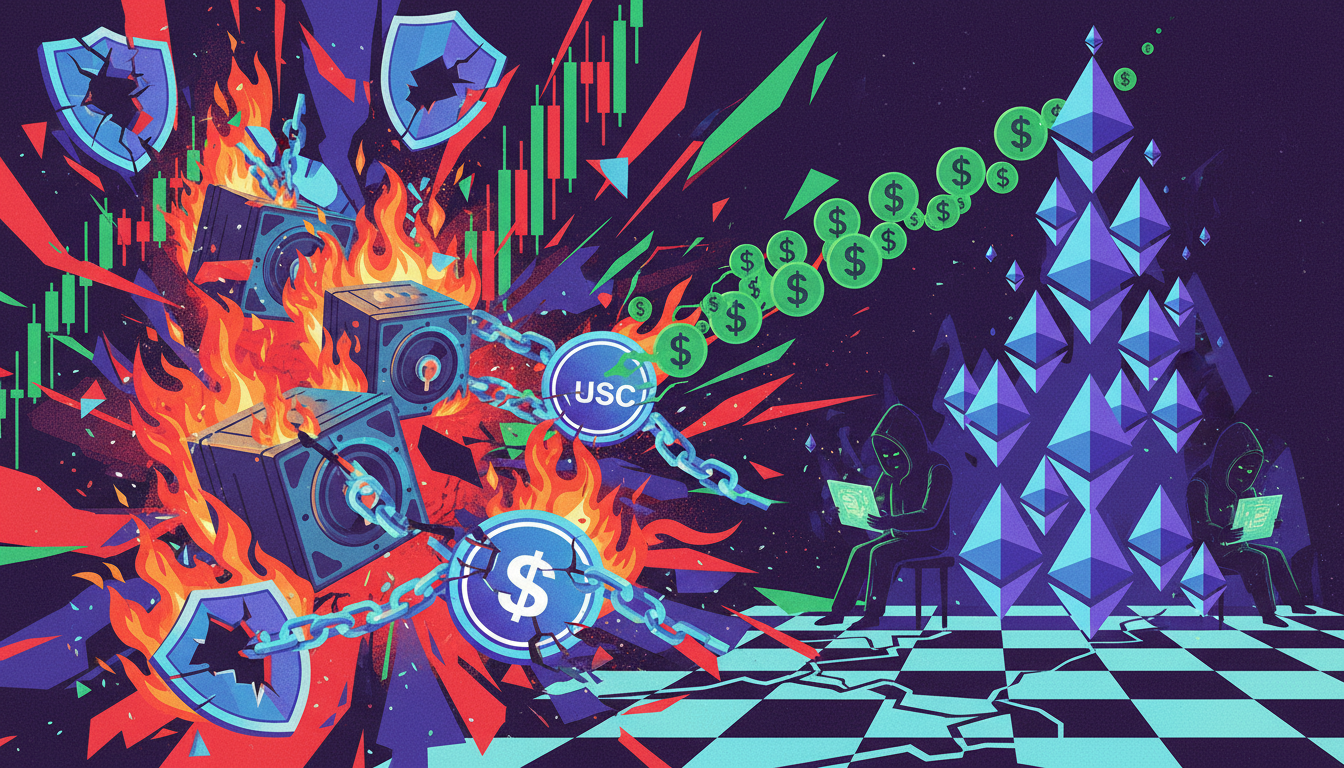
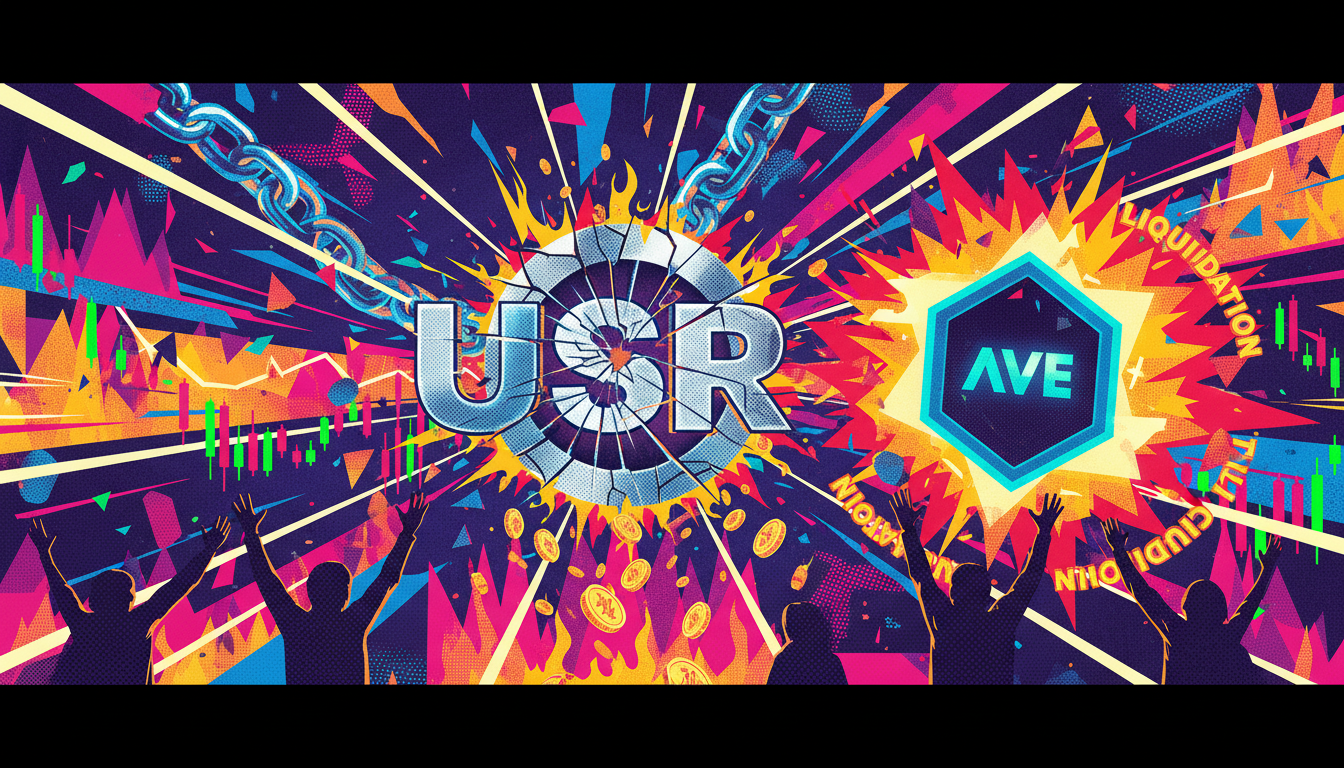
On March 22, 2026, Beijing time, Resolv Labs confirmed that the USR token it issued experienced unauthorized minting, clearly classifying the nature of the incident as a stablecoin security breach. According to comprehensive reports from multiple media outlets, approximately 50 million to 80 million USR were found to be minted abnormally. However, the project team has repeatedly emphasized in its latest statement: the collateral asset pool supporting USR remains fully sufficient and has not suffered any losses. On one side is the technical fact that on-chain assets are "intact," while on the other side is the institutional failure of the "minting mechanism being breached." This stark contrast quickly shifted the market's focus from price fluctuations to a deeper trust structure—when the issuance mechanism itself can be bypassed or abused, where does the "trust anchor" that decentralized stablecoins rely on still stand?
Loss of Control in Minting: Intact Assets Can't Prevent Panic
From a technical structure perspective, these types of events represent a typical misalignment of "asset security, uncontrolled issuance": the collateral asset pool should be fully managed on-chain as designed and has not been subjected to theft or misappropriation, but the minting logic or permissions had a flaw, allowing the system to release tens of millions of USR without corresponding new collateral. This means that the theoretical principle of "1 USR corresponds to 1 unit of asset" still holds on paper but has been diluted by unauthorized issuance, forcing users to reevaluate: can the contract truly guarantee that every circulating USR is equally bound?
Previous reports on abnormal minting and decoupling provided retrospective notes to this announcement. The market had already detected irregularities in USR deviating from its target peg, with some trading pairs experiencing discount sales and liquidity rapidly shrinking, prompting secondary market sentiments to shift towards conservatism. When "decoupling" was confirmed to be linked to "abnormal minting" by officials, investors instinctively connected wild price fluctuations to underlying mechanism defects, interpreting short-term market movements as an early reflection of systemic risk rather than just a simple emotional release.
In this context, the process of repricing risk can often be brutal. On one hand, some funds may trust the official narrative that "the asset pool is intact," believing that as long as there is a way to repair the balance sheet through recycling, destruction, or subsidies, discounted trading may offer arbitrage opportunities; on the other hand, more cautious funds might argue that "once the mechanism fails, it is no longer a one-time incident," and the previous pegging assumptions are shattered, making any future decisions regarding permissions, contract upgrades, or governance subject to additional risk premiums. Thus, the stablecoin rapidly shifts from an "asset security tool" to a "contract and governance credit testing ground," with pricing logic being completely rewritten.
Who Pressed the Button: Blind Spots in Decentralized Governance
In terms of technology stack and governance architecture, the issuance and minting permissions of USR likely involve multiple layers of modules: the front end comprises the core contracts responsible for issuance and redemption, while the middle layer may contain governance modules, multi-signature wallets, or permission control contracts used to manage who can call key functions and under what conditions parameters can be adjusted; the back end relies on oracles and governance voting results to determine collateral ratios, caps, and risk parameters, among other things. Even without specifying individual responsibilities, just these common components reveal a fact: the so-called "decentralized stablecoin" often still has a very small number of roles that can "press the button" on the critical path.
Industry experience has shown that permission management, contract upgrade paths, and oracle dependency are the weakest defenses for decentralized stablecoins. Over-concentration of permissions means that a small key leak or misuse can lead to systemic issuance or parameter manipulation; overly loose upgrade pathways could introduce new attack surfaces during what seems to be routine contract migrations; if oracles are manipulated or fail, they can mislead collateral ratios and liquidation logic in a short period, triggering a chain imbalance. Even if everything operates in "on-chain transparency," as long as critical decision-making power resides in a few addresses, the system still has invisible single points of failure.
Historical governance incidents involving other decentralized stablecoins—whether due to misconfigured parameters leading to liquidation storms or multi-signature permissions being misused resulting in fund freezes—have repeatedly reminded the market: decentralization does not equate to the absence of single points of trust, but rather shifts single point risk to "who holds governance power." The USR incident further reinforced this lesson: future stablecoin designs must implement stricter solutions regarding permission distribution, real-time audits, and emergency mechanisms, such as multi-layered governance thresholds, on-chain automated monitoring of abnormal minting behavior, and safety switches that can immediately freeze relevant contract calls once anomalies are triggered. Otherwise, the person or module that "presses the button" remains the weakest link.
The Shadow of Decoupling in DeFi: Collateral, Leverage, and the Liquidation Chain
In the broader DeFi context, USR is not only a payment and pricing tool but also a basis for collateral and liquidity. Typical uses include: borrowing mainstream assets using USR as collateral in lending protocols, providing liquidity in AMM pools alongside ETH, BTC, or other USD-pegged assets to earn trading fees, and serving as underlying margin or yield distribution units in structured products. Because it plays the role of a "relatively stable cornerstone" in these combinations, its risk transmission path is often underestimated, and once abnormal minting or decoupling shocks occur, the entire leverage and liquidation chain can be magnified exponentially.
When the market recognizes the existence of 50 million to 80 million unauthorized USR, the protocol level actually faces latent pressure of "insufficient collateral and debt inflation." Decoupling would cause the collateral value priced in USR to plummet, triggering liquidation thresholds in lending protocols, leading to a massive amount of positions potentially being forcibly closed in a short time; if the depth in LP pools gets drained due to panic withdrawals, price slippage will sharply magnify, further accelerating price declines and capital outflows, forming a typical self-reinforcing loop.
At this point, the quality of protocol risk management parameters will directly determine the loss floor. Those protocols that previously set excessively high collateral weights and overly low discount rates for a single stablecoin will be the most vulnerable when risks arise; conversely, if they had designed layered discounts, dynamic liquidation thresholds, and reserved risk control switches (such as pausing new lending or restricting specific assets as collateral), they might be able to block risks from spreading to broader assets immediately. The USR incident reminds the entire DeFi space: when the ecosystem excessively relies on a particular stablecoin, any mechanism failure could evolve into systemic shocks rather than being confined to a mere price event in a single asset dimension.
External Storms Overlapping: Geopolitical Shocks and Narrative Noise
In terms of timing, the USR abnormal minting incident did not occur in a "calm market environment." Escalating geopolitical tensions in the Middle East and Trump's public threats against Iran had already cast a shadow over global risk assets around March 2026, leading to a general market correction in crypto. Originally, some funds might view stablecoins as safe havens, periodically switching from high Beta assets to USD-pegged assets in high-volatility conditions, but when a security incident erupts within the stablecoin itself, this risk-hedging route is forcibly interrupted, forcing funds to reconsider "where else can they escape to."
On one hand, macro risk aversion sentiment drives capital out of high-risk assets, theoretically benefiting mainstream USD-pegged assets with higher compliance and better reputations. On the other hand, security incidents like that of USR prompt the market to reassess "whether algorithms and governance can withstand extreme pressures." Amidst this compounded impact, some funds may directly return to fiat currencies or tightly regulated financial products, while others may diversify across multiple stablecoins to avoid over-reliance on a single contract system.
Simultaneously, Vitalik Buterin's public comments on AI models occupied another main direction in industry tech discussions, while the Hong Kong gold heist created new security metaphors in the intersection of traditional finance and crypto: whether physical gold or on-chain assets, they could become targets for attacks when the incentives are strong enough. These seemingly unrelated events together formed an environment filled with extreme narrative noise—focal narratives continuously jumped between AI frontiers, geopolitical politics, traditional financial crimes, and on-chain security incidents.
In such an environment of multiple macro and narrative noises, technical events similar to USR are easily misread or overstated: some investors may hastily equate it with being completely insolvent before fully understanding the technical details of "the asset pool is intact, the issuance mechanism is problematic"; while other observers might see any on-chain anomaly as a precursor to systemic collapse, driven by macro panic sentiments. The asymmetric information and narrative grab further exacerbated drastic price and sentiment fluctuations.
How to Restore Trust: From Official Statements to Community Consensus
Under pressure, Resolv Labs repeatedly emphasized in its statement that "the collateral asset pool is sufficient, and the issue is limited to the issuance mechanism", attempting to convey two key signals: first, the assets behind USR have not been stolen or disappeared, and the "physical basis" for user redemption still exists; second, the repair path for this incident focuses mainly on corrections at the contract and governance level, not on endlessly filling funding gaps. In other words, the project team hopes the market understands this incident as a "failure of governance and permission control," rather than an "asset black hole."
To have this narrative truly accepted by the market, transparency tools are essential: publicly available, easily readable on-chain reserve proofs can allow users to verify the relationship between collateral assets and circulating USR themselves; real-time dashboards can provide immediate alerts in cases of abnormal minting or surges in redemption; third-party security and financial audits can provide endorsements to the phrase "it's not just me saying everything is fine, but external professionals confirming that everything is fine." These tools can't prevent accidents from happening but can provide an objective basis for the "trust recovery period" afterward.
At the same time, community governance will play an extremely complex role in accountability and repair processes. On one hand, holders and protocol users will demand clear responsibility boundaries and improvement plans, such as tightening certain multi-signature permissions, raising thresholds for governance proposals, and introducing stricter upgrade processes; on the other hand, different stakeholders will inevitably have gaming over "who bears the loss, how to distribute costs": whether through inflation subsidies, foundation compensation, or through time-spaced repurchases of the abnormally minted shares, each scheme entails different redistributions of power. In this process, the degree of voting participation and transparency of information will determine whether the future governance structure of USR can genuinely regain trust.
On a more practical level, whether USR can regain its peg and restore liquidity in the short to medium term depends on several preconditions: whether the scale of abnormal minting and its disposal plan are clear and verifiable; whether the security of the collateral asset pool has been confirmed by multiple parties; whether major DeFi protocols are willing to continue accepting USR as collateral or trading pair assets; and whether the secondary market is still willing to provide sufficient depth and credit expansion space for it. Only when "technical fixes, governance improvements, and market acceptance" form a concerted effort can USR hope to emerge from this crisis's "death spiral" and move towards "cautious recovery."
The Price of Trust: Preparation Before the Next "Minting Anomaly"
Looking at the big picture, the core issue exposed by the USR abnormal minting incident is that decentralized stablecoins still rely on several "single points of trust" on both technical and governance levels: technologically, a few contracts and permission modules bear excessive security responsibilities; in governance, a handful of addresses and voting coalitions hold key decision-making valves. Once any link in the chain fails, even if the collateral assets remain intact, overall credit can still be significantly marked down in market pricing.
For the entire decentralized stablecoin sector, this means the industry’s main theme must shift from a simple pursuit of scale and market share to emphasizing verifiable security and resilience: it must prove "that it is safe now" and "that it can fail orderly and recover quickly under extreme conditions." More granular permission distribution, stricter contract upgrade processes, smarter risk management monitoring, and emergency circuit breakers will all become essential options in the design of next-generation stablecoins, rather than just add-ons.
In the future, regulatory, auditing, risk management tools, and protocol design will gradually work together to reshape the consensus on "secure stablecoins": regulation provides a baseline framework and responsibility expectations, on-chain and off-chain audits offer dual verification for assets and code, professional risk management tools monitor cross-protocol risk transmission, while the parameters and governance structure of the protocol itself will determine whether the system "breaks down" or "absorbs resilience" when risks truly arrive. Stablecoins will no longer be mere price-pegging tools but rather "systemic infrastructure" under both regulatory and market perspectives.
For investors, the action recommendations have become quite clear: diversify stablecoin risks, avoiding excessive concentration on a single contract system or governance structure; before participating in any DeFi strategy, assess its reliance on specific stablecoins and whether its emergency plans are sufficient. For developers and project teams, they need to proactively input the "worst-case scenario" into the design: if a stablecoin suddenly loses part of its peg or is suspended, can the protocol control losses through parameter adjustments, rapid governance, or risk management switches? No one can predict when the next "minting anomaly" will occur, but being prepared for it will determine who gets liquidated in the storm and who can continue to build on the ruins.
Join our community, let's discuss and become stronger together!
Official Telegram community: https://t.me/aicoincn
AiCoin Chinese Twitter: https://x.com/AiCoinzh
OKX benefits group: https://aicoin.com/link/chat?cid=l61eM4owQ
Binance benefits group: https://aicoin.com/link/chat?cid=ynr7d1P6Z
免责声明:本文章仅代表作者个人观点,不代表本平台的立场和观点。本文章仅供信息分享,不构成对任何人的任何投资建议。用户与作者之间的任何争议,与本平台无关。如网页中刊载的文章或图片涉及侵权,请提供相关的权利证明和身份证明发送邮件到support@aicoin.com,本平台相关工作人员将会进行核查。