On March 22, 2026, the East Eight District market witnessed a severe tug-of-war among multiple narrative lines in the same trading day: on the board, Bitcoin temporarily broke below $69,000, while on-chain there were simultaneous revaluation of DeFi assets and security incidents; at the macro and political level, Trump's approval rating fell to 34%, setting a new low in ARG polling, adding noise to regulatory expectations; on the technology and computing side, Elon Musk boldly announced the TERAFAF annual production target of 1 terawatt chips and a live broadcast plan, coupled with Grok Computer's switch confirmation, reinforcing optimism on the other end. Price adjustments, brand devaluation, and security incidents intertwined to create a fragile market picture, but driven by computing power expansion and new narrative expectations, this market still stubbornly retains imaginative space.
Bitcoin Drops Below $69,000 and Market Resonance on the Same Day
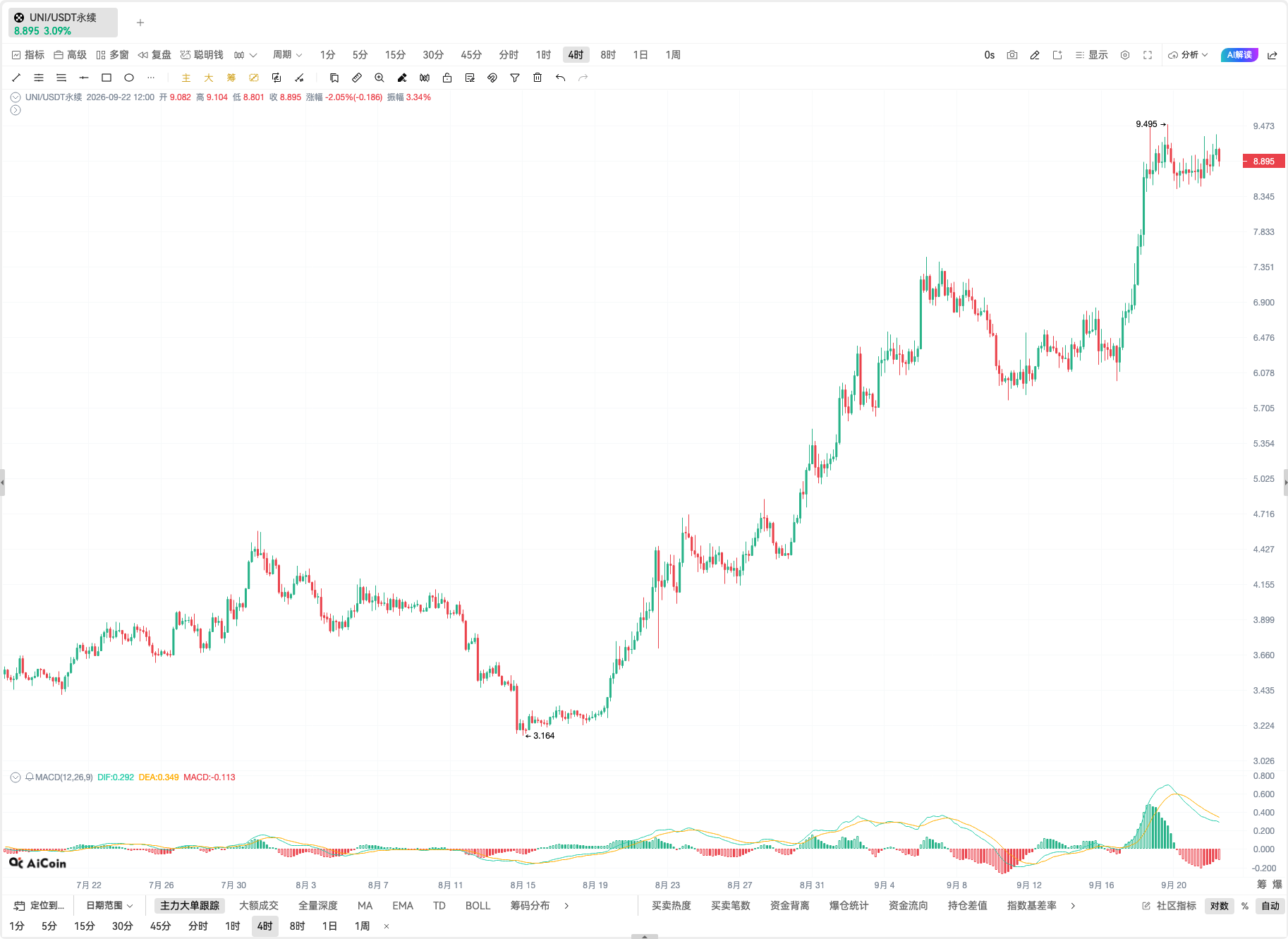
Bitcoin briefly fell below the $69,000 mark during trading on March 22, seen by many traders as a phase setback for the current bullish momentum. After multiple attempts to breach high levels failed, the breaking of this level was interpreted more as the clearing of leverage and sentiment, rather than a complete trend reversal. However, for funds relying on short-cycle trend following, this was enough to trigger an accelerated reduction in positions and a simultaneous retreat in risk appetite.
Corresponding with the spot market was an increase in speculation and derivatives games. According to data cited by the briefing from Polymarket, the market assigned a probability of about 49% to the event "Bitcoin falling to $65,000 in March," nearly even, reflecting not a consensus bearish outlook, but a group of traders with fierce disagreement over the space below and the timing rhythm. Both sides were pricing their path hypotheses with real money.
In the derivatives market, a single source showed that short-term bearish sentiment prevailed, manifested in increased demand for protective put options and a downward defensive tilt in some contract structures. However, from the briefing information, the scale of funds and sources participating in this bearish structure remain limited, more resembling a tactical hedge against price retracement than the beginning of systematic de-risking. This means that current derivatives signals alone are insufficient to constitute a basis for trend reversal, requiring comprehensive assessment alongside spot liquidity, ETF subscriptions, and over-the-counter fund allocations.
It is essential to emphasize that in the time dimension, the volatility of Bitcoin's price overlapped significantly with that day's political and technological news, but this seemed more like a same-day resonance rather than a single causal chain. Whether it was Trump polling hitting a low or Musk's announcement of the computing power expansion plan, both impacted risk appetite within their respective narrative trajectories, yet it was difficult to linearly attribute short-term price fluctuations to several thousand dollars. For professional funds, what truly matters is how these events change medium-to-long-term regulatory expectations, capital expenditures, and security costs, rather than looking for a simple news arrow on candlestick charts.
ENS's Defi.eth Auction and the Collapse of DeFi Brand Premiums
Apart from price volatility, the “intangible value” of on-chain assets was repriced on the same day. The well-known ENS domain defi.eth was sold for 15 ETH, approximately $32,337 at that time, a stark contrast to the six-figure dollar imaginations of the bull market period. For a domain once seen as a totemic asset for entering DeFi, such pricing seemed more like a return to realism rather than an unexpected occurrence at the auction.
Compared to the historical transaction price of 2022, this represents a decline of about 62.5%, which intuitively reflects the sharp correction of DeFi brand premiums in this cycle. In the past, symbols like defi.eth carried emotional premiums as “traffic entrances” and “ecological coordinates,” seen as early bets on future protocol aggregations and user entry; however, now, as yields trend towards the ordinary, and user attention is diluted by L2, new public chains and restaking narratives, the valuations of these symbolic assets begin to more closely bind with on-chain real cash flows, user retention, and protocol innovation.
The evident cooling of the ENS secondary market reflects a re-evaluation by users and capital of DeFi's long-term narrative on a more macro level. The so-called “entering the financial world by typing a name into the browser's address bar” did not translate into stable fee income or irreplaceable user sentiment as envisioned, as most protocol entrances have been consumed by wallet aggregators, cross-chain bridges, and CEX flows. For new entrants, a “good name” is no longer enough to support a steep premium.
The downgrading of traditional DeFi concepts has, however, objectively freed up space for new revenue structures and new chain narratives. Whether it's the security yield model represented by restaking or compound products combining with AI and RWAs, all are competing for the funding pool originally belonging to “pure DeFi protocols.” Yet, during the transition period, the price decline of iconic assets like defi.eth will still put pressure on the sentiments of old users—this is a transition from “narrative prosperity” to “cash flow and security discounting,” which will be hard to avoid in the short term.
Trump's Approval Retracement and the Political Noise of Regulatory Expectations
Synchronizing with on-chain pricing is yet another tremor in the US political arena. The briefing revealed that Trump's approval rating in ARG polls is only 34%, hitting a historic low for that channel. This data itself has no direct technical correlation with Bitcoin's price, yet was quickly interpreted by the market as a potential variable for the future regulatory trajectory of US cryptocurrency, increasing uncertainty noise in public opinion and voting.
In the context of the crypto market, Trump's image has frequently been associated with labels such as “looser regulation” and “encouraging innovation,” and his declining approval rating is easily extended by some investors as a symbol of “stricter regulation” or “prolonged policy uncertainty.” Although this interpretation lacks specific texts and timelines to support it, in periods without clear signals, the market often quickly adjusts risk appetite and duration allocation by amplifying symbolic indicators.
When facing such political noise, traders commonly use tools that are not simple spot reductions, but rather hedge against uncertain exposures through futures, options, and prediction markets: for example, lengthening or shortening duration, constructing direction-neutral volatility strategies, or betting on political outcomes themselves on platforms like Polymarket to balance the indirect risks they impose on asset price paths. This practice does not eliminate uncertainty but can separate “emotional volatility” from “fundamental shocks” to a certain extent in pricing.
It must be clarified that the current public information still cannot verify a direct causal relationship between Trump’s polling fluctuations and Bitcoin’s price. Polls are merely samples of political sentiment, while the pricing of crypto assets also layers multiple variables, such as macro monetary environment, technological expectations, on-chain earnings, and security costs. Simply correlating the two does not help in understanding the market; it may instead amplify noise and weaken the ability to identify true structural signals.
Musk's TERAFAB and the Tech Bullish Narrative of Grok
In stark contrast to the political noise is the high-intensity technological expectation crafted by Musk. According to the briefing, he announced the live broadcast plan for the TERAFAB project and proposed the grand target of annual production of 1 terawatt computing chips—a figure that itself holds significant narrative tension, suggesting that in terms of computing power and AI chips, the market is being guided to envision a future capacity peak far exceeding the current supply pattern.
Simultaneously, Musk indirectly confirmed via the X platform that the Grok Computer functionality switch will be launched, coupled with the path of computing power expansion, constructing a continuous optimistic curve for the tech sector and related concepts. Though the briefing did not provide specific functionality designs and business models for Grok Computer, the combination of “computing power + AI + terminal form” is sufficient to spark a new round of expected trades in the secondary market, strengthening bullish sentiment in technology.
Within the mapping logic of the crypto world, the expectation of expanded production of computing power and AI chips has been viewed by many participants as an external boon for Bitcoin mining and high-performance public chains. On one hand, more abundant and progressively optimized computing chips have the potential to change miners' boundaries in energy efficiency and expansion, affecting the overall network's hash rate and mining profitability structure; on the other hand, high-performance chains, AI chains, and ZK-related projects can seek new balances of performance and cost within a more diverse hardware ecosystem, forming a certain "dislocated competition" with traditional Web2 giants in infrastructure narratives.
It is against this background that both “technological optimism” and “short-term price corrections” occurred on the same day, reinforcing investors' sensation of emotional tearing across time dimensions. On one side is the bet on the expansion curve of computing power and AI in the next three to five years, while on the other is the reality of Bitcoin breaching levels and the prices of DeFi symbolic assets halving within hours. For fund managers, reallocation of positions and risk budgets between these two timelines is the truly difficult part.
Venus Attack Spillover Effects and Security Cracks on the Chain
Apart from the high-frequency switching of macro and technological narratives, yet another black swan at the security level reminds the market: the vulnerabilities of on-chain systems are still present. The briefing showed that the attackers of the Venus protocol have completed cross-chain transfers of approximately $4.72 million in assets, markedly accelerating the money laundering process for the stolen funds. Conversely, the attackers are estimated to have invested about $9.92 million in costs, currently only recovering around $5 million, presenting an overall profile of extremely high risk, extremely high costs, and unstable returns.
This contrast of numbers illustrates, on one hand, that high-complexity attacks are not “risk-free profits” and require pre-investment in funds, technology, and time; on the other hand, the opening of cross-chain laundering pathways again exposes the current bottleneck in real-time tracking and multi-chain collaborative freezing abilities. Even if there are relatively mature monitoring and marking tools on a single-chain dimension, once assets are rapidly split and cross-chain transferred, the difficulty of tracking and the costs of compliance response increase exponentially.
From a market structure perspective, such events will inevitably raise the demand for security premiums. At the protocol level, there is a need for more conservative reassessments of risk parameters, liquidation mechanisms, and early-warning systems, including increasing collateral rates, shortening liquidation response times, and tightening acceptable asset ranges; users and institutions will assign higher weight to “contract safety records,” “multi-signature governance quality,” and “emergency response history” during asset allocation, treating them as part of the implicit cost in valuation models.
The Venus incident also thrust DeFi liquidation and extreme scenario design back into the spotlight. How to introduce stronger risk control boundaries without stifling innovation, such as more sensitive redundancy for price oracles, stricter borrowing limits, and tiered risk control pool designs, becomes a topic that protocols cannot avoid. Every attack serves as a real pressure test for “extreme parameter assumptions,” and every liquidation storm afterward results in protocols that fail to timely adjust their models paying a greater price in the next round of volatility.
Finding the Next Pricing Power Amid Narrative Tearing
Piecing together the clues from March 22 reveals a market outline where an old narrative dividend is rapidly consumed: the short-term correction of Bitcoin shatters the bulls' simple path assumption of “straight upward movement”; the price devaluation of ENS and DeFi brand assets indicates that merely relying on symbols and traffic entrances for premium is unsustainable; while the Venus attack reminds all participants that security costs have never been genuinely accounted for in most speculative valuations. Together, these three indicate a fact—that the previous pricing framework driven by “infinite liquidity + narrative prosperity” is losing its effectiveness.
In contrast, the decline in Trump’s approval rating and Musk’s narrative of computing power expansion exert external forces from both political and technological directions: the former shakes the baseline of regulatory expectations and institutional environments through polling data, while the latter reshapes medium-to-long-term valuation models for computing power and infrastructure through grand production targets and AI terminal expectations. These two forces push the market to re-examine the connection between asset prices and the allocation of power/resources in the real world.
In the near future, capital is likely to frequently swing between “risk-averse narratives” and “high-growth expectations”: on one hand, hedging political and security uncertainties by increasing cash ratios and allocating more liquid large-cap assets and compliant products; on the other, it is challenging to completely abandon participation in AI, computing power, public chains, and new revenue structures to maintain the upward elasticity of the portfolio. This oscillation itself signifies higher volatility and more frequent structural mismatch opportunities.
Amidst this multiple tearing, the next real pricing power is likely to gradually shift from single asset prices (like “how many dollars for Bitcoin”) to a composite pricing of “computing power—security—compliance expectations”. Whoever can find a more solid equilibrium among these three is more likely to master the premium in future cycles: miners and computing power providers will layout long-term moats around hardware and energy, protocols and public chains need to gain trust through verifiable safety records and risk controls, while the clarity of regulatory and compliance paths will determine whether institutional capital can stay in large volumes and for the long term.
Join our community, let's discuss and become stronger together!
Official Telegram community: https://t.me/aicoincn
AiCoin Chinese Twitter: https://x.com/AiCoinzh
OKX benefits group: https://aicoin.com/link/chat?cid=l61eM4owQ
Binance benefits group: https://aicoin.com/link/chat?cid=ynr7d1P6Z
免责声明:本文章仅代表作者个人观点,不代表本平台的立场和观点。本文章仅供信息分享,不构成对任何人的任何投资建议。用户与作者之间的任何争议,与本平台无关。如网页中刊载的文章或图片涉及侵权,请提供相关的权利证明和身份证明发送邮件到support@aicoin.com,本平台相关工作人员将会进行核查。