As of the latest round of rapid fluctuations this week in the Eastern Time Zone, Bitcoin and Ethereum fell simultaneously in a very short period, triggering concentrated liquidations among leveraged long positions. BTC and ETH recorded declines of approximately 1.9% and 3.5% respectively in about 15 minutes, with total liquidations across the network falling in the range of 180–240 million USD, mainly from long positions. The rapid breach of key price levels, combined with a strong chain reaction, caused the market's short-term risk appetite to sharply drop, leading to concentrated liquidations of high-leverage long positions during this round of retracement.
15-Minute Plunge: Price and Liquidations Magnify Resonance
Recently, BTC's trend suddenly accelerated downward, breaking the significant psychological and technical levels of 70,000 USD and 69,000 USD in quick succession, with a maximum decline of about 1.91% in 15 minutes. After these key price levels were breached, a large number of long stop-loss orders positioned below the key levels were triggered, amplifying what was originally not an extreme price fluctuation and making the market exhibit a clear "stair-step decline" characteristic.
Compared to BTC, ETH's decline during the same period was further magnified, dropping about 3.5% within 15 minutes, with prices temporarily retreating to around 2074 USD. The synchronous drop in mainstream assets enhanced the market's perception of systemic risks and accelerated the release of margin pressure on the contract side. Observations show that ETH displayed higher volatility elasticity, escalating the overall fluctuation range driven by BTC.
From the liquidation data perspective, the total liquidation scale across the network in one hour was approximately 180–240 million USD, with BTC seeing hourly liquidations of about 83–107 million USD and ETH about 60–81 million USD, making up a significant portion of the total liquidations, predominantly from passive liquidations of long positions. It can be seen that this round of retracement has the typical characteristics of "rapid price decline + concentrated liquidations", reflecting more of a passive deleveraging process in a high-leverage environment, rather than a large-scale, active sell-off in the spot market.
Trump Pressures Iran: Geopolitical Gunpowder Affects Crypto Market
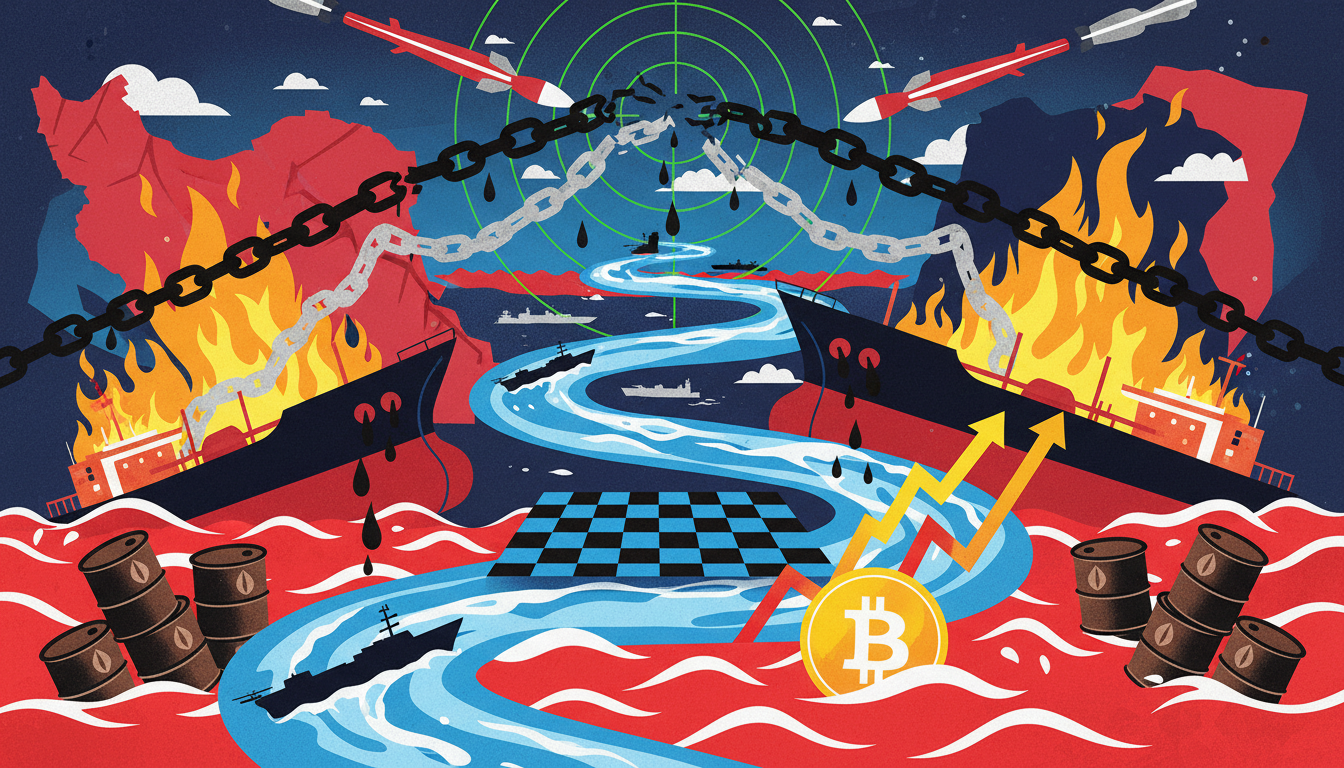
The macro backdrop of this flash crash is the renewed intensification of geopolitical risks. Reports indicate that the Trump administration recently issued military threats to Iran, demanding it open the Strait of Hormuz, directly impacting global energy and shipping chokepoints, heightening concerns regarding potential escalation in the Middle East. During a phase where risk assets are generally at high levels and leverage is elevated, such sudden statements are often quickly priced into the market.
Although the U.S. has initiated preliminary discussions to end the conflict with Iran, relevant assessments suggest that fighting is expected to continue for 2–3 weeks, indicating that the time window for risk events has significantly widened, making it difficult for the market to price in the "intensity and duration of conflict" in the short term. The conflict has not immediately eased, instead creating a form of "delayed uncertainty", causing funds to be more inclined to first compress their risk exposure and then await new information.
At the level of diplomacy and negotiations, envoy Kushner and Witkoff are participating in the preparations for relevant peace negotiations, somewhat signaling a de-escalation, but until this message translates into substantive ceasefire or agreement, this kind of walking and talking state is insufficient to reverse short-term risk-averse sentiment. For crypto funds seeking high liquidity and elasticity, choosing to reduce positions first and then observe is a more common response pattern during uncertain periods.
In an environment where geopolitical tensions and high leverage structures are layered, any sudden statements from the Middle East could be seen by the market as a "trigger threshold", rapidly magnifying their impact on mainstream assets like BTC and ETH. Price fluctuations not only reflect adjustments in risk expectations but also indicate a structural change in the crypto market's sensitivity to macro and geopolitical variables.
Leverage Squeeze: Longs Liquidated in a Chain Reaction Below Key Price Levels
Structurally, this flash crash appears more like a "leverage squeeze" targeting high-leverage longs. When the BTC price broke below significant psychological and technical levels of 70,000 USD and 69,000 USD, it was compounded by a large number of stop-loss and risk control thresholds concentrated around these price levels. Once the first batch of liquidations was triggered, subsequent margin deficiencies and forced settlements unfolded in a chain reaction, leading to consecutive liquidations for longs below key price levels.
Previously, high-leverage long positions were densely piled in relatively narrow price ranges, meaning that even a few percentage points of pullback were enough to trigger substantial nominal positions to be passively settled. In an environment where volatility is magnified, this "narrow range, thick leverage" position structure naturally amplifies the impact of every news shock, transforming adjustments that could be absorbed into panic-driven drops.
In the absence of effective hedging tools or dispersed position management, the forced selling triggered by risk controls on contract platforms, combined with investors' self-imposed stop-losses, formed a downward negative feedback loop. The selling pressure was continuously compounded within the same volatility range, further compressing the willingness of buyers to absorb. This made originally limited geopolitical news shocks exponentially magnified. The overall liquidation structure also indicates that this round was mainly composed of clearing long positions, suggesting that previous market expectations of rising prices were overly crowded, and longs were somewhat lax in risk budgeting and leverage control.
Risk Appetite Freezes: Resonance of Risk Aversion and Technical Breakdowns
As the geopolitical situation enters a high-uncertainty phase, institutional and individual funds' aversion to high-volatility assets typically rises significantly, with crypto assets naturally being at the forefront. In the face of Trump's hardline stance against Iran and expectations of prolonged conflict in the Middle East, funds tend to adopt a conservative strategy of "first reducing positions, then observing", trading down leverage and decreasing contract positions to gain higher maneuverability.
Between Trump's statements and the fluctuating situation in the Middle East, the market finds it challenging to price clearly the macro and policy path for the coming weeks. The potential link between oil prices, safe-haven assets, and U.S. Treasury yields means that crypto assets are incorporated into a larger global asset allocation chess game. Against this backdrop, short-term risk appetite has notably cooled, with even slight price fluctuations possibly triggering more concentrated emotional reactions and trading feedback.
The combination of "rapid price declines plus concentrated liquidations" essentially reflects a synchronous resonance between risk aversion and technical breakdowns: on the one hand, geopolitical tensions make funds highly sensitive to negative news; on the other hand, when prices break through multiple support levels, technical analysts and quantitative models simultaneously issue sell or short signals, further suppressing short-term buying willingness, making crypto assets appear particularly vulnerable to emotional shocks.
Similar to some traditional high-risk assets, the crypto market frequently exhibits a clear "fear of bad news but not good news" asymmetric reaction during phases of geopolitical conflict. Negative news tends to be magnified and rapidly priced under structures of high leverage and crowding, while positive news is often partially overlooked as investors are still digesting previous risks and losses. This asymmetry is also a structural feature that needs to be acknowledged during this round of flash crash.
From a Data Perspective, How Significant was This Flash Crash?
When placing this event within a longer historical coordinate system, the one-hour liquidation volume of 180–240 million USD is not an extreme peak, but in the recent environment of elevated leverage usage, it has been sufficient to trigger a notably forceful deleveraging process. For longs accustomed to continuously increasing leverage during slow upward movements, this "medium intensity clean-up" is sufficient to reset risk parameters.
From an asset structure standpoint, BTC and ETH together accounted for approximately 140–180 million USD in liquidations within this hour, making up the vast majority of overall liquidations across the network. Mainstream coins remain the core battleground for leveraged funds, with contract players inclined to concentrate positions and bets in the most liquid assets, which also means that when a liquidation wave appears, mainstream assets will bear the highest nominal liquidation pressure, making price fluctuations more representative and indicative.
Comparing the price drops with liquidation amounts, it is found that the recent short-term declines of about 1.9% and 3.5% resulted in a slightly "magnified" liquidation scale. This indicates that at this stage, the market's leverage usage is relatively high, and the margin safety net is limited, meaning that slight fluctuations can trigger risk clauses in many accounts, leading to the phenomenon of "a slight drop in currency price resulting in a large drop in leverage" being more common.
Overall, this set of data resembles a "medium intensity leverage clean-up" rather than a systemic collapse: liquidity has not shown significant exhaustion, and the selling pressure in spot markets does not indicate signs of losing control. What has been truly cleared are mainly speculative positions that were overly optimistic about the future and had high leverage multiples. The passive cleaning characteristics in market structure are far more prominent than fundamental or macro variables' fundamental deterioration.
What Preparations Should Investors Make Before the Next Geopolitical Shock Arrives?
In a phase where geopolitical uncertainties remain high, controlling leverage multiples and avoiding concentrated builds at specific price levels is one of the core strategies to resist "sudden news + forced liquidation chain reactions." A more even distribution of position building and a more conservative margin ratio can reserve buffer space for accounts during similar flash crashes, reducing the probability of being wiped out by a single candlestick.
Investors should also proactively incorporate geopolitical risks into their trading and risk control frameworks, preparing contingency plans for possible key statements or escalations in events instead of passively stopping losses or being forced out after news hits. This includes remaining sensitive to major diplomatic talks, military action windows, and periods of intensive relevant statements, adjusting positions dynamically based on their risk tolerance.
From the recent flash crash performance, the crypto market's sensitivity to macro and geopolitical events is rising, with future market movements becoming more frequently linked to global politics and liquidity environments rather than merely reflecting internal industry narratives. For traders, this means the need to incorporate more cross-asset and cross-market information into their decision-making processes, or they risk becoming "voiceless" amid systemic emotional fluctuations.
From a medium to long-term perspective, such geopolitical shocks often periodically clean out leverage and emotional bubbles, providing maneuvering space for subsequent healthier trend formations. However, this is predicated on market participants acknowledging short-term volatility risks and constraining their behaviors through quantitative position management, stop-loss strategies, and risk budgeting. Only by transforming emotional fluctuations and event shocks into manageable parameters, rather than "unexpected" outcomes observed post-factum, can investors gain greater agency when the next similar shock arrives.
Join our community to discuss and become stronger together!
Official Telegram community: https://t.me/aicoincn
AiCoin Chinese Twitter: https://x.com/AiCoinzh
OKX Welfare Group: https://aicoin.com/link/chat?cid=l61eM4owQ
Binance Welfare Group: https://aicoin.com/link/chat?cid=ynr7d1P6Z
免责声明:本文章仅代表作者个人观点,不代表本平台的立场和观点。本文章仅供信息分享,不构成对任何人的任何投资建议。用户与作者之间的任何争议,与本平台无关。如网页中刊载的文章或图片涉及侵权,请提供相关的权利证明和身份证明发送邮件到support@aicoin.com,本平台相关工作人员将会进行核查。