Many people think Huang Renxun will ignite optical communication at GTC this time.
After all, this line has been hot for too long. From CPO to silicon photonics, from optical modules to high-speed interconnections, the market has almost pressed all the imaginations about AI infrastructure upgrades onto this. Interestingly, OFC 2026 is also held in the same week, with the technical conference from March 15 to 19 and the exhibition from March 17 to 19. One is NVIDIA discussing the roadmap, while the entire optical communication industry chain is showcasing its strength, naturally pushing the heat to a high point.
So before Huang Renxun took the stage, the market was not waiting for an ordinary speech but for a fire. What everyone wanted to hear was not "there's no problem with the future direction," but a clearer statement: in the next stage, light is the main line.
Unfortunately, Huang Renxun did not convey this version.
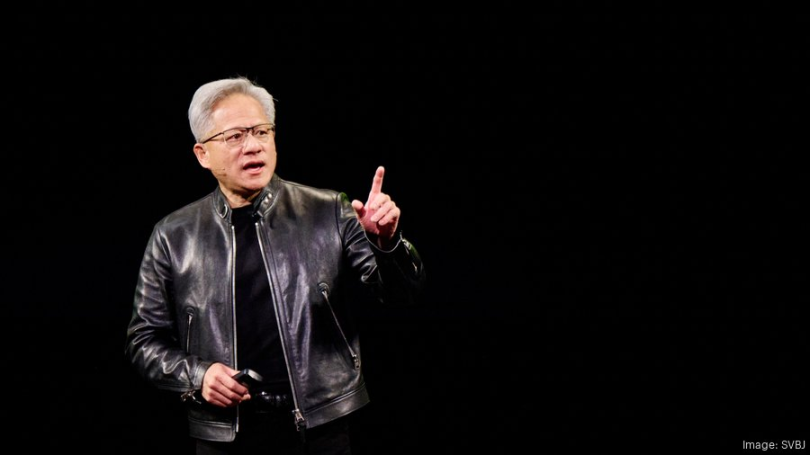
GTC Huang Renxun speech site Source: The Business Journals
Why didn't Huang Renxun get the market on board despite discussing light?
During this time, the reason optical communication has been so hot is not only because it sounds advanced, but because the logic is too smooth—as AI clusters get larger, the pressure for data transmission increases, and copper will eventually hit a bottleneck, so isn't it time for light?
This story is too easy to establish. And because it is too easy to establish, the market will naturally think one step further; since the direction is so clear, realization shouldn't be too far away.
So before GTC, much of the funding was not discussing "whether light will work," but rather was betting in advance on whether Huang Renxun would make this matter sound more aggressive than people expected.
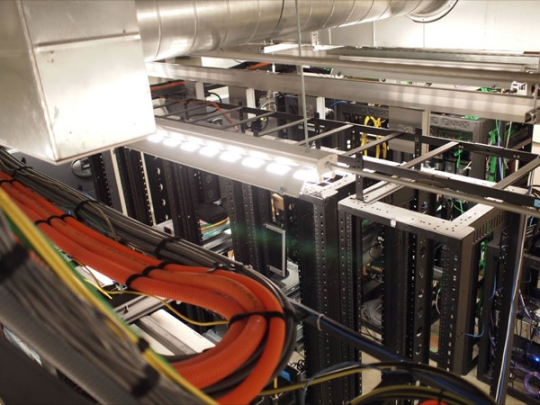
Data center machine room and wiring Source: The Fiber Optic Association
The issue is not whether he mentioned light.
He certainly did, and he mentioned it significantly. What Huang Renxun actually conveyed is that light is important, but copper will not exit the stage in the short term, "NVIDIA plans to continue using copper-based connections and updated optical technologies in upcoming platforms (including Vera Rubin Ultra and future systems)."
The market wanted to hear that light was about to take the forefront, and this slight difference was enough to change the situation.
This is also the market's most awkward aspect because what stocks fear the most is often not negative news, but rather the absence of as much positive news as imagined.
The problem is not about "whether light is promising," but rather "whether it will realize now."
The most easily misinterpreted point this time is that many people will understand it as "light is failing" or "copper has won."
In fact, neither is true.
More accurately, the statement is that the long-term logic of light has not changed; what has changed is the market's imagination about its realization speed. NVIDIA's official blog description of the Vera Rubin platform has made this logic very clear: larger systems will use direct optical connections for rack-to-rack connections, but many positions within the racks are still based on copper spines and pre-integrated copper cables.
Simply put, in many places within the rack, copper remains the mainstay; when it comes to larger scale and cross-rack areas, the importance of light only starts to rise significantly.
Therefore, what GTC really corrected was not direction, but the timeline. The market used to buy this line, investing in a very large future; now the market is beginning to question: who will realize this future first, and when will it be realized.
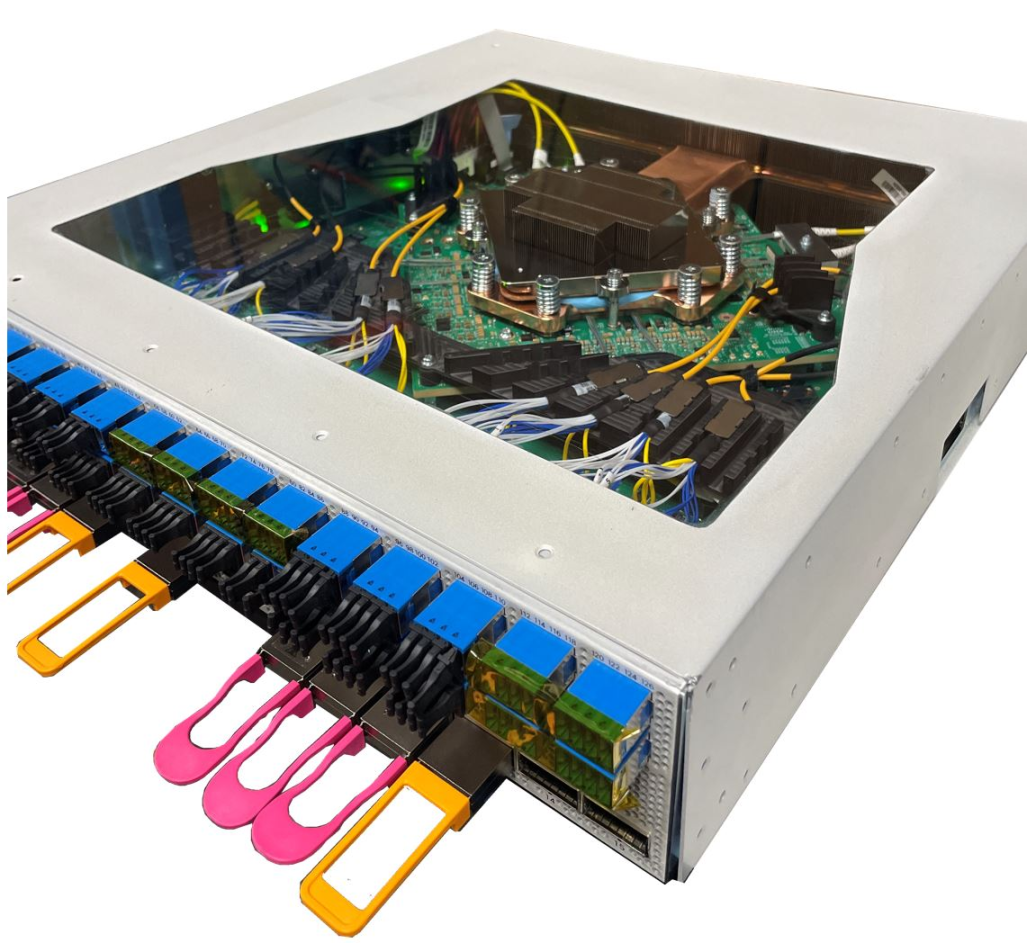
CPO equipment / system demonstration Source: Cisco Blogs
The market has shifted from "completely transitioning to light" to "starting to differentiate."
Because of this, the speech did not result in a "collective surge," but rather a brief chaos followed by differentiation.
Barron's summary of the market this time was quite accurate: the market interpreted Huang Renxun's statement as "both copper and light will continue to be used," which directly shifted the sector from "as long as it's related to light, it will rise," to a differentiation trade questioning "who really benefits and who was just lifted by the heat."
If we take a look at individual stocks, this differentiation becomes more apparent.
- Lumentum (LITE.M) continues to be discussed by the market not just because it belongs to the "light" segment, but because it has transitioned in investors' minds from being just a concept stock to being on the list of "truly having a chance to enter the next generation interconnect framework." For this reason, even though short-term emotions may fluctuate, the market finds it easier to interpret its movements as "changing rhythm," rather than "vanishing logic." Barron's noted that on March 17, Lumentum was one of the few representative stocks that managed to close up;
- Coherent (COHR.M) has a somewhat similar position to Lumentum, but the market's pricing for it won't be entirely the same. Because once the sector shifts from "telling a big story" back to "grounded discussions," investors will pay more attention to which company benefits at what level, how long realization will take, and whether expectations have been too optimistic. It doesn't lack direction, but will more easily move into a stage of "there's logic, but time must be recalculated." Barron's reviews on the same day indicated that Coherent’s performance was noticeably weaker than Lumentum's;
- Ciena (CIEN.M) is relatively special. It doesn't behave like some high-elasticity names that can be easily driven up by emotions and then sharply sold off. In this wave of discussions, it resembles more of the kind that prompts the market to think about "how the future optical networks will truly unfold." Its significance lies not merely in capitalizing on a buzzword, but in reminding everyone that if future large-scale AI infrastructure is to continue upgrading, the competition will not only be about a component story but how the entire network capability advances. Barron's post-GTC summary placed Ciena in a category as "relatively stable in the optical chain";
- Applied Optoelectronics (AAOI.M) stands out as the most typical representative of high elasticity in this wave. Such stocks tend to be quickly boosted by the market when sentiment is good; conversely, as long as the catalysts are not strong enough to sustain high expectations, they are also the most likely to face profit-taking pressure first. Its volatility precisely illustrates a fact: when the market begins to doubt "will realization be slower than expected," those names that rose fast and had high expectations are often the first to be punished. Barron's report on March 17 placed AAOI on the side facing pressure;
- Credo (CRDO.M) exposed another significant change after this GTC: it is not enough to merely be associated with "copper" to automatically benefit. Huang Renxun clarified one thing this time—copper will not exit immediately, but that does not mean all copper chain companies will be rewarded by the market right away. Because funding will next inquire more specifically: which segment of copper connections benefits the most? Is it short-range? AEC? Or other links? Barron's review indicated that Credo also experienced large fluctuations in this round of sentiment, which itself shows that the market no longer accepts simple narratives of "as long as you're on the topic, you'll rise";
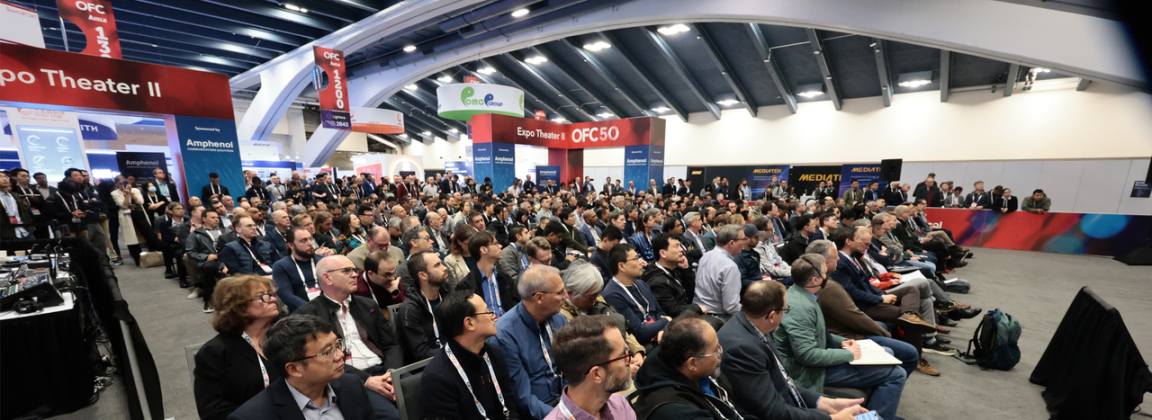
OFC Conference live shot Source: Public News Image
Ultimately, when looking at these stocks together, the most notable aspect is not who rises or falls, but that the market has begun to view them as assets with different positions, different realization rhythms, and different certainties.
In the previous phase, everyone was more willing to put them in the same basket, but from GTC onwards, that basket is being dismantled. AI interconnect is not a "light or copper" multiple-choice question, but rather a question of "who uses what first."
Ultimately, Huang did not deny light; he simply did not convey the version the market most wanted to hear. Therefore, after GTC, the market's focus is no longer just on "is there a story," but on "who is closer to ground deployment and who is closer to realization," which is why, even within the same optical communication line, stock performances have begun to show significant differentiation.
In the previous phase, many companies could still be traded together in the same basket; but from now on, the market will scrutinize more closely: who benefits first, who validates first, and who is simply pushed up by sentiment.
The real differentiation has just begun.
The direction of light has not changed; what has changed is the market's perception of this line.
Previously, everyone preferred to pay for imagination first; going forward, the market will value realization more. Therefore, what will truly widen the gap is not who tells a better story, but who converts the story into performance first.
We will wait and see.
免责声明:本文章仅代表作者个人观点,不代表本平台的立场和观点。本文章仅供信息分享,不构成对任何人的任何投资建议。用户与作者之间的任何争议,与本平台无关。如网页中刊载的文章或图片涉及侵权,请提供相关的权利证明和身份证明发送邮件到support@aicoin.com,本平台相关工作人员将会进行核查。


