This week in East 8 Time Zone, a certain anonymous whale address has utilized approximately 3 million USDC on the decentralized derivatives platform Hyperliquid, opening a short position with a notional value of around 9 million US dollars at 10x leverage on HYPE. This aggressive position has quickly fermented within the market community. Almost simultaneously, the SEC of the United States published five categories of regulatory guidance for digital assets, providing a clearer outline for a long-standing unresolved compliance framework. On one side is the market narrative of "altcoins beginning to dominate the market" and funds looking forward to a revival rotation; on the other side is the strong short bet from high-leverage whales, creating new tension for the market narrative. The market naturally questions: Is this a gamble on the wrong cycle turning point, or a cold hedge against overheating emotions?
3 Million USDC 10x Short Position: The Whale's Aggressive Bet
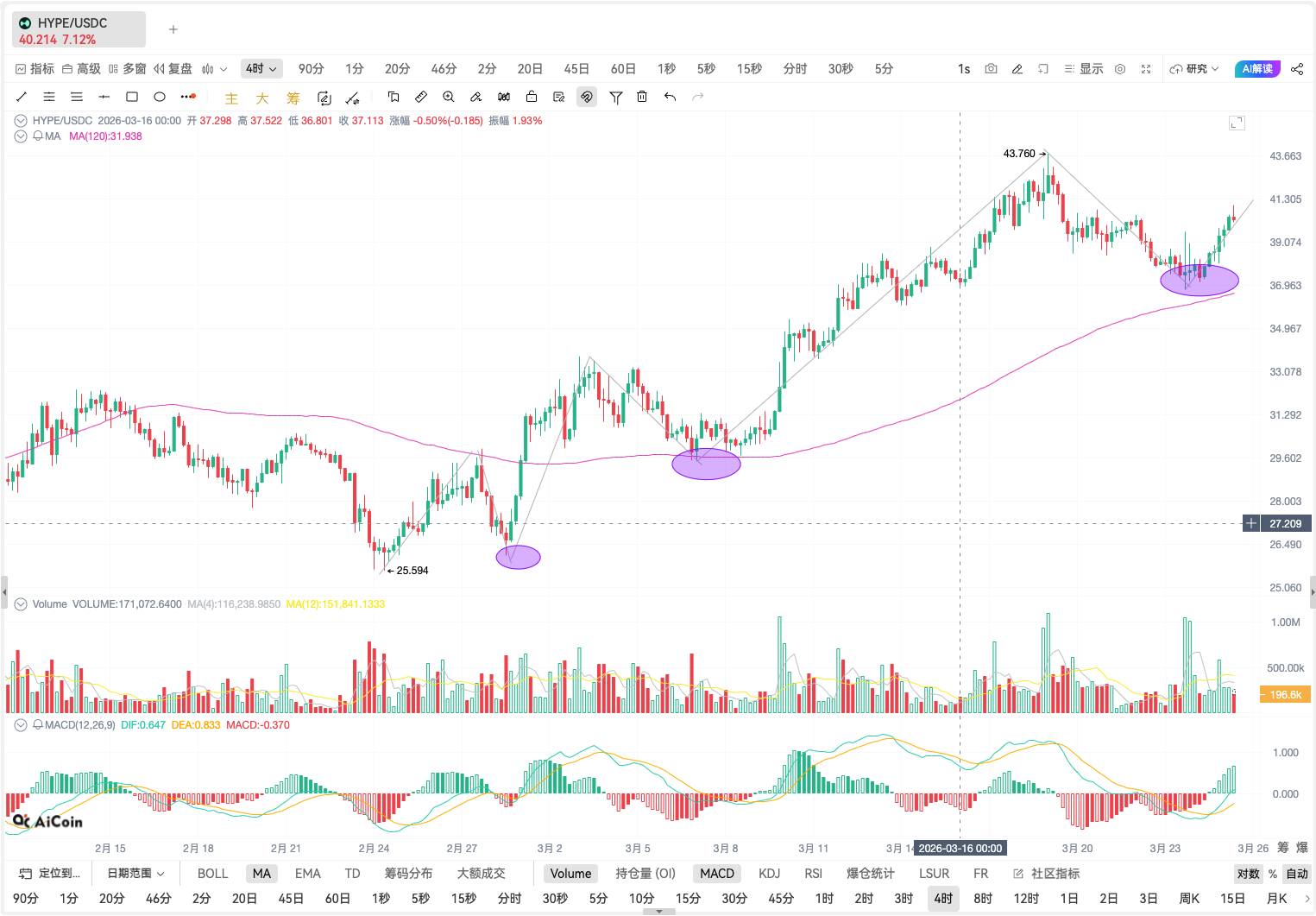
Based on information revealed on-chain and on trading pages, this anonymous address injected approximately 3 million USDC as margin into Hyperliquid, ramping the HYPE contract up to about 10x leverage, with the corresponding short position estimated at 226,000 HYPE tokens, carrying a notional value of about 9 million US dollars. In long-tail assets with limited liquidity, such a position is enough to become a key variable in price fluctuations, and the behavior itself will be amplified by the market as an emotional signal.
This is not the first time this address has bet on a HYPE short. Research briefs indicate that its previous round of short trading ended with a loss of approximately 197,000 US dollars, implying that this seems more like a continuous bearish trading route rather than a one-off gamble. Continuing to increase the position after consecutive losses while maintaining high leverage reflects a strong conviction in one's judgment, or rather, a significant disagreement with the mainstream market narrative.
Under the 10x leverage framework, even a double-digit percentage price increase can quickly erode margin, bringing the position close to the liquidation line. For assets like HYPE, which have limited liquidity and depth, any moderately concentrated inflow or outflow of funds can push the price toward these invisible liquidation zones. Once concentrated liquidations are triggered, sell or buy orders will be passively thrown onto the order book, further amplifying short-term price volatility, creating a chain feedback loop of "price—liquidation—more price volatility."
It is important to emphasize that the current details regarding this whale position primarily come from the tracking and organization of a single information source. Although key figures are generally consistent across different secondary channels, readers should maintain a degree of skepticism and safety margin when interpreting "specific liquidation price points" and "real-time profit and loss" as finer-grained information. Publicly revealed positions do not equate to full transparency; what we can confirm is the scale and direction of funds, rather than the absolute accuracy of every technical detail.
Expectations for Altcoin Recovery vs. Whale’s Bearish Stance
In contrast to this high-leverage short position is the growing market expectation of an altcoin rotation recovery. Institutions, including 10x Research, have stated in their reports that “the crypto market is at a critical turning point, where altcoins are beginning to dominate the market.” This assessment has been frequently cited in social media and research reports, becoming one of the underlying narratives for traders as they formulate strategies. As Bitcoin and mainstream assets undergo choppy consolidations, funds typically diffuse towards higher β, more imaginative altcoin directions as part of common cyclical rhythms.
At the same time, several mainstream institutions and research bodies are also discussing the possibility that "crypto assets are at a structural turning point": on one hand, the regulatory framework in the U.S. is becoming increasingly clear, and on the other hand, traditional financial infrastructures are accelerating their embrace of on-chain assets. This macro optimism starkly contrasts with the action of an anonymous address deploying millions of dollars as margin to apply 10x short pressure on a single altcoin variety, also making this position interpreted as a hallmark "countertrend bet."
From the standpoint of trading motivation, we can extrapolate several reasonable options: firstly, the whale may hold significant long exposures in other targets or spot holdings and hedge profits or achieve volatility neutrality by shorting HYPE; secondly, utilize price differentials across different platforms and products to engage in structural arbitrage, where the HYPE short is just one part of the arbitrage portfolio; thirdly, harbor pure pessimism about HYPE’s fundamentals and valuation level, believing that the current market capitalization pricing cannot be sustained. Of course, these remain at the possibility level, and research briefs have explicitly noted that the identity and true intentions of the whale remain unknown, and any narrative exceeding the data itself amounts to excessive interpretation.
On an emotional level, such a reverse large position is often seen by retail investors as "a target to bet on." Some traders will bet on "short squeezes," trying to push the price upwards in line with the rising trend, forcing the whale to cover, thereby generating greater upward momentum; another portion may choose to "follow the downtrends," interpreting the whale's short position as a more sober signal in the situation, and following its direction during a pullback. This group game around a single large position often amplifies initially neutral position information into a dual battleground of price and narrative.
SEC's Five Regulatory Categories: From Ambiguity to Structuring
Around the same time this betting occurred, the SEC of the United States released its five-category regulatory guidance for digital assets. According to a summary from research briefs, the core change in the new rules is that they no longer crudely view all related assets as the same regulatory subject, but instead, introduce a structured and tiered management framework through categorization. Tokens with different functionalities and risk attributes will be placed into their respective regulatory tracks, indicating that regulators have made more refined preparations at the toolbox level, while the market has also seen a clearer institutional outline for the first time.
Many market observers, including Alex Thorn, the head of research at Galaxy Research, pointed out that this marks a transition for the U.S. from "ambiguous rules" to "structured regulation." Previously, the main uncertainty many projects and institutions faced wasn't about whether they were willing to comply, but rather "not knowing how to comply or whom to comply with." When the regulatory framework moves from the abstract to an orderly structure, although compliance costs may not necessarily decrease, its predictability itself forms a kind of institutional dividend.
Concurrently, the U.S. Senate and White House reached a principle agreement on the regulation of related assets, signaling a subtle adjustment in Washington's overall attitude: no longer viewing this asset class simply through an antagonistic or exclusionary lens, but rather attempting to incorporate it into traditional financial order within a controllable risk framework. This does not imply that regulation will "loosen" but instead may indicate stricter compliance requirements. However, for participants who hope to attract institutional funds and establish long-term businesses, this represents a clearer competitive environment.
It needs to be clarified that the currently available information still lacks a specific effective date and detailed clauses of the SEC regulations. Research briefs also specifically remind us not to speculate or fill in any form regarding timelines or detailed aspects. Regarding trading and investment decisions, a more prudent approach is to view this guidance as an important signal that "the regulatory direction has been set," rather than an immediately effective event altering valuation or compliance status.
Global Regulatory Puzzle: From Custodial Selection to Tokenized Securities
The clarification of the U.S. regulatory framework is not an isolated event. Looking globally, several regions are accelerating their respective regulatory and infrastructure tracks, piecing together an increasingly complete compliance landscape. Research briefs mention that South Korea is advancing the selection process for custodial service providers for related assets; while the specific shortlisted names and timelines have yet to be disclosed, this very process indicates that local regulators wish to build a reliable compliance custody foundation ahead of institutional entry. For traditional institutions, custody is an absolute prerequisite before entering this asset class. Without a compliant and accountable custody system, most institutions would struggle even to discuss allocation ratios.
In capital markets, NASDAQ has been permitted to undertake tokenized securities settlement, indicating that traditional financial infrastructures are no longer satisfied with merely "watching from the sidelines." Instead, they are proactively migrating certain business forms onto on-chain or near-on-chain technological stacks. The approval of tokenized securities settlement implies that more traditional securities or assets will achieve clearing and settlement through tokenization in the future. This not only provides new tools for existing market participants but also builds a potential interconnected bridge between on-chain native assets and traditional securities.
These regional initiatives resonate with the clarity of U.S. regulations. On one hand, the U.S. has set a referential framework template for the world through regulatory classification; on the other hand, practical explorations by jurisdictions and institutions such as South Korea and NASDAQ in custody and settlement provide replicable pathways for the entire industry. Together, they form the macro backdrop of accelerating global regulatory and infrastructure "puzzle completion."
In such an environment, a clearer compliance path may open new institutional funding channels for high-quality projects in the altcoin sector: clear regulatory tags, reliable custody, and potential tokenized securities channels may all allow these projects to enter the vision of compliant portfolio managers. Meanwhile, the elevation of regulatory thresholds and information disclosure requirements will significantly compress the survival space for "story coins" and "air coins." The future polarization of the altcoin sector may become increasingly evident: assets passing compliance thresholds and fundamental tests will enjoy higher valuation premiums, while projects relying on short-term speculation, lacking transparency, and governance structures may find it increasingly difficult to survive under institutional dividends.
Game on the Price Battlefield: Displacement of High Leverage and Institutional Dividends
Returning to the specific target of HYPE, the presence of the whale’s high-leverage short position initially generates a series of cascading effects on the micro market structure. At the order book level, large shorts imply that concentrated sell orders or triggering orders may be present at critical price levels. Once touched, this may test short-term buying depth; in terms of funding rates, if shorts dominate the overall holding structure, funding on the short side may need to pay higher costs persistently, stimulating reversed funding to enter into the bet; while regarding open interest (OI), such positions may elevate the overall leverage level, making it easier for any directional price fluctuations to evolve into cascading responses.
If the HYPE price continues to rise, approaching or even breaking through the stop-loss or margin threshold potentially set by the whale, the resulting buying demand to cover shorts will overlap with the original long momentum, creating a typical short squeeze scenario: the price surges steeply in a short time, volume amplifies, and social media is flooded with narratives of "shorts liquidating" and "the whale being squeezed out of the market." Such a trend often attracts momentum funds and chasing buys, pushing the market away from fundamentals in the short term, exaggerating the irrational components of fluctuations.
Conversely, if HYPE enters a downtrend, the high-leverage shorts appear "safer" during the price weakening phase: as the unrealized profits expand, the whale can opt to gradually take profits or add to the position at key levels, further suppressing the price. For other participants, this "validated direction" signal will trigger an influx of additional shorts, compounded by panic sales from holders, creating another version of amplified selling pressure. In both scenarios, the whale's initial position plays a demonstration and guiding role.
From the perspective of the exchange's micro-mechanism, the design of the liquidation and clearing processes dictates how these large positions perform in extreme market scenarios: once massive leveraged positions are identified by the market as a "weather vane," retail and smaller funds will typically structure long and short strategies around potential liquidation price levels. Some attempt to "break through" these prices, creating a chain reaction of liquidations; others opt to lay in wait within liquidation zones, seizing opportunities for oversold rebounds brought about by systemic selling pressure. The public and narrative-focused exposure of whale positions transforms them from an ordinary account into a collective expectation anchor.
Ironically, these short-term fund games often occur against the long-cycle background of increasing clarity in regulation and infrastructure completeness. The same price curve ties one end to the medium- to long-term value reassessment of assets like HYPE amidst the regulatory, custodial, and tokenization waves; the other end is tied to the high-frequency games between whales and retail investors around liquidation price points. The rhythm of institutional dividends being released is typically slow and gradual, while the profits and losses of leveraged funds are measured in minutes and hours. This temporal dislocation is a core feature of the current crypto market structure.
Whales and the New Regulatory Order: Who Leads the Next Round of Markets
Shifting to a more macro perspective, we can observe: on one side, a certain anonymous whale is leveraging approximately 3 million USDC on Hyperliquid to operate a 10x short of HYPE valued at about 9 million dollars, continuing to increase the position after a previous short loss of around 197,000 US dollars; on the other side are the SEC's five-category new regulations for digital assets, a principled consensus in U.S. politics, and institutional movements such as custodial selections in South Korea and NASDAQ's tokenized securities settlement. These events emerge concurrently, sketching a clear dual narrative: short-term, the ongoing tug of war around a single asset, high leverage, and emotions; mid- to long-term, the slow reshaping of funding patterns and valuation systems by regulation and infrastructure.
In terms of judgment framework, one might use a simple segmentation: short-term, focus on the hedging game between leveraged shorts on HYPE and similar assets against market emotions, observing how funding rates, open interest, and liquidation data reflect upon price fluctuations; mid- to long-term, the key variables will be the rollout rhythm of regulatory classification, compliance custody, and the improvement of tokenized infrastructures, as they will determine which assets can truly gain institutional allocation weight and which tracks will be bolstered into "mainstream assets" by institutional dividends.
Meanwhile, it is necessary to alert readers to a common misconception: one should not mythologize the actions of a single whale as "absolute smart money." What is publicly visible is only the address and position, not all information. The whale may have undisclosed hedges, off-exchange contracts, or organizational arrangements. Equating its position with "insider" or "ultimate truth" does not hold statistically. For the vast majority of market participants, a more rational attitude is to treat these large positions as a sample, rather than the ultimate guide.
Looking ahead to the future of the altcoin sector, when elements such as regulatory clarity, compliance custody, and tokenized securities gradually come into place, the dominance of the market may slowly shift from extreme games represented by high-leverage whales to fundamentals and compliance premiums. Projects that can obtain a clear identity within the new regulatory framework, have verifiable cash flows or utility, and successfully integrate with traditional financial infrastructure will have a better chance of becoming the protagonists of the next cycle. Whales will still exist; leverage will not disappear; however, they will no longer be the sole narrative center. The true leaders of the next market round will likely be the "new order" shaped by both regulation and quality.
Join our community to discuss and grow stronger together!
Official Telegram community: https://t.me/aicoincn
AiCoin Chinese Twitter: https://x.com/AiCoinzh
OKX Benefits Group: https://aicoin.com/link/chat?cid=l61eM4owQ
Binance Benefits Group: https://aicoin.com/link/chat?cid=ynr7d1P6Z
免责声明:本文章仅代表作者个人观点,不代表本平台的立场和观点。本文章仅供信息分享,不构成对任何人的任何投资建议。用户与作者之间的任何争议,与本平台无关。如网页中刊载的文章或图片涉及侵权,请提供相关的权利证明和身份证明发送邮件到support@aicoin.com,本平台相关工作人员将会进行核查。