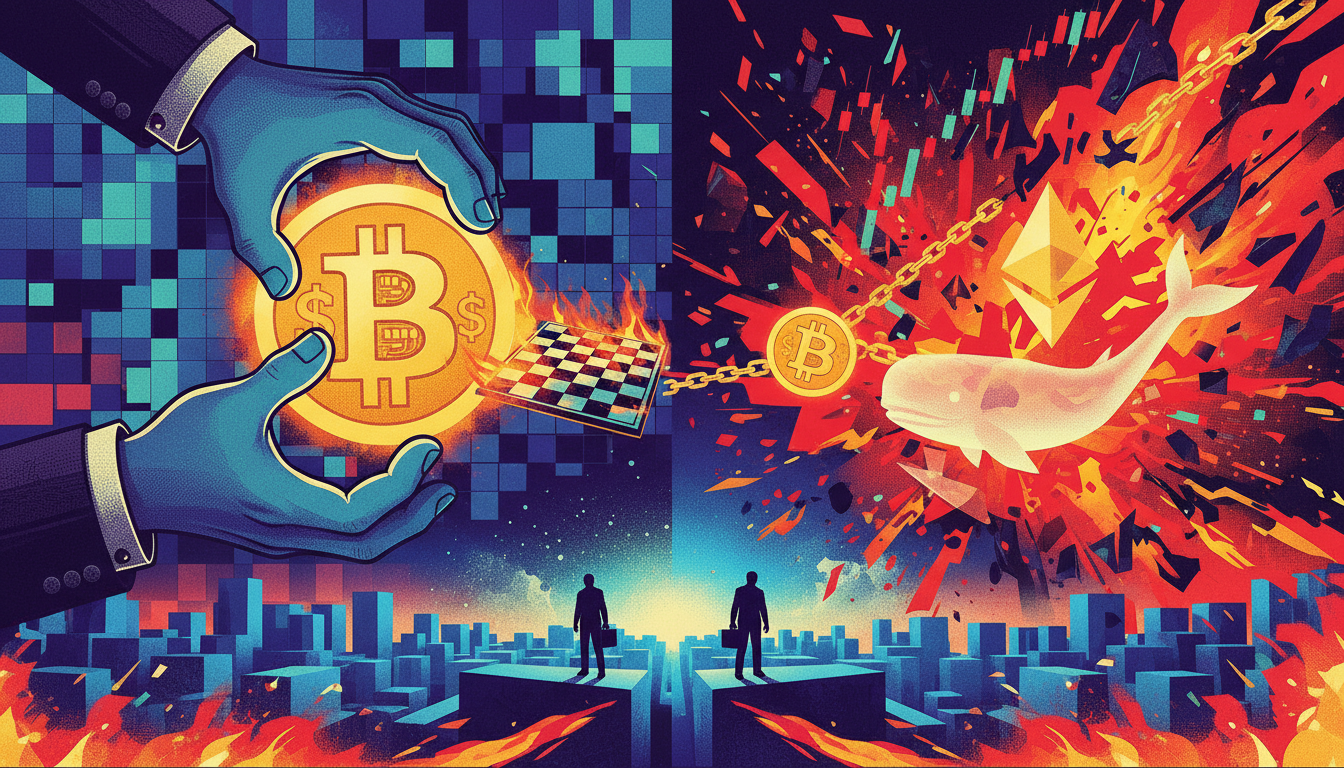
On March 20 at 08:00 UTC+8, a piece of on-chain tracking data tore open a new narrative in the Ethereum market during a retracement: an account widely regarded as associated with Erik Voorhees (0x102…1e781) accumulated 5,805.51 ETH within about 50 minutes, amounting to roughly 12.34 million dollars based on an average purchase price of 2,126.32 dollars/ETH at that time. This was not an isolated transaction; statistics show that since March 10, this address has been continuously accumulating during dips amidst a fluctuating environment with Ethereum generally in a pullback from its highs, with its ETH holdings now totaling 109,194.73 ETH, representing a nominal value of around 232 million dollars. While the market is generally discussing macro uncertainty, Middle Eastern risks, and oil price expectations, a participant known as a "Bitcoin veteran" has significantly bet on ETH with real money on-chain— is this an advance positioning for asset pricing in light of the Middle Eastern situation, or a long-term chip restructuring intertwined with macro narratives?
50 Minutes of Buying 5,800 Units: From Continuous Accumulation to Systematic Positioning
According to on-chain data, within a short span of about 50 minutes on March 20, the address 0x102…1e781 purchased a total of 5,805.51 ETH in batches, corresponding to an investment of over 12 million dollars. This pace was not characterized by aggressive operations that instantaneously crashed or surged on the K-line but was completed through a relatively restrained slicing approach, more like a concentrated execution with a preset price range. Coupled with prior records, since March 10, this address has appeared repeatedly on accumulation lists, almost stacking chips daily.
By the end of operations on March 20, the ETH holdings of this address reached a cumulative 109,194.73 ETH, valued at approximately 232 million dollars based on purchase averages and current valuation. In terms of scale, this is no longer an ordinary "whale trial position" but more akin to a structural position at the institutional level or by high-net-worth entities. Over the past ten days of continuous accumulation, this address has gradually moved from an ordinary large player to the forefront of on-chain ETH holders, with a clearly visible trajectory.
More noteworthy is that the average purchase price of 2,126.32 dollars/ETH falls precisely within a notable retracement range for Ethereum—prices have dropped from prior highs, while market sentiment has shifted from greed to a wait-and-see or even panic mode, with most participants opting to reduce positions or hold back. This counter-intuitive behavior amplifying chips is more characteristic of a typical systematic positioning: showing tolerance for price fluctuations, making pre-emptive judgments about cycles, and having an overall plan for positions.
Therefore, crypto media, including Deep Tide TechFlow, Odaily, etc., view this series of on-chain actions as a “significant signal indicating a bullish outlook on ETH in the medium to long term.” Planet Daily even directly stated: it is more like a veteran's renewed bet on Ethereum's medium to long-term value rather than operating based on short-term emotions, setting the stage for subsequent macro and narrative layer analysis.
From Bitcoin Flagbearer to Heavy ETH Holder: The Symbolic Significance of Narrative Displacement
In the early narratives of crypto, Erik Voorhees and Bitcoin were often depicted together. His early image in the industry was that of a staunch Bitcoin supporter and advocate of decentralization, publicly endorsing Bitcoin's currency attributes and liberal values multiple times, which also earned him a significant voice and symbolic meaning in early communities. Whether through entrepreneurial experiences or comments on regulation and the financial system, he has been seen as one of the important voices in the “Bitcoin camp.”
Thus, when the market widely considers 0x102…1e781 as “an address associated with Voorhees,” and this address has significantly increased its ETH holdings since March 2026, raising its positions to over 100,000 units, the contrast at the narrative layer is particularly striking: a traditionally defined “Bitcoin flagbearer” has his publicly visible on-chain chip focus significantly tilted towards Ethereum. This pivot from a single asset narrative to multi-chain betting is not merely about asset diversification but is sending a signal to the market—Ethereum's role is shifting from “the second choice outside Bitcoin” to “a core infrastructure asset in a multi-chain world.”
In market interpretations, this identity shift is more likely seen as a re-evaluation of Ethereum's medium to long-term position and narrative: on one hand, it acknowledges ETH as a composite asset of “currency + technology + infrastructure,” and on the other hand, it implies expectations for its continued expansion in sectors like DeFi, L2, and asset issuance. If Bitcoin is still regarded as digital gold, then such large-scale accumulation behaviors somewhat label Ethereum as “a high-beta technology base.”
It is essential to emphasize that Voorhees himself has never publicly confirmed the ownership of this address in the current events. The term “Erik Voorhees associated address” is more a public consensus formed by industry tracking, media, and community based on existing on-chain behaviors and historical association paths, rather than a legal name confirmation. All analyses in this article are based on publicly verifiable on-chain data and mainstream industry attributions, not on subjective speculation regarding personal private assets.
Strained Hormuz: Oil Price Expectations and Risk Asset Repricing
Extending the timeline to the macro level, March 20 is not an isolated on-chain date. On that day, traditional finance and geopolitical factors added new variables to the market: South Korea joined the G7's joint statement on the Strait of Hormuz, signaling escalation in geopolitical tension diplomatically. This transit route bears significant global crude oil transportation; once risks rise, energy price expectations will inevitably be repriced.
Against this backdrop, UBS adjusted its core forecast for future oil prices: increasing 2026 oil price expectations by 14 dollars to 86 dollars per barrel and raising 2027 expectations by 10 dollars to 80 dollars per barrel, explicitly assuming that the current conflict situation will likely persist until early April. These figures are not merely parameters for crude oil traders; they also imply a recalibration regarding global inflation and cost structure expectations for the next two to three years.
Geopolitical conflicts combined with rising energy costs will amplify the volatility of global risk assets through several channels: corporate profits being squeezed, uncertainty in interest rate paths, the rebalancing between safe-haven assets and high-risk assets—all of which may be forced to occur in advance. For those inherently volatile crypto assets, such macro shocks could bring short-term stampedes while also providing motives for medium to long-term hedging and asset reallocation—funds need to find a new balance between “anti-inflation” and “growth potential.”
In this context, the substantial ETH purchases that have gradually increased since March 10 seem more like a preemptive positioning for “anti-inflation, high-beta technology assets,” rather than a simple correlation to any specific news or diplomatic statement. We cannot and should not infer Voorhees's subjective views on oil prices or the Middle Eastern situation, but objectively, rising oil prices and inflation expectations will enhance market focus on assets with on-chain cash flow, application ecosystems, and technological iteration space, and Ethereum happens to be at this intersection.
DEX Under Currents: Shadows of Price Manipulation and Ethereum's Relative Safe Haven
Beyond macro, micro-level structural risks are also reshaping investor preferences for different chains and assets. Recently, an incident involving the Base network raised industry caution regarding decentralized trading microstructures: research pointed out that attackers leveraged certain protocols' propAMM and Flashblock structures to implement an operation path resembling “price manipulation” by manipulating quotes and matching microstructure, resulting in ordinary users experiencing increased trading costs unknowingly.
According to a report disclosed by the 0x protocol, these behaviors taking advantage of structural advantages may cause users to incur 5 to 10 basis points (bps) of invisible losses on each trade. While this may seem marginal per transaction, in high-frequency trading and long-term participation, this hidden slippage systematically erodes the earnings of regular users, damaging the overall trust basis of the DEX ecosystem: when on-chain trading experiences are deemed “opaque” and “exploitive,” users are more likely to cluster towards a few leading assets, top protocols, or even centralized platforms.
Such underlying micro-structural risks reinforce the relative safe haven attributes of “leading chains and assets”: compared to complex, hard-to-audit mechanisms on niche chains or small protocols, funds prefer to remain on the Ethereum mainnet and its surrounding blue-chip assets; on one hand, the maturity of the ecosystem and auditing resources are more concentrated, on the other hand, there’s a higher degree of compliance and institutionalization. Thus, when on-chain risks are amplified in discussions, Ethereum, in the eyes of many funds, presents a kind of “relative safe haven” role.
When this point is juxtaposed with Voorhees's long-standing image, a thought-provoking contrast emerges: he has always been an active advocate for decentralization and self-custody spirit, yet at the moment when trust fractures in the underlying structure of DEX are exposed, his associated address chooses to continuously enlarge its exposure to ETH. From a narrative perspective, this resembles a vote of confidence in the future repair and evolution capabilities of the Ethereum ecosystem—believing that issues will be exposed and corrected, trusting that leading public chains can gradually reduce the harm of such micro-structural “under-currents” to ordinary users through technological and governance iterations.
Funding and Narrative Interwoven: Who Is Increasing Their Chip Holdings Amidst the Retracement?
Overlaying significant on-chain accumulations, macro oil price increases, and geopolitical tension signals onto the same chart reveals a typical “surface panic, hidden accumulation” scene: at the price level, ETH is in a fluctuation range after a high retreat, with most retail investors feeling cautious or even pessimistic; in macro narratives, the situation in Hormuz is alarming, oil price expectations are rising, and inflation worries are re-emerging; while on-chain data show that some early players and heavily invested subjects are continuously accumulating during the retracement, quietly moving chips from emotionally sensitive hands into more patient accounts.
For institutions and veteran players, the appeal of ETH is not limited to the price itself; it incorporates multiple identities: part of it is a scarce asset with “digital currency” attributes, another part serves as a technology growth platform supporting DeFi, NFT, and L2, and a further part functions as the underlying infrastructure for future on-chain asset issuance and settlement. In this current phase, characterized by intertwined macro and micro variables, this composite role adds a lot of points for ETH on asset allocation lists, enabling it to be viewed as both a high-beta technology asset and part of the narrative of “hedging against inflation and fiat dilution.”
Thus, when media such as Planet Daily interpret this round of accumulation behavior as a “typical signal indicating a positive outlook for ETH in the medium to long term,” the path for the transmission of market sentiment becomes relatively clear: on-chain data is first captured by professional trackers, then spread through media and social networks, leading some retail investors to view it as a signal of “smart money entering,” thereby increasing their willingness to follow up with buying or reduce selling pressure. The narrative amplifies the influence of a single address's behavior in this process, creating a feedback loop between on-chain actions and price expectations.
However, it must also be pointed out that the on-chain behavior of a single large account can easily be interpreted in an exaggerated manner. Whether viewed as a “top signal” or as an “outflow of insider information,” it may fall into the trap of over-anthropomorphism. For ordinary investors, what is more important is not to replicate the buying and selling rhythms of a specific address, but to build a position and cyclical assumptions suitable for themselves, based on understanding the macro environment, on-chain structural changes, and their own risk tolerance, rather than treating “whale activity” as the sole guiding light.
Next Scene: If Oil Prices Rise to 86 Dollars, How Will Ethereum Be Priced?
If we follow UBS's assumptions further: under the premise that tensions in the Strait of Hormuz continue and conflict persists until early April, with oil prices rising to 86 dollars/barrel in 2026 and maintaining around 80 dollars/barrel in 2027, the global economy will face an environment of higher costs and longer inflation tails. For high-growth assets dependent on pricing models relying on risk-free interest rates and growth expectations, this is both pressure and a screening mechanism—those assets that carry technological innovation and possess scale network effects may have a better chance of surviving amidst multiple rounds of volatility and obtaining higher risk premiums.
In this macro script, ETH's role may further shift from “mainstream altcoin” to a technological base in macro narratives: on one hand, it generates weak connections with real economic activities and on-chain cash flow through forms such as transaction fees and staking rewards, possessing certain anti-inflation attributes; on the other hand, as the core infrastructure for smart contracts and application layers, it naturally remains highly sensitive to technological innovation and application expansion. Therefore, every re-evaluation of oil prices and geopolitical situations will to some extent reflect in the valuation of composite assets like Ethereum.
From this perspective, the so-called “Erik Voorhees associated address” continuously amplifying its ETH holdings during the retracement conveys two layers of signals: first, it acknowledges and adapts to the irreversible trend of multi-chain world by traditional Bitcoin factions; second, it is a renewed bet on Ethereum's long-term status as decentralized finance and on-chain economic infrastructure. Rather than mere speculation across different camps, it represents a reconstruction of the risk-return relationship between individuals and public chains on a higher dimension.
At the same time, we must remain restrained: currently publicly available information contains neither direct confirmation from Voorhees himself regarding the address ownership nor clear information on his individual investment motives. All forecasts regarding layout cycles and price targets can only be logically associated based on visible on-chain data and public macro variables, performed under relatively conservative premises, and cannot elevate to “definitive conclusions” or investment advice.
For every participant in this cycle, the more realistic issue is: amid the multiple resonances of rising geopolitical uncertainties, upward oil price trends, and exposure of DEX micro-structural risks, how to reassess one’s positions and cyclical judgments on ETH—do you see it as a short-term high-beta asset, or as part of a medium to long-term inflation hedge? Are you more concerned about volatility in the coming weeks, or the position of Ethereum within the entire crypto finance stack over the next few years? Before answering these questions, any simplistic imitation of “whale actions” hands over decision-making authority to others.
Join our community to discuss together and become stronger!
Official Telegram group: https://t.me/aicoincn
AiCoin Chinese Twitter: https://x.com/AiCoinzh
OKX welfare group: https://aicoin.com/link/chat?cid=l61eM4owQ
Binance welfare group: https://aicoin.com/link/chat?cid=ynr7d1P6Z
免责声明:本文章仅代表作者个人观点,不代表本平台的立场和观点。本文章仅供信息分享,不构成对任何人的任何投资建议。用户与作者之间的任何争议,与本平台无关。如网页中刊载的文章或图片涉及侵权,请提供相关的权利证明和身份证明发送邮件到support@aicoin.com,本平台相关工作人员将会进行核查。