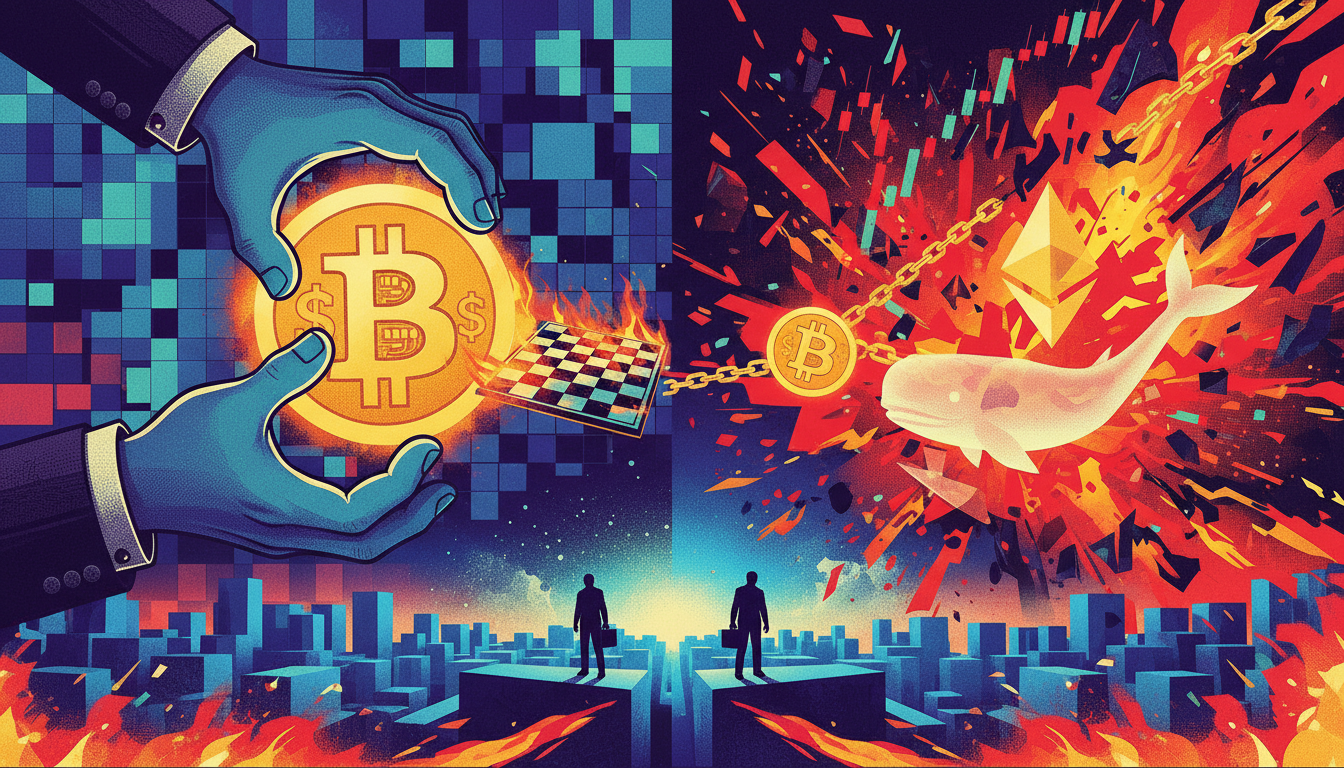
On March 20, 2026, Eastern Eight Zone Time, the military confrontation between the United States and Iran escalated once again. The United States announced the deployment of additional military forces to the Middle East, coinciding almost exactly with a hardline speech from Iran's Supreme Leader on the eve of Nowruz, further tightening already strained nerves. At such a moment, a bizarre scene unfolded in global assets: spot gold briefly fell to $4,550 per ounce, declining about 2.19% during the day, while silver plunged about 6% to $68.45 per ounce; the S&P 500 was down 1%, and the Nasdaq dipped 1.36%; the dollar index DXY rose 0.5% to 99.76; Bitcoin fell below the $70,000 mark.
The escalation of geopolitical conflict should have ignited the imagination for traditional safe-haven assets and "digital gold," yet on this day, the combination of falling gold and Bitcoin, a dip in U.S. stocks, and a strengthening dollar instead revealed the fragility of safe-haven narratives in the face of liquidity. This article unfolds along this unusual day: under the dual pressure of rising expectations for a Fed rate hike in December and escalating Middle Eastern tensions, how the market reassesses risk and how the roles of traditional and emerging safe-haven assets are being rewritten.
Middle East Tensions Heighten: Market Experiences Severe Displacement on the Same Screen
On March 20, the United States announced the deployment of additional military forces to the Middle East, signaling a "long-term preparation" for the situation. Almost simultaneously, Iran's Supreme Leader issued a hardline statement on the eve of Nowruz, choosing to make a strong public stance just before Iran's traditional New Year, which in itself carries a strong political symbolism—serving both as domestic mobilization and as a display to the outside world, hinting that this confrontation will not easily cool down.
As the news spread during trading hours, global asset prices seemed to be dragged by the same invisible hand: the S&P 500 fell 1%, the Nasdaq dropped 1.36%, as tech stocks came under pressure, and the overall risk appetite for U.S. stocks was quickly withdrawn; the dollar index DXY surged 0.5% to 99.76, with funds flowing back into dollar cash and short-term debt; meanwhile, gold, silver, and Bitcoin that should have been supported by the escalation of conflict all fell, with precious metals retreating at high levels and crypto assets breaching key thresholds, revealing a "breakage" in the safe-haven chain.
Geopolitical tensions typically correspond to the classic combination of "gold soaring, U.S. Treasuries strengthening, and risk assets retreating." However, this time, the escalation of conflict did not trigger a typical flight to safety; instead, it resulted in a disparate picture of "cash and dollar index rising + precious metals and Bitcoin all falling." This simultaneous decline on the same screen lays the suspense for the later discussion on whether safe-haven assets have "failed": the issue is not that gold or Bitcoin suddenly lost their safe-haven properties, but rather that the entire pricing system has been rewritten by macro liquidity and interest rate expectations.
Gold and Silver Lose at High Levels: Safe-Haven Funds Withdrawn by Liquidity Logic
That night, spot gold briefly fell to $4,550 per ounce, down about 2.19%, while spot silver exacerbated the decline, plunging about 6% to $68.45 per ounce. This magnitude and speed of correction, rather than being solely a reversal of sentiment, is better described as the crowded long positions from earlier being forced to collectively "exit" due to the catalyzing conflict. Since the beginning of this year, gold and silver have seen significant increases driven by inflation fears and expectations of rate cuts, with accumulated leverage and futures long positions laying a fragile foundation for this correction.
In a context of geopolitical tension, funds chose to reduce their holdings in precious metals, the core reasons being: on one hand, the earlier surge was too significant, and the concentrated leveraged positions made any uncertainty likely to trigger risk control and additional margin calls, forcing longs to close their positions; on the other hand, in an environment with overlapping conflict and rate hike expectations, institutions' preference for "cash flow and liquidity" is amplified, leading to the priority selling of assets that are "easily liquidated and still have book profits", causing gold and silver to naturally become the first chips to be liquidated.
From the perspective of fund flow, DXY surged 0.5% to 99.76, indicating that some safe-haven demand has not disappeared but instead shifted towards dollar cash and U.S. Treasuries, instruments with “no credit risk and easy position shrinkage”, rather than continuing to add to long positions in precious metals. This is a form of "life-preserving defense"—in times of high uncertainty, investors prefer to hide in short-term dollar assets rather than leveraging up on the already high-priced gold.
This also reminds us: in moments of panic, the market's first reaction is often to "cut the most easily liquidated assets" , rather than seeking the "perfect safe-haven" according to textbook examples. The short-term drop in gold does not imply that its long-term safe-haven logic has been overturned, but rather is a typical manifestation of liquidity constraints taking precedence over safe-haven attributes. In this moment, gold resembles a "collateral that can be cashed out at any time," rather than an unfaltering myth of perpetual price increases.
Bitcoin Falls Below Seventy Thousand: New Safe-Haven Narrative Exposes High-Beta Nature
Alongside precious metals, Bitcoin within the same trading day fell below the $70,000 mark, breaking both a price and sentiment threshold, delivering a direct blow to the "digital gold" narrative. $70,000 represents not only a significant technical support level but also symbolizes a "safety boundary" in the minds of many new investors; once breached, the sense of security for chasing the rally quickly evaporated, triggering more stop-loss and margin closings.
Despite the chaotic trading environment, some traders cautioned against equating short-term panic with a trend reversal. Trader Jelle pointed out that historically, Bitcoin bear market bottoms often accompany bullish divergences in the weekly RSI, and the current structure technically still displays similar characteristics. This perspective is not a statistical law but offers an important viewpoint: short-term price shocks and medium-term structural signals may misalign; in moments of panic, it is often leverage and sentiment that amplify fluctuations rather than the fundamentals themselves.
On-chain, institutional Twenty One Capital transferred 392 Bitcoins (about $27.67 million) to Bitfinex—this action carries multiple narrative possibilities: on one hand, funds entering exchanges are traditionally interpreted as "potential selling pressure," viewed as preparation for unloading on more liquid platforms; on the other hand, during periods of high volatility, it could simply be a preparation for hedging, arbitrage, or periodic rebalancing, or even reserving ammunition for "low bids to eat up liquidity." In short, a one-time large transfer itself does not point to a specific conclusion but serves as an emotional amplifier in the long-short battle.
More critically, in an environment where macroeconomic liquidity is tightening, expectations for Fed rate hikes are rising, and geopolitical risks are stacking up, Bitcoin’s pricing increasingly reflects the attributes of a "high-beta risk asset”—more sensitive to changes in risk appetite, exhibiting greater volatility, rather than acting as an "unconditional safe haven" in all situations. This does not negate its correlation with gold in specific cycles but reminds investors that "digital gold" is more of a phase-based narrative rather than a cross-cycle rule.
Geopolitical Conflict Coupled with Rate Hike Expectations: Dual Compression Reshapes Risk Pricing
On March 20, the market was not only digesting the situation in the Middle East but also re-evaluating the monetary policy path—the probability of a December rate hike by the Fed was repriced upwards, creating a "double head pressure" with interest rates and war. As investors worried about the Strait of Hormuz, oil prices, and supply chains, they were also forced to confront higher terminal rate expectations, and the "calculation" of asset allocation was rapidly rewritten.
Rising rate expectations mean increased risk-free returns, making U.S. Treasuries and other safe assets more appealing. This change directly compresses the discount space for U.S. stocks and other high-valuation assets like crypto: the present value of future cash flows is discounted, and "long-duration, high-growth, high-volatility" assets are the first to be reduced, thereby intensifying the selling impulse. Geopolitical conflict provides a "selling rationale," while rate hike expectations offer a "new valuation anchor"; together, they produce a more systemic characteristic of selling pressure.
Moreover, UBS analysts expect this round of conflict to last about 2 to 3 weeks, extending into early April, as the market begins "pre-paring pricing" for the potential blockade of the Strait of Hormuz and rising oil prices. Such expectations may not fully materialize, but they themselves are sufficient to raise investors' valuation discounts against future uncertainties—imaginings of cost pressures on the supply and consumption sides over a longer time frame are all included in the "discount table" of the market.
In this environment, safe-haven sentiment does not simply flow into one type of asset but presents a clear "dynamic redistribution":
● A portion of funds flows into cash, dollars, and short-term U.S. Treasuries to gain liquidity and nominal yield "safety";
● Another part maneuvers between U.S. stocks, high-yield bonds, and risk assets, attempting to buy the dip but being constantly constrained by higher rate expectations.
Safe haven is no longer a simple redistribution from risk assets to gold, but rather a continuous reallocation process between cash, dollars, short-term bonds, and various risk assets, which explains why we see "counterintuitive" phenomena like gold and Bitcoin dropping while the dollar strengthens on the same day.
Trump's Tough Talk and Iran's Timing: Posture Games Amplifying Risk Premiums
Beyond military and financial dimensions, political rhetoric is also driving up market risk premiums. Trump publicly stated that "Iran has no leader to negotiate with anymore," a harsh wording that almost extinguishes the imagination for "short-term reconciliation," further pushing concerns about "a loss of control escalation" to the forefront for investors. For the market, this is not merely an aggressive statement but a denial of the critical assumption of "is the negotiation door still open."
Placed against the symbolic backdrop of Nowruz's eve, the reverberating effect is even more pronounced: the Supreme Leader of Iran releases a hardline signal before Nowruz, demonstrating a political posture of "not backing down" to the domestic audience; meanwhile, Trump, from the opposing side, states that "there is no negotiating partner," and the overlap of both sends a message to global investors of a "scene where it is very difficult to sit at the negotiating table in the short term." This hedging in posture makes the already opaque future trajectory even harder to judge.
In the realm of public opinion and diplomacy, the U.S. and Iran are engaged in a typical "posture game": both sides, through tough rhetoric and public actions, strive for the high ground of narratives and ally support, while simultaneously retaining space for ambiguity in substantive actions. This state of "sounding fierce but with unclear bottom lines" poses the worst combination for the market—red lines become harder to define, and escalation thresholds become harder to predict, forcing the weight of "worst-case scenarios" in risk models higher.
In situations where true bottom lines and intentions are hard to clarify, investors often choose to reprice assets using a higher risk premium: requiring greater returns to hold risk assets or simply reducing positions and waiting on the sidelines. This uncertainty magnified through emotional channels is an important factor in the increased volatility during layered days of "geopolitics + interest rates" like March 20.
The Myth of Safe Haven Assets Cracking or Being Hijacked by Short-Term Liquidity?
Returning to the asset mix on this day: gold and Bitcoin falling together, U.S. stocks correcting, and the dollar strengthening seems like a collective mockery of the "safe haven asset myth," but in reality, it is a concentrated manifestation of "liquidity and risk management prioritizing over safe-haven attributes." As conflict escalates alongside rising rate expectations, institutions' primary task is no longer to seek the perfect hedge from textbooks, but to reduce leverage, increase cash holdings, and ensure flexibility even in worse scenarios.
It is important to note that the situation in the Middle East and the Federal Reserve's policy path are still evolving. The 2 to 3 week time window indicated by UBS suggests that at least during this period until early April, various imaginations surrounding oil prices, supply chains, and military actions may still amplify volatility. Short-term prices may not necessarily represent the end of long-term narratives, whether regarding gold's safe-haven role or Bitcoin's "digital gold" label, both are more likely to be temporarily obscured rather than permanently discarded.
For crypto investors, the takeaway from this event is that: whether Bitcoin can take on a safe-haven role greatly depends on the macro liquidity environment and holder structure. In periods of loose conditions, with institutions holding primarily for long-term allocations, its price is more likely to reflect characteristics of an "alternative reserve asset"; once entering a cycle of rising rate expectations with generally high leverage, Bitcoin's "high beta" nature will be amplified, and in a conjunction of war narratives and tightening policies, high volatility is almost a given rather than an exception.
Looking ahead, the market needs to focus on several main lines: first, whether the U.S.-Iran situation will evolve from words and postures to more substantive military conflicts, especially touching on energy and shipping routes; second, whether the Fed will marginally ease rate hike expectations in subsequent communications, thereby releasing some valuation space for risk assets; third, whether there will be continuous behavioral changes in large on-chain positions—whether institutional addresses like Twenty One Capital choose to gradually accumulate, engage in range trading, or distribute during rebounds will provide important clues for both bulls and bears.
In this script woven by geopolitics and monetary policy, no single asset can sustain a "mythical" linear role. What truly needs to be reevaluated is not gold or Bitcoin themselves, but investors' overly romantic expectations of the term "hedge."
Join our community for discussions and to become stronger together!
Official Telegram community: https://t.me/aicoincn
AiCoin Chinese Twitter: https://x.com/AiCoinzh
OKX Welfare Group: https://aicoin.com/link/chat?cid=l61eM4owQ
Binance Welfare Group: https://aicoin.com/link/chat?cid=ynr7d1P6Z
免责声明:本文章仅代表作者个人观点,不代表本平台的立场和观点。本文章仅供信息分享,不构成对任何人的任何投资建议。用户与作者之间的任何争议,与本平台无关。如网页中刊载的文章或图片涉及侵权,请提供相关的权利证明和身份证明发送邮件到support@aicoin.com,本平台相关工作人员将会进行核查。