On March 20, 2026, Eastern Eight Zone time, a mysterious wallet marked as “-human-” placed a bet of 220,000 USD on the decentralized prediction platform Polymarket regarding the direction of the Middle East situation, instantly raising the tension in the market on-chain. Meanwhile, Bitget launched an event with 3 XAUT rewards, BitFuFu disclosed a total revenue of 475.8 million USD, Ondo Finance announced that accessible assets on the platform surpassed 250 types, while the established trading platform Gemini found itself in a new collective lawsuit. These seemingly unrelated events were linked together by the same timestamp: on one side, capital was rapidly flowing into activity rewards, prediction markets, and RWA expansion, while on the other side, regulatory and legal pressures were simultaneously increasing on various business formats. This article attempts to trace how the prediction market and macro politics intertwine into a new narrative of crypto games, and how capital continuously chooses and migrates between risks and opportunities.
Mysterious Wallet's 220,000 Bet: On-Chain Amplified Anxiety Over the Middle East
As a decentralized prediction market, Polymarket's core mechanism breaks down real-world uncertainty into tradable contracts: users can buy shares in different directions regarding “whether a certain event will occur,” ultimately settling profits and losses based on real outcomes. It directly financializes the suspense originally belonging to geopolitics and public events into price curves, allowing people to bet on their judgments. At 03:20 AM Eastern Eight Zone time on March 20, the wallet marked as “-human-” placed a substantial bet of 220,000 USD in markets related to the Middle East situation, which stands out as a significant position on the platform and was quickly magnified by on-chain trackers as an “emotional signal.”
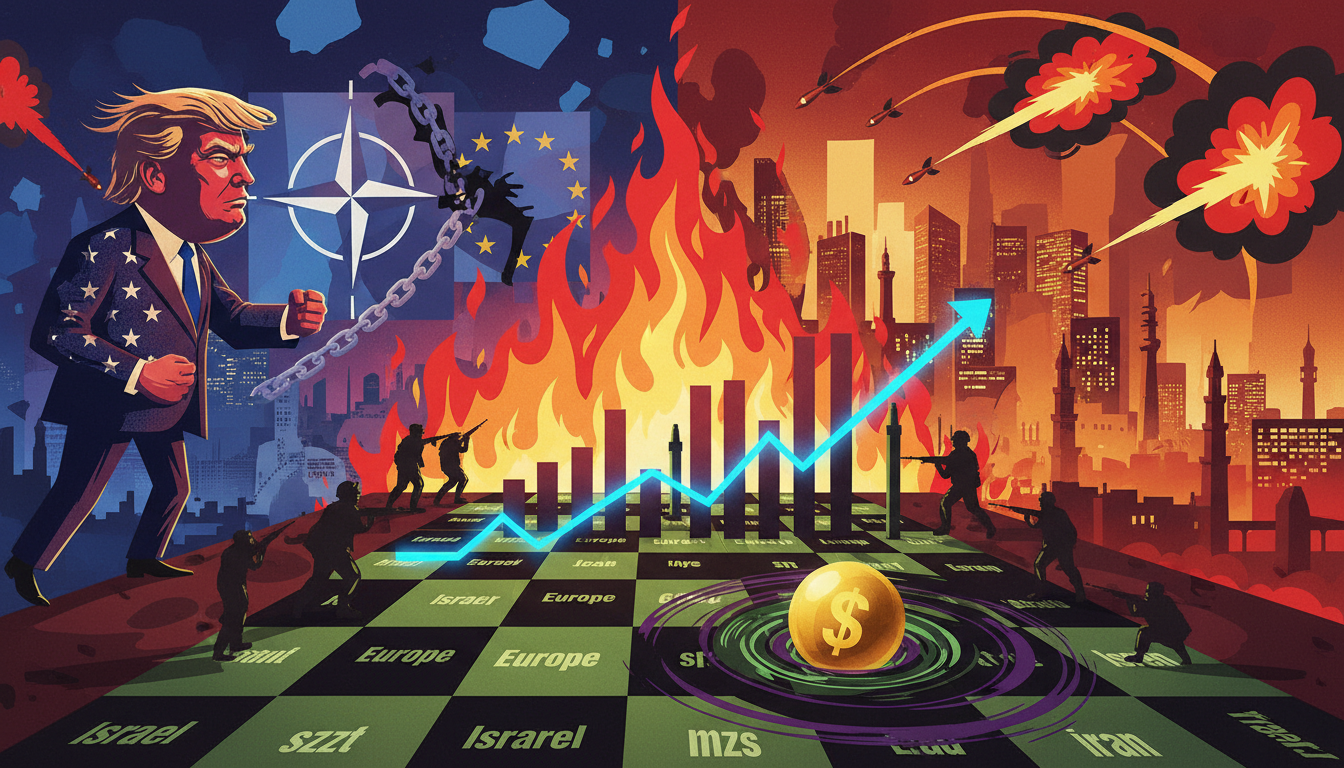
The uniqueness of this bet lies not only in the amount itself but also in the overlap of the timing and real narrative. On the same day, Arthur, CEO of DeFiance Capital, publicly stated, “There will be no cooling of the Middle East situation in the short term”, reflecting a resonance between this judgment and the aggressive bets on-chain: one is a macro viewpoint in a public setting, while the other expresses directional choice in real money on-chain. The market finds it challenging to determine who holds more information, but it is certain that prediction markets are becoming the intersection of sentiment, views, and capital. It is essential to emphasize that the true identity, background, and sources of information for the “-human-” wallet are entirely unknown; existing information is only sufficient to regard it as a representative sample of high-risk preference capital rather than confirmation of “insider funds.” Operating in a regulatory gray area, prediction markets turn the grayness of geopolitics into tradable targets, and such substantial bets crystallize global anxiety into cold numbers on-chain.
From Bitget Prize Pool to 5.49 Million HYPE: Capital Switching Between Three Modes
Synchronously with aggressive bets in prediction markets, centralized platforms are also igniting trading sentiment in a more traditional manner. Bitget launched an activity containing 3 XAUT as rewards, introducing the symbol of safe-haven assets into mechanisms for attracting new users and promoting activity through rewards tied to gold-pegged tokens. On one hand, such rewards amplify users' associations with a “safe base,” while on the other hand, they transform the originally conservative asset symbol into chips in platform traffic battles, attracting both existing and new capital to participate in tasks, trades, and staking.
On-chain provides another narrative of capital: research reports show that an address completed a large transfer of 5.49 million USD HYPE withdrawal. Such operations are often viewed as typical “short-term profit realizations” or chip redistribution: after the project's or sector's popularity rises, early holders withdraw their chips from on-chain or contracts to go off-chain or into other assets after a period of increase. From Bitget's activity rewards to HYPE's massive withdrawals, capital behavior rapidly shifts through three modes in a short time: first is a “participating in activities” type of low-risk bet, then a “chasing hot trends” type of high-volatility participation, and finally a “cashing out” type of realization and repositioning.
Underlying these actions is a complex psychological structure: concerning the prospects of the macro situation and geopolitical conflicts, there are clearly doubts among capital, with some participating by engaging in rewards linked to gold, retaining high liquid cash positions to hedge against uncertainty; however, in the face of short-term opportunities, the same capital exhibits strong greed, daring to participate in high-volatility tokens with large amounts and enduring drastic drawdown risks. The instinct for safety and high-risk preference coexist in the same group of participants, while the price and on-chain data in the crypto market are continuously rewritten in this tug-of-war of contradictory psychology.
BitFuFu Reveals 475.8 Million Revenue: A Lagging Barometer for the Mining Business
From a longer-term perspective, mining and computing power service companies provide another “market thermometer.” BitFuFu's business model focuses on providing mining and computing power-related services, with its revenue highly reliant on cryptocurrency asset prices, overall network hash power levels, and electricity and infrastructure costs. On March 20, 2026, Eastern Eight Zone time, BitFuFu disclosed that its total revenue reached 475.8 million USD, still showing expansion momentum despite a period of significant market volatility. This number reflects both the survival capability of top computing power companies during industry lows and indicates that mining hasn’t contracted comprehensively as worried by the outside world.
The revenue of mining companies is closely linked to cryptocurrency prices, overall network hash power, and electricity costs: when prices rise, mining gains and the number of new miners often increase in tandem, driving demand for miner sales and hosting; conversely, when prices downtrend coupled with high electricity costs, profit margins are compressed, squeezing out high-cost participants. The revenue figure disclosed by BitFuFu serves more as a “lagging validation” of past market conditions: it tells the market that the pricing and hash power structure of the previous phase was adequate to support leading service providers in maintaining their size or even expanding, but cannot automatically extrapolate the same degree of market conditions in the future.
In the backdrop of geopolitical tension and tightened regulation, mining companies face not only the cost game of electricity and equipment but also the rebalancing of financing channels, compliance pressures, and regional deployments. On one hand, they need to seek regions with more stable and relatively friendly policies to deploy computing power, avoiding sudden policy risks; on the other hand, traditional financing routes such as going public, issuing bonds, or attracting institutional investments require them to continuously “catch up” on information disclosure and compliance frameworks. For the computing power industry, future competition will not only be about who has cheaper electricity or more machines, but rather who can construct a living space that is recognized by capital markets while accommodating high-volatility business models amid complex regulatory environments.
Ondo Assets Surpass 250 Types: RWA Soaring Under Regulatory Spotlight
Unlike the mining business revolving around cryptocurrency price fluctuations, Ondo Finance represents another narrative thread: tokenizing real-world assets and distributing returns on-chain. As one of the representative projects in the RWA track, Ondo’s role is to break down traditional financial instruments like bonds, funds, or other income-generating assets into transferable token shares through on-chain carriers, enabling crypto users to directly allocate and trade on-chain. According to research briefs, the types of assets accessible on the Ondo platform have surpassed 250 types, while the total value of the entire RWA market has reached approximately 27.3 billion USD, drawing a profile of a rapidly expanding yet not fully defined track through these two figures.
The expansion of RWA is essentially dependent on the involvement and endorsement of traditional financial institutions, custodians, and compliance frameworks: audits, custody, and legal structures of underlying assets must be integrated within the regulations of the existing financial system. This means that compared to the more “decentralized” crypto narratives, RWA projects naturally stand at the center of regulatory scrutiny, reconstructing distribution and transactions with on-chain technology while being bound by layers of traditional compliance requirements. When scaling up to 27.3 billion USD, any risk management gap or legal dispute could rapidly amplify into a systemic risk event.
Bringing the perspective back to the prediction market mentioned at the outset, an interesting contrast can be observed: the prediction market trades real-world uncertainties and conflicts through contracts, allowing people to bet on probabilities; RWA, on the other hand, “on-chains” traditional assets, letting existing value flow anew on a new technological track. The former relies more on information gaps and risk preferences, while the latter leans heavily on compliance frameworks and institutional cooperation. However, both share a commonality of seeking incremental returns within the gaps of the real world: one bets on what may happen in the future, while the other revitalizes pre-existing assets. Capital traversing between these two paths is, in reality, answering the same question—where can relatively controllable returns still be found amidst a globally uncertain environment.
Gemini Faces Collective Lawsuit: Compliance Example No Longer Safe
In parallel with the compliance narrative of RWA, the recent situation of established trading platform Gemini has poured cold water on the market. As one of the early trading platforms emphasizing compliance routes, Gemini has long positioned itself as the representative of “rule followers” in market image, distinguishing itself from more aggressive platforms through licensing applications, compliance statements, and dialogues with regulators. However, according to research briefs, Gemini is currently facing a collective lawsuit; although specific details of the accusations and the composition of the plaintiffs have not been fully disclosed, this fact alone is sufficient to shake the simplistic narrative that “compliance equals safety.”
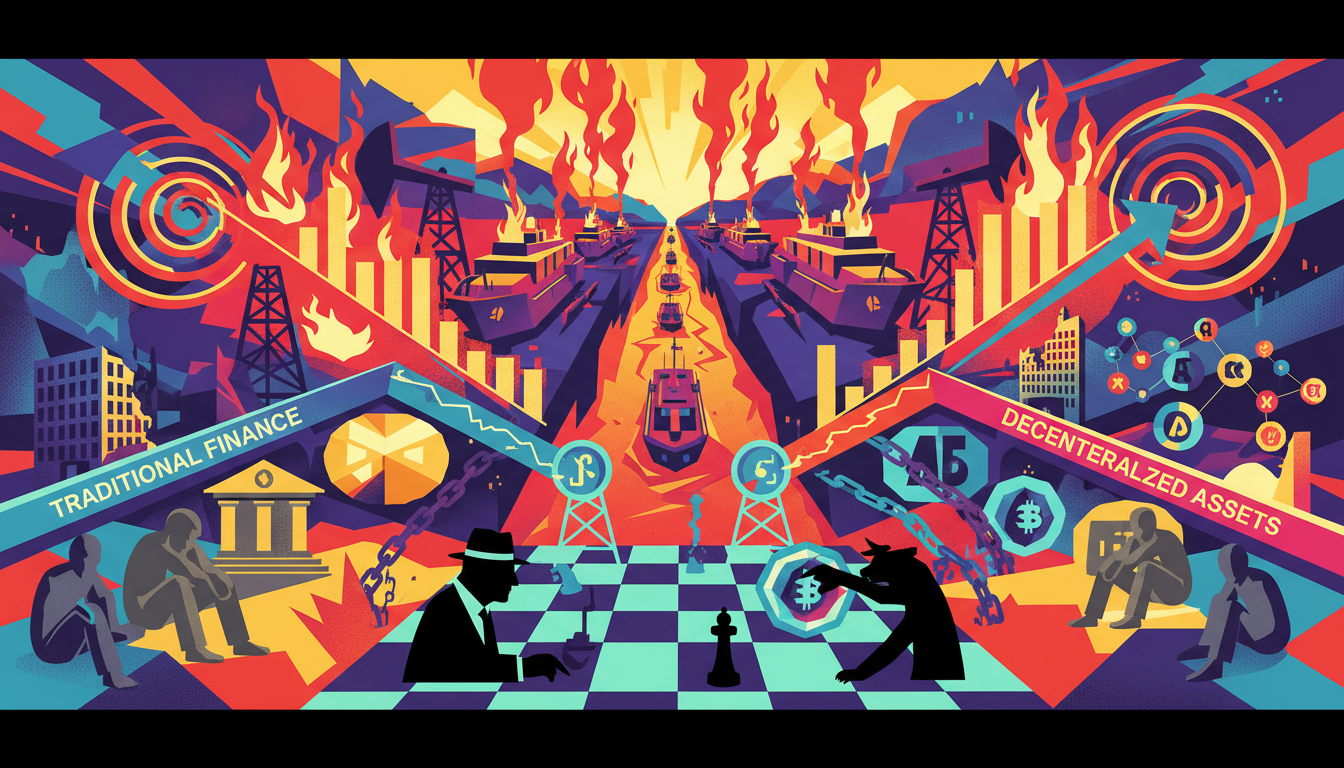
In the absence of complete information, it is challenging to make substantive judgments regarding this lawsuit, let alone theorize any clauses or liability structures. However, viewing Gemini’s legal pressures in conjunction with the previously mentioned RWA compliance requirements and the gray areas surrounding prediction markets allows for a clearer perception that the regulatory network is tightening simultaneously across various business lines: on one end are platforms like Polymarket, which bet on real events while long operating on the regulatory edge; on the other end are RWA projects deeply connected with traditional institutions that inevitably face requirements to align with securities and fund regulations; and even the so-called “orthodox” compliant exchanges find it difficult to completely extricate themselves from lawsuits and investigations.
This raises an unavoidable core question: in an environment where the frequency of regulations and lawsuits is rising, will platforms choose to scale back on innovation and retreat to conservative business models, or will they continue to open new paths while strengthening compliance? This choice is likely to become a pivotal dividing line for the industry landscape in the coming years. For users and institutional funds, compliance commitments are no longer a singular dimensional “amulet,” but rather resemble a dynamic contract that requires continuous updates and is subject to potential legal challenges at any time.
Between Chips and Gavel, Who Decides the Next Step
Looking back at the events linked together on this day: the mysterious wallet wagered 220,000 USD on Polymarket for the Middle East situation, Bitget activated trading sentiment with a 3 XAUT prize pool, and an address cashed out chips via a 5.49 million USD HYPE withdrawal; on the other side, BitFuFu proved that the computing power business is still operational with 475.8 million USD in revenue, Ondo Finance expanded platform assets to 250+ types, pushing the scale of the RWA track to 27.3 billion USD, while Gemini's collective lawsuit reminded everyone that the shadow of law and regulation is thickening. These fragments piece together a panorama of market enthusiasm and regulatory risks simultaneously escalating: chips are flowing rapidly between activities, tokens, and contracts, while gavel strikes are increasingly frequent across different business forms.
The overarching narrative throughout the article is how capital seeks new sources of returns amidst an uncertain macroenvironment, leveraging tools like prediction markets and RWA, while repeatedly colliding with regulatory red lines both domestically and abroad. Polymarket and the RWA track “on-chain” real-world conflicts and assets in different ways; BitFuFu and Bitget demonstrate the high dependency of trading and computing power businesses on price and sentiment, while Gemini's case reveals that even institutions parading under the “compliance” banner can hardly circumvent legal risks. In such an environment, any singular political event or short-term price direction is insufficient as a basis for judging the industry’s trajectory; what truly bears significance will be how compliance frameworks in various jurisdictions are implemented, how the execution standards evolve, and whether institutional funds are willing to continue increasing their stakes under this new set of rules.
For individual participants, facing similar on-chain large bets, platform expansions, or new track eruptions, it is essential to understand both the stories and numbers while also discerning the underlying legal and regulatory boundaries. Viewing high-risk prediction markets as “certain opportunities” or simplistically equating RWA and compliant platforms, which are under regulatory focus, to “risk-free returns,” may lead to serious misjudgments. Between chips and gavel, what can truly protect participants is not a singular narrative but rather a calm recognition of structural risks and a sense of boundaries.
Join our community, let's discuss and become stronger together!
Official Telegram community: https://t.me/aicoincn
AiCoin Chinese Twitter: https://x.com/AiCoinzh
OKX Benefits Group: https://aicoin.com/link/chat?cid=l61eM4owQ
Binance Benefits Group: https://aicoin.com/link/chat?cid=ynr7d1P6Z
免责声明:本文章仅代表作者个人观点,不代表本平台的立场和观点。本文章仅供信息分享,不构成对任何人的任何投资建议。用户与作者之间的任何争议,与本平台无关。如网页中刊载的文章或图片涉及侵权,请提供相关的权利证明和身份证明发送邮件到support@aicoin.com,本平台相关工作人员将会进行核查。