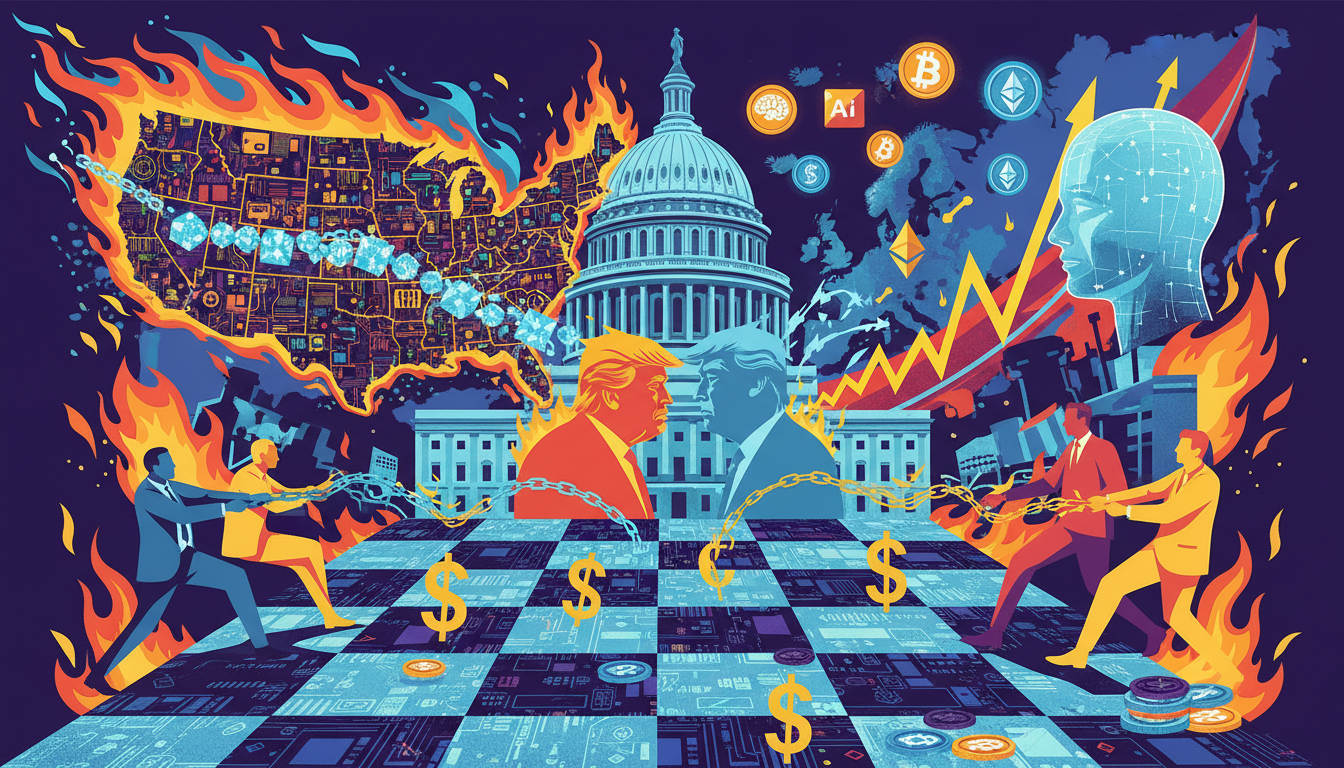
On March 20, 2026, at 8:00 AM Beijing time, global asset prices were violently fluctuating on the same screen: U.S. stock index futures fell before the market opened, European and UK bond market yields soared, while Bitcoin quickly retreated to around $70,547 after breaking the $71,000 threshold. The simultaneous surge and drop of the stock market and crypto assets, combined with the UK’s 10-year government bond yield skyrocketing to its highest level since 2008, pulled the market back to the old question of "how long can high rates last?" In an environment where traditional equity and bond asset valuations are under pressure and macro uncertainties are worsening, is Bitcoin and the broader crypto assets regarded as a new safe haven by the market, or will they act as amplifiers of risk in the next round of volatility?
Wall Street futures turn from green to red: the starting point of risk repricing
Before the market opened on March 20, the optimistic sentiment built on easing expectations was repressed by the shadow of high rates: S&P 500 futures fell 0.5%, NASDAQ 100 futures fell 0.72%, Dow Jones futures fell 0.49%. The tech-heavy NASDAQ futures led the declines, responding first to the rising discount rate. The synchronous adjustment in the futures market indicates that capital began to reset positions and risk budgets for "longer high rates" even before the formal opening.
This round of global risk asset reassessment was driven not only by the expectations of U.S. monetary policy. According to reports from Jinshi Data, traders almost fully expect the European Central Bank to raise rates three times this year. Although the market did not receive any specific timetable or path details, such a "clear direction but unknown rhythm" expectation was enough to raise the speculative space for global rates’ terminal point and duration. In the models, the equity risk premium is forced to compete with higher risk-free rates, compressing valuations in both European and U.S. stock markets.
A more tangible shock came from the UK bond market: The UK 10-year government bond yield rose to its highest level since 2008, essentially raising an important risk-free rate anchor within the global pricing system. For global asset management institutions, U.S., European, and UK bonds are interchangeable items on the same asset allocation report; the overall rise in the UK yield curve forces portfolios to reassess between "bonds offering higher rates" and "stocks with higher valuations." The result is that U.S. stock futures are guided by the dual signals of European Central Bank expectations and UK bond yields, completing the first round of adjustments before the market opens.
On this interconnected rate map, U.S. stocks, European bonds, and UK bonds are not isolated events, but rather a chain reaction of repricing in a "high-rate world." The European Central Bank is widely expected to continue tightening, UK long-term bond yields stand at an 18-year high, and the U.S. faces inflation stickiness and fiscal deficit pressures, collectively issuing the same command to global risk assets: the margin for error narrows, and the premiums for duration assets and overvalued assets must be recalculated. This also explains why, behind what seems to be only a few percentage points of stock index corrections, the shift in funding sentiment appears particularly profound.
Bitcoin retreats after surpassing $71,000: correlations are being rewritten
In contrast to the uniform decline of stock index futures, Bitcoin independently experienced a round of "upward surge + pullback" during the same period. On March 20, driven by bullish sentiment, Bitcoin's price broke above $71,000, then retreated to around $70,547 amid profit-taking at high levels and macro risk sentiment. From the day's fluctuations, Bitcoin did not follow the synchronous drop of U.S. stock futures but instead displayed a relatively strong rhythm of rising before moderating.
This contrast gradually weakens the simplistic analogy of "Bitcoin = high beta tech stocks" in traditional markets. In the past, under the pressure of the Federal Reserve's interest rate hikes and shrinking risk appetite, Bitcoin often moved in high correlation with the NASDAQ. However, in this pricing round on March 20, while tech stock futures retraced their gains, Bitcoin remained above $70,000, showing that the correlation with macro risk sentiment is being rewritten. Capital is no longer simply viewing it as an extension of high-risk tech stocks but is oscillating between the narratives of "currency" and "asset."
Under the dual pressure of inflation stickiness and the permanence of high rates, the real returns on traditional savings and bonds have quietly eroded, and some liquidity has started seeking assets that can hedge against the decline in monetary purchasing power. Beyond gold, Bitcoin has become an option considered by increasingly more funds—whether from its fixed issuance cap's supply logic or its 24-hour liquidity and global accessibility features, it possesses the potential of a "hedge tool." For many investors, even with short-term price volatility, as long as it can outpace real-world inflation and nominal interest rates in the medium to long term, it serves as a piece of the puzzle in asset allocation.
This also explains why, under the market sentiment of "high rates for longer," Bitcoin has not been ruthlessly sold off as it was during the last tightening cycle. Increasingly more medium to long-term funds see it as a macro hedge tool rather than purely a speculative chip: in the expectation of the permanence of high rates, Bitcoin is slowly shifting from being a high-risk speculative target to a role of "digital gold" and "currency devaluation hedge." Correlations won't reverse overnight, but the price performance on March 20 has quietly added new evidence to this narrative.
Oil price and inflation anxiety: a chain reaction from gas stations to exchanges
Macroeconomic narratives ultimately affect each family's daily budget. A recent poll in the U.S. showed that 55% of American adults said rising gas prices have impacted their household finances. This means that over half of households perceive inflation through actual gasoline costs and commuting expenses, not just through CPI reports or official statements. The numbers on gas station signs, with every upward adjustment, are squeezing savings and disposable income, changing their consumption and investment choices.
In the face of rising public discontent, the U.S. Treasury is also planning new tools for negotiation. The U.S. Treasury Secretary is discussing releasing strategic petroleum reserves and considering exempting Iranian tankers from some sanctions, intending to cool oil prices by increasing supply and alleviating geopolitical constraints. As the related proposals are still in the discussion phase, the market does not yet have specific terms and execution paths for pricing, but this already reflects the sensitivity of policymakers to high oil prices—inflation is not only a macro variable but also directly related to votes and social stability.
The ongoing rise in living costs has a noticeable structural impact on retail investment preferences. When traditional savings rates are insufficient to offset the rising costs of expenditures, and the stock market struggles to provide excess returns in a high-rate environment, some young people and low to middle-income groups begin to seek "turnaround chips" through higher volatility assets. High-elasticity assets like Bitcoin are being re-evaluated in this psychological context: they are no longer just chips in a speculative game but are considered "opportunity assets" that can significantly alter personal balance sheets in one or two market rounds.
This also leads to fluctuations in energy prices and inflation expectations more directly affecting the flow of funds in the crypto market. When rising oil prices drive up living costs and squeeze savings, part of the funds that might have flowed into the stock market or traditional financial products will be involuntarily reduced; while another part of the risk-tolerant capital will migrate from traditional assets to the crypto market in search of high-risk, high-return hedges. Policy interventions attempt to set a "ceiling" on oil prices, inadvertently installing amplifiers for asset price volatility: every significant fluctuation in oil prices could reflect a rapid inflow and outflow of funds in the crypto market.
AI job displacement and employment shadows: simultaneous risk imagination and opportunity bets
If inflation and oil prices create short-term pressures, then artificial intelligence is shaping a more distant and uncertain medium to long-term landscape. According to Goldman Sachs, artificial intelligence may put as many as approximately 300 million jobs at risk. This figure does not imply an immediate wave of unemployment, but it plants long-lasting doubts about career stability and income ceilings in the minds of the younger generation: expected earnings from traditional career paths are being downgraded, while opportunities and threats arising from technological changes are being amplified.
In the capital markets, this uncertainty is packaged into another extreme—AI narratives have pushed tech stock valuations higher, while also raising the risks of systemic bubbles. Wall Street is chasing the profitability imaginaries of AI-related companies while being forced to re-evaluate discount rates under the Federal Reserve and European Central Bank's interest rate hike expectations. From NVIDIA to cloud computing, from algorithm companies to computing infrastructure, the price elasticity of AI-related assets is increasing, with bull market narratives coexisting with bubble fears, where any macro bearish signal could trigger a chain sell-off.
Amidst the insecurity surrounding employment and income, young people's attitudes toward asset allocation are quietly changing. For many, the linear accumulation from stable jobs is insufficient to counteract the triple pressure of inflation, debt, and technological displacement, leading them to be more willing to bear higher volatility in assets to strive for identity transitions. From U.S. stock options to crypto assets, and various high-leverage products, an increasing amount of capital is actively or passively flowing into high-risk tracks, making Bitcoin a significant recipient of this force.
Within this macro structure, the AI revolution and the rise of crypto assets are not two parallel lines but interwoven dual narratives. On one hand, the technology and capital concentration driven by AI has exacerbated societal divisions in the definition of "safe assets": for some, traditional jobs and bonds are no longer safe; on the other hand, crypto assets are viewed as "opportunity assets" due to their high elasticity and high uncertainty, becoming tools that can significantly change personal wealth trajectories within a single cycle. The market fluctuations on March 20 are just a slice of this cognitive reshaping process.
8,000 phones and $580 million: tightening regulatory lines in the crypto order
Beyond macro pricing, security and compliance are becoming another key pivot in the structural changes in the crypto market. Recently, a joint law enforcement action by the FBI and Thai police seized 8,000 phones and froze approximately $580 million in cryptocurrency assets. Although the specific projects and exchanges involved have not been disclosed, the scale of the seized devices and the frozen amounts suggest that this operation has created substantial deterrence against on-chain money laundering, fraud, and cross-border capital transfer behaviors.
For grey and black businesses accustomed to using crypto assets for concealed transactions, such large-scale law enforcement cases send a clear signal: on-chain fund flows are not completely "traceable," and advancements in judicial cooperation and on-chain analysis tools are compressing their survival space. Meanwhile, compliant exchanges and project parties gain indirect endorsements through this process—the more actively they cooperate with regulatory and judicial bodies, the more likely they are to benefit in the next round of industry rectification, while those that do not face costs for historical legacy issues.
At the industry self-regulation level, the global Web3 security firm CertiK announced it would submit an anti-fraud commitment at the 2026 United Nations Global Anti-Fraud Summit, attempting to stand alongside multilateral organizations to promote a set of industry standards covering project review, contract security, and user protection. Although the specific technical terms of the commitment document have not been made public, this action symbolically indicates that more and more native players, from on-chain security firms to auditing bodies, are willing to position themselves within the global anti-fraud discourse system rather than remain confined to the role of "technical service providers."
As both regulatory and self-regulatory lines tighten simultaneously, the "security red line" in the crypto world is being redrawn. In the short term, this high-pressure environment may bring emotional disturbances: some grey funds may be forced to withdraw, investors with a strong preference for anonymity may reduce their participation, and individual assets may experience liquidity pressure. However, in the medium to long term, stricter law enforcement and clearer compliance frameworks are likely to alleviate institutional funding concerns—when compliance boundaries are clarified, and the costs of illegal activities are significantly raised, large institutions find it easier to explain their crypto allocation logic to boards and regulators. This "short-term bearish, long-term bullish" structural contradiction will continue to shape the inflow and outflow rhythm of crypto funds for some time.
The crypto proposition in the era of high rates: oscillating between hedging and amplification
In summary of the market picture on March 20: on one side, S&P 500, NASDAQ 100, and Dow futures retraced 0.5%, 0.72%, and 0.49% respectively, while UK 10-year government bond yields reached their highest level since 2008, and oil prices and inflation anxieties continued to ferment at gas stations and in household budgets; on the other side, Bitcoin broke above $71,000 yet remained above $70,000, demonstrating unexpected resilience relative to traditional risk assets. Together, these fragments paint a new picture: under high rates, inflation, and regulatory pressure, crypto assets have not simply become the sacrificial victims of risk sell-offs but are oscillating between safe haven tools and risk amplifiers in search of balance.
The policy interplay between Europe and the U.S. provides a macro backdrop for this picture. The European Central Bank is expected to continue raising rates, while the U.S. is struggling to balance inflation and fiscal constraints; the interest rate paths in both regions influence not only equity and bond valuations but also affect Bitcoin and broader crypto asset cyclical rhythms through monetary expectations and capital flows. Meanwhile, energy prices are repeatedly tugged between strategic reserves and geopolitical negotiations, and the AI revolution is creating new fractures between tech stock bubbles and increasing employment uncertainties—these long-term variables overlap, collectively shaping a more volatile and fragmented narrative in the crypto cycle.
In an environment where regulation and institutionalization go hand in hand, the role of crypto assets is bound to be complex rather than one-dimensional. On one hand, more frequent law enforcement actions and stricter compliance requirements may periodically amplify risk events, causing them to act as "risk amplifiers" in certain contexts; on the other hand, as the macro monetary environment is reshaped by persistent high rates and inflation, the narrative of Bitcoin as a "hedge against currency devaluation" may repeatedly be invoked by the market, becoming an anchor for funds seeking stability in turbulent times. In this oscillation, no one can simply conclude that "Bitcoin has become an absolute safe-haven asset."
For investors, a more realistic takeaway is: in the high-rate era, crypto assets must be reevaluated within the macro and regulatory frameworks rather than being simplistically categorized as safe-haven assets based solely on price spikes. Interest rate paths, inflation trends, regulatory actions, and law enforcement rhythms all transmit to Bitcoin and the broader crypto market through risk preferences and liquidity channels; the relationship between assets and narratives will also be continually repriced as these variables change. In such a world, what truly deserves vigilance may not be volatility itself, but rather an over-reliance on a single narrative.
Join our community to discuss together and grow stronger!
Official Telegram community: https://t.me/aicoincn
AiCoin Chinese Twitter: https://x.com/AiCoinzh
OKX Benefits Group: https://aicoin.com/link/chat?cid=l61eM4owQ
Binance Benefits Group: https://aicoin.com/link/chat?cid=ynr7d1P6Z
免责声明:本文章仅代表作者个人观点,不代表本平台的立场和观点。本文章仅供信息分享,不构成对任何人的任何投资建议。用户与作者之间的任何争议,与本平台无关。如网页中刊载的文章或图片涉及侵权,请提供相关的权利证明和身份证明发送邮件到support@aicoin.com,本平台相关工作人员将会进行核查。