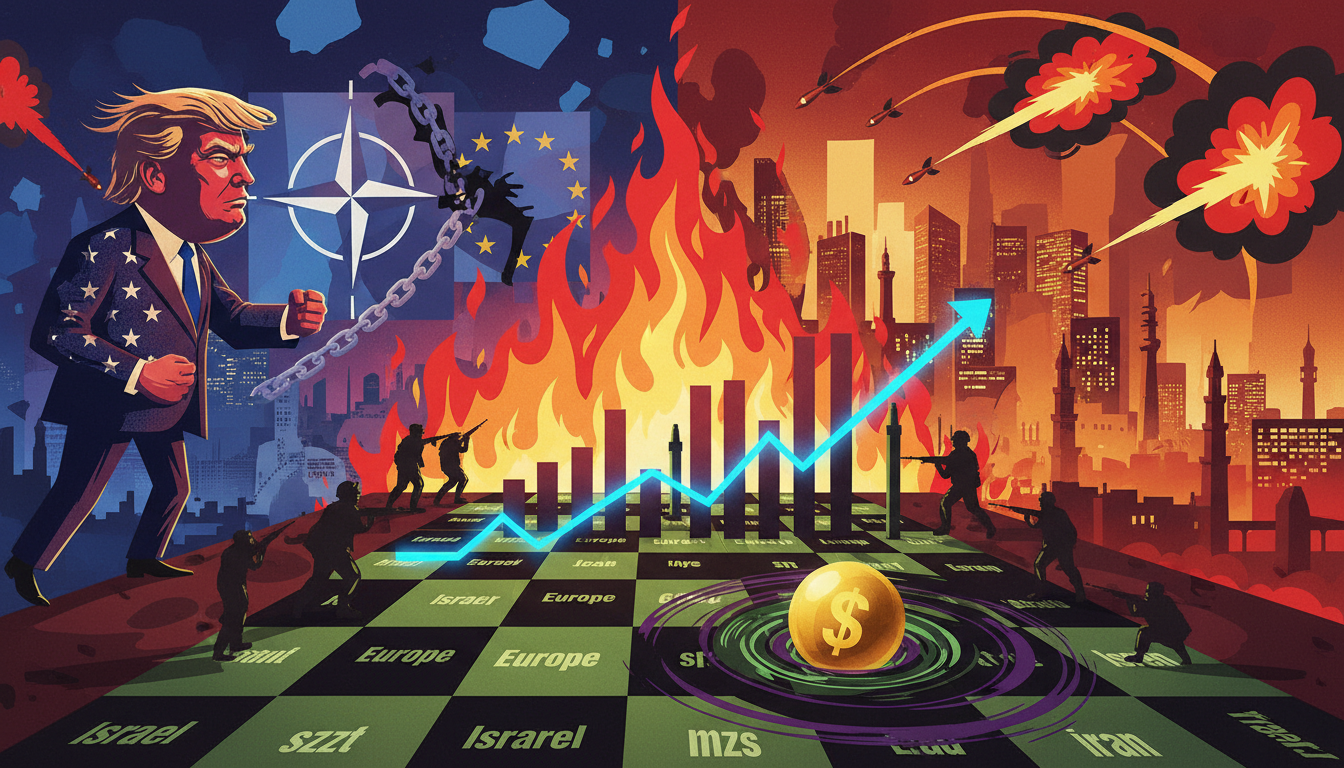
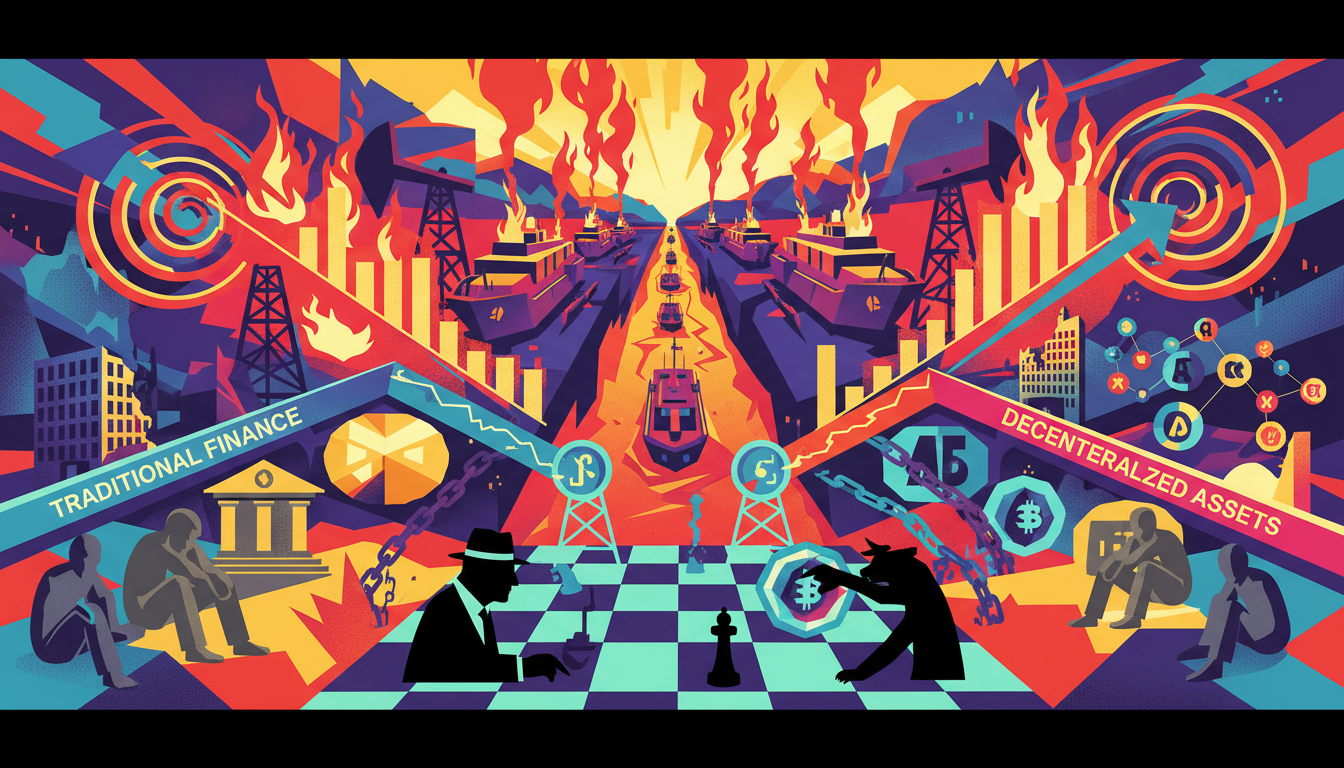
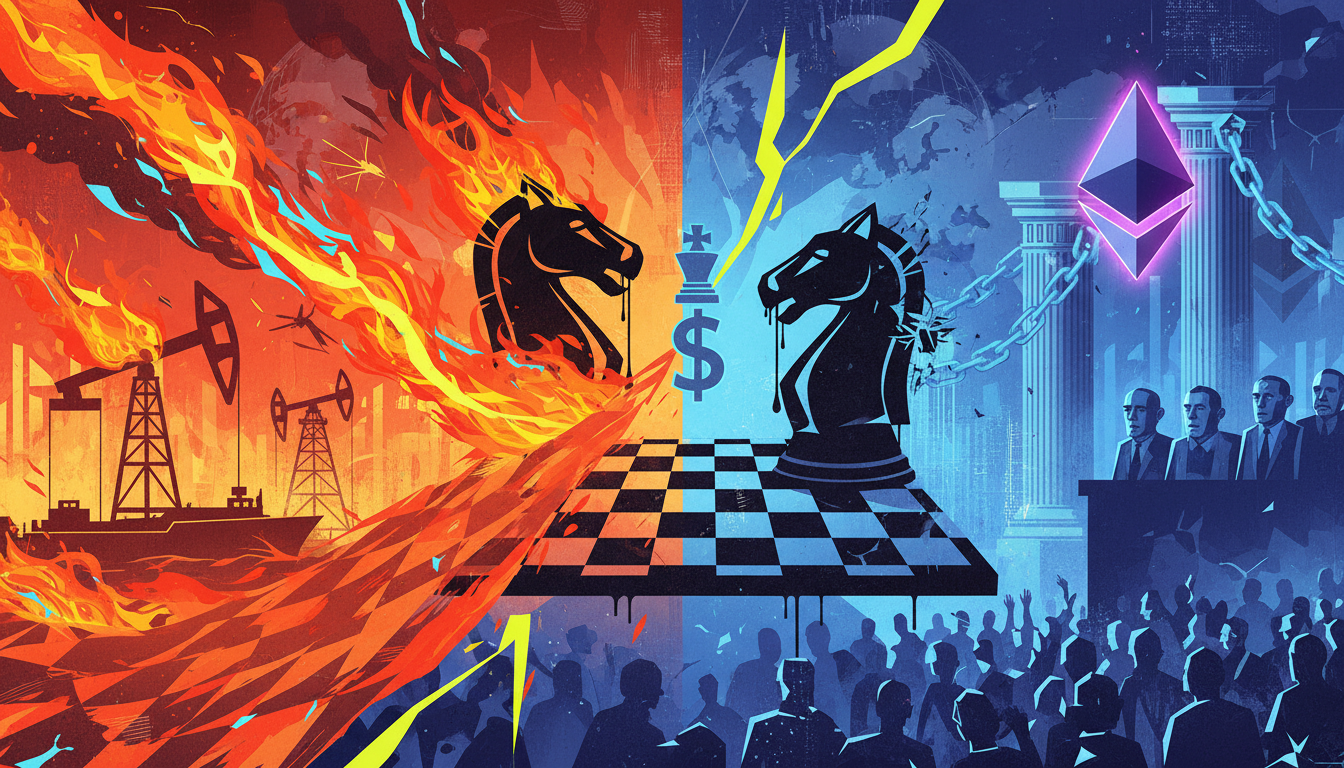
This week in Eastern Standard Time, American media AXIOS disclosed that the Trump administration is discussing a high-risk military plan: considering the occupation or blockade of Kharg Island in Iran, an action explicitly linked to the control of shipping in the Strait of Hormuz. Kharg Island currently handles approximately 90% of Iran's crude oil export processing capacity, effectively serving as the "main valve" for Iran's oil sales abroad. Once this small island is included in military action options, it means directly reaching toward the heart of Middle Eastern oil transportation. The real pending question is: if this plan translates from paper to reality, how would global energy prices rewrite the risk premium curve, and under the intertwining of high volatility and risk-averse sentiment, how would the crypto market repricing respond to this geopolitical conflict?
The Heart of Oil is Choked: The Strategic Gate of Kharg Island
Kharg Island has long been seen as the "heart and lung device" of Iran's crude oil export system. According to AXIOS and several Chinese media reports, it handles approximately 90% of Iran's crude oil export processing volume, with the vast majority of oil sold abroad loaded, stored, and transshipped here. This means that as long as the loading and storage operations of Kharg Island are restricted, Iran's cash flow from crude oil exports would be instantly tightened, with the pressure on public finances and foreign currency sourcing far exceeding that of standard sanction tools. For any Iranian government attempting to relieve sanction pressures through oil sales, the island's security is almost equivalent to a national financial artery.
Geographically, Kharg Island is located in the northern part of the Persian Gulf, right next to the entrance of the Strait of Hormuz, and is a key node connecting Iran's mainland oil fields to global tanker routes. The Strait of Hormuz itself is a "super bottleneck" for oil, with every escalation in tension amplifying the impact on global shipping and oil prices; Kharg Island acts as the "last switch" in this chain, and if its function is compromised, it would compound the geopolitical risks associated with Hormuz, amplifying market concerns over the overall shipment capacity of the Middle East. In the event of a blockade, attack, or partial paralysis, even if the actual scale of supply disruption remains unclear, the expected impact would be sufficient to significantly raise crude price volatility and risk premiums.
In this structure, Kharg Island is not merely "another optional target," but one of the few key points that can directly influence supply expectations in the Middle East. Any news regarding its blockade or military control will be quickly transformed by traders into discounted prices for the stability of Middle Eastern exports, which would then be amplified through multiple channels such as futures, spot markets, shipping, and insurance into the global energy market pricing system.
U.S. Military's Forward Pressure on the Middle East: From Marine Deployments to Island Occupation Ideas
Regarding whether the Trump team is seriously discussing the "island seizure" option, media such as AXIOS describe it as "considering the occupation or blockade of Kharg Island," while emphasizing that the sources are close to the decision-making circle. The credibility of this statement has its boundaries: on one hand, it is not a formal military order but a plan included in the toolbox; on the other hand, several Chinese crypto and technology media outlets have not provided more detailed operational specifics or timelines when referencing it, highlighting that it currently remains at the policy and military planning level. Based on publicly available information, we can confirm that "this discussion and concept exist," but we cannot reasonably extrapolate it as a definitive route of "imminent execution."
Parallel to the paper plan is the continuous ramp-up of the U.S. military presence in the Middle East. According to reports from PANews and others, the U.S. military has deployed multiple Marine Corps units toward the Middle East to enhance mobility and deterrent capabilities in key maritime areas. The specific tasks of these troops have not been disclosed, but against the backdrop of escalating geopolitical tensions, their symbolic significance and signaling value are extremely high: on one hand, it conveys an "always ready to escalate" posture to Iran and regional armed forces, while on the other hand, it leaves greater flexibility for any U.S. actions in the Persian Gulf and around Hormuz.
Among market views, a commonly quoted statement is "Seizing the island could place the U.S. military directly in the line of fire." This statement outlines the core struggle between the plan designers and decision-makers: Kharg Island has extremely high strategic value, but if the situation escalates from blockade and escort to actual occupation, it signifies a shift for the U.S. military from "suppressing risk" to "directly accepting the risk of war," directly facing countermeasures from Iran and its proxy forces. Some analyses also point out that relevant plans "may be implemented after the U.S. military weakens Iran's military capabilities," further indicating that even if this option exists, its execution would require extensive military and diplomatic groundwork and cannot simply be deemed as a predetermined script in the short term.
Oil Price Nerves and Risk Premiums in the Shadow of Hormuz
Reflecting on the past decade, every escalation in tension in the Strait of Hormuz has almost always seen the first response in oil prices manifesting as a rapid jump in risk premiums. Whether it be tanker attacks, detention incidents, or the escalations in public discourse and sanctions between the U.S. and Iran, the market often preemptively prices in risks by pushing up crude futures prices, changing the spot discount structure, and increasing shipping insurance rates when information remains unclear. The typical path is as follows: at the initial stage of an incident, traders amplify the most pessimistic supply assumptions, and as the situation evolves and transportation conditions clarify, the premiums gradually retract, but the overall volatility range is elevated, adding extra costs and uncertainties for refining companies and downstream demand.
In contrast to traditional "maritime escort" plans, directly blockading or controlling Kharg Island presents stark differences in deterrent power and escalation risk. Escorting is more about increasing escort forces and reducing the individual probability of ships being attacked to mitigate risks, with potential conflict levels remaining controllable within limited friction; however, a blockade targeting Kharg Island touches on Iran's key interests, objectively coming closer to actions that could "structurally change its export capacity," raising the scope for escalation and uncontrollable consequences by several dimensions. This difference would also be reflected in market expectations: the former corresponds to "short-term harassment + increased security costs," while the latter points towards a pricing logic of "mid- to long-term supply capacity discounts."
At the current stage, where information remains far from clear, the market often chooses to express concerns through financial instruments rather than wait for physical shocks. Oil futures and options would initially magnify extreme scenario hypotheses, with implied volatility rising and demand for call options increasing, while short-term trading strategies would densely position around the timeline of events; in the spot market, buyers might lock in future supplies, while sellers could increase quotes as a trial. Even if the Kharg Island plan never actually materializes, as long as it exists in policy discussions, it is enough to inject a layer of "geopolitical premium" into the oil market and indirectly influence the sentiment curve of high-beta assets and the crypto sector.
Will Bitcoin be a Safe Haven in Geopolitical Conflicts?
In past rounds of Middle Eastern conflicts, U.S.-Iran confrontations, and global risk events, the correlation between Bitcoin and assets like gold and crude oil has not been stable. At times, gold tends to rise conventionally during escalations in geopolitical tension, while Bitcoin often reflects more sensitivity as a high-beta risk asset, responding to liquidity in U.S. dollars and risk preferences in U.S. stocks; there have also been occasions where Bitcoin exhibited short-term surges in tandem with gold during local conflict escalations, interpreted by the market as a resurgence of interest in "digital safe-haven assets." However, from an overall historical sample viewpoint, this correlation with safe-haven assets remains intermittent, driven more by sentiment and does not form a consensus like gold.
The current scale and structure of the crypto market are markedly different from earlier stages of Middle Eastern conflicts. On one hand, the market capitalization of leading assets and the depth of derivatives have significantly increased, with institutional participation and macro trading logic gaining prominence, reinforcing the correlation between BTC, interest rate expectations, the U.S. dollar index, and U.S. stock risk preferences; on the other hand, the entry of large institutions and compliant products has led to Bitcoin being categorized as a "non-traditional hedging tool" in certain asset allocation frameworks. This dual attribute means that in some scenarios, it may be pressured alongside tech stocks, while in other contexts it may see marginal increases in allocation due to concerns over currency depreciation or financial sanctions.
If oil prices surge due to geopolitical risks while suppressing global growth expectations and triggering a pullback in traditional risk assets, the migration path of funds among U.S. dollars, gold, and Bitcoin is likely to unfold in layers: first, the most risk-averse asset, the U.S. dollar and U.S. Treasuries, will receive the first wave of buying; subsequently, demand for gold will rise amid concerns over actual inflation and purchasing power; Bitcoin will depend more on two factors: first, whether the market interprets this round of conflict as a risk to "the U.S. dollar's credit and reserve system itself"; second, whether regulatory and compliance channels remain smooth during the event. If the answers lean toward "local geopolitics + relative benefits to the dollar," BTC may resemble a high-volatility derivative; if it evolves into broader anxieties about finance and sanctions, it may have the opportunity to be reinvigorated into the narrative of "digital safe haven."
From Tehran to Washington: Political Maneuvering and Signaling Wars
From Washington's perspective, a hardline stance towards Iran has never merely been a security issue; it is deeply embedded in domestic politics and electoral narratives. For the Trump administration, putting a highly sensitive target like Kharg Island on the discussion table carries dual signals: internally, it strengthens the image of being "tough on adversaries" and "maintaining energy and shipping security," addressing expectations from some voters for America's global dominance; externally, it sends a pressing signal to Iran that "we have the capability and the willingness to touch your core interests," attempting to enhance leverage reserves in negotiation chips and regional deterrence.
It is noteworthy that these military plans are often not disclosed only at the final decision-making stage, but are released to the media discourse at certain points with specific phrasing. Disclosure by outlets like AXIOS forms part of the policy toolbox: by stating "considering" and "discussing," it deliberately retains strategic ambiguity. On one hand, it tests Iran and its allies' reactions and tolerance limits; on the other hand, it conveys to U.S. allies and energy-importing countries a posture of "we are actively designing options," thereby providing political and diplomatic cushioning for potential future actions.
For countries heavily reliant on Middle Eastern oil imports, such signals compel a reevaluation of energy security and diplomatic balance policies: whether to closely follow the U.S. position and bet on its ability to maintain order in the Persian Gulf, or to call for de-escalation in public forums to prevent their own economies from being dragged down by high oil prices and supply uncertainty. These policy choices and statements will ultimately reshape market expectations—for example, if mainstream importing countries strongly emphasize "we will not allow serious shipping disruptions," the market may price risks more moderately; conversely, if significant divisions in stance emerge and blame-shifting occurs, traders will lean more toward hedging potential "failure of coordination" with higher volatility and premiums.
The Script is Not Finalized: How the Crypto Market Can Protect Itself in the Fog
Based on currently available information, actions related to Kharg Island remain at the military planning and policy consideration stage, with high uncertainty surrounding any form of actual execution. Whether it be occupation, blockade, or merely an increase in escort efforts, the timeline, execution methods, and response pathways from all parties have yet to take shape. For the market, this resembles a "high-risk option card" placed on the table; its mere existence is sufficient to be counted into risk premiums, but it does not equate to a storyline that is guaranteed to unfold in the future.
At the trading level, a more practical approach is to include Kharg Island, the Strait of Hormuz, oil price volatility, and Bitcoin liquidity in the same risk monitoring checklist:
● Pay attention to official and authoritative media statements regarding Kharg Island and the Strait of Hormuz, assessing whether the situation trends towards "strengthening escorts" or "constrained export capacity."
● Observe the structure of crude oil futures prices, implied volatility, and the performance of energy stocks, judging whether the risk premium reflects short-term emotional outbursts or starts to embed within mid- to long-term pricing.
● Combine the movements of Bitcoin with the U.S. dollar index, U.S. Treasury yields, and gold to monitor its role within the macro asset sequence as a "high-beta derivative" or a "marginal hedging tool."
In a period filled with rumors and emotions surrounding geopolitical events, it's crucial to remain vigilant against various unverified "action timelines" and extreme forecasts, whether they concern specific target price points for oil or doomsday and paradise narratives regarding crypto assets. For average participants, anchoring attention on publicly verifiable information, price actions of mainstream assets, and their own position and leverage management often carries more practical significance than chasing every explosive rumor. The script has not been finalized, but regardless of the direction taken, the ability to maintain decision-making discipline in a high-volatility environment is the key variable determining the final returns and survival rate.
Join our community for discussions, let's get stronger together!
Official Telegram community: https://t.me/aicoincn
AiCoin Chinese Twitter: https://x.com/AiCoinzh
OKX Benefits Group: https://aicoin.com/link/chat?cid=l61eM4owQ
Binance Benefits Group: https://aicoin.com/link/chat?cid=ynr7d1P6Z
免责声明:本文章仅代表作者个人观点,不代表本平台的立场和观点。本文章仅供信息分享,不构成对任何人的任何投资建议。用户与作者之间的任何争议,与本平台无关。如网页中刊载的文章或图片涉及侵权,请提供相关的权利证明和身份证明发送邮件到support@aicoin.com,本平台相关工作人员将会进行核查。