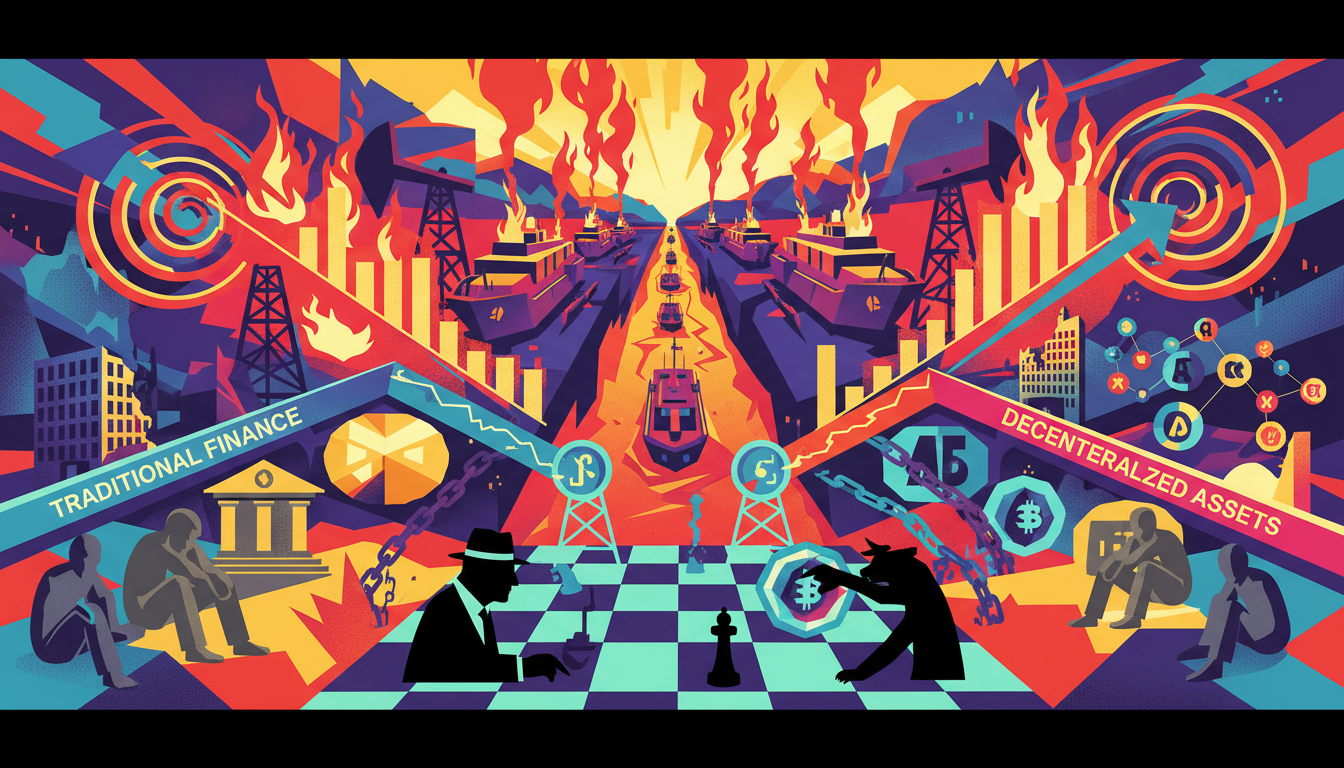
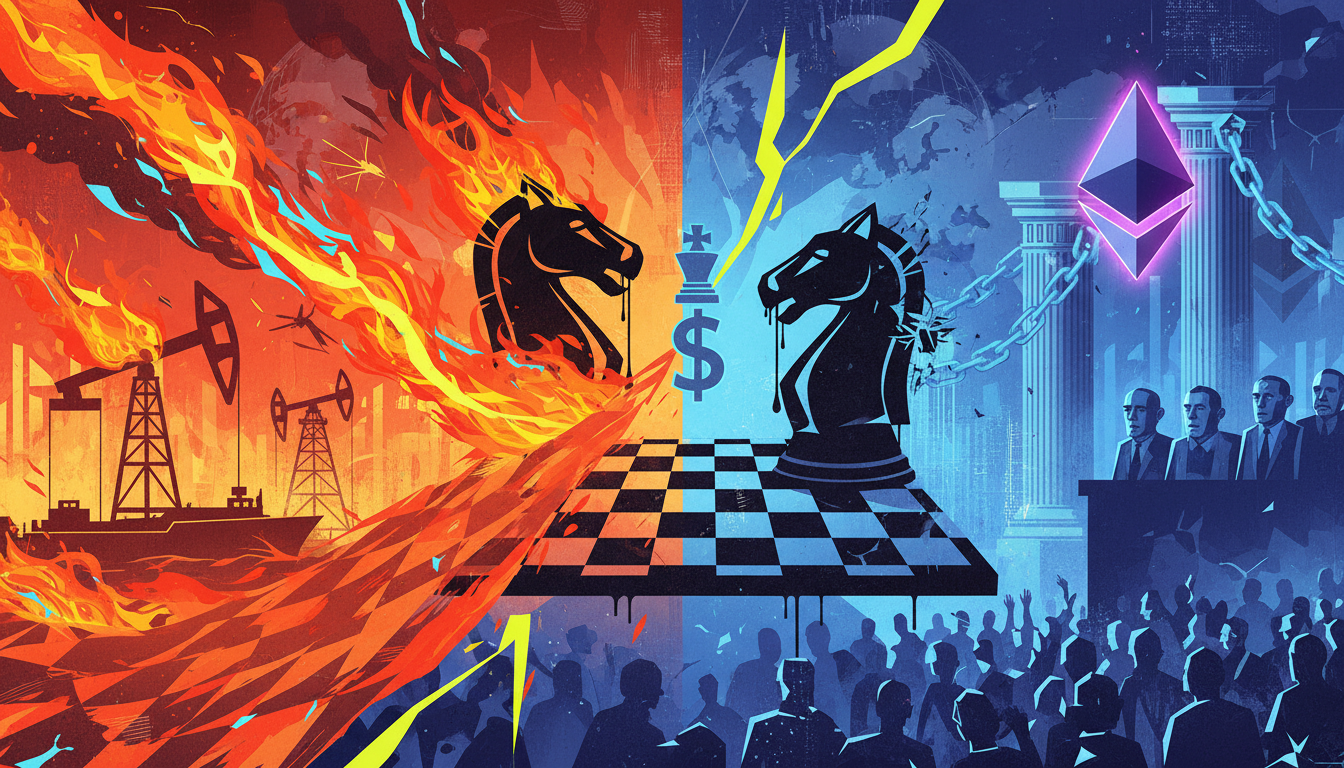
On March 20, 2026, Eastern Standard Time, Coinbase launched stock perpetual contracts and Rune Christensen made large-scale adjustments almost simultaneously. On one end, a compliant leader is bringing traditional assets to a high-leverage betting table, while on the other, on-chain star traders are seeking new winning hands in cross-market positions. The new product allows for up to 10x leverage on individual stocks and up to 20x leverage on ETFs. Correspondingly, Rune actively closed ETH long positions, confirming a $257,000 loss, after previously earning over $1.8 million using 20x leverage on ETH long in Q4 2025. As compliant institutions ramp up more aggressive derivatives in regulatory gaps, while professional players turn to higher leverage long-short hedging, the core conflict of “traditional asset cryptoization + on-chain gambling” is simultaneously brought to the forefront.
Coinbase moves US stocks to the crypto derivatives brand table
The stock perpetual contracts launched by Coinbase are targeted at international users outside the US, allowing for an indefinite perpetual contract form with up to 10x leverage on individual stocks and up to 20x leverage on ETFs. In terms of operational experience, these contracts are embedded in the existing contract trading interface, seamlessly connecting with the perpetual contracts of crypto assets like Bitcoin and Ethereum, lowering the threshold for the speculation and contractization of traditional stocks and ETFs, enabling assets that previously required penetration through multiple account systems to become directly “crypto-styled” high-leveraged assets.
Prior to this, Coinbase had already obtained a Bermuda derivatives license, successively completing the path of product matrix expansion from compliant spot trading to futures, crypto-perpetual, and now stock and ETF perpetuals. It has gradually built a full-stack trading structure covering spot, leverage, and futures from the initial offering of Bitcoin and Ethereum exchange services, and now further incorporates traditional financial assets into this derivatives system, attempting to layer more high-risk rewards on the existing compliant moat.
More critically, this step is not a simple “adding more assets,” but rather deeply integrating the asset pool of traditional finance with crypto derivative tools: individual stocks and ETFs are subject to securities regulatory frameworks, and when they are traded on a crypto CEX as perpetual contracts with high leverage, the applicable regulatory boundaries become blurred—whether to view them as crypto derivatives or to regulate them as securities derivatives, or to place them in a gray area under offshore licenses. By choosing to advance here, Coinbase is essentially outlining a new experimental field around the regulatory red line, tying the volatility of traditional assets to the leverage culture of the crypto world.
The arms race of CEX derivatives reignites
If we place Coinbase’s new product within a larger industry coordinate system, we find that this step has directly pulled it into the front line of the centralized exchange derivatives arms race. In recent years, the competition in the derivatives market has evolved from a simple speed of listing to a fierce battle over higher leverage, lower thresholds, and richer assets: some platforms offer dozens or even hundreds of times leverage on crypto assets, while Coinbase has chosen a 10x and 20x leverage approach on traditional stocks and ETFs, competing for the same pool of risk-tolerant users with a “compliance narrative + familiarity with traditional assets.”
Once traditional stocks and ETFs are made perpetual, their appeal to existing users transforms from simply “being able to go long on US stocks” to “being able to trade Tesla or Nasdaq ETF like BTC contracts.” This will inevitably attract some users who originally traded contracts on platforms like Binance to migrate or diverge: on one hand, speculators accustomed to using high leverage on CEX might shift part of their positions to familiar US stock assets; on the other hand, investors who previously only purchased passive ETFs through brokerage accounts are now provided an option to amplify volatility within crypto CEX.
Amid mounting domestic regulatory pressure in the US, Coinbase still chooses to bet on overseas versions of high-leverage contracts, reflecting a strategic wager on the real demand of offshore markets and the ambiguity of compliance boundaries. On one hand, it seeks to isolate regulatory pressures from high-risk products through Bermuda and other licensing structures; on the other hand, it bets that global funds are still willing to pay for high leverage and cross-asset gaming. For the entire CEX industry, this step will undoubtedly raise the ceiling of derivatives competition further, transforming “who can bear more risk in regulatory gaps” into a new dimension of competition.
Rune stops-loss on Ethereum long and bets on cross-market gaming
Almost simultaneously with Coinbase raising the risk radius in product terms, the renowned on-chain trader and Sky co-founder Rune Christensen also provided his own high-leverage answer in practical operations. Around March 20, 2026, he closed his ETH long position, locking in a loss of approximately $257,000, a stark contrast to his glorious record of earning over $1.8 million using 20x leverage on ETH long in Q4 2025: the same high leverage, the same Ethereum, yet the result changed from doubling profit to a six-figure stop loss, showing that in the face of volatility and cyclical changes, high-leverage strategies do not yield linear and reproducible returns.
After closing ETH, Rune’s position structure has distinctly shifted to cross-market long-short hedging: on-chain data shows that he currently holds a 7x long position in BRENT OIL, betting on rising oil prices; simultaneously, he hedges against stock market declines with a 20x short position in SP500 and adds a 7x short position in XYZ100, shorting another basket of stock indexes or index-like assets. This combination expands from a single crypto long to directional betting and hedging structures between commodities and stock indexes, making its profit and loss curve no longer tied to a single asset, but dispersed across multiple macro variables.
This transformation from “purely crypto long” to “cross-commodity and stock index long-short hedging” essentially signifies the migration of risk exposure and winning hand positions: in the past, his primary risk focused on one Ethereum mainnet, while now it is distributed among oil prices, the US stock market, and other indexes. On the surface, this is about seeking new beta and alpha combinations across multiple markets; the actual effectiveness will await market volatility to yield results. We can only observe from the position structure and historical returns comparison that he is expanding the professional gambling table from a single on-chain asset to a wider cross-market of traditional and crypto, without making subjective conjectures about his specific motives.
On-chain transparency leaves professional players nowhere to hide
Unlike traditional hedge funds that can operate within black boxes, Rune’s position adjustments are almost live-streamed in real-time. His holding address has been closely monitored by on-chain analysis tools, and position changes, closing times, and even TWAP order behaviors have been dissected, forming publicly available “live tracking.” This means that professional players no longer enjoy the right to remain anonymous; every additional position or reduction could be interpreted as a signal, amplifying their influence on market sentiment while simultaneously increasing the risk of their actions being misinterpreted or exaggerated.
Market analysis tools and on-chain intelligence sources even suggest, “TWAP orders show that professional investors are employing more complex execution strategies,” indicating that these large players are executing refined operations in batch transactions, slippage control, and information leak management. At the same time, the discussion around “upgrades in on-chain anti-money laundering technology” has also extended from cases such as UXLINK attackers' fund tracking—more funding flows and address association charts are automatically generated, turning on-chain behaviors from “data traces” into “actionable intelligence,” weaponized by exchanges' risk controls, on-chain analysis companies, and even counter parties.
In such an environment, the profits and losses, as well as leverage multiples exposed by star traders on-chain, will directly reverse impact retail investor sentiment: when Rune earned $1.8 million with 20x leverage in Q4, the sentiment to follow and reverence atmosphere drove more funds towards similar positions; while now, after he actively acknowledges a loss of $257,000, it may be interpreted as a signal of a shift in sentiment, prompting some retail investors to take profits and exit or open contrary positions. This “public real-time + emotional amplification” feedback mechanism makes on-chain professional players not only participants in the market but also samples placed under a microscope, where every leverage choice could trigger a new wave of volatility.
SMOKE oversubscribed and MEME narratives ignite chips on the other end
Beyond derivatives and on-chain gambling, the chase for high-risk narratives is also continuing to heat up in another lane. The SMOKE project experienced oversubscription rates as high as 435 times during its issuance phase, raising approximately $435 million, far exceeding the fundraising scale of many infrastructure projects. This phenomenon of accumulating hundreds of millions in funding during the early issuance stage indicates that projects characterized by high volatility and high heat remain one of the most effective magnets for funding in the current cycle, especially during periods when liquidity seeks short-term exit.
Some market voices even summarize the current phase as “the first market cycle that synchronously promotes the issuance of MEME assets and the expansion of mainstream financial derivatives”: on one side, projects like SMOKE are wildly raising funds in the primary market, selling early shares to funds willing to bear extreme volatility risks; on the other, Coinbase is pushing stock and ETF perpetual contracts to global users, providing high-leverage betting tools for a broader base of funds. These two seemingly disconnected narrative lines—MEME and mainstream derivatives—resonate at the same time, forming the dual engines of this speculative story.
In terms of results, the compliant CEX’s increased stock perpetuals means that traditional assets, originally protected by regulations, are being more deeply integrated into the crypto leverage system; while the on-chain MEME project is crazily attracting funds, concentrating early liquidity in the narrative's most intense corners. Together, they shape a more dynamic market structure: the upper layer represents institutional derivative expansions led by Coinbase, while the lower layer represents a wild narrative carnival epitomized by SMOKE, with players like Rune using high leverage strategies to link the volatility of both ends.
How will regulatory gray areas and high leverage conclude?
Whether it’s Coinbase raising the leverage limit on stock and ETF perpetuals under the Bermuda licensing framework, or Rune shifting from ETH long to a cross-market combination of BRENTOIL, SP500, and XYZ100, both are essentially attempting to push the risk boundary outward: the former is expanding the product line in regulatory gaps, combining the volatility of traditional assets with the crypto leverage culture; the latter is seeking new winning hands using 7x and 20x high leverage across multiple markets, binding the profits and losses of personal and institutional funds to a more complex combination of macro variables.
Looking forward, under the multiple pressures of on-chain transparency, upgrades in anti-money laundering technology, and tightening compliance reviews, both CEX and large on-chain players will face stronger constraints and adaptive tests. Exchanges need to find a balance between expanding the types of derivatives and controlling compliance risks and cannot indefinitely stack leverage in gray areas; on-chain professional players need to accept the reality of all positions being publicly displayed in real-time and consider the additional costs of information leakage, emotional feedback, and regulatory penetration in strategy design. Who can survive in this round of “high leverage + high transparency” environment will determine the structure of market dominance in the next phase.
As for whether this round of “traditional asset cryptoization + on-chain gambling” will ultimately lead to a more mature risk pricing mechanism, rather than evolving into yet another high-leverage liquidation cycle, remains an open question. If regulations can clarify boundaries without stifling innovation, and exchanges and on-chain players learn to manage risks within transparency instead of merely amplifying leverage, the intersection of traditional assets and crypto derivatives may lead to a more robust pricing framework. Conversely, if funds merely repeat past stories on a larger table, the chain of liquidations may become longer and its impact more widespread, at which point the market will truly know whether this round of bets is evolution or mere reenactment.
Join our community, let's discuss and get stronger together!
Official Telegram community: https://t.me/aicoincn
AiCoin Chinese Twitter: https://x.com/AiCoinzh
OKX welfare group: https://aicoin.com/link/chat?cid=l61eM4owQ
Binance welfare group: https://aicoin.com/link/chat?cid=ynr7d1P6Z
免责声明:本文章仅代表作者个人观点,不代表本平台的立场和观点。本文章仅供信息分享,不构成对任何人的任何投资建议。用户与作者之间的任何争议,与本平台无关。如网页中刊载的文章或图片涉及侵权,请提供相关的权利证明和身份证明发送邮件到support@aicoin.com,本平台相关工作人员将会进行核查。