“What other native applications of cryptocurrencies can make money?”
When it comes to this question, you might instinctively think - stablecoins, CEX, Perp DEX, on-chain Pokemon cards...
And pump.fun, an application that once flourished during the meme frenzy and set a record for one of the largest IPOs in cryptocurrency history, is starting to be easily forgotten. Even in some conversations, I've heard the question:
“Is pump.fun still alive? Can they still make money?”
Not only can pump.fun still make money, but it remains a top “cash printing machine” among native crypto applications. Statistics from DefiLlama show that over any time frame of 24 hours, 7 days, 30 days, or 1 year, pump.fun’s revenue ranks fourth, only behind Tether, Circle, and Hyperliquid.
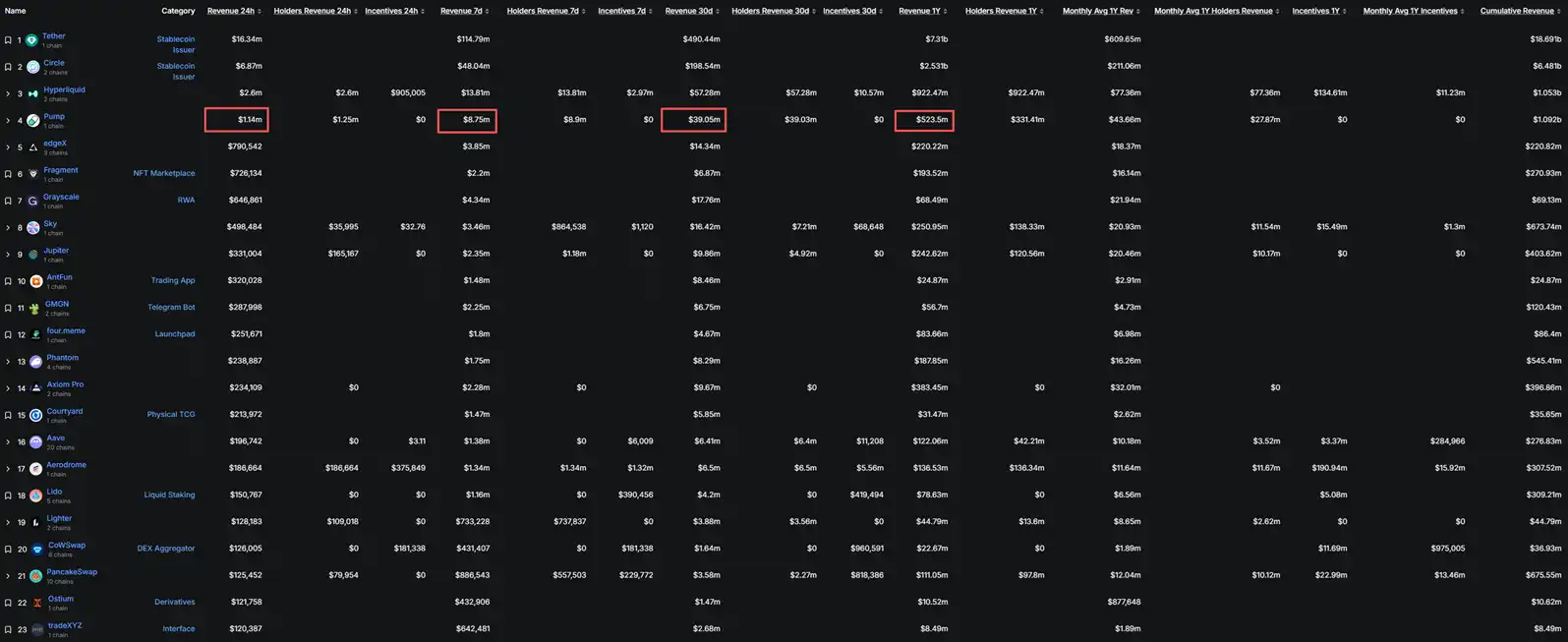
Although various “dog fighting” chat groups are quiet, with many even going days without a single message, in the past 7 or 30 days, pump.fun's average daily revenue has still exceeded one million dollars.
Is this real revenue, or is pump.fun faking it?
Is pump.fun’s revenue real?
First of all, according to pump.fun's official revenue dashboard, the revenue currently comprises three parts:
- Bonding curve revenue: trading fee income before new coins graduate, where pump.fun charges a protocol fee of 0.95% on this portion
- Pumpswap revenue: for successfully graduated new coins (that have migrated to trade on Pumpswap AMM), a protocol fee of 0.93% is charged on tokens with a market cap of 0-420 SOL
- Terminal (Padre) revenue: pump.fun acquired the trading terminal Padre last October and rebranded it as the multi-chain trading platform Terminal; since then, the revenue from this trading platform has also been included in pump.fun's revenue
- Revenue is net of referral commissions and transaction rebates
For bonding curve protocol revenue, the official Solana address used by pump.fun for receiving this income is CebN5WGQ4jvEPvsVU4EoHEpgzq1VV7AbicfhtW4xC9iM. The bonding curve revenue gathered at this address is locked by the contract; if there were fake revenues being created by externally transferring funds to this address, there would definitely be external addresses directly invoking the System Program's Transfer command. After analyzing the transactions to this address, we found no actions indicating falsified income through simple external SOL transfers.
This means that the bonding curve revenue truly comes from the actual contract-call protocol fee deductions.
The bonding curve revenue data for pump.fun from DefiLlama is directly calling pump.fun's official API, which is why we conducted on-chain analysis of pump.fun's official bonding curve revenue address first. However, the revenues for Pumpswap and Terminal (Padre) are calculated by Dune SQL querying Solana chain data, completely independent of pump.fun's official API, possessing high on-chain objectivity and immutability.
At this point, we have eliminated pump.fun's suspicion of income fraud through "external transfers" or "data misreporting," but they still have the possibility of generating false income through "wash trading" with bots or internal wallets. Therefore, we need to further investigate - in the current overall market downturn of the cryptocurrency market, with meme coins experiencing a significant decline in popularity, is pump.fun's revenue real and organic?
Is pump.fun's revenue reasonable in the current market environment?
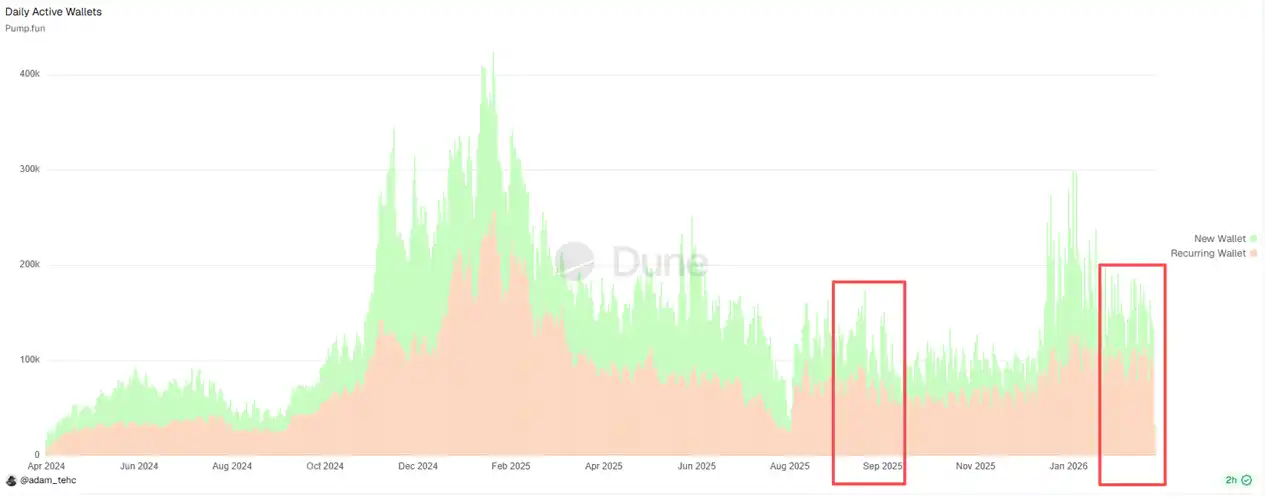
According to data from token terminal, in the first quarter of this year, the daily active addresses on Solana remained stable between 1.2 million and 2.2 million, while on pump.fun, there were about 150,000.
At the same time, based on the data from pump.fun's related statistics dashboard on Dune, these 150,000 addresses correspond to an average daily deployment of about 30,000 new tokens.
This means that if 30,000 new tokens are fully deployed by different real users every day, then about 20% of active users on pump.fun are issuing new tokens daily. However, according to the paper “Predicting the success of new crypto-tokens: the Pump.fun case” published by Giulio Marino and others last month, from September 1 to October 1, 2025, a total of 655,770 new tokens were deployed on pump.fun, but the number of addresses deploying tokens was only 243,123.
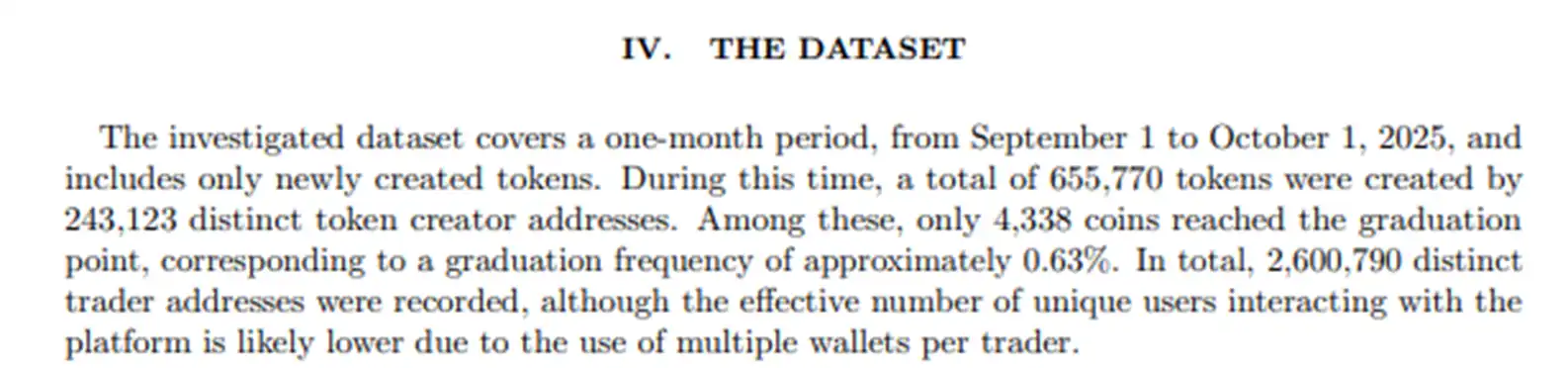
And the current average daily deployment of tokens is even more than in September of last year:
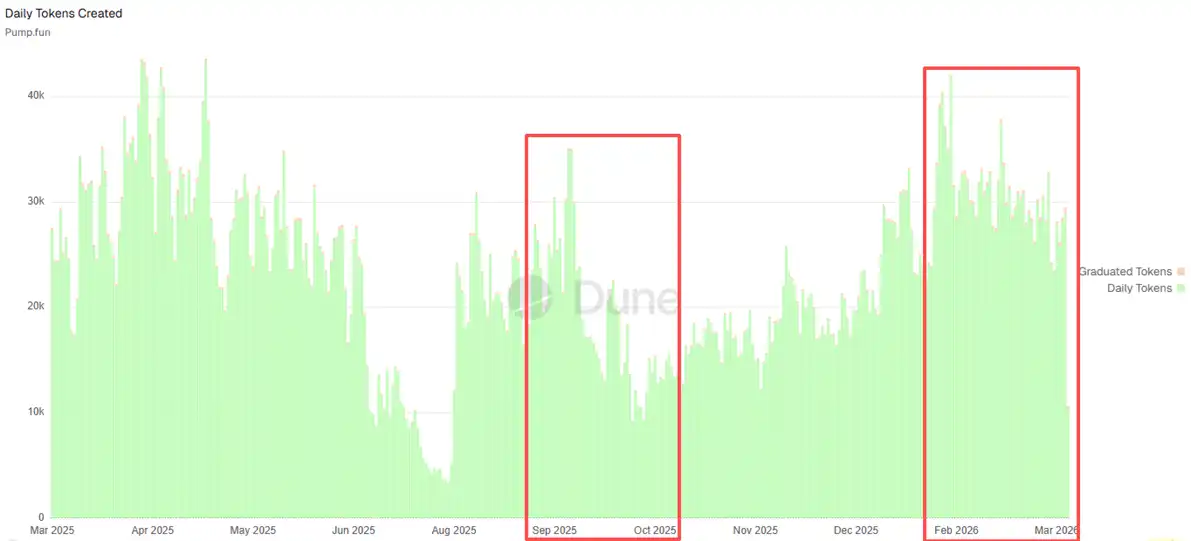
Considering the current market environment, this data seems rather “counterintuitive” - it feels like cryptocurrencies are on the verge of collapse on social media, yet there are still so many new tokens being deployed daily on pump.fun. Additionally, the number of active addresses in the past month has also increased by about 10% compared to September of last year.
In the million dollars of daily revenue from pump.fun, Pumpswap and Terminal (Padre) still account for a relatively “small share.” For example, on March 18, the revenue from Pumpswap and Terminal (Padre) was approximately $284,000 and $58,000, respectively, while the revenue from bonding curve was about $795,000, which is approximately 2.3 times the sum of the former two revenues.
The new token graduation rate has recently even reached over twice that of September last year:
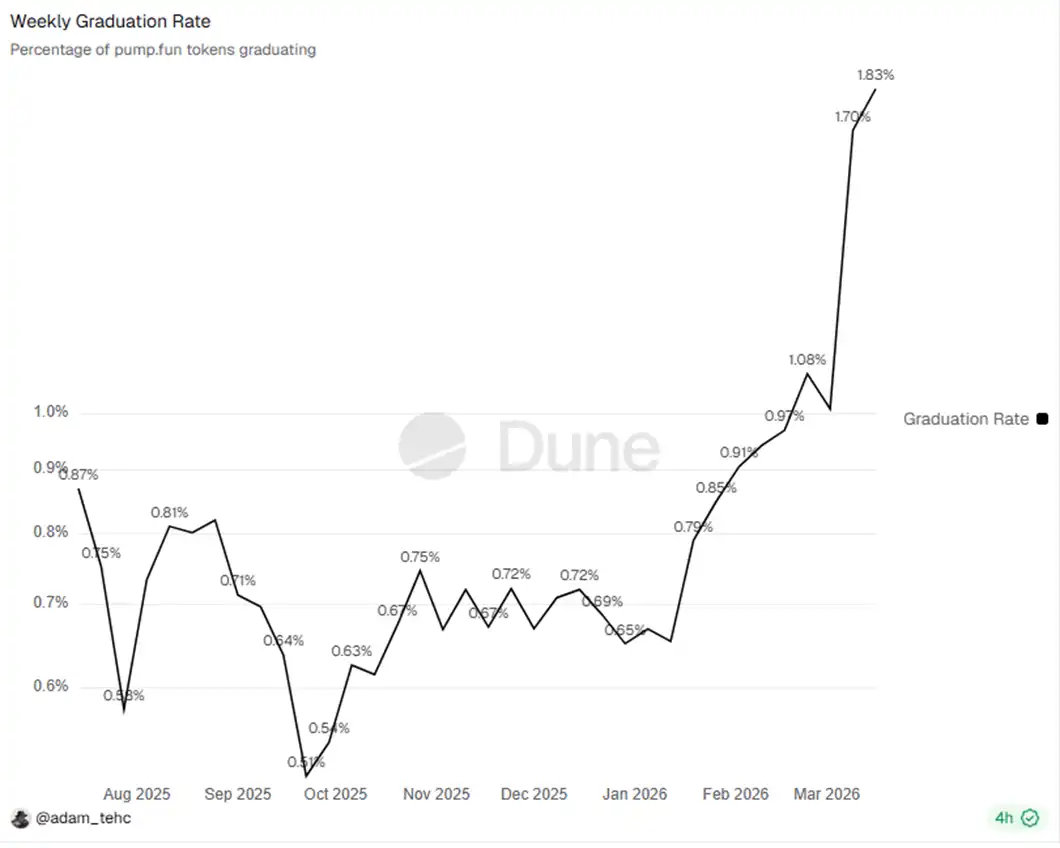
At the same time, on that day, about 26,000 new tokens were deployed on pump.fun. If the bonding curve revenue of $795,000 is to be achieved, it requires a bonding curve trading volume of approximately $8,368.42 million (calculated as $795,000 / 0.95%, the protocol fee rate charged by bonding curve), meaning that on average, each newly deployed token would need to contribute about $3,218 in trading volume before successfully graduating.
Considering the above data, hearing that each new token contributes a little over $3,000 in trading volume doesn’t sound too difficult; on the contrary, it seems quite normal, because last September, when data was still lagging overall, pump.fun was able to achieve this target. If calculated in SOL, the SOL earned now is even more than in September last year; it is just that the revenue in dollar terms has decreased.
However, at this point, we still have questions: pump.fun has been using nearly all of its daily revenue for repurchasing $PUMP since August last year, having repurchased over 10% of the total supply and over 30% of the current circulating supply of $PUMP by now; why does the price of $PUMP keep falling? Although we can see through on-chain data that the $PUMP worth over $300 million that pump.fun has repurchased sits in wallets without movement, is it possible that they are faking income by inflating the volume while simultaneously “repurchasing” and sneakily dumping using dispersed addresses?
Where did the $PUMP go?
Let's take a look at the token release plan for $PUMP:
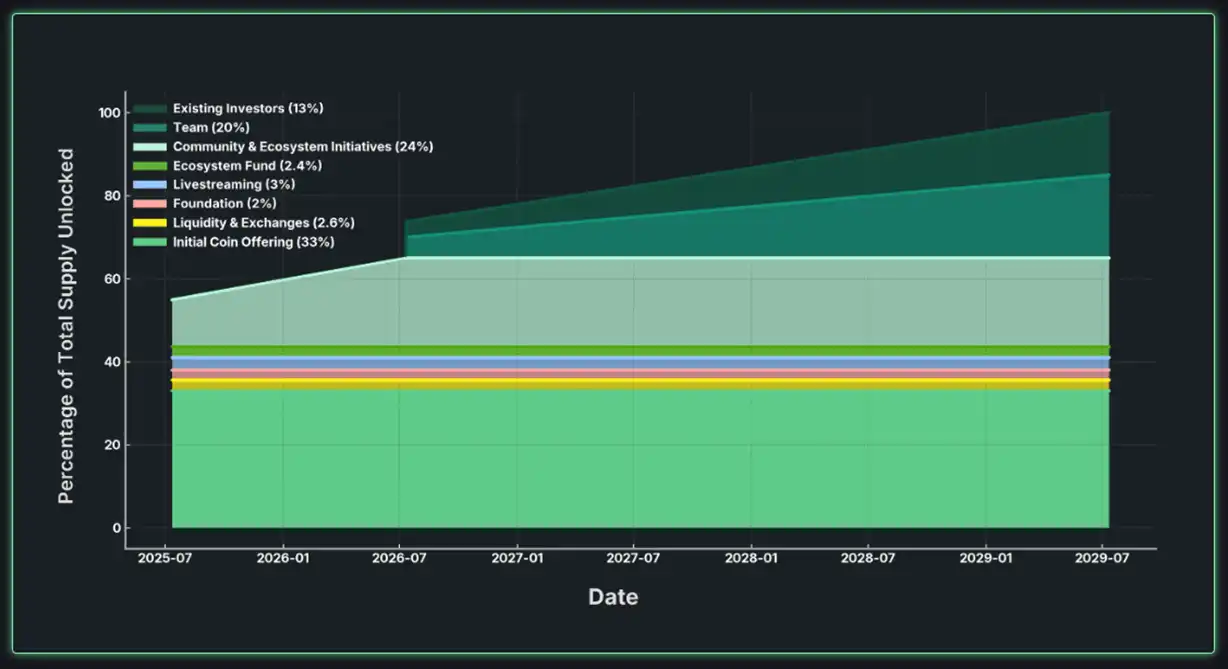
As of now, the circulation status of $PUMP is as follows:
- ICO: 33%, fully unlocked at TGE
- Team: 20%, still locked
- Investors: 13%, still locked
- LP and exchanges: 2.6%, fully unlocked at TGE
- Ecosystem fund: 2.4%, fully unlocked at TGE
- Live support: 3%, fully unlocked at TGE
- Foundation: 2%, fully unlocked at TGE
- Community and ecosystem incentives: 24%, about 50% unlocked at TGE, with the remaining portion linearly unlocked within 1 year; currently, this portion has been unlocked by 65.27%
In the $PUMP multi-signature wallet at address Cfq1ts1iFr1eUWWBm8eFxUzm5R3YA3UvMZznwiShbgZt, there is currently approximately 36.5% of the total supply of $PUMP.
This does not align with the $PUMP token release plan. What we can confirm is that after TGE, all $PUMP was transferred to a multi-signature custody wallet for distribution. Theoretically, the maximum transferable quantity is only about 58.67% of the total supply (ICO 33% + LP and exchanges 2.6% + ecosystem fund 2.4% + live support 3% + foundation 2% + approximately 15.67% of the unlocked community and ecosystem incentives), which means that the $PUMP balance in the multi-signature custody wallet should not be less than about 41.33%, leaving a discrepancy of about 4.83%.
Where did this 4.83% go? We don’t know. We don’t even know where the remaining parts with clearly defined purposes, except for the ICO sale distribution, are located. Although we have indeed discovered that approximately 24% of the total supply of $PUMP has long remained silent after being transferred to various addresses in large amounts, which likely corresponds to the parts outside of ICO sales distribution, the pump.fun official has never disclosed the wallet addresses corresponding to the funds of each section.
Especially concerning community and ecosystem incentives, the publicly known community and ecosystem incentive activities include Glass Full Foundation (which bought approximately $1.7 million in meme coins within the pump.fun ecosystem), granting $10,000 each to 6 meme coin communities, totaling $60,000, and funding 12 projects with $250,000, giving out a total of $3 million but only announcing 6 winning projects of a hackathon so far.
However, this section is already the clearest...
But even with such transparency issues, even if 4.83% were discreetly sold off, pump.fun’s significant buyback of over 10% of the total supply and over 30% of the current circulating supply could offset this selling pressure; why does the price of $PUMP still remain sluggish?
The possible reason is that $PUMP simply does not have enough buying interest; large-scale buybacks, lacking market recognition, are like a needle in the ocean.
An Unrecognized "Casino"
When it comes to Hyperliquid, we can affirm its leading position and narrative potential in Perp DEX, but in the meme coin sector of pump.fun, even retail investors largely consider it a scam, unsustainable.
In the earlier parts of the article, we acknowledged the authenticity of pump.fun's revenue; now we need to look at additional data. This data can illustrate that the negative perception of meme coins is not merely a superficial emotional aversion from retail investors enduring the extreme volatility of meme coins, but can also lead institutional investors to a rational rejection.
As early as last April, research from Medallion Analytics indicated that during a 180-day statistical period, about 178,000 deployers launched multiple tokens, with 85.3% of them profiting. Within 180 days, these deployers collectively launched approximately 3.59 million tokens, of which profit-making deployers launched about 3.07 million, a ratio of about 85.5%.
During the statistical period, the top 10 profit-making deployers earned around 365,000 SOL, while the medium-performing 10 deployers could only profit 47.3 SOL, a difference of about 7,720 times. For the top-tier deployers, the average new token issuance interval was only 0.11 hours, while for mid-level deployers it reached 10.96 hours.
Solidus Labs researched the performance of newly deployed tokens on pump.fun from January 2024 to March 2025. The research analysis pointed out that as much as 98.6% of tokens were scams aimed at inflating prices for dumping.
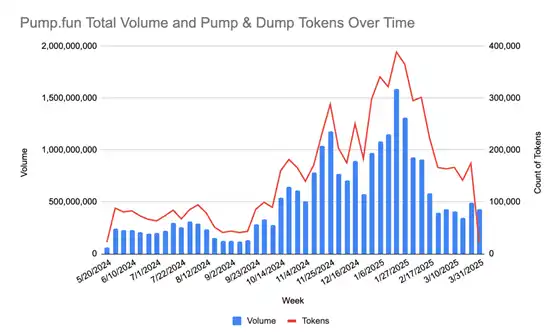
The issuance of meme coins has long ceased to be a competition of creativity but has become a profit-making assembly line. Top deployers, following rapid profits within extremely short periods, can reinvest funds into automated token generation facilities, increasing their harvesting speed.
pump.fun has lowered the cost of issuing new meme coins on Solana to $2 or even less; this is indeed a technological advancement, but they have not guided the meme coin sector towards a positive direction that convinces retail and institutional investors that meme coins are truly a cultural or even belief asset. They have attempted to broaden the sector to include live tokens, ICM coins, and the recent AI Agent coins, but none of these attempts have succeeded.
The data is there; the most money they make still comes from providing “low-cost harvesting tools,” akin to how a casino takes a cut.
For pump.fun, each time a deployer issues a new coin or inflates each piece of fake volume before token graduation, they earn a risk-free profit of 0.95%. If you want to increase a token's exposure and need to inflate more volume, you must provide more income to pump.fun. The funds in this ecosystem are real, the income is real, but the ecosystem itself is non-organic, harming retail investors. For institutional investors, such an ecosystem lacks a healthy and sustainable long-term foundation, which may be the root cause of pump.fun's sluggish coin price.
In the end, we have one more question:
If pump.fun's buybacks cannot boost the coin price, then is using the daily income for staking rewards better than the current buybacks?
Maybe yes, or perhaps they have simply stopped caring.
免责声明:本文章仅代表作者个人观点,不代表本平台的立场和观点。本文章仅供信息分享,不构成对任何人的任何投资建议。用户与作者之间的任何争议,与本平台无关。如网页中刊载的文章或图片涉及侵权,请提供相关的权利证明和身份证明发送邮件到support@aicoin.com,本平台相关工作人员将会进行核查。


