Text | Kaori
On February 8, 1971, the NASDAQ system went online.
Without a trading floor or bell-ringing ceremony, it was merely an electronic quoting terminal that connected scattered over-the-counter dealers across the United States into a network. NYSE brokers glanced at it and dismissed it. For two hundred years, the rules of stock trading dictated that you walk into that building, stand on that floor, and shout prices face to face. What could one screen change?
Twenty years later, Intel, Microsoft, and Apple successively listed on NASDAQ, and the era of tech stocks rewritten Wall Street's landscape. The NYSE began to catch up, acquiring the electronic trading platform Archipelago in 2006.
Another twenty years later, by 2026, SpaceX is negotiating with NASDAQ, requesting to be included in the NASDAQ 100 index within 15 trading days after its IPO. If this is not possible, it can go to the NYSE.
Each time, the rules yield to sufficient power, but this time is different from before.
The rise of NASDAQ in 1971 was a new type of exchange leveraging technology to disrupt old rules. The NYSE's transformation in 2006 was the old exchange surrendering to new technology. And the scene in 2026 features a company that has not yet gone public, demanding a market system with two hundred years of history to modify its processes.
This is not just a story about SpaceX going public; it is also a snapshot of the changing gravitational forces in the capital markets.
Financing windows are no longer exclusive to IPOs
What is the purpose of going public? The textbook answer is financing.
This answer was accurate in the 1990s. At that time, the public market was almost the only place capable of providing large-scale, long-term capital for companies. SoftBank had not yet established its Vision Fund, sovereign wealth funds avoided tech stocks, and the private secondary market was almost non-existent. If one sought genuine large sums of money, there was only one path: knock on the door of the exchange, undergo audits, scrutiny, and pricing, then pray for a successful roadshow.
Microsoft went public on NASDAQ on March 13, 1986, raising $61 million, with a market cap of about $777 million. At that time, the company had annual revenues of less than $200 million. It needed that money to expand its product line, recruit engineers, and capture a standard position in PC operating systems.
Forty years later, this logic is no longer the only answer.
SoftBank Vision Fund, Tiger Global, Coatue, a16z... an entire ecosystem of institutional capital has pushed the ammunition in the private market to unprecedented levels. A company can grow to a valuation of $50 billion or even higher in the private market without ever touching the public market.
Revolut is the most direct proof. On November 24, 2025, this London digital bank completed a secondary equity transfer, reaching a valuation of $75 billion. Lead investors included Coatue, Greenoaks, Dragoneer, and Fidelity, while participants included a16z, Franklin Templeton, and even Nvidia's venture capital unit NVentures.
In 2024, total revenue was $4 billion, an increase of 72%, with a pre-tax profit of $1.4 billion. CEO Nik Storonsky stated when asked about the IPO timeline: we are building the world's first truly global bank, and an IPO is not a priority.
What does $75 billion signify? This figure surpasses the market caps of Barclays, Deutsche Bank, and Lloyds Banking Group on the public market. A private company got a higher valuation in private transactions than listed banks.
Recently there have been reports that Revolut plans another secondary stock sale in the second half of 2026, with a valuation of $100 billion.
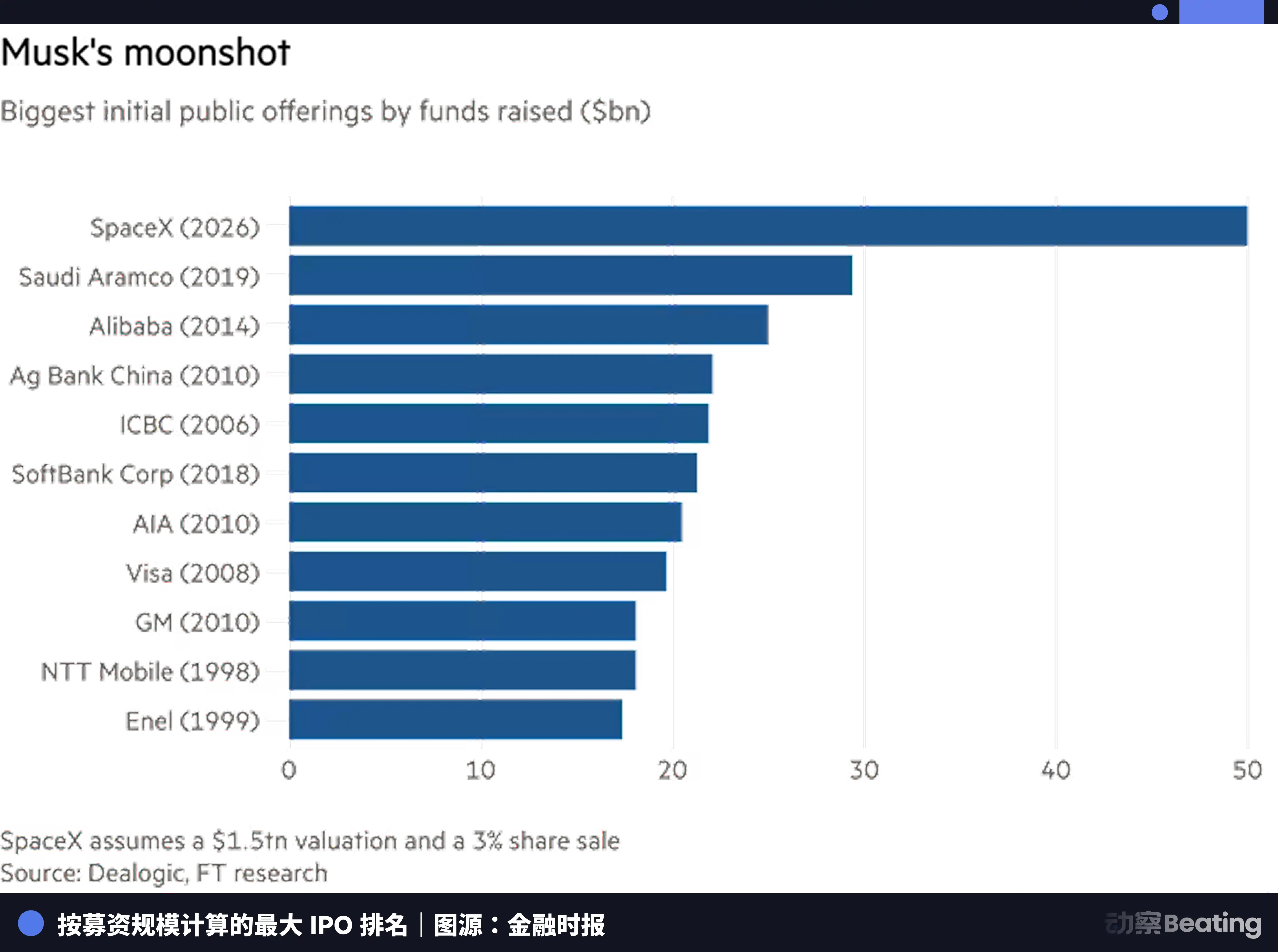
SpaceX completed a similar setup earlier; its private funding round covered all capital needs for its three product lines: rocket development, Starlink deployment, and deep space exploration. According to Reuters, SpaceX plans to IPO at an estimated valuation of about $1.75 trillion. If it goes public, it will become the largest IPO by fundraising in history and will directly rank sixth in market value in the U.S., following Nvidia, Apple, Microsoft, Amazon, and Alphabet.
Then there is Stripe, the payment company that processed $19 trillion in transactions in 2025, a 34% increase year-over-year. In February 2026, through an employee stock buyback, its valuation reached $159 billion. Co-founder John Collison stated in an interview: IPO is just a “solution to a problem” for us.
This batch of companies is not going public because the market environment is unfavorable; rather, they no longer urgently need public market funds. The private market offers equivalent capital along with fewer regulatory constraints and information disclosure requirements.
However, not needing money does not equate to not needing to go public.
Entry into indexes, the real spoils
Financing is just the first layer of motivation for going public, the second layer is liquidity for individuals.
SpaceX has thousands of employees holding options and RSUs; the company has allowed some employees to cash out early through tender offers in recent years, but this method has limits on quotas and frequency, and the pricing is driven by the company, not market pricing.
For a company with tens of thousands of employees, this channel is too narrow. The public market can provide a true, continuous, market-priced liquidity outlet.
The same pressure exists on the VC side. Revolut's shareholder list includes a16z, Fidelity, and Coatue, and these funds' LPs are not seeking just paper valuation increases, but real cash returns. The private secondary market can address part of the exit demand, but its scale and efficiency are far inferior to those of the public market. When funds mature, LPs need to withdraw their money; paper wealth does not count.
Therefore, this batch of companies still needs to go public, but the combination of variables driving the IPO has changed. Financing needs have significantly decreased, while employee liquidity and VC exits remain basic necessities, and on top of these traditional motivations, a structural force that has been underestimated by most for the past decade is quickly increasing in weight.
In 1975, John Bogle founded the first index fund aimed at individual investors tracking the S&P 500 at Vanguard. Wall Street's reaction was mockery; active stock selection was for professionals, while passive following was a lazy strategy, and no one wanted to buy a mediocre product.
Half a century later, the lazy ones won.
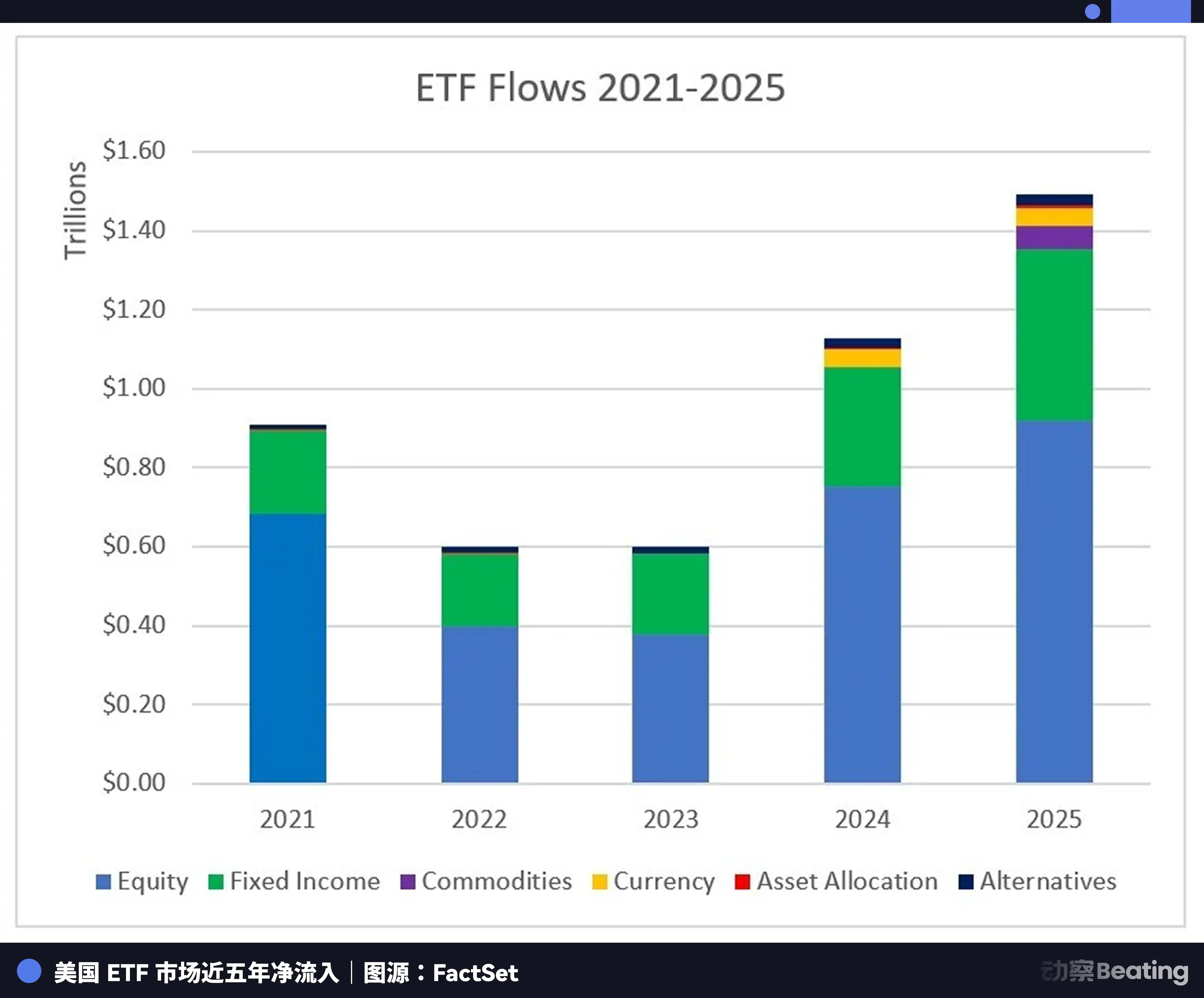
As of March 2025, assets managed by U.S. passive funds (including mutual funds and ETFs) reached $15.96 trillion, accounting for 51% of the entire mutual fund industry’s assets, exceeding actively managed funds for the first time. In the year 2025, net inflows to the U.S. ETF market amounted to $1.49 trillion, setting a record, with equity ETFs attracting $923 billion.
Behind these numbers lies a mechanical logic. Once a stock is included in an index, all funds tracking that index must allocate it by weight. There is no subjective judgment, no waiting for the right moment, just mandatory buying. Moreover, as long as the company remains in the index, funds will hold it perpetually.
It is important to clarify that passive funds are price takers, not price makers. Price discovery for stocks is still mainly accomplished by active fundings, including analyst research, institutional trader battles, and hedge fund bets.
However, what passive funds are doing is also critical; they provide a huge, stable, non-discretionary holding base. This base will not panic sell due to quarterly reports falling short of expectations, nor will it cut positions because a CEO tweeted; it serves as ballast.
For a company like SpaceX, the value of this ballast can be quantified.
SpaceX anticipates a listing valuation of about $1.75 trillion, which would place it directly among the top six within the NASDAQ 100. According to current rules, newly listed companies usually need to wait a maximum of one year to qualify for inclusion in major indices like the S&P 500 or NASDAQ 100. This waiting period is originally intended to verify whether a company can withstand liquidity pressures stemming from large-scale institutional buying.
But for SpaceX, this waiting period means that funds tracking the NASDAQ 100, including the Invesco QQQ managing over $400 billion, will be unable to allocate one of the top ten companies by global market value for up to a year, leading to an unacceptable tracking error.
The pressure is not on SpaceX, but on the index funds themselves.
Thus, NASDAQ proposed the Fast Entry rule, which allows new listed companies to fast-track inclusion if their market value ranks among the top 40 of existing components after 15 trading days post-listing. This rule is still pending approval, but NASDAQ itself admits it is designed to attract high-valuation private companies like SpaceX, Anthropic, and OpenAI.
SpaceX has made rapid entry a prerequisite for choosing an exchange; it has the confidence to do so because the inherent demand from passive index systems gives it bargaining power.
Some may ask, if the core goal is to enter an index, why not pursue a direct listing? A direct listing avoids underwriting fees, can still list, and still enter the index.
The answer lies in scale.
SpaceX's IPO is expected to raise over $25 billion; it needs to create a sufficiently large float on its first trading day to meet liquidity thresholds for passive funds. A direct listing has no new shares issued; the number of shares available on the first day entirely depends on how many existing shareholders are willing to sell. For a company valued at $1.75 trillion, if the float on the first day is too small, passive funds cannot complete their build-up, leading to severe price distortions.
The structured issuance of an IPO is precisely a tool that paves the way for the entry of large-scale passive funds. This logic also explains why Revolut and Stripe are not in a hurry.
Revolut’s $75 billion entering the NASDAQ 100 has limited weight, and the passive buy driven by this won't be proportional. Its delay also has other practical reasons, such as its banking license still being finalized, and management hoping for a few more quarters of profit data to solidify the valuation narrative.
But the arithmetic of index weight is also part of the calculation. Stripe's $159 billion valuation is already considerable, but John Collison says the IPO is not a priority; the reasoning behind this may be similar—waiting for valuation to increase further and for the index weight to become more meaningful when the structural benefits of an IPO can be maximized.

The value equation of going public is being rewritten.
Financing takes a backseat; employee liquidity and VC exits are fundamental, while the perpetual holding base brought by index investment is becoming a new variable influencing the timing of going public. It is not the only variable, but its weight has been steadily rising over the past decade, and in the SpaceX case, it has been brought to the negotiation table for the first time.
So, what role do exchanges play in this game?
Surprised by Hyperliquid
NASDAQ modified its index inclusion rules for a company that has not yet gone public.
Meanwhile, the parent company of the NYSE, ICE, invested $2 billion in the prediction market platform Polymarket in October 2025, with a valuation of around $8 billion. In March 2026, ICE took a stake in the cryptocurrency exchange OKX at a valuation of $25 billion, gaining a board seat.
On the surface, these two moves appear to be competitive strategies, but underneath lies the same anxiety: the scarcity of gatekeepers is disappearing.
There was once an unwritten boundary between the NYSE and NASDAQ. Traditional industries went to the NYSE, while tech and emerging sectors went to NASDAQ. This boundary was maintained for decades, with both sides holding monopolies in their respective tracks.
This tacit agreement has now broken down.
The deal structure of ICE’s investment in OKX is worth examining. The 120 million users of OKX will gain access to the U.S. futures market operated by ICE, alongside tokenized trading of NYSE-listed stocks. In return, ICE acquires real-time cryptocurrency pricing data from OKX for the development of regulated cryptocurrency futures products.
ICE Vice President Michael Blaugrund stated plainly that future competitors for ICE may not necessarily be traditional institutions such as CME or NASDAQ, but could be DeFi protocols or super apps. He specifically mentioned Robinhood and Uniswap.
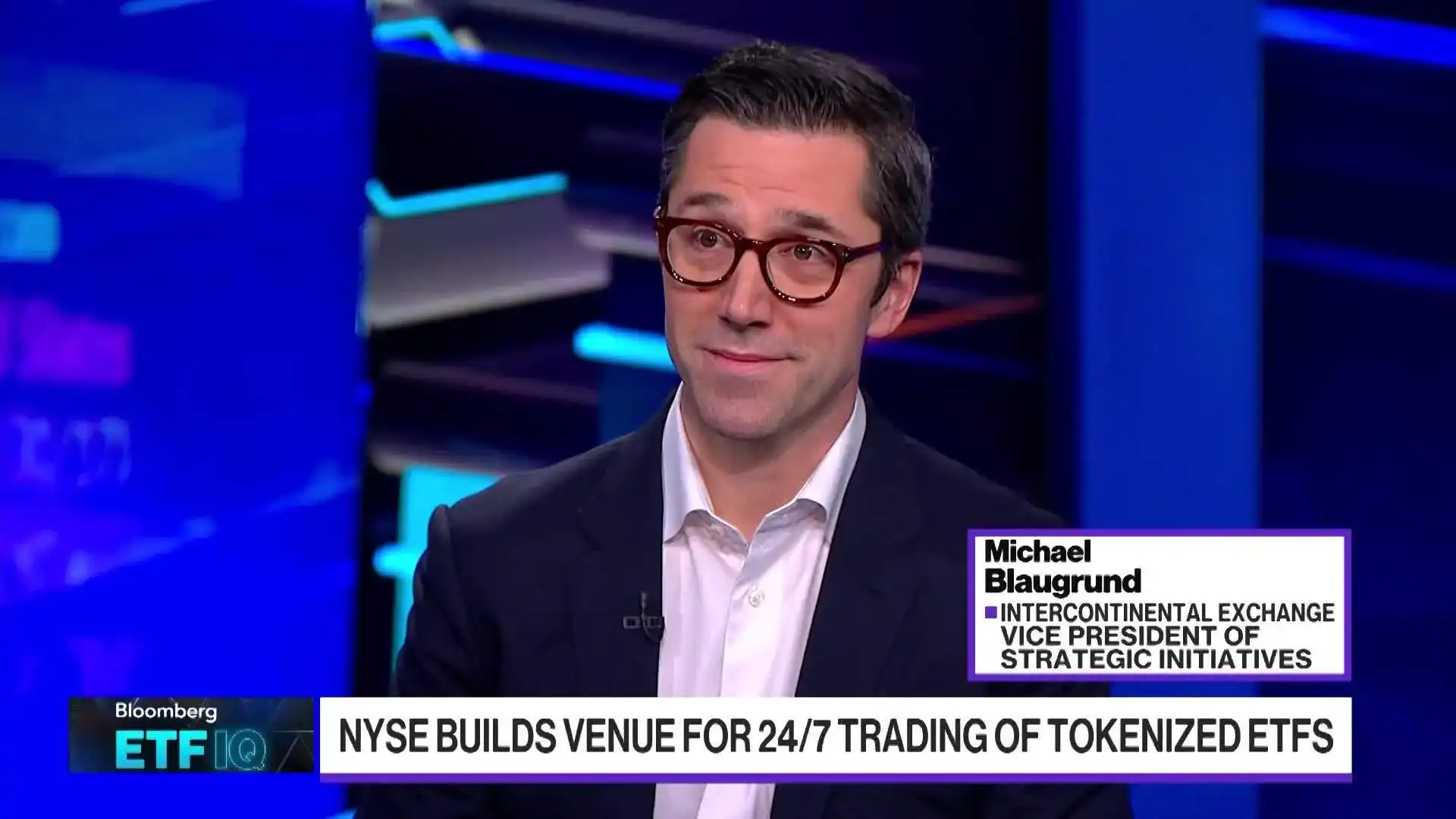
A company that owns the NYSE openly admits in public that its future competitors could be a decentralized protocol. This statement itself sends a signal.
The investment logic behind Polymarket is similar. ICE is not acquiring a prediction market platform; it is buying an entry point into a chain-based trading infrastructure. Collaboration includes institutional distribution of Polymarket data and future tokenization projects.
In the 1990s, NASDAQ broke through the NYSE’s trading floor monopoly with electronic trading. The weight shifted, but the landscape did not disappear. Today, chain-based infrastructure is replaying this script, eating into the share of derivatives and alternative assets on the edges of exchanges.
Hyperliquid provides the most concrete perspective.
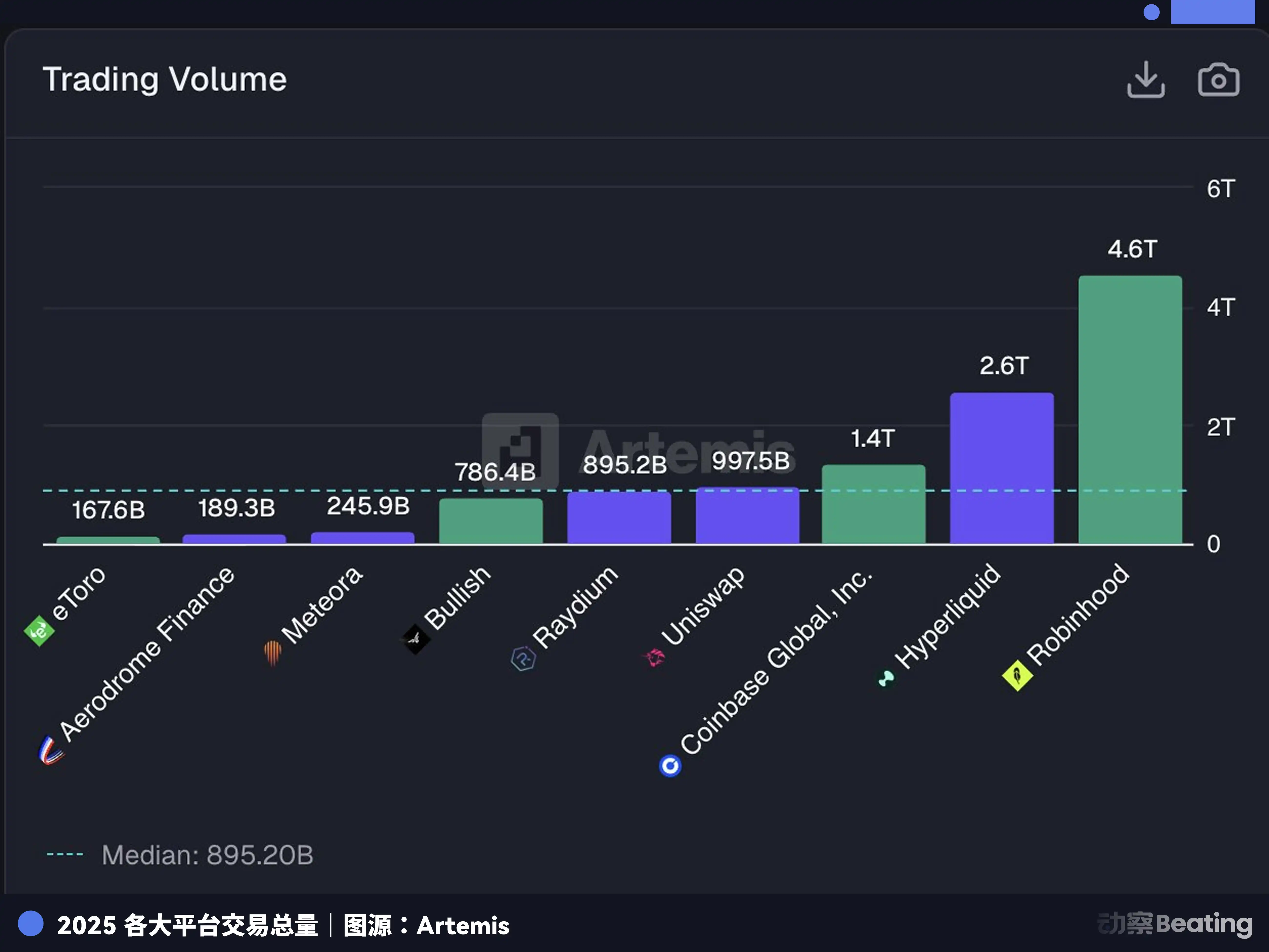
This decentralized exchange achieved a trading volume of $29.5 trillion in 2025, with an average daily trading volume of about $8.34 billion and annual revenue of $844 million, adding over 600,000 new users. For comparison, Coinbase had a trading volume of about $1.4 trillion during the same period. An on-chain protocol without a company entity or CEO publicly appearing, has trading volume twice that of NASDAQ-listed Coinbase.
More noteworthy is the change in its user structure.
In 2025, Hyperliquid launched on-chain perpetual contract trading for global stocks like the S&P 500, NASDAQ Index, Gold, Oil, Nvidia, and Tesla through the HIP-3 protocol; in the top 30 markets on its tokenized platform trade.xyz, only 7 are crypto trading pairs. On March 15, the total open interest in the HIP-3 market reached a historical high of $1.43 billion, increasing 100 times over six months, with trade.xyz alone accounting for 90% of it.
In March, escalation of tensions in the Middle East triggered drastic fluctuations in oil prices, while traditional futures exchanges closed on weekends, causing a flood of professional traders to flock to Hyperliquid. These traders are not retail; they come for 24/7 continuous trading, on-chain transparency, and higher capital efficiency. While traditional exchanges are still methodically opening and closing, on-chain markets have transformed the concept of “around-the-clock liquidity” into reality.
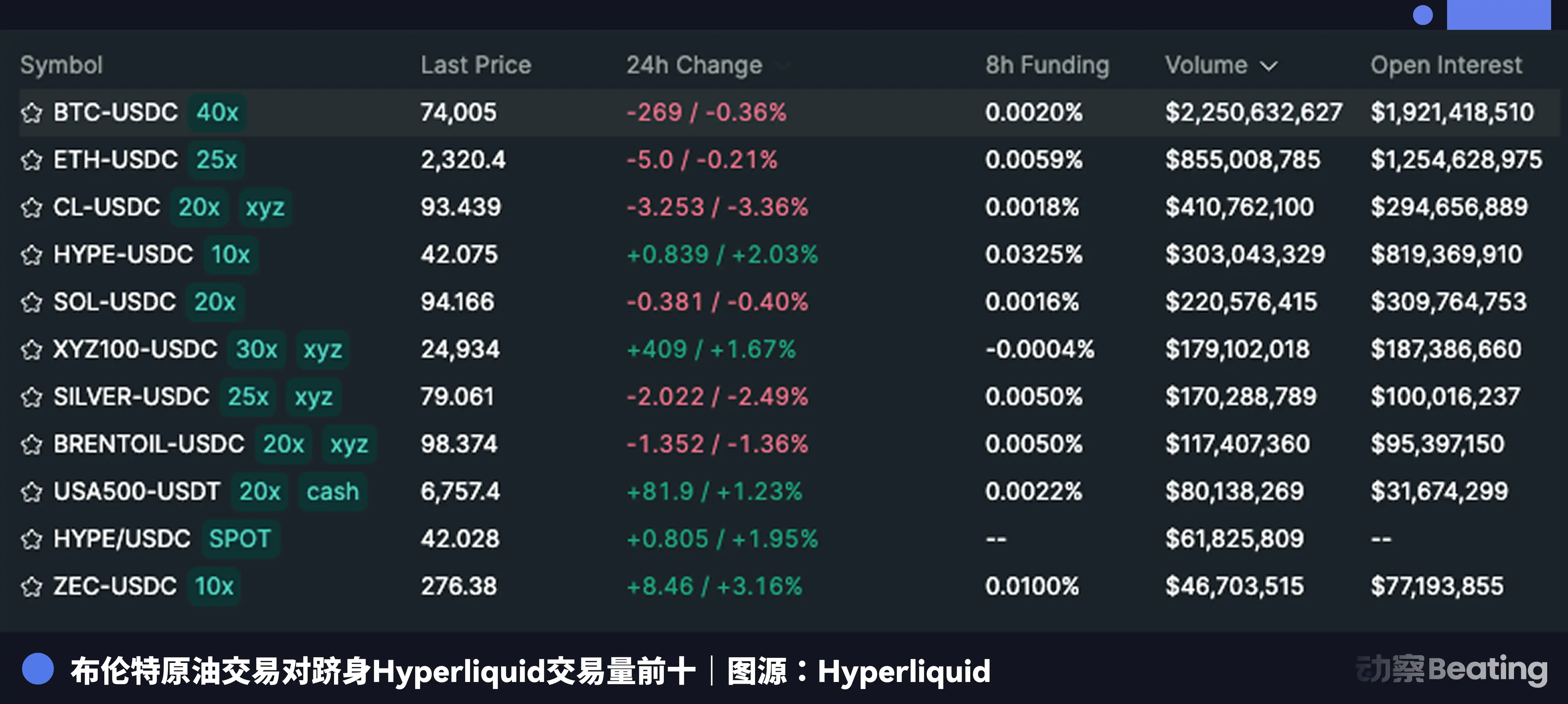
These numbers and the current IPO business of exchanges are not in the same lane; the direct competition between them is very limited. However, ICE’s concerns are not about today, but about trends.
When chain-based infrastructure can support perpetual contract trading for global stocks, when professional traders begin to hedge and speculate using on-chain tools, and when the liquidity of tokenized stocks gradually approaches that of traditional exchanges, the moat of exchanges is being bypassed little by little.
The NYSE chooses to invest in on-chain players, while NASDAQ chooses to modify its own rules. Both actions point to the same judgment: the era of relying on monopoly to maintain status has ended; active expansion is the only option.
Conclusion
In 1971, no one viewed NASDAQ's electronic quoting terminals as a threat. In 2006, no one thought the NYSE would actively dismantle its own trading floor. By 2026, no one knows how far Hyperliquid and the chain-based infrastructure it represents will go.
But after every rule concession, the old pattern has not disappeared; rather, it has been re-layered.
The NYSE still exists today, still strong, but no longer alone in its pricing power. NASDAQ will become even stronger after SpaceX goes public, and that perpetual holding base will continue to grow alongside the expansion of market value. The logic behind ICE's investments in OKX and Polymarket is similar; if on-chain trading is inevitable, then become an infrastructure provider in the on-chain world, rather than waiting to be bypassed.
The on-chain system will not disappear, and it may even grow stronger, becoming the new infrastructure.
In a world where both systems coexist, where will the next sufficiently large company with enough confidence to set terms go to knock? Or to phrase it differently, does it still need to knock?
免责声明:本文章仅代表作者个人观点,不代表本平台的立场和观点。本文章仅供信息分享,不构成对任何人的任何投资建议。用户与作者之间的任何争议,与本平台无关。如网页中刊载的文章或图片涉及侵权,请提供相关的权利证明和身份证明发送邮件到support@aicoin.com,本平台相关工作人员将会进行核查。


