The flames of war in the Middle East have been burning for weeks, and black smoke billows over the Strait of Hormuz. Brent crude oil futures broke through $107 per barrel at one point this week, and the lifeblood of global energy is experiencing unprecedented "obstructions".
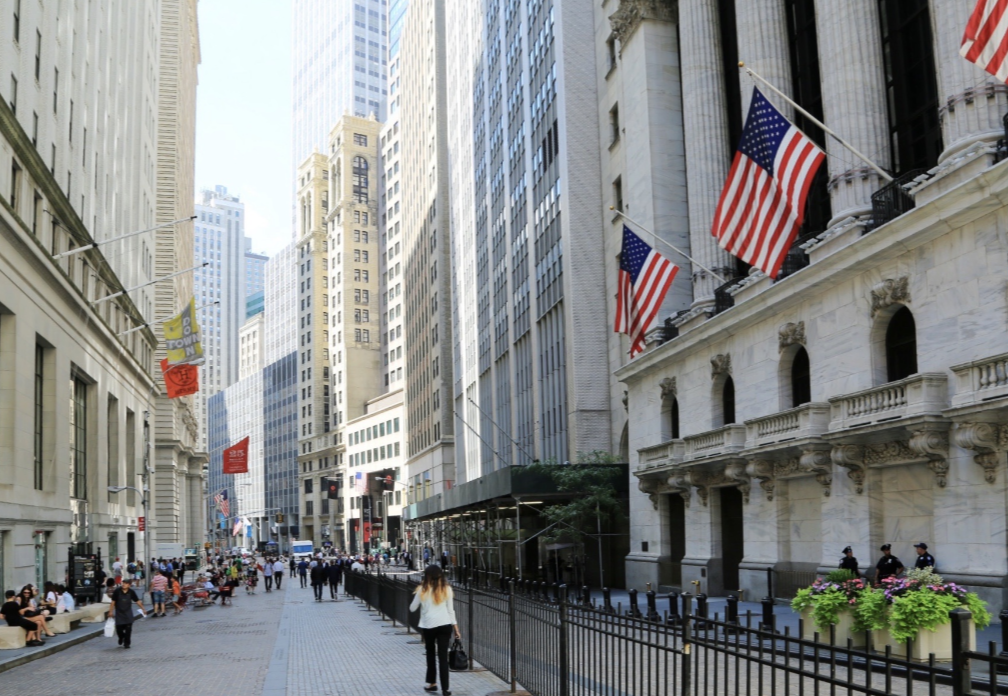
In the face of all this, the performance of the US stock market appears rather "unusually calm". The S&P 500 index has only fallen about 3% since the conflict escalated, and last week some funds even attempted to bottom-fish. Why did Wall Street traders not flee when bombs fell on oil facilities?
Bank of America strategist Michael Hartnett's team provided an accurate diagnosis: The market is still supported by "three major beliefs"—the war will not last long, the $1.8 trillion private credit market will not face a meltdown, and Trump will ultimately step in to save the market at the last moment.
1. One Belief: The War Won't Last Long?
Reality Check: The Strait of Hormuz Has Become a "Ghost Town," No End in Sight for the Energy War The first fantasy of investors is that this is just a "quick decision battle".
● However, reality is moving in the opposite direction. According to data tracked by shipping consultancy Kpler, currently an average of only 2 oil tankers dare to pass through the Strait of Hormuz daily, while before the conflict, this number was about 100 tankers. About 400 oil tankers and cargo ships are stranded in the surrounding waters of the strait, afraid to move.
○ JPMorgan pointed out in a recent report that current shipping has fallen into extreme contraction, with the few ships that pass through being "mostly related to Iran" and needing to hug the Iranian coastline, undergoing "verification" before being released. This is not genuine navigation but a form of "controlled release" under political understanding.
○ Former White House official Bob McNally warned that even if the US sends warships for escort, it may take weeks to eliminate asymmetric threats such as mines, drones, and small boats planted by Iran.
● The war has not only not ended, but has further escalated. On March 18, parts of the oil and chemical facilities in Iran's Bushehr Province were attacked by the US and Israel. Subsequently, the Iranian Revolutionary Guard issued an emergency warning, declaring that the oil facilities of Saudi Arabia, the UAE, and Qatar have become "legitimate targets". That night, the Saudi capital Riyadh was hit by ballistic missiles, and Qatar's Ras Laffan Industrial City also caught fire due to missile strikes, causing extensive damage.
● Although US officials later revealed that Trump said he "does not want to launch further attacks on Iranian energy facilities" in an attempt to cool the situation. But the damage has already been done— all oil facilities along the Persian Gulf are now under the gun.
2. Second Belief: The Private Credit Market Won't Trigger a Crisis?
Reality Check: The "Liquidity Illusion" of the $1.8 Trillion Market is Being Examined
● The second major belief supporting the market revolves around that massive yet hidden corner—the $1.8 trillion private credit market. The consensus among investors is that this "shadow banking" system, which emerged after 2008, though lightly regulated and highly leveraged, is not likely to trigger a systemic crisis.
● In the past week, this belief has been questioned. JPMorgan has taken the lead by tightening loans to some of its private credit funds after reassessing the value of certain loans.
○ Investment giant Pimco issued a stern warning. Analysts pointed out that the "liquidity premium" of private credit has been severely compressed—investors are not receiving sufficient extra returns for locking their money in illiquid assets. When the market turns, these assets will be hard to sell.
● More concerning data comes from the fundamentals. Currently, the proportion of private credit borrowers with negative free cash flow has risen to about 40%, while in 2021, this figure was only a quarter. An increasing number of borrowers are starting to adopt the "Payment in Kind" (PIK) method, which means borrowing money to pay interest rather than using cash. This implies that the yields reported by many funds are merely "paper wealth," while real cash repayments are dwindling.
● However, there are still divisions in the market. Executives from Deutsche Bank, UBS, and Société Générale publicly spoke this week, attempting to reassure the market. SocGen CEO Slawomir Krupa stated that the extent of repricing of their collateral is "not significant," and the proportion of problematic loans is very small. Deutsche Bank CEO Christian Sewing even claimed that they have had "no losses for over a decade" in the private credit space. The debate over "systemic risk" has not reached a conclusion but is enough to keep Wall Street on edge.
3. Third Belief: Trump Will Always Save the Market?
Reality Check: Powell Turns Hawkish, Policy Support Becomes "Policy Squeeze"
● In the early hours of March 19, the Federal Reserve announced that it would maintain interest rates at 3.50%-3.75%, which was in line with expectations. However, what truly shocked the market was Fed Chair Powell's hawkish stance at the press conference. Faced with soaring oil prices due to the Middle East situation, Powell not only did not hint at loosening but also clearly stated: "No consideration of cutting rates until inflation improves further." He even revealed that the committee had begun discussing "whether the next step might be a rate hike"—though this is not yet the mainstream scenario, simply bringing it to the table is a strong signal of tightening.
● Powell attributed the current inflation to "the dual shock of tariffs and energy" and warned that commodity inflation may not significantly recede until at least mid-year.
● What does this mean? It means that if oil prices continue to stay above $100, eroding consumer purchasing power and pushing up inflation, the Fed is not only unlikely to save the market but may actually further tighten monetary policy to combat inflation. A "stagflation" scenario is precisely the "poison" most feared by the stock market.
● The dot plot indicates that Fed officials expect the median federal funds rate to be 3.4% by the end of 2026, meaning there will only be one 25 basis point rate cut for the entire year, and it has been pushed back to the end of the year.
● After the decision was announced, all three major indices of the US stock market fell collectively. The Dow Jones fell 1.63%, the S&P 500 fell 1.36%, and the Nasdaq fell 1.46%. The dollar index surged close to 100 points, and gold plunged below $4900.
● The political landscape is also swinging. While investors expect Trump to "fix everything," the reality is that Trump's latest statement is that he "does not want further attacks on Iranian energy facilities"—this seems more like an emergency avoidance after the situation is out of control rather than a hard support.
4. Tail Risks and the Predicament of Central Banks
● The current anxiety in the market is starkly revealed in the prices of hedging tools. Experts from Liquidnet Alpha pointed out that the VIX skew is nearing historical highs, which means the market is paying a high premium for "tail risks"—investors are extremely pessimistic yet afraid to leave the market, so they can only buy insurance and endure.
● This week, not only the Federal Reserve but also the European Central Bank, Bank of Japan, and Bank of England will make their statements successively. Against the backdrop of soaring oil prices, central banks are caught in a dilemma: Loosen, and inflation runs wild; tighten, and the economy collapses.
● The warnings from Barclays strategists are becoming a reality: the longer the Strait of Hormuz remains blocked, the more obvious the market's stagflation characteristics will become. And in the face of stagflation, policymakers have almost no real antidote.
● The "three major beliefs" on Wall Street have now shown cracks of loosening. When the war will end remains uncertain, the hidden reefs of private credit loom, while the once all-powerful "savior" is now sitting in the Federal Reserve's office, looking into the camera and saying: "We need to raise rates again."
Join our community, let's discuss and become stronger together!
Official Telegram community: https://t.me/aicoincn
AiCoin Chinese Twitter: https://x.com/AiCoinzh
OKX Welfare Group: https://aicoin.com/link/chat?cid=l61eM4owQ
Binance Welfare Group: https://aicoin.com/link/chat?cid=ynr7d1P6Z
免责声明:本文章仅代表作者个人观点,不代表本平台的立场和观点。本文章仅供信息分享,不构成对任何人的任何投资建议。用户与作者之间的任何争议,与本平台无关。如网页中刊载的文章或图片涉及侵权,请提供相关的权利证明和身份证明发送邮件到support@aicoin.com,本平台相关工作人员将会进行核查。