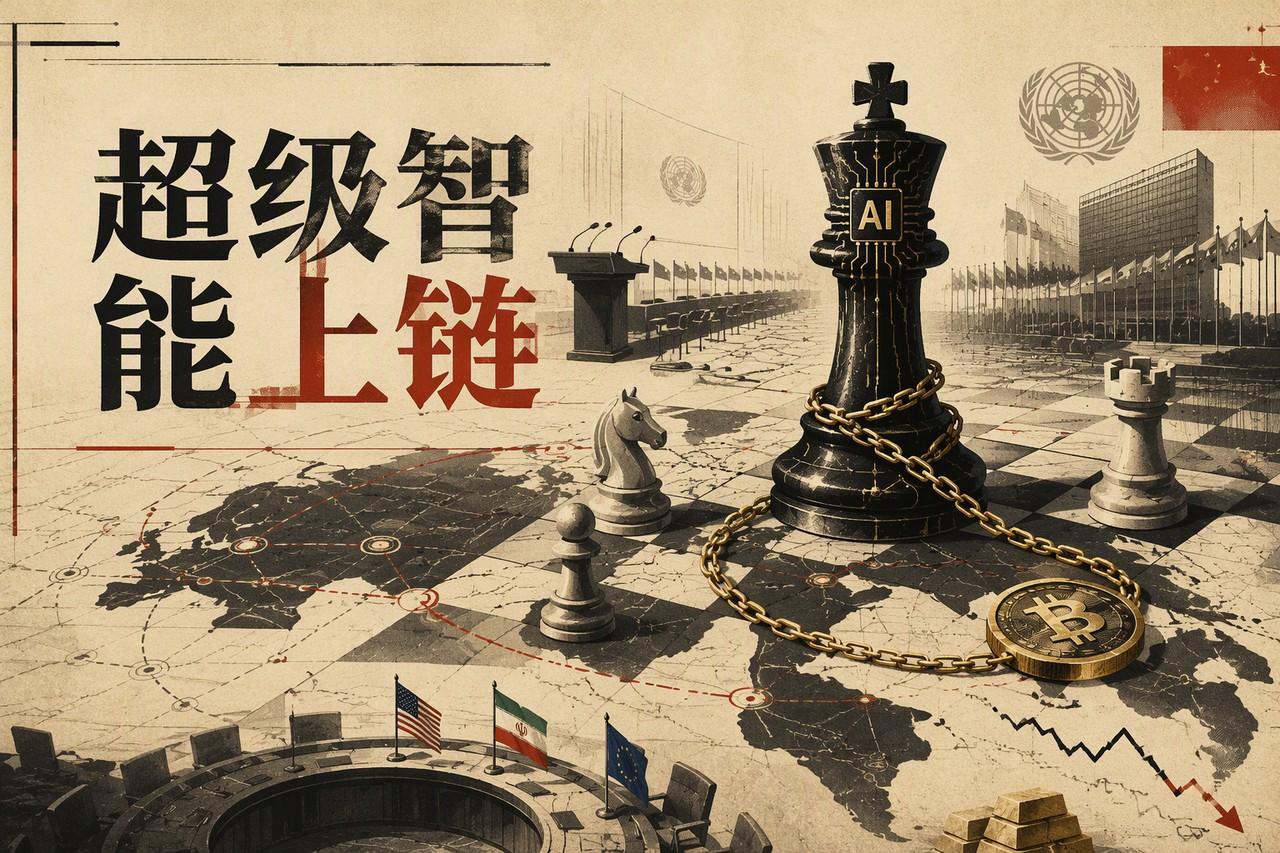
On March 18, 2026, the Iranian Armed Forces issued strong signals through official channels, declaring they would employ "advanced weapons never used in warfare before," further escalating the already tense situation in the Middle East. At the same time, the Strait of Hormuz, one of the global energy arteries, faced unprecedented congestion and "shutdowns": According to Kpler data, the daily passage of oil tankers plummeted from about 100 vessels to only 2 vessels, with one source reporting that approximately 400 tankers were stranded around the corridor, effectively pausing the maritime transport chain. As the energy corridor is choked, global risk appetite is being repriced, raising a pressing question—will cross-border capital once again turn its gaze toward crypto assets, viewing them as a "new safe haven"?
The Energy Shock of Almost Blocked Hormuz
The Strait of Hormuz is one of the most sensitive geopolitical chokepoints on the global energy map. Over the years, Iran has "controlled the passage security of vessels in the Strait of Hormuz," a reality that naturally amplifies any military statements. Historically, whenever regional tensions escalate, the market quickly returns to a simple assessment: whoever can influence this passage holds the bargaining chips regarding global oil prices and some shipping costs. In the current situation, this structural advantage has been highlighted once again and is concretized through transport data.
According to Kpler data, the volume of oil tankers in the Strait of Hormuz has plummeted from an average of about 100 vessels to only 2 vessels, indicating that the actual traffic volume has been effectively "cut in half." Adding to this, the claim from a single source indicating approximately 400 tankers stranded suggests that while the specific economic losses are difficult to calculate yet, the visual impact is sufficient to create an image of a "maritime parking lot." Data-wise, the traffic volume has dropped by about 99%, which not only marks a collapse in shipping operational efficiency but also delivers a direct blow to energy supply expectations.
Once energy transport is obstructed, the first and foremost reassessment occurs regarding the pricing logic of crude oil—even if spot inventories can buffer in the short term, the market will factor future supply uncertainties into prices; next is the increase in shipping costs and insurance rates, with the risk premium of passage cascading down from oil tankers to containers; further, there will be a chain reaction impacting global inflation expectations, as higher fuel costs will leak through logistics, manufacturing, and consumer prices. This effectively adds an "energy shock factor" on top of an already complicated macro environment in terms of asset pricing.
Iran's Escalation and Deterrent Posture
While the passage data drastically worsened, the Iranian military chose to advance deterrence through a dual-track narrative of words and weapons. Recently, Iran has been intensively vocal through official media, including Press TV, emphasizing the deployment of "advanced weapons not previously used on the battlefield." The deliberate highlighting of "first use" is a part of psychological warfare—despite the external uncertainties regarding specific models and performance details, the mere "unknown" is enough to amplify the opponent's risk expectations.
Accompanying the weapons narrative is a more straightforward geopolitical signal. High-ranking Iranian military officials openly warned that if Kharg Island is attacked, all facilities of the attacking country will be targeted. Kharg Island, as a crucial component of Iran's oil infrastructure and loading node, being singled out means that the imagination of conflict extends from maritime passage security to the energy production and storage and transportation systems themselves. In other words, should the opponent cross this red line, they will face not only local friction but greater risks of facility assaults in the future.
This escalation of deterrence does not necessarily lead to immediate military confrontation, but will significantly intensify the risks of misjudgment and uncertainty of conflict spillover. In an environment of multiple military deployments and concentrated naval and aerial activities, any reconnaissance, interception, or technical failure may be interpreted by the opponent as "escalation of provocation," triggering a chain reaction beyond the original game script. For the market, the true challenge in pricing lies precisely in this "mistaken strikes, misreadings, and misjudgments" tail risk, while the repeated mention of advanced weapons adds yet another layer of vague and high-intensity filter on this tail risk.
Asset Selection Differentiation Amid Oil Route Anxieties
In the macro context of pressured energy corridors, the asset markets did not present a singular direction of "panic templates." On one side, there are expectations of supply squeezes potentially faced by traditional energy chains, while on the other side, there have emerged scenes of Micron Technology and others in the tech sector rising against the trend. Micron's stock price continued to rise during the period of escalating geopolitical risks, reflecting a structural differentiation of capital: some funds are betting on the medium to long-term growth logic of the semiconductor and AI-related industry chains, choosing to ignore short-term geopolitical noise; while others are starting to reposition around commodities, military, and defensive sectors.
Returning to the experiential trajectory of traditional safe-haven assets, similar geopolitical events typically first lead to a strengthening of gold and temporary favor for dollar assets: Gold serves as a bottom catch for monetary credibility and geopolitical insecurity, while U.S. Treasury bonds are bought under the dual narrative of "risk aversion + liquidity," with actual yield changes more dependent on market expectations of the central bank's next policy responses. As long as this logic has not been credibly refuted, gold and dollar-denominated debt remain the preferred buffers for many institutions and sovereign funds.
However, in recent years, within the alternating environment of conflicts and sanctions cycles, the role of crypto assets has begun to subtly evolve. On one hand, it provides a de facto alternative cross-border channel and means of value transfer for entities hampered by capital controls and sanctions; on the other hand, in areas where residents face currency devaluation and banking instability, leading assets like Bitcoin are also viewed as "self-rescue tools." This role has moved from the margins to partial visibility, causing each time keywords like sanctions, freezes, and restricted payments appear, the crypto sector experiences a wave of narrative peaks.
Three Pathways for the Resurgence of Safe Haven Narratives
Under the combined impact of blockage in Hormuz and military escalation, the internal funds of the crypto market may show various differentiation pathways without requiring any specific price targets. Three typical scenarios can be roughly imagined: First, some funds will regard leading assets as "digital gold" substitutes, hedging against crowded traditional safe-haven trades (gold, dollar-denominated debt) by allocation, pushing assets of greater market concentration to gain relative advantages; second, traders with strong risk appetites may flock to high beta altcoins, seeking greater volatility in the fluctuations driven by safe-haven narratives; third, more conservative long-term funds may choose to wait and see, only enhancing liquidity preparation in both on-chain and off-chain systems without rushing to buy.
Meanwhile, against the backdrop of geopolitical sanctions and cross-border payment limitations, the real demand for decentralized assets in certain regions is likely to increase. Whether enterprises bypass specific clearing networks for settlement or individuals attempt to withdraw some wealth from local financial systems, it may be realized through crypto assets as intermediaries. This demand often does not manifest itself in the price trends of a single trading day but gradually emerges through on-chain activity, the scale of cross-border transfers, and OTC premiums over a longer cycle.
It is important to emphasize that the safe-haven narrative itself can easily be magnified by emotions and the media’s magnifying glass. In an environment of high-frequency information dissemination, single events being repeatedly interpreted can easily lead the market to misread one or two high-volume candlesticks as signals of a "global asset pricing paradigm shift." Historically, most "geopolitically driven" phenomena see price fluctuations far exceeding actual structural changes in the fundamentals. Therefore, for traders, it is a necessary prerequisite to survive within such narrative cycles to be cautious of overinterpreting single-day fluctuations and distinguishing between headline fervor and genuine capital behavior.
Energy Shock and the Long Tail Effects of Computing Power Landscape
Over a longer period, the linkage between oil prices and electricity costs may alter the operating cost curve and geographic distribution of miners via a somewhat covert pathway. Rising energy prices will directly elevate mining costs in regions reliant on fossil fuel power generation, forcing marginal miners to cut back on production or even exit the market; in contrast, areas boasting low-cost hydro or wind resources, or those with long-term locked-in electricity price contracts, will likely gain relative advantages in competition, resulting in a gradual concentration of computing power in these areas and subsequently altering the geographical decentralization map at the network layer.
If the turmoil in the Middle East and surrounding regions evolves into a long-term unstable state, not only will local energy project investments and infrastructure expansions face pressure, but on-chain activities and OTC liquidity within the region will also be affected. Past experiences indicate that rising uncertainty often brings about stricter regulations, capital flow restrictions, and enhanced KYC, which weakens the activity levels of local exchanges and OTC channels, forcing funds to migrate through more covert or distant pathways; simultaneously, regional players may turn to offshore platforms and on-chain protocols, increasing the complexity of cross-timezone capital flows and address interactions.
In a broader macro context, the energy shock combined with geopolitical risks will impact the rhythm and narrative focus of institutional allocation to crypto assets. When inflation, growth, and interest rate expectations are continuously revised, the correlation structure of traditional assets shifts, prompting some institutions to perceive Bitcoin and the like as alternative allocation tools with "unstable correlations to traditional risk assets," constructing positions more from the perspective of diversifying risk and hedging against extreme scenarios; while others may revert to the old label of "crypto = high beta tech growth assets," choosing to reduce allocation under intensified macro pressures. The tug-of-war between these two narratives will determine the specific form of institutional participation and allocation structure in the next stage.
In the Atmosphere of Gunpowder Smell and Uncertainty, Crypto is Just One of Many Options
In summary, the Iranian military escalation and the blockade of the Hormuz energy corridor are converging into a pressure test of global risk appetite: on one hand, advanced weapons and tough statements elevate the tail risks of conflict escalation and misjudgments; on the other hand, the drastic decline in traffic volume and the stranding of tankers crystallize this risk as an unstable factor affecting energy supply and inflation expectations. Under this multiplicity of shocks, global capital is forced to reorder among various assets, with traditional safe havens, tech growth, and crypto assets represented by Bitcoin all being different squares on the same asset allocation chessboard.
It must be made clear that there remains a considerable amount of information gap and verification needed regarding the specific models of weapons Iran intends to use, actual deployment progress, and outcome details. Some claims, including those regarding radar results, lack multi-source confirmation and have not been adequately disclosed by authoritative channels, treating them as "established facts" for high-leverage trading decisions at this stage poses risks far exceeding potential rewards. For professional participants, a more rational approach is to view such information as incomplete noise and to handle it within risk models with higher discount factors, rather than directly translating it into directional betting bases.
Looking ahead, if the situation gradually eases, with restoration of Hormuz passage volumes and a cooling of military exercises, the rapidly ignited crypto "safe-haven label" may again retreat to a secondary position, with the narrative focus returning to internal factors such as regulatory developments, institutional participation, and technological iterations; conversely, if things escalate into a loss of control situation, leading to significant fluctuations in energy prices and global financial markets, the safe-haven narrative of crypto assets may be further reinforced, but this "label addition" also comes with higher policy and liquidity risks. For all participants, in this intertwining of gunpowder scent and uncertainty, it is more important not to bet on a single narrative, but to maintain sufficient flexibility and risk buffer across multiple scenarios.
Join our community, let's discuss and become stronger together!
Official Telegram community: https://t.me/aicoincn
AiCoin Chinese Twitter: https://x.com/AiCoinzh
OKX welfare group: https://aicoin.com/link/chat?cid=l61eM4owQ
Binance welfare group: https://aicoin.com/link/chat?cid=ynr7d1P6Z
免责声明:本文章仅代表作者个人观点,不代表本平台的立场和观点。本文章仅供信息分享,不构成对任何人的任何投资建议。用户与作者之间的任何争议,与本平台无关。如网页中刊载的文章或图片涉及侵权,请提供相关的权利证明和身份证明发送邮件到support@aicoin.com,本平台相关工作人员将会进行核查。