Written by: Wenser, Odaily Star Daily
The time left for traditional betting companies is running out, which might be the latest consensus in the prediction market arena.
In the recently concluded Oscar award event, the total betting funds on Kalshi and Polymarket surpassed 100 million dollars for the first time, whereas this figure was below 10 million dollars last year. On the other hand, Kalshi partnered with Cash APP to open up user payment channels; Polymarket, after launching the AI AgentCLI application, now supports AI Agent trading 24/7 with the help of the AgentCard launched by Alchemy. In this year 2026, marked by many historic moments and dubbed the "Year of Prediction," the prediction market duopoly is vying for new users from traditional betting companies, internet platforms, as well as traditional media and finance sectors. This time, they have chosen to target real users of payment channels and the tireless AI Agents first.
New Battleground for Prediction Market Giants: Payment Channels and AI Agent Users
Last week, the well-known investment firm Paradigm released the first public opinion survey report of the year, which is also the first survey report on prediction market platforms from this firm.
The survey results show that more than one-third (approximately 36%) of American voters have used prediction markets, whether by placing bets or browsing the market for information.
In terms of user demographics, the prediction market group under 50 years old accounts for as much as 66%, with those aged 18-34 making up 20% and those aged 35-49 making up 27%; non-white voters have a slightly higher usage rate of prediction markets compared to white voters, while males use prediction markets significantly more than females (46% to 31%).
From this perspective, in the U.S. market, prediction markets are no longer the "niche track" that they once were; they have become an "information source," "trading platform," and "information pool" closely related to households.
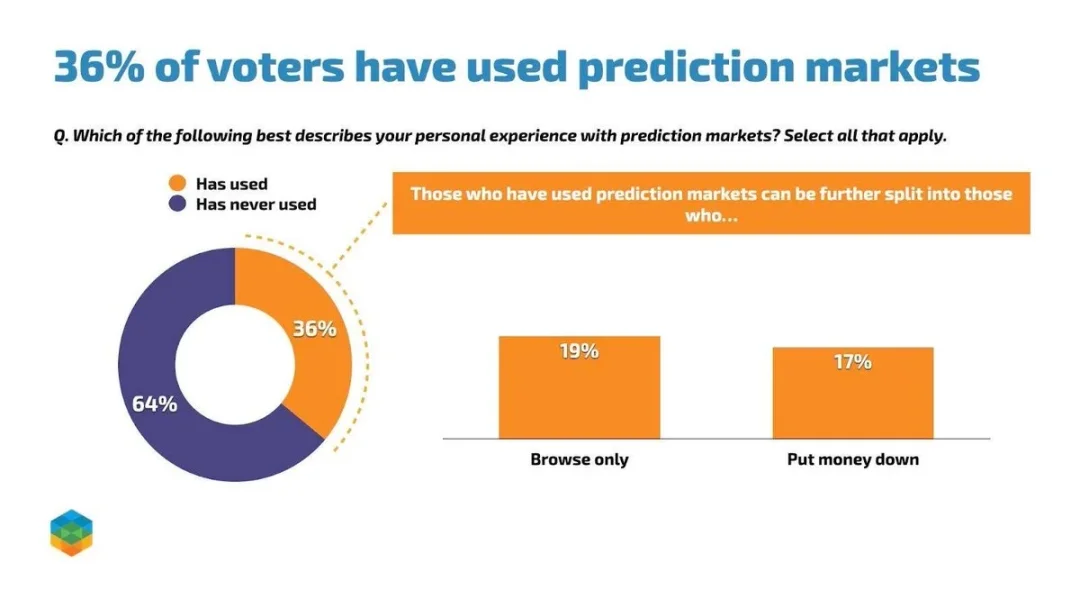
Of course, as the leading investor in Kalshi's recent 1 billion dollar financing round, Paradigm's action is undoubtedly a "Shout out for his Bag" (calling attention to its investment project), which is understandable, but this survey also reflects a new question—how will the prediction market duopoly of Kalshi and Polymarket penetrate the remaining 64% of American voters and all American citizens?
The answer is naturally: either fight against old forces or seek new growth.
Kalshi's New Growth Method: Opening Payment Channels and Encouraging Users to Fund
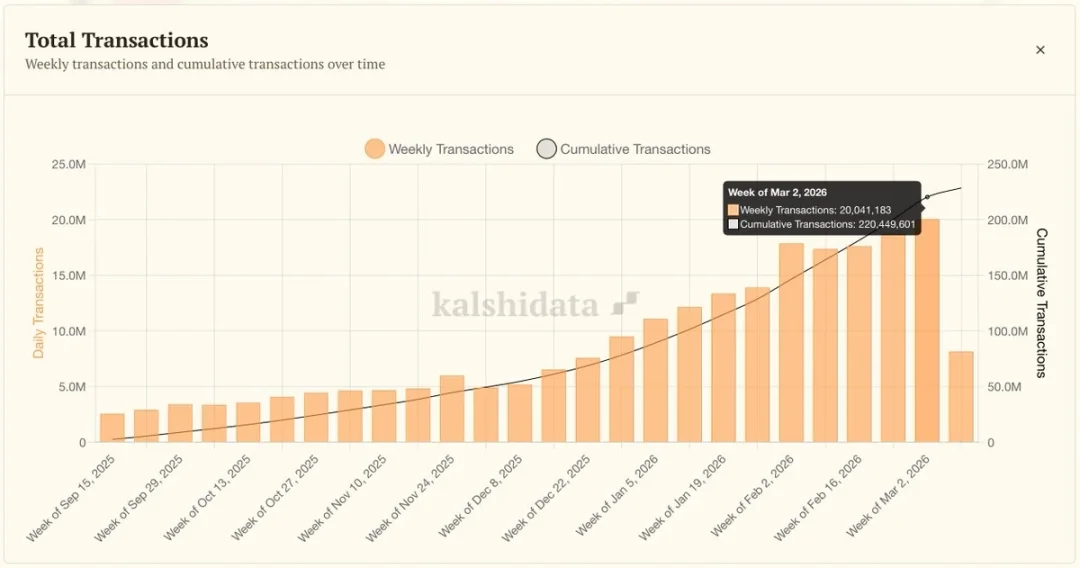
From March 2 to March 8, Kalshi's trading volume for the first time exceeded 20 million transactions, setting a record for weekly transaction volumes since the platform's establishment. At a time when trading volume and transaction numbers continue to set new highs, if they want to further their progress, seeking the existing user pool is undoubtedly a more effective approach.
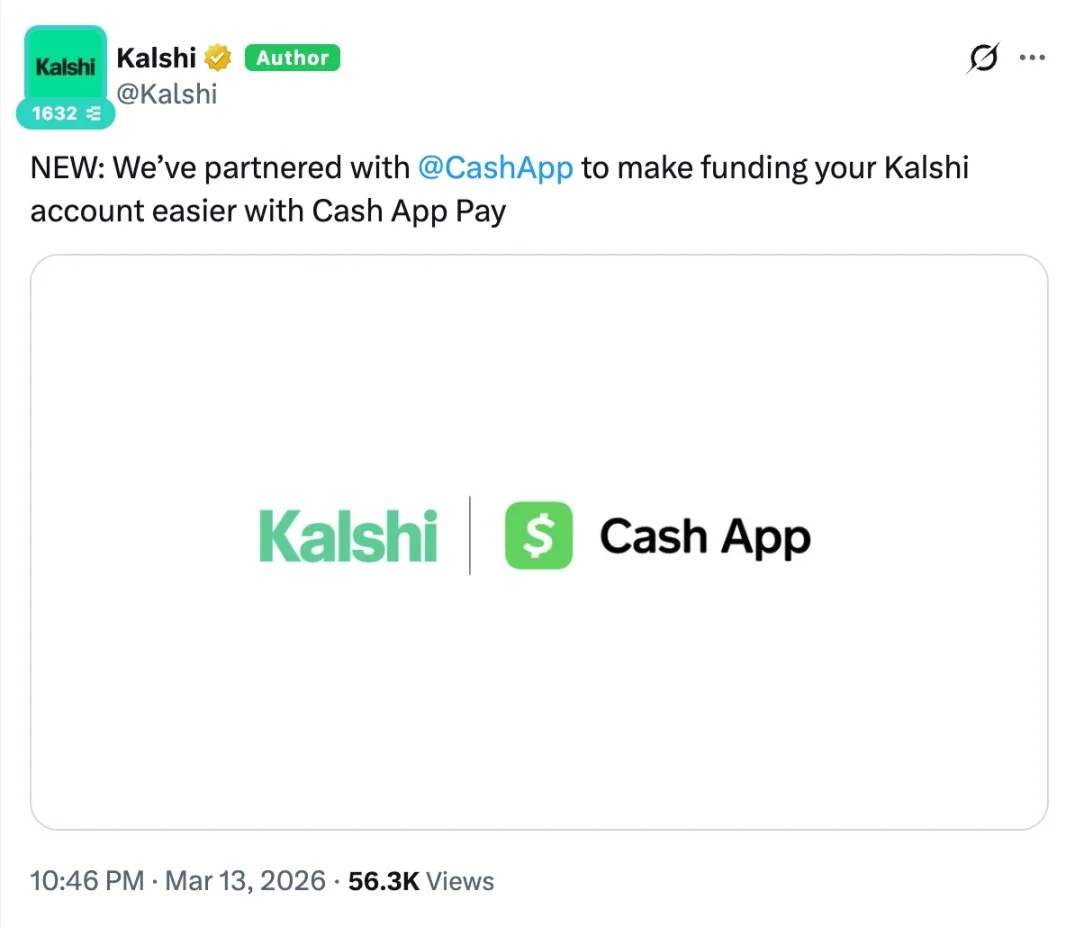
This may be why Kalshi announced a partnership with Block's payment application Cash APP last week. Kalshi's official statement was even more direct—"With Cash App Pay, making deposits to your Kalshi account is easier" (make funding your Kalshi account easier with Cash App Pay). The words nearly scream, "Quickly use Cash App Pay to deposit and start betting."
After all, even if just 1% of Cash App's 59 million monthly active trading users convert, it would bring Kalshi close to 600,000 users, equivalent to the user base they have worked hard to build over two to three years. More importantly, all of these are "incremental cakes."
Polymarket’s Market Expansion Strategy: Besides Humans, AI Agents are Target Users Too
On the other side of the prediction market, Polymarket, one of the duopolies, also performed remarkably.
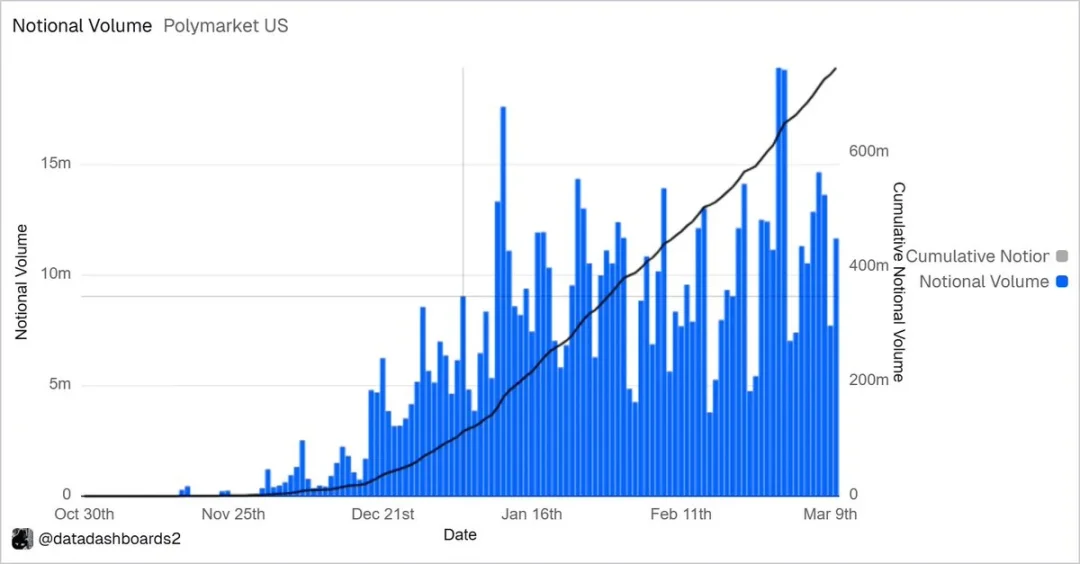
Since resuming operations in the U.S. last November, by March 14th, Polymarket's nominal transaction volume on the U.S. platform had exceeded 750 million dollars, with more than 5 million transactions. Previously, the platform's open contract volume had once reached 2.6 million dollars, which has recently fallen to about 1 million dollars.
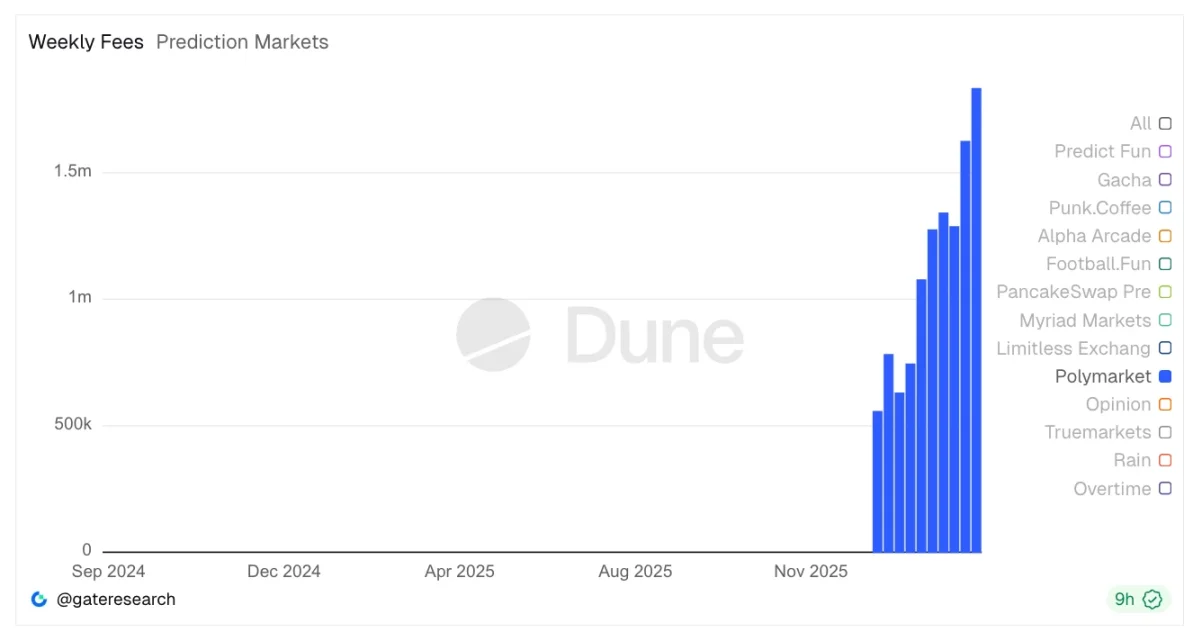
Additionally, according to Dune data, since implementing trading fees for some markets (including NCAA and cryptocurrency fluctuations) starting January 6th, Polymarket has accumulated over 11.2 million dollars in fee revenue. In other words, Polymarket has fully validated its self-sustaining capability.
Therefore, the ambitious Polymarket is not just content with the existing market of human users; it has even started betting on supporting AI Agents for 24/7 trading.
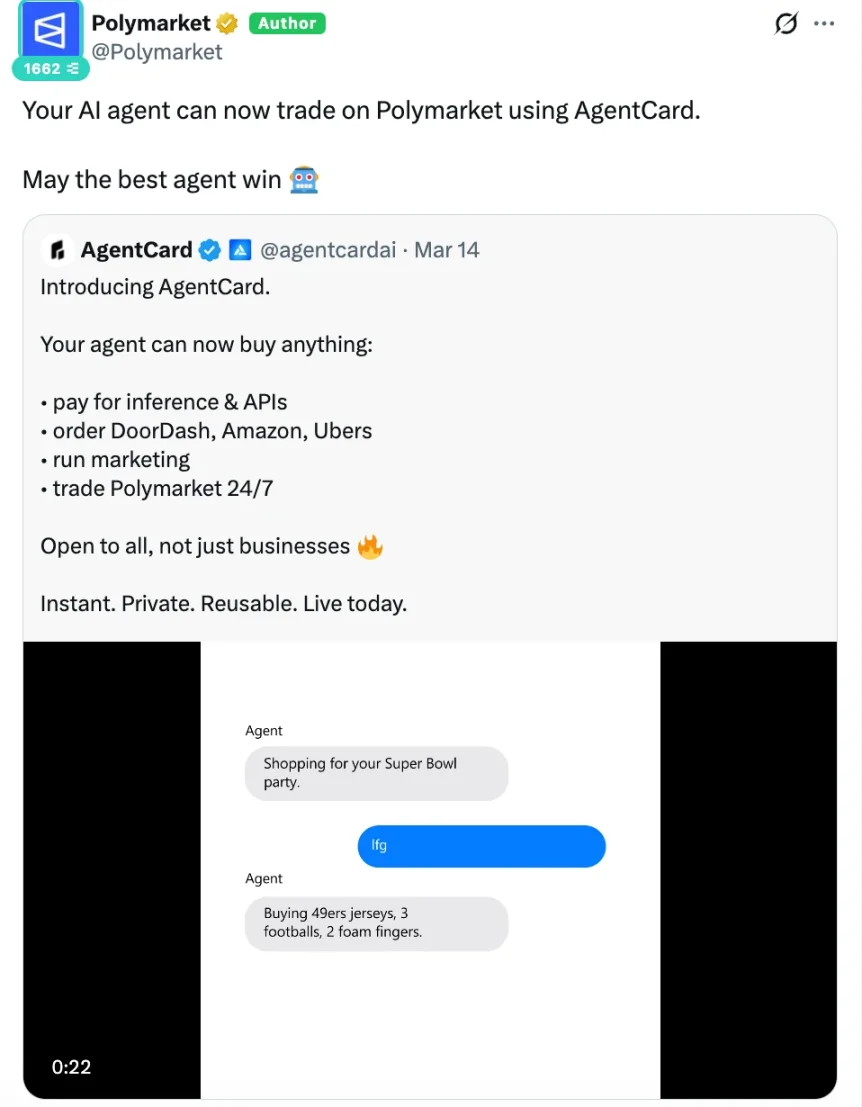
Last weekend, the crypto payment platform Alchemy officially launched the AI agent payment platform AgentCard, which, aside from regular payment functions for food delivery and AI application subscriptions, emphasized that "user's AI Agents can now trade on Polymarket 24/7"; subsequently, this news was confirmed by Polymarket's official account.
In the context of the rapid rise of OpenClaw "lobster," x402, ERC8004, ERC8183 all supporting AI Agent payments, combined with Polymarket's previously designed Polymarket CLI specifically for AI Agents, a prediction market platform that supports querying prediction market data, executing orders, managing positions, and interacting with on-chain contracts is gradually taking shape.
Just like Circle's impressive transformation from being a "stablecoin issuer" to "building financial infrastructure for the AI era," Polymarket has already seized the important ecological niche of "the prediction market platform for AI Agents." As Nvidia’s founder Jensen Huang mentioned at last year’s CES, the AI Agent industry is set to become a trillion-dollar market just like the robotics industry, and the 24/7 tireless AI Agents may shine brightly in the prediction market first.
Conclusion: A New War in the Prediction Market Has Already Begun
Undoubtedly, a new war belonging to prediction market platforms has quietly begun, encompassing both the deep activation of existing users, continuous incentives for active users, and ongoing conversion of new users; it also includes the extension of betting events' boundaries, communication with regulatory forces, and potential future development targeting AI Agents as "potential active users."
Previously, Dingaling, the founder of the prediction market platform Predict.fun in the BSC ecosystem, had also planned to launch products combining prediction markets and DeFi, intending to provide users with returns related to account funds management, which could also be regarded as an alternative "PayFi revenue product," and this is quite worth looking forward to.
No matter the outcome of the prediction market's development, in the quest for 20 billion dollars or more in funding, Kalshi and Polymarket have already initiated a new growth lever.
免责声明:本文章仅代表作者个人观点,不代表本平台的立场和观点。本文章仅供信息分享,不构成对任何人的任何投资建议。用户与作者之间的任何争议,与本平台无关。如网页中刊载的文章或图片涉及侵权,请提供相关的权利证明和身份证明发送邮件到support@aicoin.com,本平台相关工作人员将会进行核查。