Original | Odaily Planet Daily (@OdailyChina)
Author | Azuma (@azuma_eth)

On January 6 of this year, Polymarket officially bid farewell to the "zero fee" model, starting to charge transaction fees in the "15-minute cryptocurrency price fluctuation" market. The specific fee ratio will change according to real-time market odds - the closer the odds are to 0% or 100%, the lower the fee; conversely, the closer the odds are to 50%, the higher the fee, up to a maximum of 1.56%.
Then on January 28, about three weeks after the fee implementation began, we published an article titled “Data Calculation Shows Polymarket's Annual Revenue Exceeds $100 Million is Not Difficult, The Premise is...”. The article performed a static estimate based on Polymarket's then trading volume and trading activity structure: in the most conservative scenario, if the range of the fee market remains unchanged, it is estimated that Polymarket could generate about $38 million in revenue per year; while in the most aggressive scenario, if Polymarket extends transaction fees to all markets, the estimated annual revenue could reach $418 million.
When we last estimated Polymarket's revenue, we were troubled by the short observation period and the small number of calculable samples. However, two months later, we used richer data to re-estimate Polymarket's revenue expectations and found that the so-called "conservative" estimate was indeed overly conservative, and the so-called "aggressive" expectation was not too exaggerated.
Changes in Revenue Data
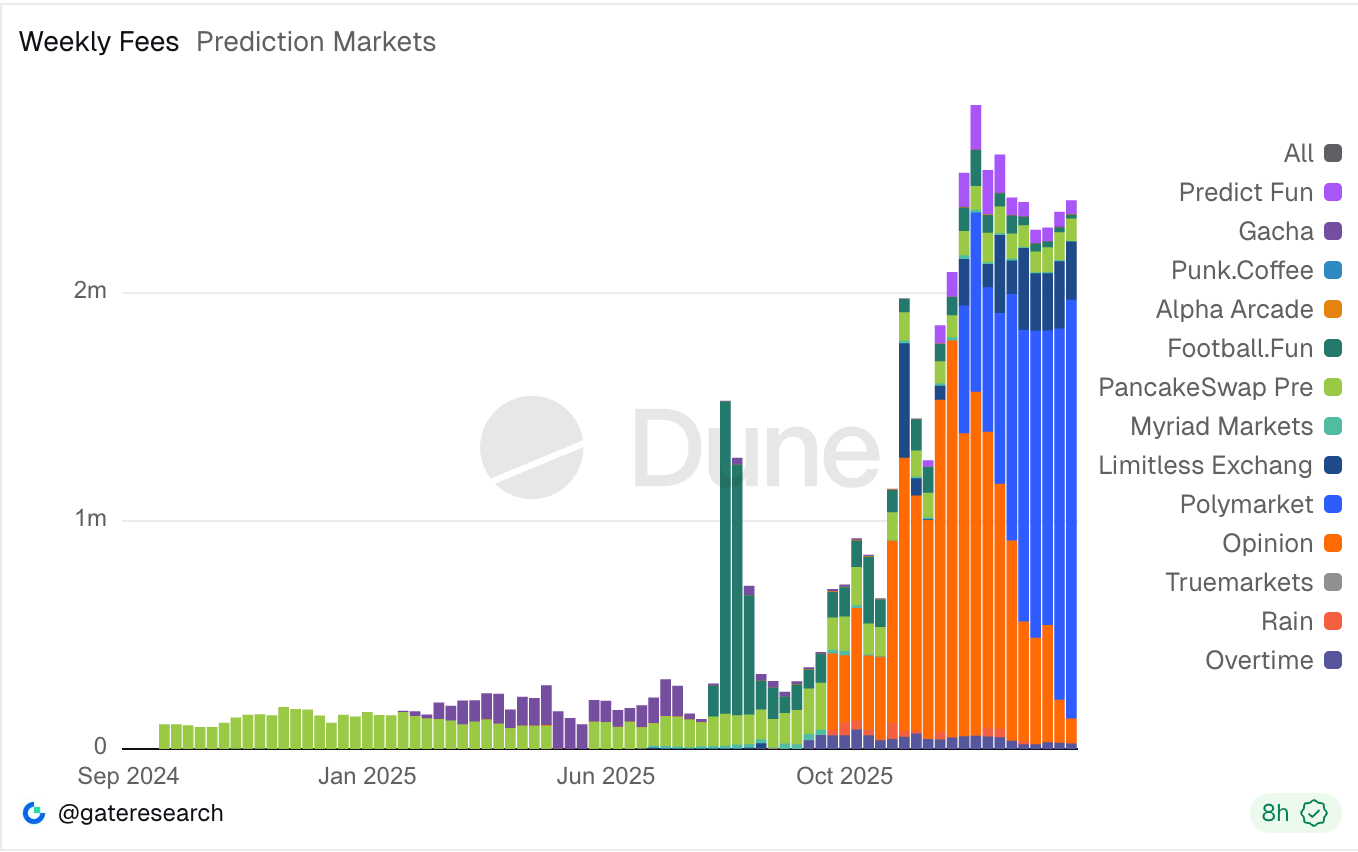
According to data compiled by Gate Research on Dune, since the start of charging transaction fees on January 6, Polymarket has accumulated over $11.2 million in transaction fee revenue.
Using the most conservative method for a static estimate, assuming that the trading volume and trading activity structure of related markets remain unchanged, Polymarket is expected to generate approximately $58.4 million in revenue annually.
However, this estimation method cannot accurately reflect Polymarket's revenue-generating capability.
The reason is that Polymarket's revenue data is visibly on the rise - over the past 10 weeks, the platform's transaction fee revenue was $560,000, $786,000, $633,000, $749,000, $1.08 million, $1.28 million, $1.35 million, $1.29 million, $1.63 million, $1.84 million... there has been noticeable growth almost every week.
Reasons for Revenue Growth
There are two reasons for the growth in Polymarket's transaction fee revenue. First, Polymarket expanded the range of fee-charging markets; second, both the overall trading volume of Polymarket and the trading volume of fee-charging markets continue to grow.
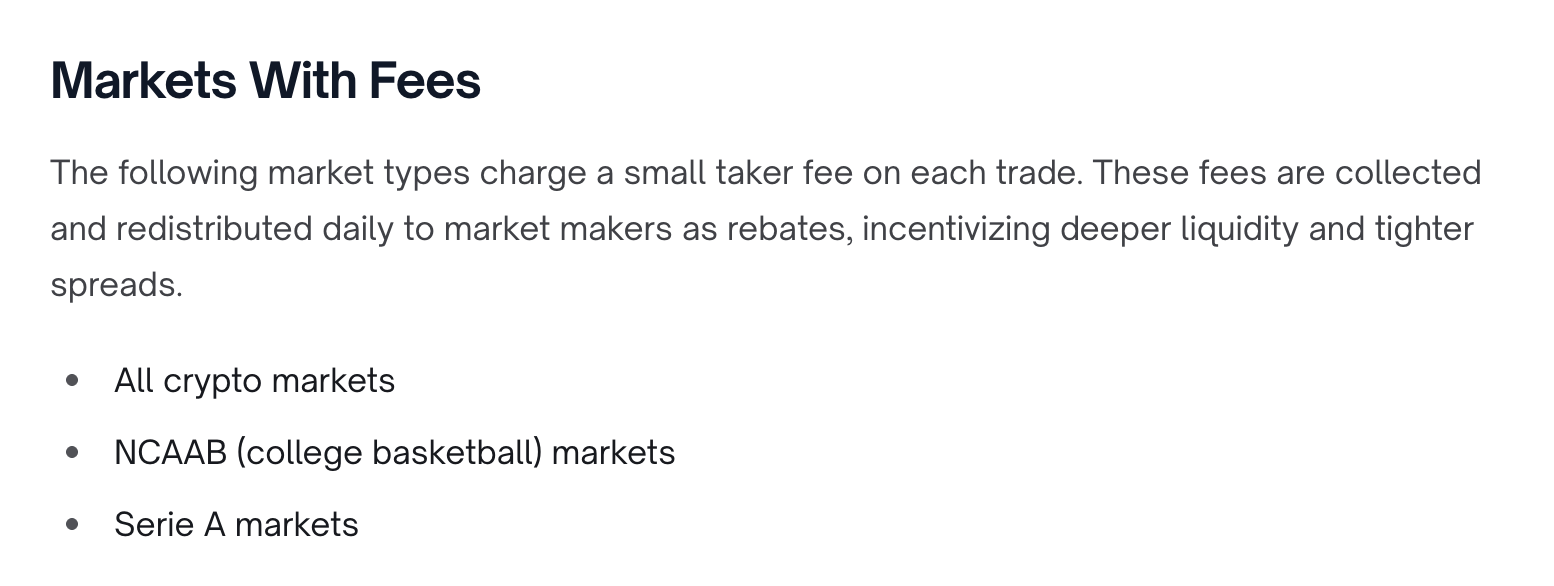
Regarding the scope of fee-charging markets, Polymarket expanded its fee mechanism to all cryptocurrency-related markets on March 6. Additionally, earlier, it had already implemented fee collection in sports markets such as NCAA and Serie A, but the former (cryptocurrency-related markets) is still the main source of transaction fee revenue.
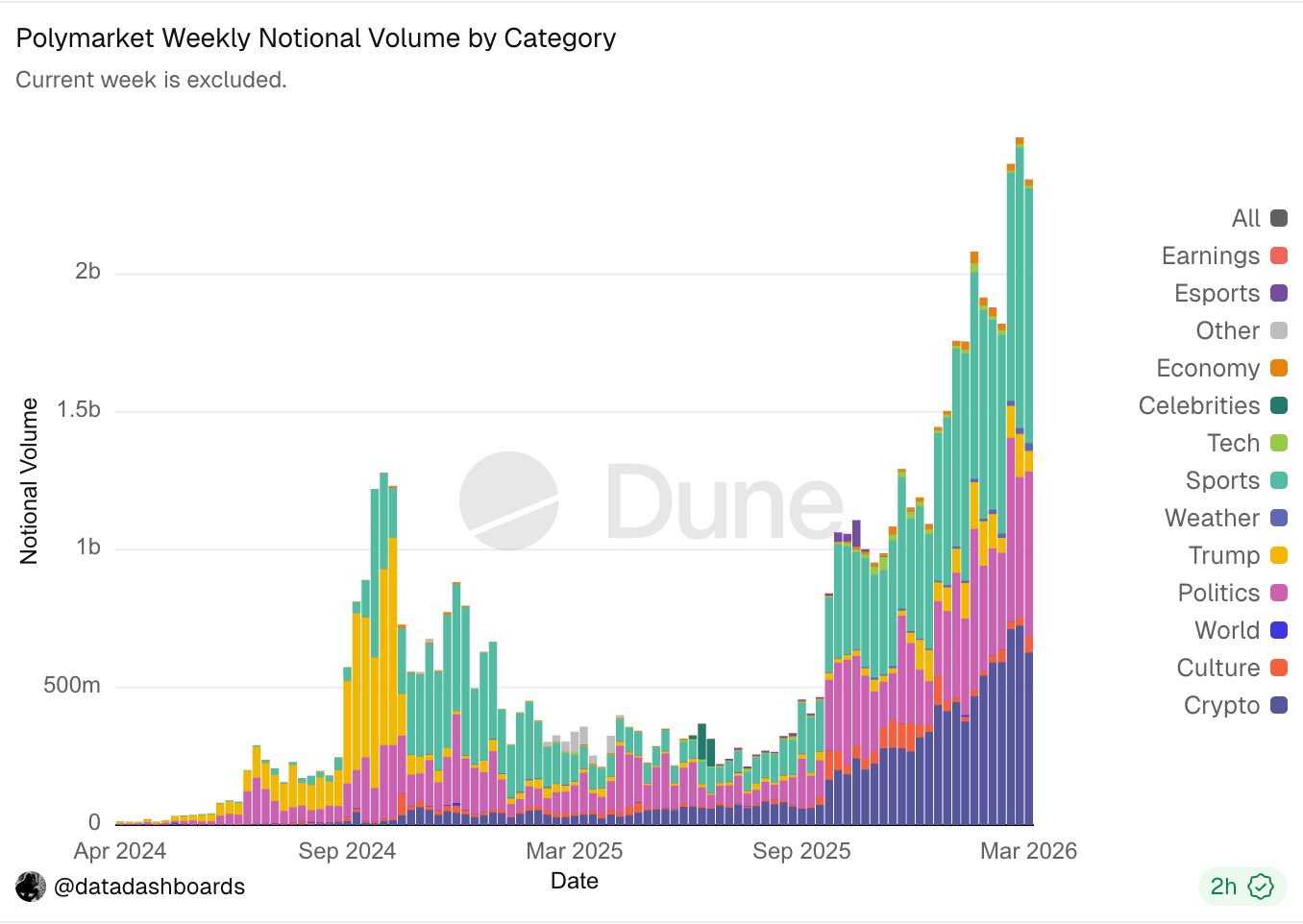
In terms of trading volume, the data dashboard from Data Dashboards on Dune shows that the overall weekly trading volume of Polymarket and the cryptocurrency market (the purple bar at the bottom) are both continuously increasing.
Future Revenue Estimates
The last time we estimated Polymarket's revenue, we had to manually extract the trading volume share of the "15-minute cryptocurrency price fluctuation" related market from all cryptocurrency-related markets. However, now that Polymarket has expanded transaction fees to all cryptocurrency-related markets on March 6, this estimation has become much easier. As for NCAA and Serie A, perhaps because the former has not yet entered the "March Madness" official competition stage, and the latter does not garner much attention in American culture, the trading volume scale of these markets is significantly lower than that of cryptocurrencies, so we will temporarily ignore them.
Taking the only complete week of data after March 6 (March 9-15), the trading volume of cryptocurrency-related events accounted for 26.7% of Polymarket's total trading volume that week, and Polymarket's transaction fee revenue for the same week was approximately $1.84 million - based on this proportion, with the current trading volume level and trading structure, if Polymarket introduces a similar fee mode for all markets, it is estimated to bring the platform $360 million in annual revenue.
The Money Printer is Already Running
It is worth noting that as a key measure for Polymarket to expand liquidity, the platform has so far issued a total of $13.41 million in subsidies to liquidity providers (LPs). By comparison, if the data over the remaining days in March can maintain the performance of the first half of the month, the transaction fee income for Polymarket this month could cover the total expenditure on liquidity subsidies.

Polymarket has basically proven the revenue capacity of this new type of prediction market, and the upcoming revenue growth will mainly depend on two variables - how much more can trading volume grow and whether fees can be further extended to more markets.
If these two variables continue to rise, the prediction market may become the simplest and most direct "money printer" in the cryptocurrency industry.
免责声明:本文章仅代表作者个人观点,不代表本平台的立场和观点。本文章仅供信息分享,不构成对任何人的任何投资建议。用户与作者之间的任何争议,与本平台无关。如网页中刊载的文章或图片涉及侵权,请提供相关的权利证明和身份证明发送邮件到support@aicoin.com,本平台相关工作人员将会进行核查。


