From March 11 to 13, 2026, in the time zone of UTC+8, an Ethereum whale with the address 0x8E34...4170 withdrew over 73,000 ETH from a trading platform in batches within just three days. At the same time, public statements within the U.S. Securities and Exchange Commission (SEC) hinted at regulatory innovations and "deregulation" ideas regarding tokenized securities, with these seemingly parallel narratives surfacing almost simultaneously. On-chain data shows that this batch of ETH was moved from the exchange at an average price of $2,072.2, and to date, it has recorded about $4.04 million in unrealized profits, indicating a scale and rhythm more akin to institutional funds rather than the emotional impacts of retail investors. In this time window of subtle regulatory shift, whether the accelerated movement of substantial chips is a pure coincidence or a preemptive layout ahead of a new round of institutional restructuring has become the core suspense of this market game.
Three days of quietly moving 70,000 ETH
● Timeline Breakdown: According to on-chain tracking, the address 0x8E34...4170 continuously withdrew ETH from the trading platform in batches from March 11 to 13, 2026, totaling 73,744-73,745 ETH, valued at around $152 million at the time. Unlike the common high-frequency trading patterns, this address exhibited a unidirectional and stable outflow path with almost no reverse inflows during this window, indicating a clear intention of "only inflows, no outflows" regarding chip migration.
● Fund Size and Unrealized Gains: From a pricing perspective, the average withdrawal price for this batch of ETH was $2,072.2, and based on the current market price, the whale address has recorded an unrealized gain of about $4.04 million. For a single address, controlling over 73,000 ETH in one go suggests strong confidence in the mid- to long-term prospects of the Ethereum ecosystem and the availability of funding to withstand short-term volatility. From the perspective of absolute scale and concentration, this appears more as a unified migration of inventory within a phased price range rather than chasing highs and lows in a short-term game.
● Behavioral Characteristics Favoring Institutions: In terms of operational details, the withdrawal of funds exhibited characteristics such as batching, a relatively concentrated pricing range, and a compressed time window, which significantly differs from the typical retail investor's "chasing highs" and "panic selling", aligning more closely with the execution methods common among institutional or semi-institutional funds. First, executing in batches helps reduce the direct impact on market prices; second, completing a large withdrawal within three days combines time efficiency with market impact control; third, there were no evident on-chain signs of derivative hedging activities leaking out, resembling a structural migration of existing positions rather than high-leverage short-term speculation.
After the SEC's hints of deregulation, the whale...
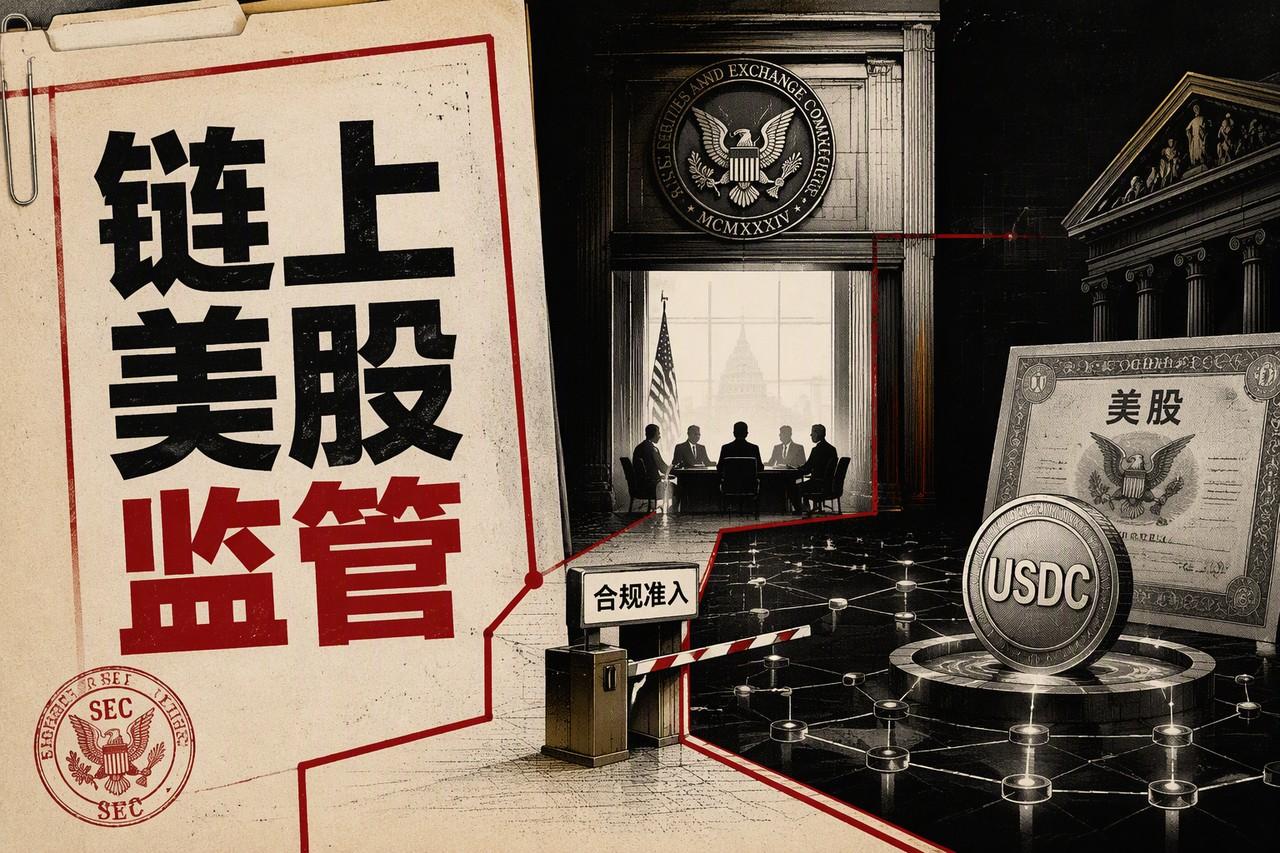
● Key Statement Review: Around the same timeframe as the whale's withdrawals, SEC commissioner Hester Peirce publicly discussed the regulation of tokenized securities, emphasizing that “blockchain systems can achieve faster settlement speeds and, in some cases, bypass traditional intermediaries”, and pointed out that “publicly listed companies spend a lot of resources preparing mandatory disclosure documents”. In the context of the SEC's long-standing focus on compliance risk, this statement evaluating on-chain systems positively from the perspective of cost and efficiency is seen as a relatively rare signal of “regulatory innovation”.
● Imagination Space for Innovation Exemptions: Peirce's advocacy isn’t simply about loosening regulation but about exploring more flexible experimental spaces for tokenized securities within existing frameworks, avoiding the complete application of traditional disclosure and intermediary models to on-chain assets. The idea of “innovation exemptions” she mentioned focuses on reducing compliance costs and administrative burdens, allowing room for trial-and-error and growth of new financial instruments. Although specific terms and technical standards have not yet been made public, and the briefing did not provide disaggregable details, its directional outlook is sufficient to inject new imagination into the institutional expectations surrounding on-chain assets.
● Closeness in Timing and Resonating Signals: Research briefs reveal that the concentration of ETH accumulation occurred within 48 hours after the SEC released signals of regulatory relaxation. On one hand, commissioners publicly highlighted the advantages of blockchain settlement; on the other, over a hundred thousand ETH were “cleared” from exchanges to on-chain addresses. The convergence of these two event lines on the timeline makes it difficult for the market to ignore the ambiguous resonance between them. Although it cannot currently be proven that any insider information transmission or direct correlation existed, the scenario of “improved regulatory expectations + concentration of chips toward long-term addresses” undoubtedly strengthens the bullish narrative for the mid- to long-term.
BitMine stands with the whale...
● BitMine Identity and Accumulation Facts: Aside from the 0x8E34 whale, the briefing also mentions an Ethereum treasury company BitMine, viewed as a “treasury management” role within the Ethereum ecosystem responsible for holding and allocating ETH assets. From a single source, BitMine reportedly increased its holdings by 30,000 ETH in the same market cycle, further reinforcing the narrative that “institutional funds continue to concentrate on core on-chain assets”. Due to the data coming from a single source, further verification from multiple sources is needed, but its identity as a treasury company lends some logical validity to its accumulation behavior.
● Cautious Interpretation Under a Single Source: Due to the lack of backing from multiple data providers or official announcements, current reports about BitMine's accumulation mainly remain on the level of “observed factual fragments”. We cannot reliably deduce its underlying investment logic, risk models, or cycle judgments, nor is it appropriate to use a single source to substantiate grand conclusions. A more prudent approach is to view these 30,000 ETH as another sample of chip concentration under the same macro narrative, rather than as decisive evidence verifying a specific trading strategy.
● Similarities and Resonance with Whale Hoarding: From a temporal perspective, BitMine's accumulation and the withdrawal of the 0x8E34 whale both occurred in mid-March 2026, after the SEC released signals of regulatory innovation; in terms of scale, the whale moved over 73,000 ETH in one go, while BitMine increased its holdings by 30,000 ETH. The former resembles a large-scale migration of a single address, while the latter represents a structural increase in an institutional treasury. Although there are differences in absolute scale and identity attributes, both point to a resonance: that in the context of improved regulatory expectations and slight adjustments in the infrastructure environment, more mid- to long-term funds are choosing to “move chips back to their own pockets”.
Who is racing in the shadow of JPMorgan's lawsuit...
● Lawsuit and Compliance Controversy: As crypto-native assets concentrate towards institutional addresses, traditional financial giants find themselves embroiled in controversies due to gray areas in the old order. Research briefs mention that JPMorgan is involved in a lawsuit related to a $328 million crypto Ponzi scheme (with the source also from a single channel). The crux of the case revolves around whether traditional banks fulfilled their obligations of adequate anti-money laundering and suspicious transaction reviews while providing account and settlement services to involved parties, and what the boundaries of the banks' “passive involvement” in crypto funding chains are becomes one of the focal points of the lawsuit's contention.
● Passive Exposure of Traditional Banks versus Proactive Layout of Crypto-native Institutions: Major banks like JPMorgan are more passively exposed to the inflows and outflows of crypto funds within existing customer systems, remaining primarily in the role of “settlement and passage” in the fiat world. Once Ponzi schemes or money laundering behaviors arise upstream in the chain, banks may be questioned on whether they “turned a blind eye”. In stark contrast, crypto-native institutions like BitMine actively play a role in holding and allocating on-chain assets, with their risks and rewards tightly bound to the prices of assets like ETH. This distinction between passive and proactive acts is where the tension between traditional regulatory logic and new financial infrastructure lies.
● Regulation Between the Old Order and New System: The JPMorgan lawsuit enhances regulatory awareness of anti-money laundering vulnerabilities in the traditional financial system while also forcing regulatory agencies to think about whether, under new infrastructures with higher on-chain transparency and stronger programmable restrictions, illegal flows can be tracked and blocked more effectively. The calls for regulatory innovation within the SEC have arisen under the dual pressures of “old order failure” and “new framework rise”. For those quietly accumulating chips on-chain, how to adjust asset positions and compliance paths before the regulatory lines are redrawn becomes a race without gunfire.
Apple's Commission Adjustment Opens a Side Door for On-chain Applications
● Basic Situation of Commission Reduction: Research briefs show that starting from March 15, 2026, Apple will reduce commissions in the China App Store. Although specific percentages and revenue-sharing structures have not yet been disclosed, the direction has been confirmed through multiple channels. This adjustment is not specifically targeting crypto applications; however, it means the “platform tax” that developers need to pay will decrease while obtaining the same income, providing a more relaxed survival space for all types of applications.
● Indirect Benefits for Crypto Applications and Wallets: For applications related to crypto such as wallets, market tools, and compliant custody, the reduction in channel commissions equates to marginal improvement in customer acquisition and operational costs. Under the previous dual pressures of “high commissions + stringent review”, many developers had to compromise on functional design and business models. Now, the easing of cost pressures may not completely change compliance thresholds, but it could encourage more teams to try listing within the compliance framework, enhancing the visibility and user experience of on-chain applications in legitimate channels.
● Two Threads of Infrastructure Reconstruction: If we juxtapose Apple's commission adjustment with internal SEC discussions on regulatory innovations, a larger-scale infrastructure reconstruction can be observed: one thread is the distribution and entry layer—platforms like the App Store reducing costs and improving developer incentives, making it easier for users to access compliant crypto-related services; the other thread is the asset and compliance layer—the SEC exploring new regulatory tools to adapt to tokenized securities, attempting to strike a balance between reducing compliance costs and protecting investors. These two threads operate independently yet together lay the foundation for the expansion of on-chain economies, while whales and institutions accelerating chip migration may indeed be positioning themselves in anticipation of the possible “new order” to come.
The Game of Chip Migration Completed in Regulatory Gaps
Integrating the withdrawal of 73,000 ETH from the whale address 0x8E34, BitMine's approximately 30,000 ETH treasury accumulation, SEC commissioner Hester Peirce's released signals of regulatory innovation, and JPMorgan's passive involvement in the $328 million crypto Ponzi lawsuit, an image of dual migration of funds and rules can be sketched: some funds are concentrated from high-frequency exchanges to long-term holding addresses and institutional treasuries, while some regulatory powers are redrawn between the old financial order and new on-chain systems, trying to lock in risks and release efficiency using new institutional tools.
From the evidence chain perspective, there is currently no direct clue sufficient to prove that the “whale behavior = possessing insider information = preemptively betting on regulatory relaxation”, the internal discussions within the SEC are still in a principled statement phase, and both JPMorgan's lawsuit and Apple's commission adjustments have their independent logical starting points. However, it can be confirmed that the overlay of these events on the timeline and directional aspect constitutes a clear resonance: the regulatory discourse has shifted from a singular focus on risk prevention to “valuing both risk and innovation”, the compliance shadows of traditional banks have deepened and crypto-native institutions and large addresses have accelerated accumulation on-chain, while the reduction in application distribution costs lays the groundwork for future user entry.
From a mid- to long-term perspective, the trend of institutional chip concentration on Ethereum may continue: the mutual migration between treasury companies, long-term funds, and whale addresses will make the circulating supply increasingly reliant on derivatives and short-term trading funds, amplifying price elasticity. At the same time, the uncertainty of the regulatory path remains a variable hanging overhead—how far the SEC's innovation exemptions can go, whether traditional banks will strengthen their self-examination on crypto-related flows, and whether app stores will further relax technical and policy restrictions on on-chain products will determine whether these chips that have completed migration in the gaps will ultimately find themselves in a safer, more transparent institutional framework or facing the next cyclical headwinds of regulation.
Join our community, let’s discuss and grow stronger together!
Official Telegram group: https://t.me/aicoincn
AiCoin Chinese Twitter: https://x.com/AiCoinzh
OKX benefit group: https://aicoin.com/link/chat?cid=l61eM4owQ
Binance benefit group: https://aicoin.com/link/chat?cid=ynr7d1P6Z
免责声明:本文章仅代表作者个人观点,不代表本平台的立场和观点。本文章仅供信息分享,不构成对任何人的任何投资建议。用户与作者之间的任何争议,与本平台无关。如网页中刊载的文章或图片涉及侵权,请提供相关的权利证明和身份证明发送邮件到support@aicoin.com,本平台相关工作人员将会进行核查。