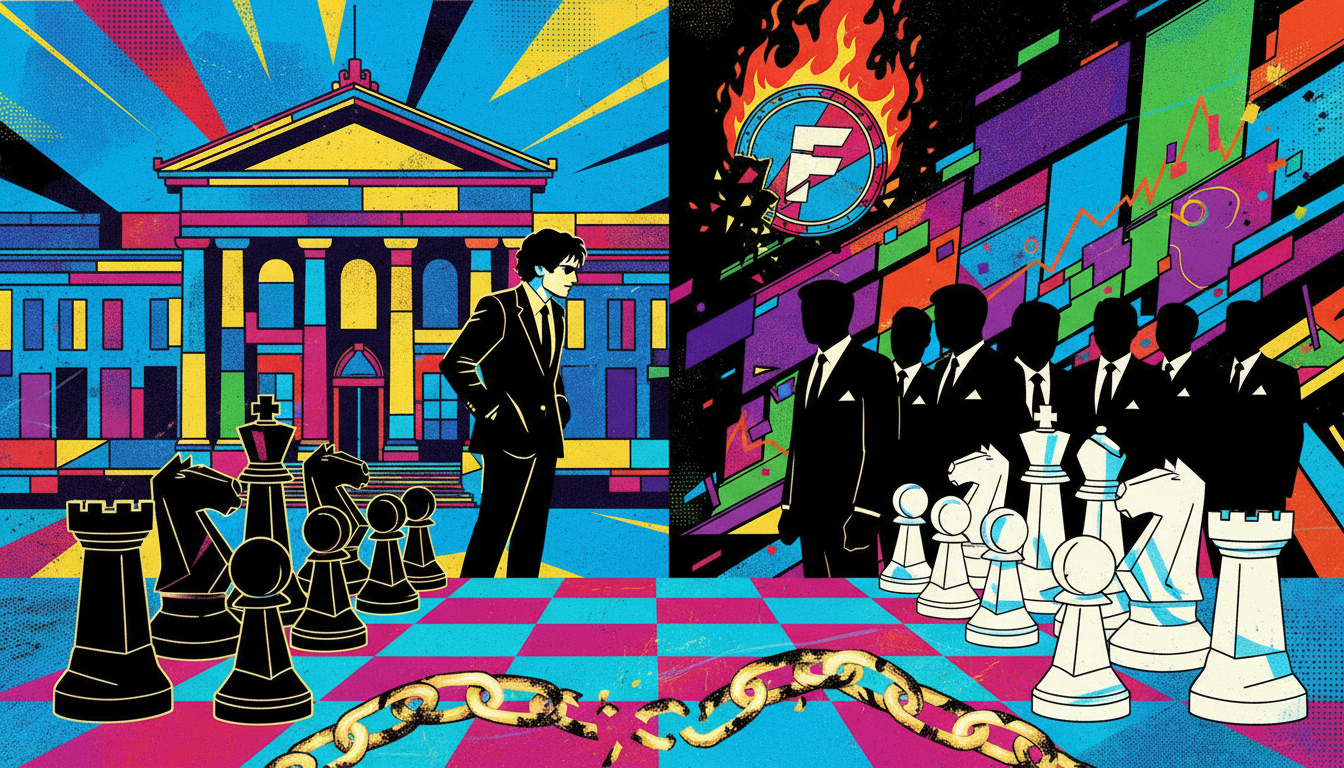
On March 12, 2026, the meme distribution platform Bonk.fun/Letsbonk.fun was reported to have its domain hijacked by hackers, who controlled team member accounts and implanted a fund-draining program through relevant entry points, turning the original interaction path into an asset exit. After the incident broke, founder Tom publicly called for users to "immediately stop any interaction with bonk.fun," with several media outlets pushing alerts, causing the entire Solana Meme community to become tense. On the surface, this was just another "website hack" incident, but it pointed to a deeper paradox: while assets and contracts can be deployed on a decentralized network, what truly carries user entry and trust is still a string of domain names controlled by centralized DNS and hosting services. Once this single point is compromised, the so-called "self-hosting" and "immutability" become exceedingly fragile the moment users click "connect wallet."
Domain Seized: From Account Compromise to Asset Entry Rewrite
● The timeline of the incident roughly points to March 12 in the UTC+8 time zone, with hackers first taking over the team member accounts, rather than the on-chain contracts themselves. After controlling the relevant accounts, the attackers performed front-end tampering with Bonk.fun and its associated entry points, replacing the originally normal interaction flow with malicious code that had drainer implanted, leading users to connect their wallets and authorize signatures without any awareness, transforming the entry from "play Meme" to "opening the door for hackers." Current public information has yet to disclose more detailed technical details, only confirming that the attack occurred at the account and front-end level, rather than the on-chain logic.
● After the attack was discovered, founder Tom provided very direct advice through public channels—"Users should immediately stop any interaction with bonk.fun." This statement itself is the best annotation for the seriousness of the event: the project team chose not to downplay the risks but instead opted to cut off all potential funding flows to exchange time for investigative space. From an emergency response perspective, this "braking first, then investigating" approach means that the team defaults to the assumption that the front-end and entry are no longer trustworthy, and continued interaction would only expand the damage range.
● Consequently, mainstream crypto media outlets such as Jinse Finance and BlockBeats nearly simultaneously disseminated risk warnings, spreading messages like "suspend interaction" "beware of drainer" to a wider audience. This rapid media response somewhat slowed the spread of the incident, but it should be emphasized that currently, there is no authoritative channel publicly disclosing key loss data such as the amount stolen and the number of affected wallets, and most claims about the scale of the losses remain at the rumor level. Based on the existing briefings, all specific numbers are missing information and not suitable for citation.
● The official social media account was once cited as stating "we are cooperating with security companies for investigation," but this statement remains in a to be verified state. Regardless of whether an investigation has started, who is leading it, or what technical paths are used, currently, there are no publicly available details that have been cross-verified. To interpret "investigating" as having found the attack path or about to recover assets is obviously an over-interpretation; until sufficient evidence is available, the boundaries of information disclosure should remain at the most basic consensus levels of "attack occurred," "front-end unsafe," and "suspend interaction."
Why the Decentralization Dream Falters on a String of Domain Names
● The Bonk.fun incident brought to the forefront an old question: the structural contradiction between asset layer decentralization and entry layer high centralization. On-chain, token contracts can be hosted on a transparent ledger, and governance can occur through multi-signature or DAO, seemingly very different from the single-point hosting of Web2. But what truly carries most users’ first contact with the project is that string of `bonk.fun` in the browser's address bar, controlled by traditional domain registrars, DNS resolution, and hosting services. Once this link is compromised, even the most perfect on-chain design cannot prevent users from signing "fatal authorizations" at the wrong entry.
● For attackers, DNS, hosting panels, and team social accounts are the "key breakthroughs" to bypass complex on-chain security mechanisms. Securing these Web2 components is equivalent to obtaining the "administrator key" for the project's appearance layer, allowing modification of resolution pointing, replacement of front-end code, and even pushing "false update links" via official accounts. In such a structure, domains and accounts constitute a de facto centralized single point of failure: without multi-signature or immutable records, as long as passwords and two-factor authentication are compromised, the entire user entry can be rewritten in a short time.
● For high-frequency interaction scenarios like meme distribution platforms, this risk is further amplified. The platform encourages users to frequently connect wallets, participate in distributions, and snatch early slots within a short period. Driven by FOMO regarding popular assets, users often do not perform additional verification: seeing a familiar domain and a somewhat recognizable page, they will instinctively click "connect" "approve." This means that as long as the entry is replaced even for a few hours, the potential victim base can become very considerable, and a significant portion of them may not realize "where the problem actually lies" when losses occur.
● After the incident, the community inevitably raised questions about the team's security responsibilities, even extending to conspiracy theories of "true hackers or insiders," believing that only internal cooperation could achieve the "seamless replacement" of the front end. It should be emphasized that as of now, there is still insufficient evidence to support either party's position, and it is not enough to simply whitewash the team, nor is it advisable to directly categorize the incident as a rug pull without on-chain and log evidence. The only two points open for discussion are: firstly, the team indeed has weak links in the protection of accounts and domains; secondly, such incidents highlight the need for Web3 projects to elevate "entry security" to the same priority level as "contract security."
Meme Platform Security Shortcomings: The Pitfalls Created by Wallet Signatures
● From a more general perspective, the common security shortcomings existing in the Meme platform's security architecture are not new: inadequate access control, insufficient team account protection, lack of independent auditing for front-end updates. Many projects are still using personal email to register key services, social accounts are managed by a small number of core members, and domains and hosting are only bound to a single manager. Once the credentials for any one of these links leak, it can lead to the "gate wide open." Front-end iterations often prioritize speed, treating "launching it first" as the norm, while lacking independent code auditing or multi-party verification processes, which provides an opportunity for the insertion of malicious scripts.
● On the user side, the behavior patterns driven by FOMO similarly create fertile ground for drainer type attacks. In the face of popular meme platforms or new issuance pages, many users often do not read authorization information item by item; instead, they habitually click confirm repeatedly, believing that "they have time to snatch" or "everyone is playing," considering the risks as negligible. However, the essence of a drainer is to utilize these authorization interactions to turn seemingly "normal signatures" into implicit permissions for asset transfers and unlimited authorizations. When users treat their wallet as a "single sign-on" button in the browser, the safety threshold has already been repeatedly lowered.
● The traditional narrative of rug pulls typically manifests as project teams embedding suspicious logic on-chain or leaving backdoors in liquidity and token distribution that allow funds to be withdrawn at any time; the corresponding on-chain signs are often clearer and more apparent. In contrast, this incident with Bonk.fun is closer to a combination of "domain/front-end hijacked + drainer implanted": the on-chain contract itself has not been identified as having backdoors, with the issues centered around the entry being tampered with by third parties. In terms of motivations and signs, this differs fundamentally from a team actively running off with money and indicates that attackers prefer the technical path of "bypassing contracts and directly harvesting authorizations."
● In this context, the protection strategies on the user side must lean more toward the behavioral level: try to minimize the power scope of a single authorization, prioritize using “on-demand authorization” or “single authorization” rather than long-term unlimited authorization; separate large asset wallets from high-frequency interaction wallets, adopting a "small accounts participate, large accounts preserve value" structure to avoid full exposure of a single wallet; when encountering hot links, prefer to enter through known official aggregation entry points or time-tested navigations, rather than hastily clicking on shortened links or forwarded addresses in social platforms. In tool selection, various security plugins and risk alert services can serve as aids, but what remains truly effective is users' basic understanding of "the meaning behind each authorization."
How Web2 Legacy Components Become Web3's Achilles' Heel
● If most crypto projects are disassembled for observation, it will be found that a considerable part of their infrastructure still builds upon Web2 legacy components: domains rely on traditional registrars and DNS resolution systems, official websites and front-end code are hosted on centralized service provider servers, and teams highly depend on social accounts and email systems for external communication, constituting the "overall project" as perceived by users. The on-chain components, on the other hand, are often packaged within these Web2 shells; for ordinary participants, whether they are genuinely interacting with contracts or connected to the correct address is judged by these seemingly familiar logos and URLs.
● When attack paths concentrate on these Web2 segments, even if a project excels in areas like contract auditing and multi-signature governance, it will be difficult to provide complete protection for users' interaction funds. Users sign the parameters submitted by the front end, the address bar showing `bonk.fun` appears normal, and the browser’s certificate may still be valid; however, as long as the resolution has been altered or front-end code replaced, the interaction target can point to an address controlled by the attacker. In other words, under the scenario where "the entry level is compromised," on-chain security can mostly only protect the protocol's own funding pool and cannot prevent users from actively transferring their personal assets through erroneous routes.
● Currently, some security companies and community researchers are analyzing the attack path surrounding this incident, but the briefings explicitly state: specific technical methods, including whether it is DNS hijacking or whether server intrusion is involved, still belong to the stage of confirmation of information. Different experts have varying speculations, and there is yet to be sufficient public evidence to support any kind of qualification, so descriptions can only remain at the level of consensus that "attack occurred through control of team member accounts, tampering with the front end and entry," avoiding firmly assigning unverified technical labels to the narrative of the event.
● In the long term, such incidents prompt the entire industry to reconsider: should there be more proactive improvements in directions such as self-hosted domains, decentralized naming systems, and tiered access management? For instance, some projects have begun trying to bind key entries to decentralized naming systems to reduce the weight of traditional DNS as a single point; gradually introducing team internal multiple approvals and hardware key systems in the management of domains and hosting to avoid "one account having the final say"; and some teams have started considering deploying version signatures and public verification mechanisms for the front end, enabling users to independently verify whether the currently loaded code is the official release. Before fully achieving a completely decentralized infrastructure, these compromise improvements might be realistic paths to mitigate single point failure risks.
Noise and Attention: How Security Incidents Are Drowned by Market Trends
● Curiously, on the same day that the Bonk.fun domain was hijacked, another hot news in the market was Arthur Hayes publicly going long on HYPE. In a speculative environment, major moves from so-called influencers often more easily become focal points on social media timelines, diverting significant attention that should have been directed towards security alerts. Many users, upon encountering the exciting narrative of "long opportunities," may overlook the risk warning of "suspend interaction with a certain platform," and this attention structure effectively weakens the short-term constraints of security information on behavior.
● At the same time, news about Gate DEX and others launching USDD staking activities circulated in the community, subtly illustrating a typical market state: high-yield opportunities coexist with high-risk events, with users chasing annualized returns and airdrops while being reminded to be cautious regarding front-end and authorizations. The brief intentionally did not elaborate on the specific rules and interest rates of these activities, as they existed merely as a backdrop for market activity in this article, but it aptly reflects a fact—within a system driven by incentives and gains, risk information must compete for the same attention resources as "money-making stories."
● When a market is dominated by emotions and short-line speculation, safety incidents like Bonk.fun often only trigger panic for a very short time, only to be covered by new price fluctuations, forming delayed risk pricing. The project's reputation and the platform's credibility will not be immediately reflected in the secondary market; rather, they are more likely to be collectively forgotten in the next round of FOMO. This memory loss allows the same types of attacks to be repeated periodically, while the user base incurs costs in the cycle of "catch-up—forgetting—stepping on mines again."
● In such an environment, the disclosure rhythm of information from media and project teams has an asymmetrical impact on market sentiment and user decisions. If the media amplifies unverified comments too early, it can easily trigger secondary panic or even wrongful accusations; if the disclosure is too late, it may miss the best alert window, allowing a large number of users to continue interacting without knowledge. Similarly, project teams, if too conservative in their information releases, providing only vague statements, will be seen as evading responsibility; while if they overcommit or blame in the absence of sufficient evidence, they may lay mines for subsequent investigations. The currently observable relatively prudent strategy is to issue a baseline warning of "suspend interaction" as soon as it is confirmed that there is a risk at the entry point, and then progressively supplement more technical details and handling plans as investigation progress becomes clear.
What Should You Ask Yourself Before Connecting Your Wallet Next Time
The Bonk.fun domain hijack incident ultimately exposes a core lesson that is not complex: even if your assets are secure on-chain, once daily interactions still heavily rely on centralized domains, hosting, and accounts, these entries become the weakest link. Contract auditing and multi-signature governance can protect the protocol's funds from being easily emptied, but they cannot judge for you whether "the page currently open is that official entry you thought it was." In this structure, any project design that neglects entry level security will lay the groundwork for the next "front end being replaced."
For project teams, the upcoming priorities should include: strengthening the protection of domains and hosting accounts, transitioning from personal control to team-based, multi-authentication; in permission splits, avoiding allowing a single member to hold all keys for domain, server, and social accounts; simultaneously pre-designing emergency plans that can swiftly complete "announcement—offline—tracing" steps once abnormalities are discovered, rather than being passively remedied under public pressure. These measures will not eliminate attacks but can significantly reduce the damage boundary that a successful intrusion can cause.
For users, before each "connect wallet," it is worth asking three simple questions: Is the source trustworthy—is this link obtained from officially maintained channels or opened casually from forwards or shortened links; Is the permission overly broad—does the authorization requested for this interaction exceed the necessary scope for the current operation, are there any unlimited authorizations or access to unintended tokens; Has the community issued warnings—has anyone in social platforms, media, and communities indicated that there is an anomaly with the entry, has the project team issued any announcement to suspend interaction? Internalizing this threefold self-check as a habit is itself a cost-effective yet effective security investment.
Looking forward, the wider adoption of decentralized domains and infrastructure solutions indeed has the potential to structurally alleviate single point failures, providing projects with higher resilience against attacks at the entry level as well. However, for quite a long time, Web3 will inevitably coexist with Web2 components; traditional DNS, hosting, and social platforms will not disappear overnight. Learning to identify risks and manage permissions within this mixed architecture will be a practical lesson every project team and user must face—not just after the next incident similar to Bonk.fun, asking "which link went wrong."
Join our community, let's discuss together and grow stronger!
Official Telegram community: https://t.me/aicoincn
AiCoin Chinese Twitter: https://x.com/AiCoinzh
OKX Benefits Group: https://aicoin.com/link/chat?cid=l61eM4owQ
Binance Benefits Group: https://aicoin.com/link/chat?cid=ynr7d1P6Z
免责声明:本文章仅代表作者个人观点,不代表本平台的立场和观点。本文章仅供信息分享,不构成对任何人的任何投资建议。用户与作者之间的任何争议,与本平台无关。如网页中刊载的文章或图片涉及侵权,请提供相关的权利证明和身份证明发送邮件到support@aicoin.com,本平台相关工作人员将会进行核查。