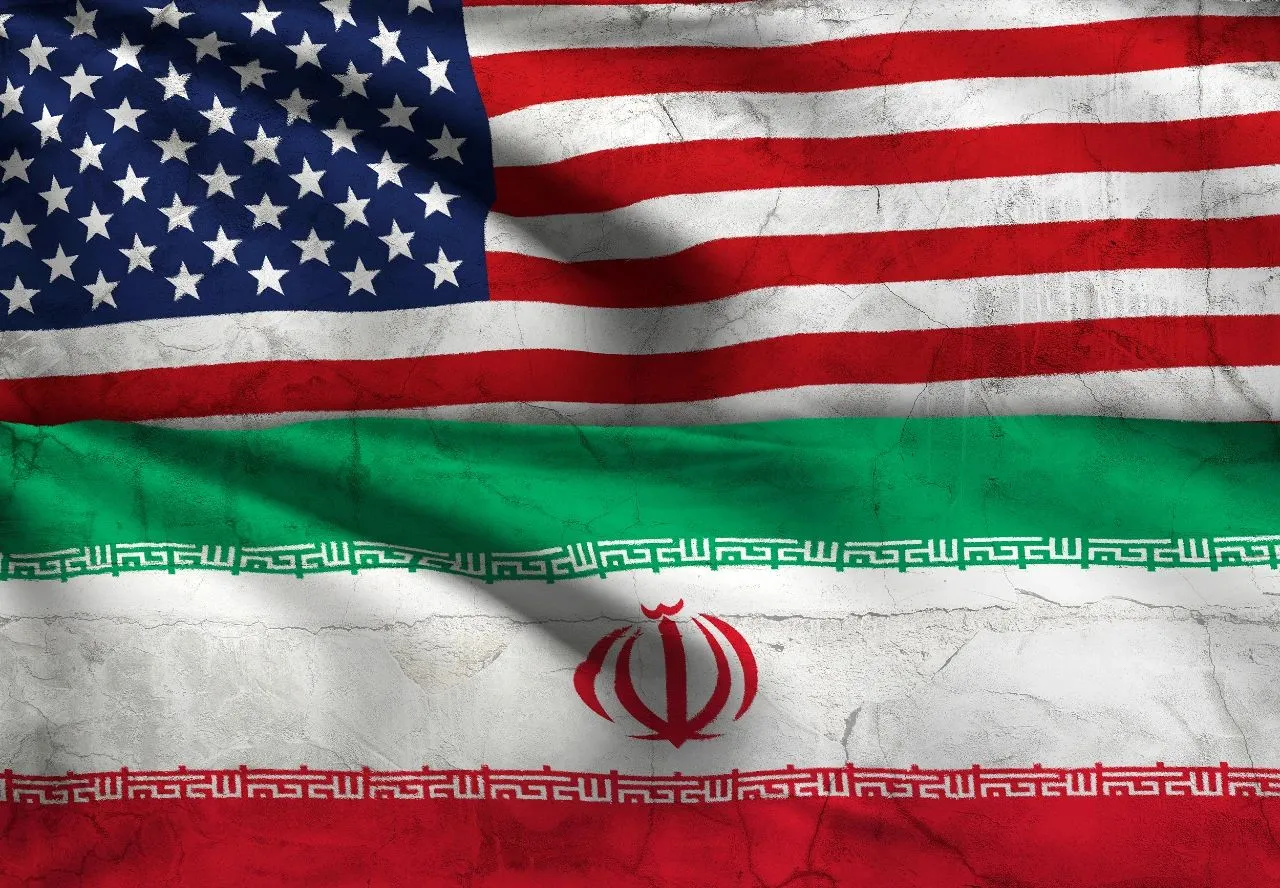
At the moment when the world is closely monitoring the "tanker ban" in the Strait of Hormuz, Washington staged a scene that left allies dumbfounded. In just two hours, the U.S. government's energy policy took a 180-degree turn, leaping from a “premature” cold indifference to becoming the behind-the-scenes driver of the largest oil reserve release in global history.
What lies behind this is either a carefully considered precise control or a panic response to the consequences of war?
1. “Premature” just said, White House quickly turns around
● On the morning of March 11, local time, at the G7 energy ministers' meeting, U.S. Energy Secretary Chris Wright was still conveying the White House's clear position: given that oil prices had fallen below $90 a barrel, it was “premature” to discuss large-scale market intervention. This statement was in line with the perception of the Trump administration's consistent style—under no circumstances would it easily use precious strategic resources unless absolutely necessary.
● However, within less than two hours, the meeting's atmosphere changed dramatically. The U.S. representatives suddenly changed their tune, beginning to actively lobby and even pressure allies, stating that an unprecedented oil release must be urgently advanced. According to insiders, European officials were “shocked” by this sudden shift, but in order to avoid causing greater market upheaval at a sensitive time, they ultimately chose to align with the U.S. pace.
● This hasty coordination meeting even broke the usual practice of the International Energy Agency (IEA) giving member countries a 48-hour review period, with 32 member countries quickly reaching an agreement to jointly release 400 million barrels of strategic oil reserves. This number is more than twice the IEA's historical record of releasing 182 million barrels after the Russia-Ukraine war in 2022.
● What exactly caused Trump to change his mind in just two hours? The answer points directly to the pain caused by war.
2. The "backlash" of war: The Strait of Hormuz has the U.S. by the throat
● The direct trigger for this abrupt policy shift was the enormous economic backlash caused by seemingly tough military actions. Since late February, when the U.S. and Israel launched airstrikes against Iran, the situation rapidly escalated. In retaliation, Iran factually controlled the passage rights of the Strait of Hormuz and explicitly prohibited oil tankers from the U.S., Israel, and their partner countries from passing through.
● This narrow waterway is a “throat” through which one-fifth of global oil trade must pass. Once it is throttled, the consequences go far beyond what the White House expected. Data shows that since the outbreak of the conflict, the volume of oil exports through the strait has plummeted to below a quarter of normal levels, with global daily crude oil supply losses possibly reaching 15 million barrels.
● With no crude oil “in the pot,” gasoline prices in the U.S. surged in response. As of March 11, the average price of regular gasoline across the United States had soared to $3.578 per gallon, hitting a new high in over 20 months, reflecting a 20% increase compared to the end of February.
● For Trump, who has always viewed low oil prices and the economy as the cornerstone of his political achievements, the numbers flashing at gas stations are far more politically lethal than any battlefield victories or losses. A senior White House official revealed that it was Trump himself who realized, under his advisors' persuasion, that he must suppress oil price volatility at all costs, and personally ordered this major offensive in the energy market.
3. The "gamble" of 400 million barrels: A double bet on assets and credibility
The release plan of 400 million barrels resembles a gamble of last resort.
● As the "big brother" of the IEA, the U.S. bears the largest share of more than 100 million barrels. But this means that America's strategic oil reserves will drop to less than half, hitting the lowest point since at least 2008. This contradicts Trump's earlier pledge during his inauguration speech to "fill the reserves to the top" and exposes the government's severe misjudgment of the energy market's impact before the war.
● Although other member countries begrudgingly followed suit, their attitudes were subtle. Japan announced a release equivalent to 15 days' worth of civilian reserves and one month's worth of national reserves; the Netherlands contributed approximately 5.36 million barrels, accounting for about 20% of its reserves; major European countries such as Germany participated but still expressed concerns, believing that the effectiveness of large-scale intervention remains questionable while the strait is still blocked.
● Even more intriguing is the market's reaction. According to logic, with such a vast volume of oil about to enter the market, oil prices should logically drop. However, reality delivered a resounding slap to the White House: after the announcement, international oil prices rose instead of falling, with a daily increase of over 5%, U.S. oil returned above $88, while Brent crude even broke through $93.
4. Why doesn’t the market buy it? Because 400 million barrels are "not enough to drink soup"
● 400 million barrels sounds like an astronomical number, but if converted into time, it only equates to about 20 days of normal passage volume through the Strait of Hormuz. Currently, due to major oil-producing countries being forced to cut production and storage space being exhausted, the actual daily supply loss is extremely staggering.
● The Chief Investment Officer of the oil and gas investment firm Bison Interests pointed out that in the past 10 days, global oil supply may have already lost about 175 million barrels. The reserves released by the IEA “are only enough to support just over three weeks of war,” and while it is better than doing nothing, it cannot fill the supply chain gap that may last for several weeks or even longer.
● More critically is the psychological aspect of the game. Michael Lynch, President of Strategic Economic & Energy Research, analyzed that while utilizing strategic reserves can prevent panic in the short term, it simultaneously sends a dangerous signal to the market: the authorities believe the supply disruption will continue for a considerable duration, and there is no better solution. Once the reserves are exhausted and the conflict remains unresolved, the market will be plunged into even more crazy surges.
● Meanwhile, Iran's stance is becoming increasingly hardline. Its military spokesperson stated that the previous “proportional retaliation” has ended and that “chain strikes” will be implemented next. This implies that there is little possibility for a quick resolution to the war, and oil tankers cannot quickly return to the strait.
5. Trump's concerns and the practical dilemma
● This “terrifying two hours” of policy reversal is essentially a clumsy catch-up for the Trump administration in the face of wartime economics.
● Earlier, he boasted that there were “almost no targets left to strike” in Iran, implying that military actions were nearing an end. But the reality is that the energy crisis triggered by the war is just beginning. Every penny increase in gasoline prices accumulates public dissatisfaction. To calm domestic emotions, Trump had to personally break his campaign promise and “slightly” release a little, despite the reserves nearing depletion.
● However, the market's reaction has already given the most straightforward judgment: in the face of genuine supply cut panic, government reserves are limited, while the uncontrollability of war is infinite. If the blockade of the Strait of Hormuz continues for weeks, then even if the IEA sells everything to stop it, it would be difficult to prevent oil prices from breaking through the $120 or even $150 barrier.
● For Trump, the numbers at gas stations are perhaps more worrisome than the victories or losses on the battlefield, as they could potentially trigger an economic recession and a political tsunami. Whether this 180-degree policy turn is a masterstroke to salvage the situation or a panic-stricken blunder will soon be revealed by time.
Join our community, let's discuss and become stronger together!
Official Telegram community: https://t.me/aicoincn
AiCoin Chinese Twitter: https://x.com/AiCoinzh
OKX benefits group: https://aicoin.com/link/chat?cid=l61eM4owQ
Binance benefits group: https://aicoin.com/link/chat?cid=ynr7d1P6Z
免责声明:本文章仅代表作者个人观点,不代表本平台的立场和观点。本文章仅供信息分享,不构成对任何人的任何投资建议。用户与作者之间的任何争议,与本平台无关。如网页中刊载的文章或图片涉及侵权,请提供相关的权利证明和身份证明发送邮件到support@aicoin.com,本平台相关工作人员将会进行核查。