Original Title: Fintech: What does Stripe at $160B mean for traditional IPOs?
Original Author: Michiel Milanovic, Fintech Blueprint
Original Translation: BitpushNews
In the past two weeks, payment giant Stripe announced a tender offer, valuing the company at up to $159 billion.
At the same time, fintech infrastructure provider Plaid also completed a tender offer with a valuation of $8 billion.
A few days later, Robinhood's first Ventures Fund I listed on the New York Stock Exchange, allowing retail investors direct access to a basket of private equity in companies.
These events are interconnected, reflecting a structural shift in companies' approaches to raising capital, providing liquidity, and ultimately considering ways to go public.
Why do we say this?
Let’s start with Plaid.
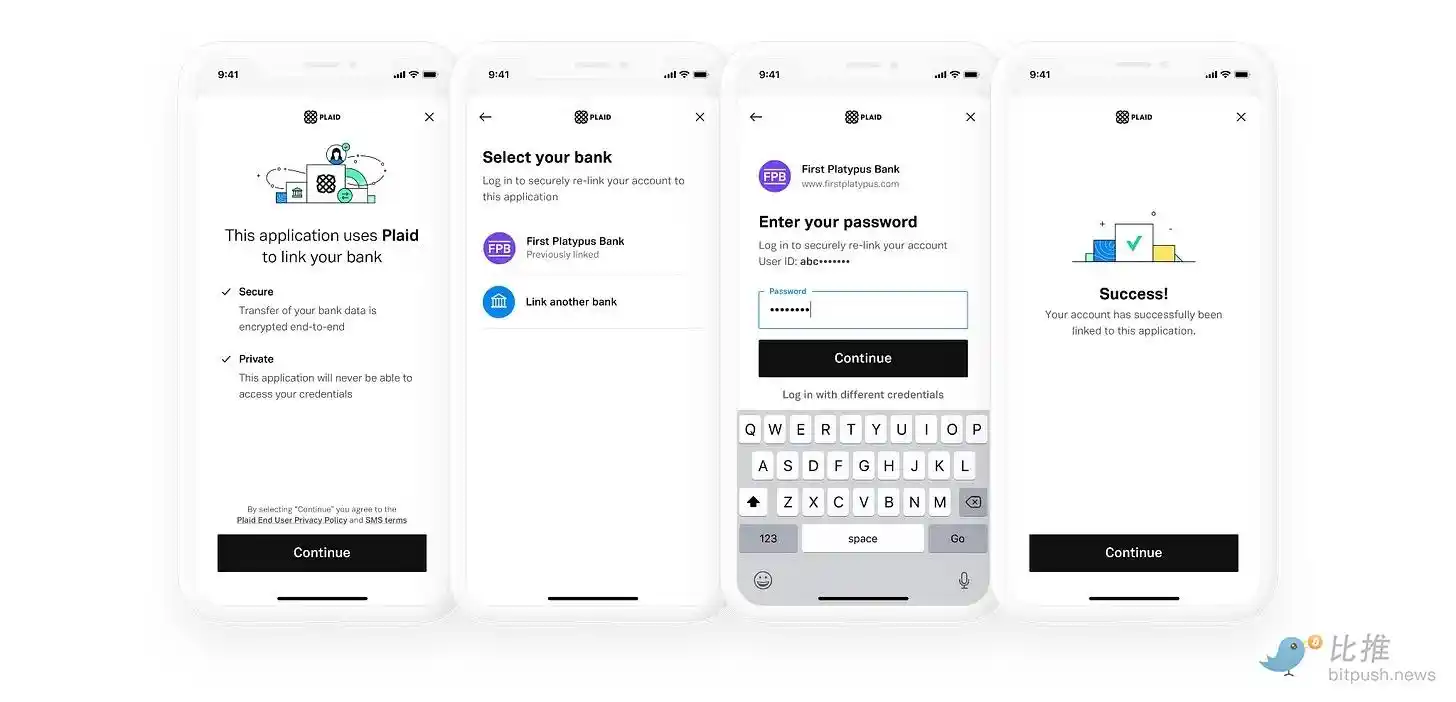
The company was founded in 2013 as an infrastructure layer that connects consumers' bank accounts to financial apps like Venmo, Robinhood, and Chime. Applications pay Plaid to allow users to seamlessly connect their banks, verify credentials, and share account information. This is particularly valuable in the U.S., where regulations do not require banks to share information with third parties (unlike open banking in the UK and PSD2 in the EU).
In fact, it’s reported that half of Americans have indirectly used Plaid's services through various financial applications. The company's valuation peaked at $13.4 billion in 2021 and was once planned to be acquired by Visa for $5.3 billion, but regulators ultimately blocked the deal. After being repriced at $6.1 billion in April 2025, its latest $8 billion tender offer reflects a rebound in momentum. Projected revenues in 2025 are expected to reach $430 million, with 20% of new customers now being AI companies.
Meanwhile, Stripe is a payment service giant founded by brothers John Collison and Patrick Collison in 2010.
With a decade of exponential growth in e-commerce, the company recently reported impressive performance for 2025. Total payment transaction volume reached $1.9 trillion, a 34% year-over-year increase, equivalent to about 1.6% of global GDP. Although revenue is not disclosed, sources estimate 2024 revenue to be at least $5 billion. Today, just Stripe's revenue suite (including Stripe Billing, Invoicing, Tax, etc.) is expected to reach an annual run rate (ARR) of $1 billion.
In addition to payments, Stripe is also actively positioning itself around cryptocurrencies and Agentic Commerce, viewing them as catalysts for online spending. It acquired the stablecoin platform Bridge for $1 billion, purchased wallet infrastructure provider Privy, and is building Tempo—a payment-focused L1 blockchain currently being tested by Visa, Nubank, and Klarna. Its latest $159 billion tender offer price represents a 74% increase from last year.
ARK Invest Big
A tender offer is a secondary transaction that allows new or existing investors to buy stock directly from employees and early shareholders. It provides liquidity without diluting company equity or being subject to IPO regulatory and structural burdens.
Both Stripe and Plaid are part of this larger trend: companies successfully bypassing the public markets in favor of private transactions.
Reports suggest that Anthropic is exploring a tender offer valued at over $350 billion, while Revolut recently completed an employee stock sale with a valuation of $75 billion.
In 2025, private secondary market transaction volumes soared to $240 billion, up from $162 billion in 2024. In contrast, about $140 billion was raised globally through traditional IPOs.

As the private capital markets flourish, the pace at which companies enter public markets has slowed. Currently, companies wait an average of 16 years to go public, extending 33% longer than a decade ago. In the past 12 years, total assets in the private market have more than doubled to $22 trillion. Some of the world’s most valuable companies, including SpaceX and OpenAI, remain private, with valuations comparable to or exceeding large public companies.

This has led to two key market developments:
First, the emergence of a new capital markets infrastructure layer. We recently analyzed the rise of platforms like Forge and EquityZen that facilitate secondary trading of private company stocks. Charles Schwab acquired Forge in November for $660 million, while Morgan Stanley acquired EquityZen in October (amount undisclosed).
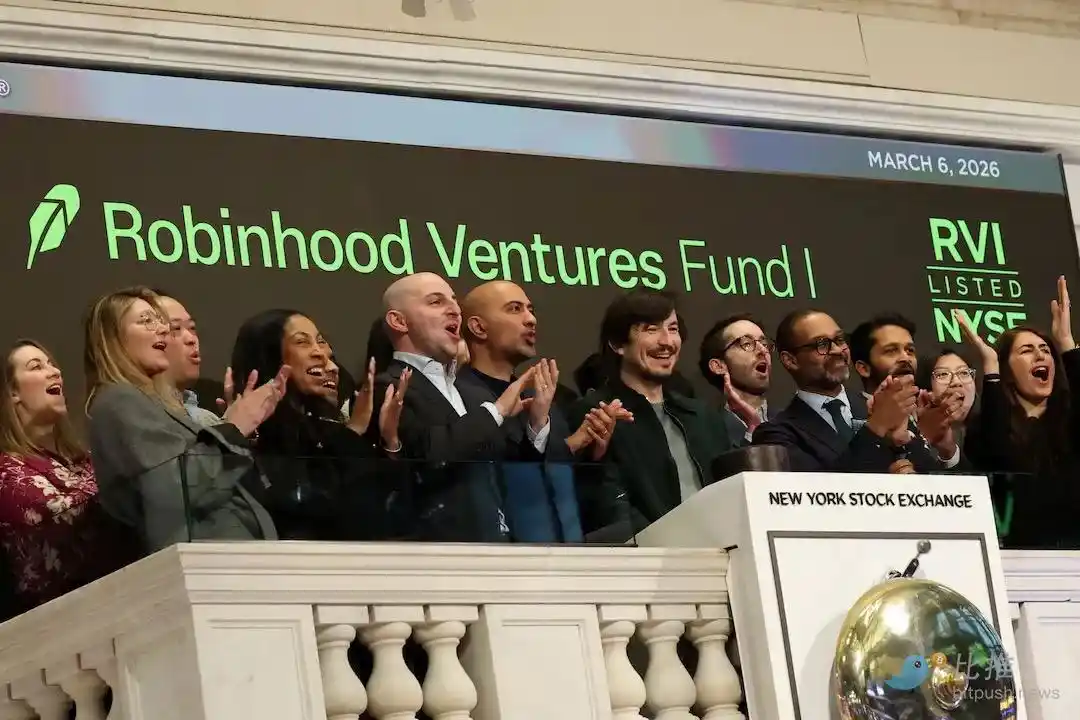
Second, the private market opening up to retail investors. Robinhood's newly established Ventures Fund I listed on the NYSE last Friday, raising $658 million, holding stakes in large private companies like Ramp, Stripe, and Revolut. This is not unprecedented; Destiny Tech100 listed in March 2024, offering a portfolio of 100 venture-backed companies, including SpaceX and OpenAI. However, Robinhood can directly distribute to its 28 million users, and like its performance in the public stock arena, it has a successful track record in democratizing asset classes historically limited to institutional investors.
In addition, the Trump administration signed an executive order last summer paving the way for $8.7 trillion in 401(k) retirement accounts to invest in alternative assets like cryptocurrencies and private markets.
We see these as major catalysts for further growth, but they also expose some hidden risks.
One of which is the structural complexity behind purchasing private equity. Brokers often bundle these stocks into their own special purpose vehicles (SPVs) and charge fees, while these SPVs sometimes hold positions in other instruments. These overlapping counterparty risks and fees may obscure the actual assets investors own. The next macroeconomic downturn will be accompanied by the unwinding of SPV positions and the subsequent lawsuits.
Moreover, there are issues with valuation transparency. Private company valuations are typically anchored to the most recent funding round, which may occur only once or twice a year. This limits price discovery and creates a gap between reported net asset values (NAVs) and prices the public market is willing to pay.
The Financial Times recently reported that Robinhood’s Ventures Fund I fell 11% on its first day of trading. Meanwhile, Destiny Tech 100’s trading price once reached nearly 20 times its NAV. This unpredictability is not a good thing for retirement savings accounts.

Meanwhile, regulators are starting to push for reforms to enhance the attractiveness of public markets. SEC Commissioner Hester Peirce expressed concerns about the private market in a speech in February: the pressure to go public has reduced for companies, but the private market lacks an equivalent mechanism for price discovery, accessibility, and liquidity.
SEC Chair Paul Atkins recently proposed a three-pillar plan aimed at "making IPOs great again" (his exact words), achieved through relaxing disclosure requirements and reforming securities litigation. Whether these reforms will be implemented remains to be seen.
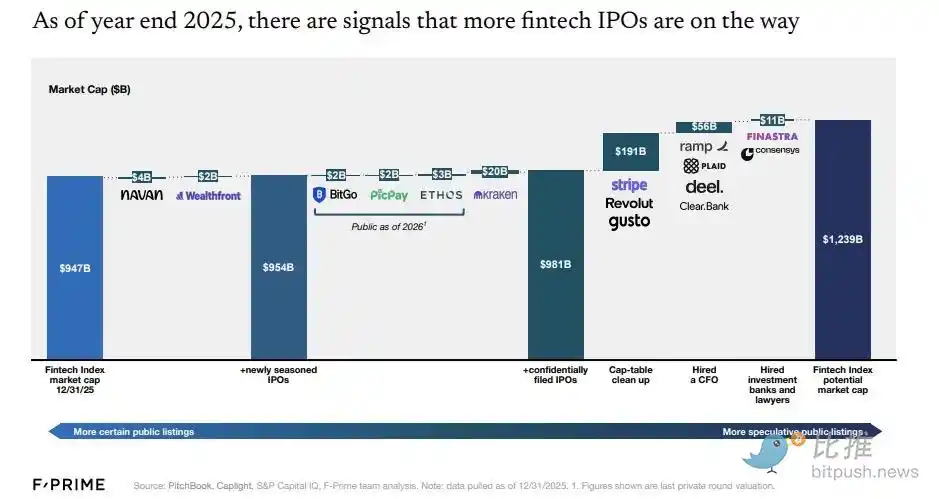
Aside from private transactions, IPOs are indeed seeing a significant rebound in 2025. Eleven venture-backed fintech companies, including Circle and Klarna, have gone public, and more are on the way. Kraken and Bitgo have applied confidentially, while companies like Ramp and Gusto are preparing by cleaning up cap tables, hiring new CFOs, or reaching out to investment banks. F-Prime estimates that the total market capitalization of fintech could grow from $947 billion to $1.2 trillion.

Whether these companies can obtain ideal prices is another matter. By the end of the year, only 2 out of 11 companies had share prices above their IPO prices. Chime was privately valued at $25 billion, but went public at $13.5 billion. Klarna went public at $17.3 billion but fell to $10.9 billion by the end of the year.
With geopolitical tensions rising and macroeconomic outlook uncertain, companies still on the sidelines may find that the tender offer approach is the path of least resistance. At least for now, liquidity in the private market remains robust enough to absorb the supply of these unicorns.
免责声明:本文章仅代表作者个人观点,不代表本平台的立场和观点。本文章仅供信息分享,不构成对任何人的任何投资建议。用户与作者之间的任何争议,与本平台无关。如网页中刊载的文章或图片涉及侵权,请提供相关的权利证明和身份证明发送邮件到support@aicoin.com,本平台相关工作人员将会进行核查。


