Original Title: Top 100 Gen AI Consumer Apps: March 2026
Original Author: Oliva Moore, Partner at a16z
Translation: Peggy, BlockBeats
Editor's Note: Three years ago, generative AI was still an experimental field for a few products; today, it has become a foundational capability in the software world. From the ongoing AI battle for default AI led by ChatGPT, to the emergence of creative tools in video, music, and voice, to the arrival of Agent products and AI browsers, the form of AI is rapidly evolving from a "chat tool" into a new computing platform.
This article presents several key changes by analyzing the traffic, user structure, and functional evolution of mainstream AI products worldwide: platform ecosystems are beginning to form lock-in effects, the global market is gradually diverging under policy and technological paths, the focus of creative tools is shifting from images to video and audio, while Agents are pushing AI from "answering questions" to "executing tasks."
More importantly, AI is quietly moving away from browsers and applications themselves, embedding into operating systems, development tools, and everyday software. As AI shifts from a standalone product to an omnipresent feature, the way we measure it will inevitably have to change.
Here is the original content:
Three years ago, we released the first version of this list with a simple goal: to find out which generative AI products are truly being used by mainstream consumers.
At that time, the boundary between AI-native companies and other software companies was very clear. Products like ChatGPT, Midjourney, and Character.AI were built around foundational models from the start. Other participants in the software industry were still exploring how to use this technology.
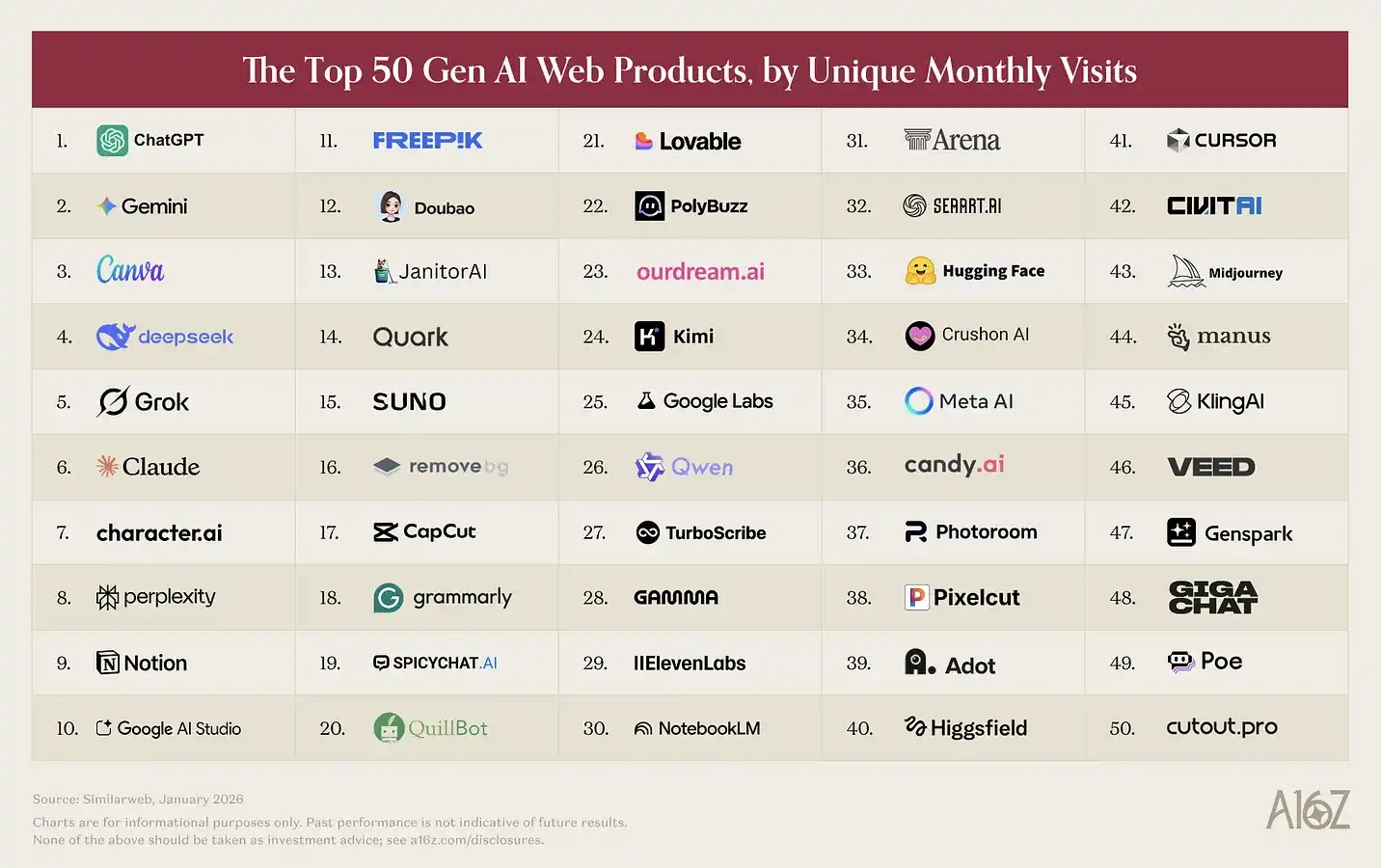
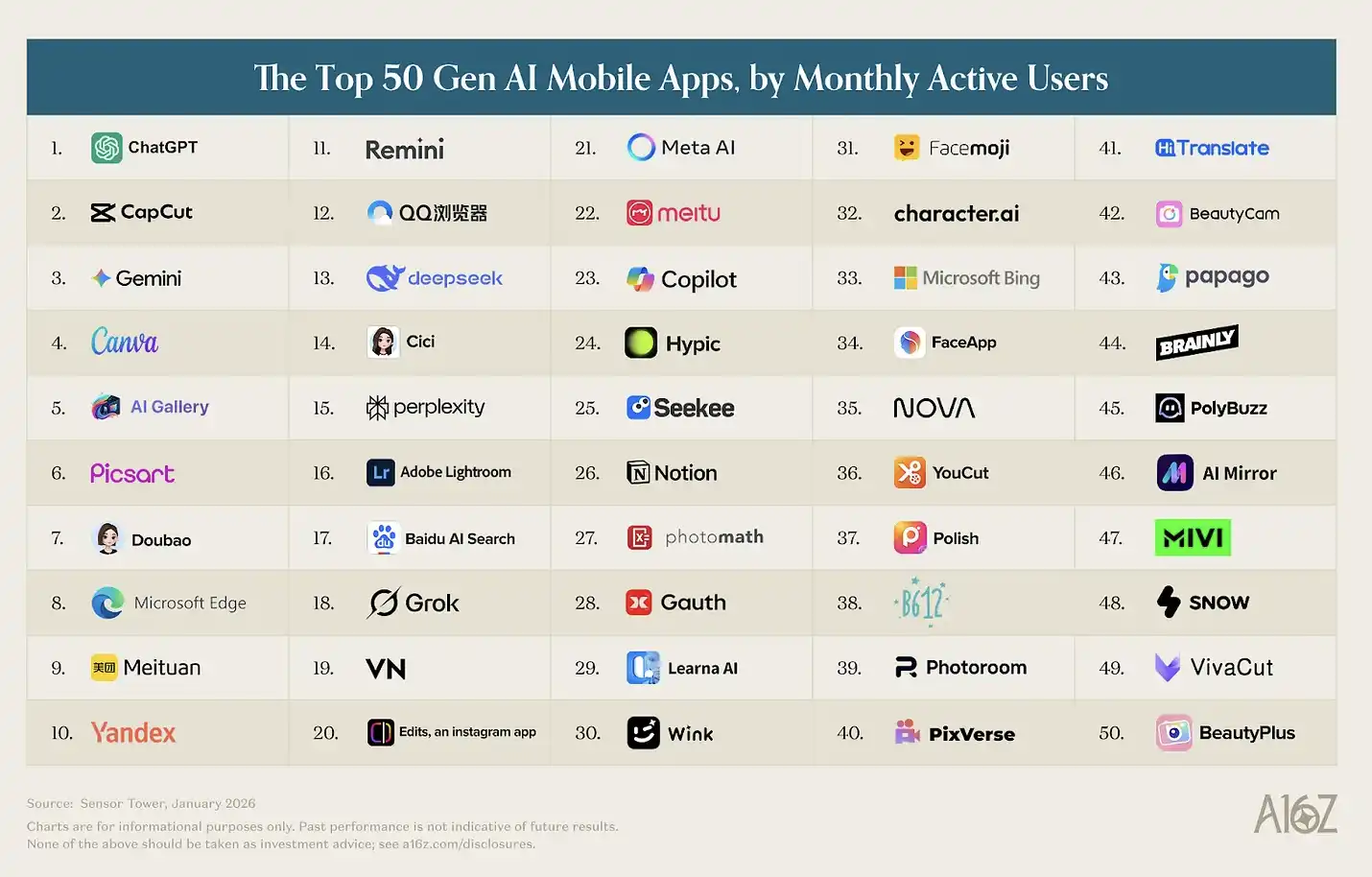
This distinction is no longer valid. Take the video editing application CapCut as an example; it has 736 million monthly active users on mobile, and its most popular features heavily rely on AI, such as background removal, AI effects, auto subtitles, and text-to-video generation. Canva has built its entire growth engine on its Magic Suite's AI toolset. Notion's paid AI feature binding rate soared from 20% to over 50% within a year, and now AI features contribute about half of the company's annual recurring revenue (ARR).
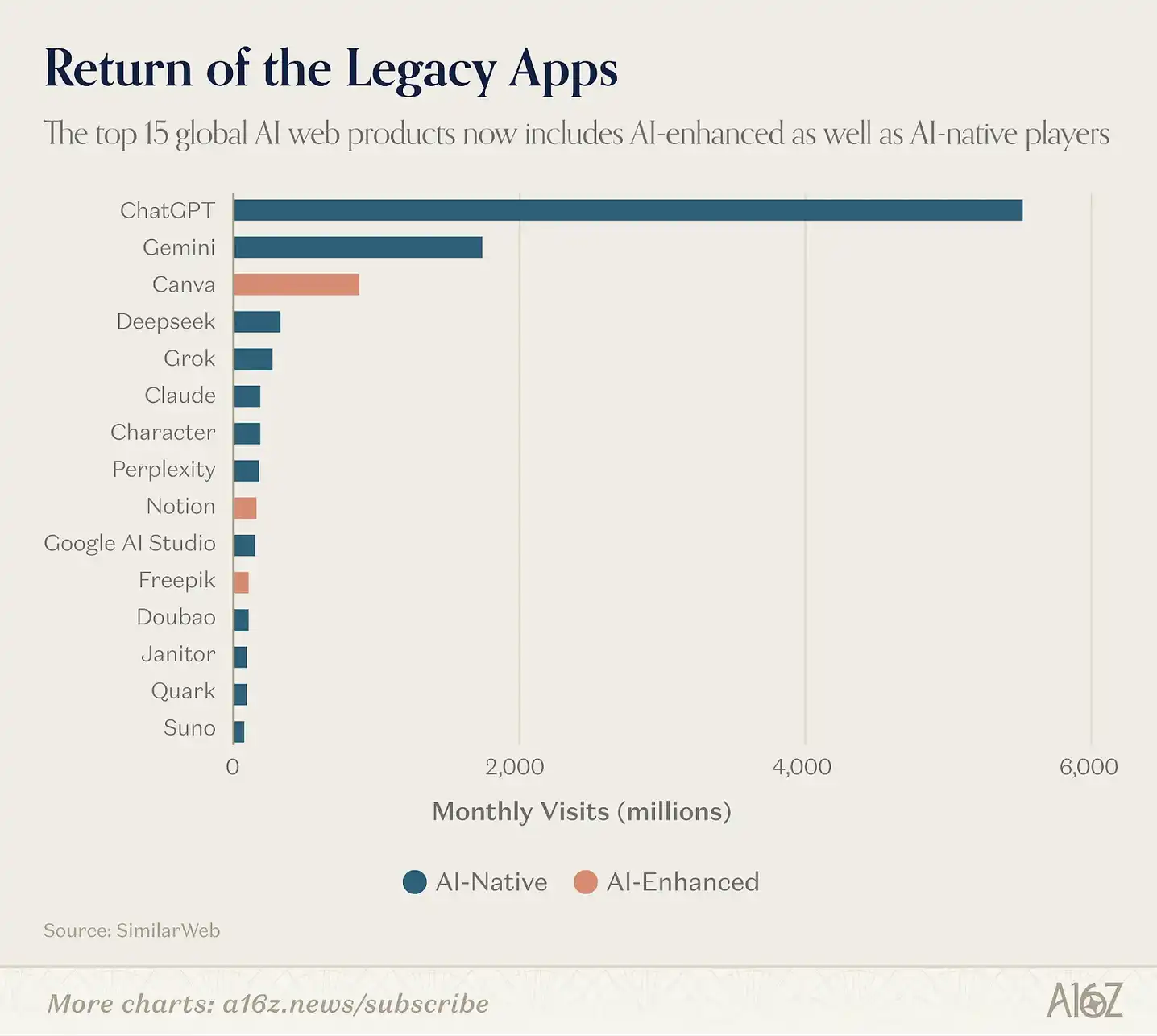
Starting from this version of the list, we will broaden our statistical scope to include any consumer applications where generative AI has become a core product experience, including CapCut, Canva, Notion, Picsart, Freepik, and Grammarly. We believe the resulting data will more accurately reflect how people actually use AI, although most of the top products on the list are still AI-native.
As usual, our web-based list is ranked based on monthly unique visits as of January 2026 according to SimilarWeb; the mobile application list is ranked based on monthly active users (MAU) as of January 2026 according to Sensor Tower.
Here are some key observations we've summarized:
ChatGPT Remains Leading, but the "Default AI" Battle Has Begun
ChatGPT remains the consumer AI product with a scale far ahead of others. On the web, based on monthly visits, its scale is 2.7 times that of the second-ranked Gemini; on mobile, based on monthly active users, it is also 2.5 times larger.
In the past year, ChatGPT's weekly active users have increased by 500 million, reaching 900 million. Given the challenges of continuing to maintain growth on such a massive scale, this achievement is particularly impressive. Now, more than 10% of the global population uses ChatGPT weekly.
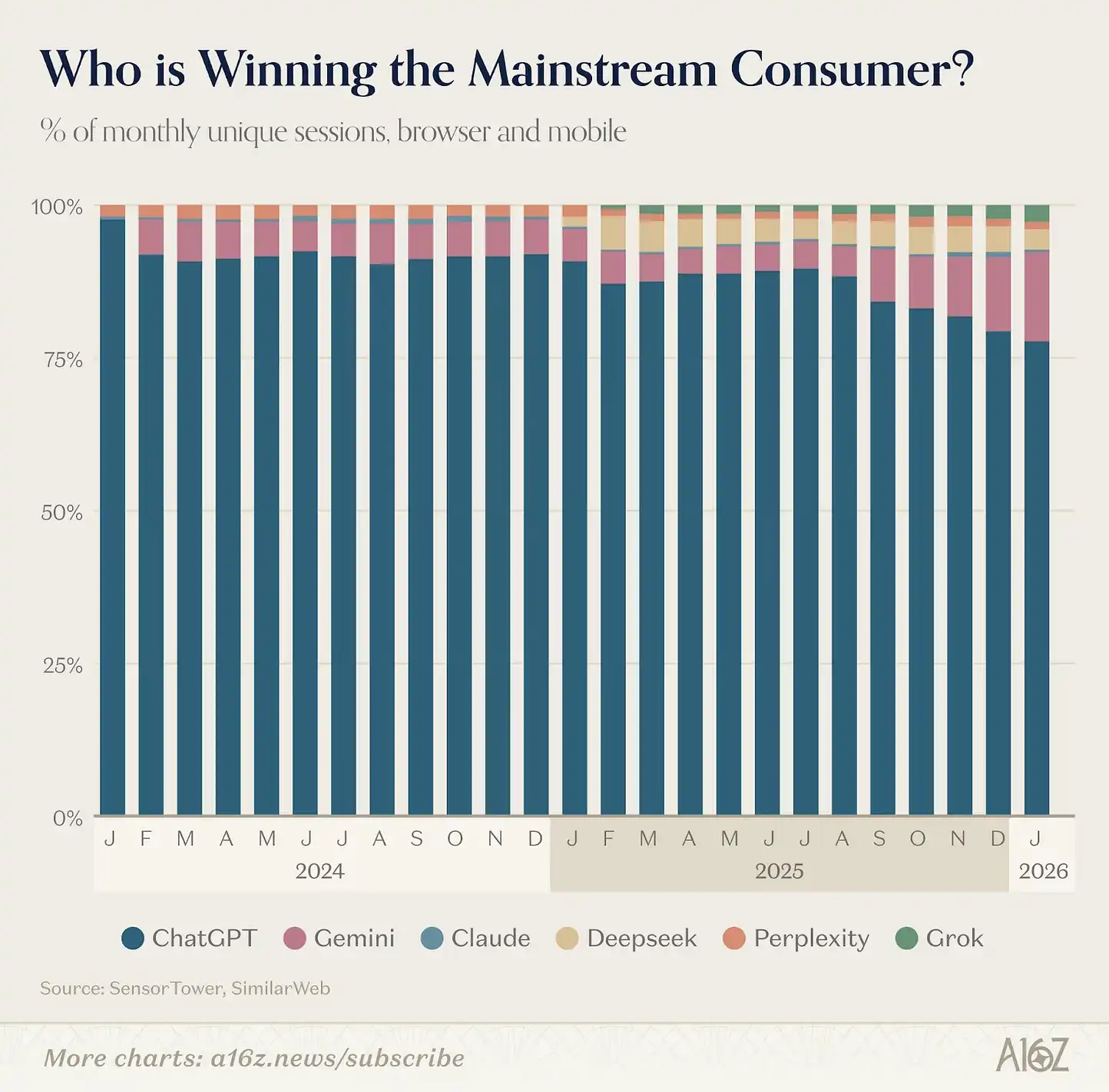
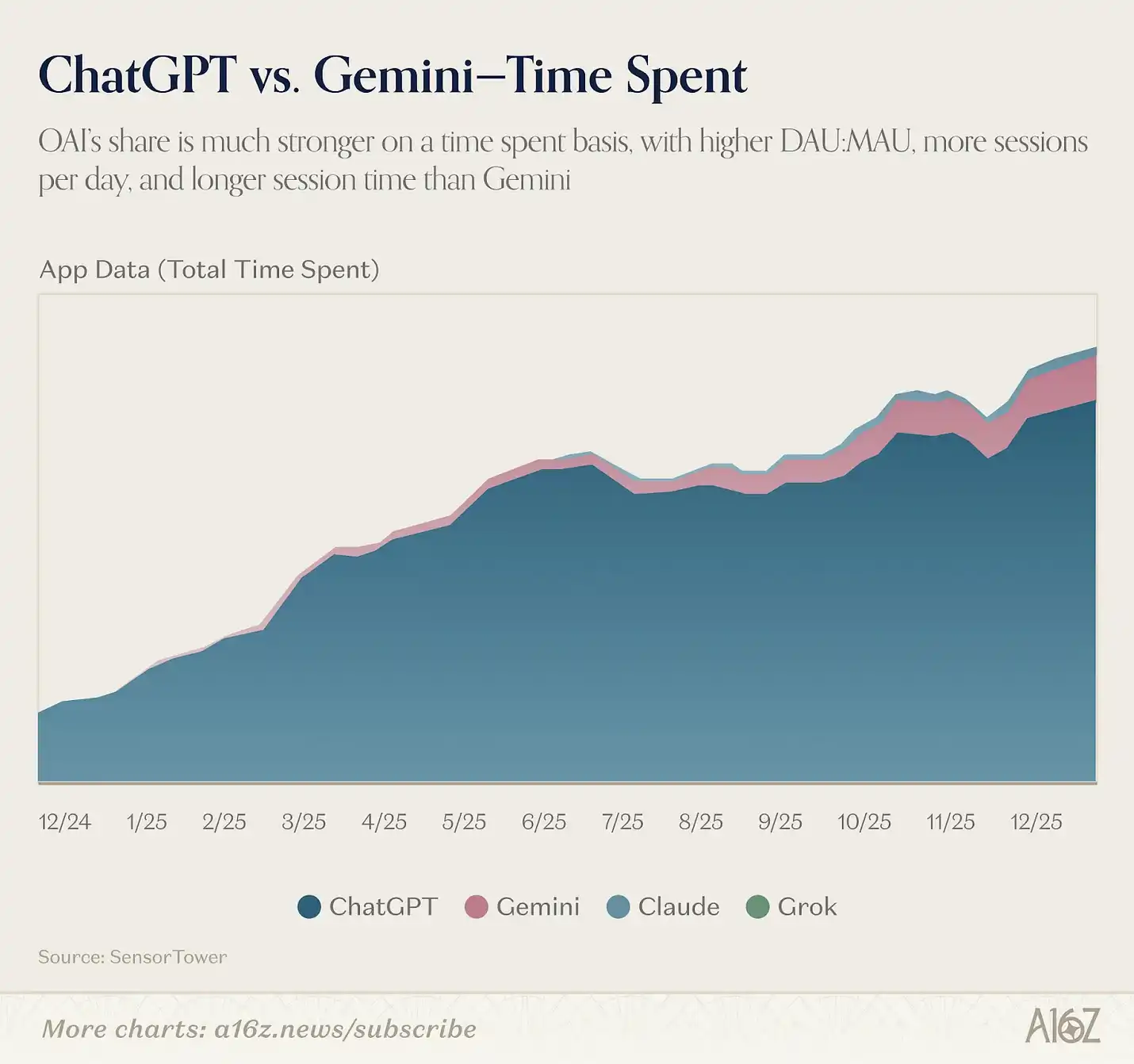
However, we also see that this field is gradually expanding, with other horizontal platforms rapidly emerging targeting specific use cases. Over the past year, the growth of paid subscribers for Gemini and Claude in the U.S. has accelerated significantly (although their scales are still far smaller than ChatGPT. In this metric, ChatGPT's scale is about 8 times that of Claude and 4 times that of Gemini).
According to data from Yipit Data, as of January 2026, the number of paid subscribers for Claude has increased by over 200% year-on-year, while Gemini's growth rate has reached 258%. At the same time, we have observed an increasingly evident multi-platform use behavior: about 20% of weekly active users on the ChatGPT web platform also use Gemini within the same week.
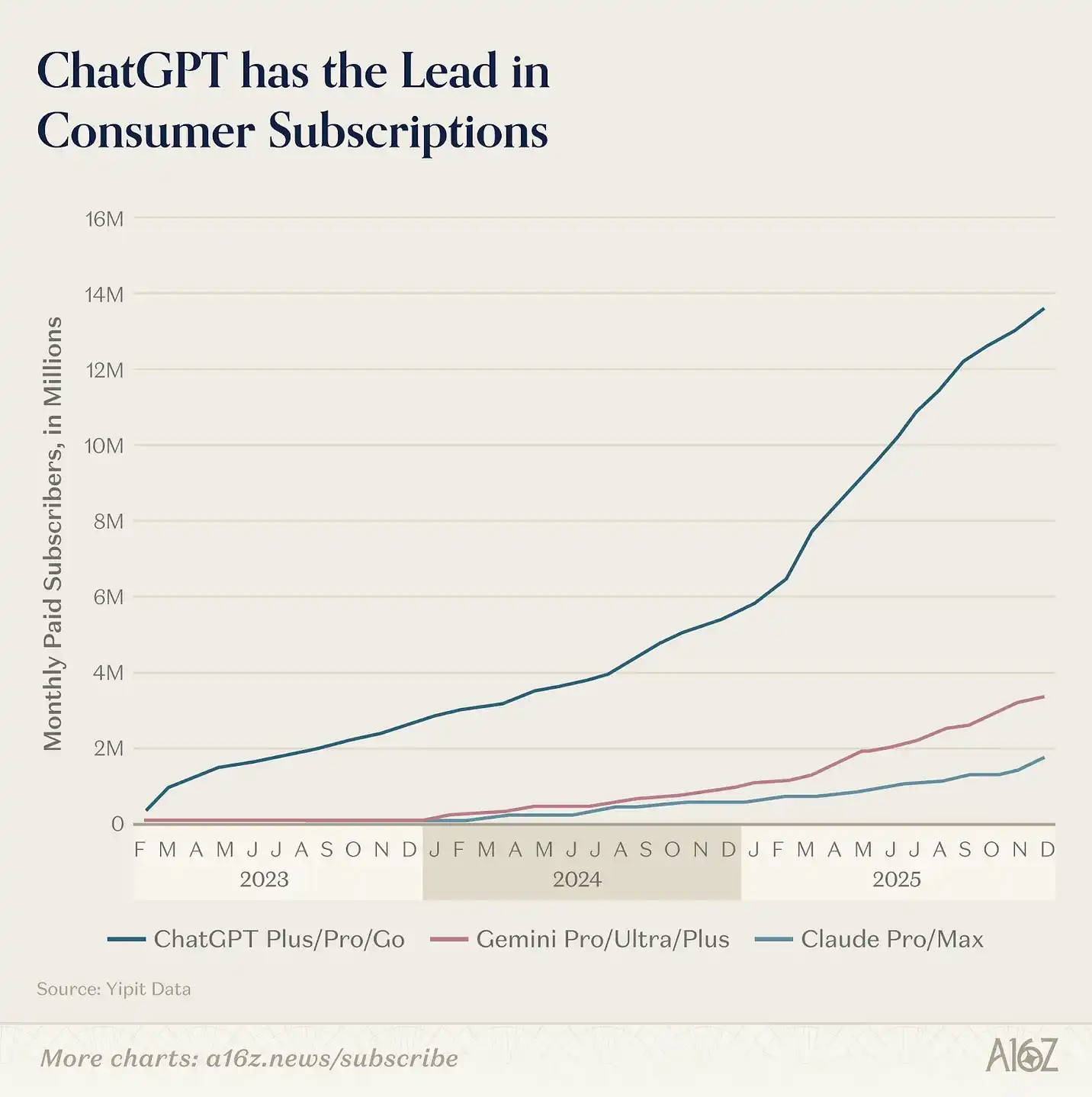
What has changed? Competitors have begun to seriously launch products.
Google has made significant breakthroughs in creative models. Nano Banana generated 200 million images in its first week of launch, bringing in 10 million new users for Gemini; meanwhile, Veo 3 is widely regarded as a key breakthrough moment in the AI video field. At the same time, Anthropic continues to delve into the prosumer market, launching Cowork, Claude in Chrome, Excel and PowerPoint plugins, as well as the most eye-catching Claude Code.
The importance of this competition lies not only in who is leading today but also in who can establish a structurally irreplaceable position. In this field, "context will continuously accumulate benefits": the more a large model understands your information and habits, the better results it can provide, and it will encourage you to use it more frequently.
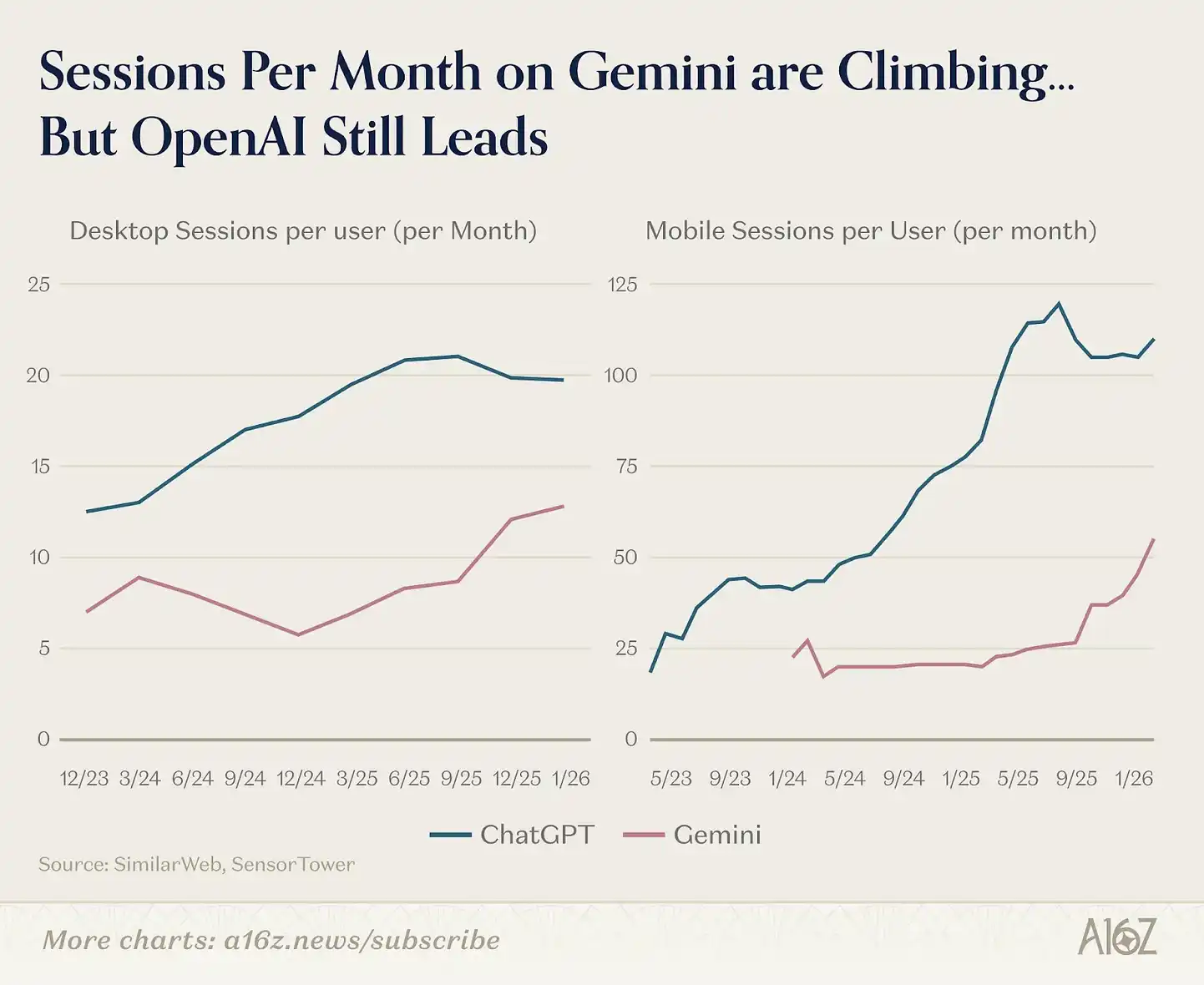
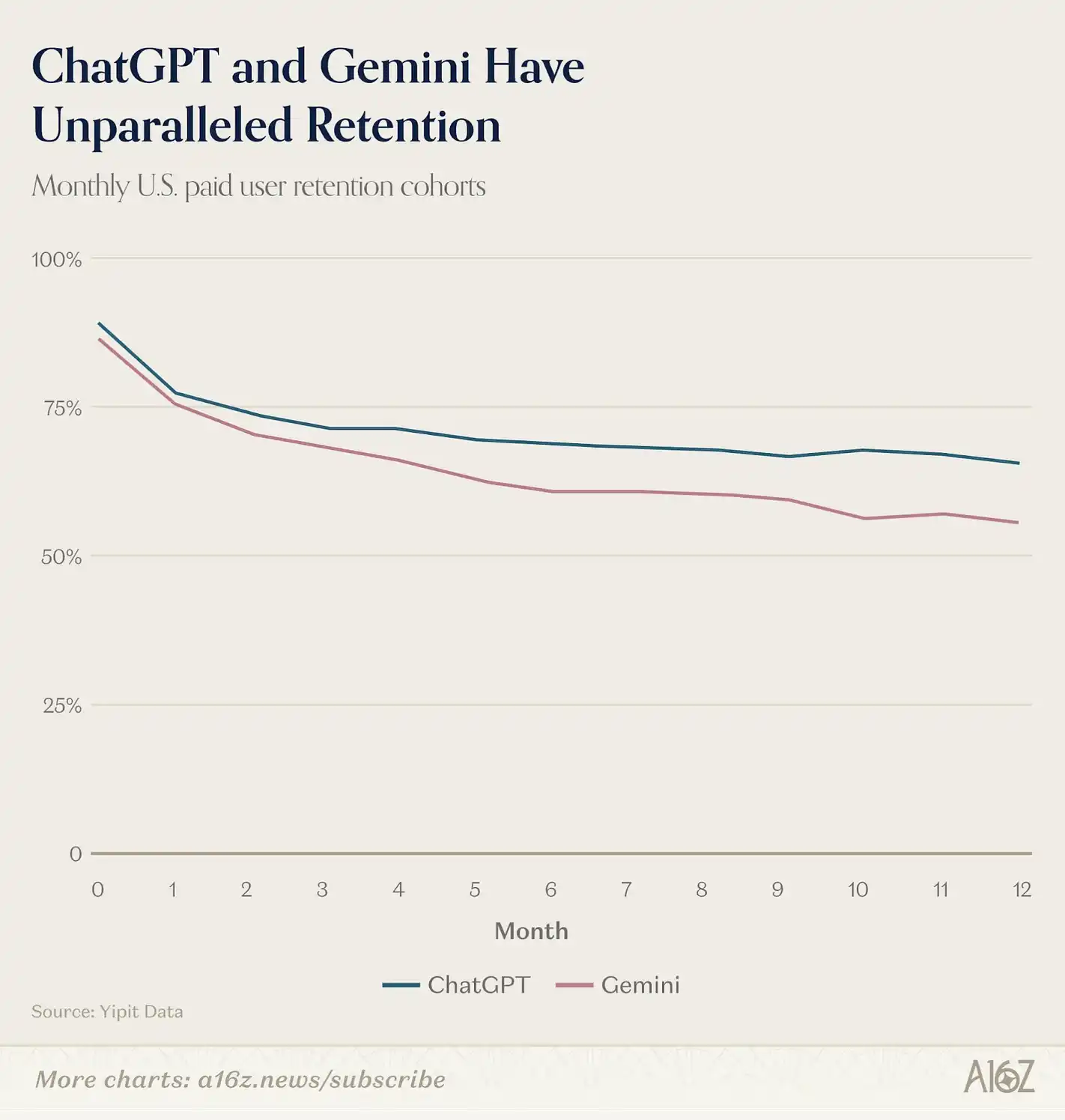
Preliminary data shows that Gemini's user average session count on the web is rising, but is still about 1.3 times lower than ChatGPT; on mobile, ChatGPT’s advantage is even more evident, with users averaging 2.2 times more sessions. According to Yipit Data's statistics, both companies lead the industry in consumer-level paid subscriber retention rates in the U.S. market.
The next layer of "lock-in effect" comes from the application ecosystem.
ChatGPT and Claude have both launched their own connector ecosystems: ChatGPT's GPTs and Apps, and Claude's MCP integration and Connectors, allowing users to build their own workflows atop the assistants. Once users connect AI to their calendars, emails, CRM, and other systems, the cost of switching platforms significantly increases. Meanwhile, developers often concentrate their efforts on the largest user ecosystems, creating a flywheel effect similar to past platform wars.
We are starting to see two platform paths becoming clearer. Sam Altman has stated that OpenAI’s goal is "to bring AI to billions who cannot pay subscription fees," which is why they have begun to introduce ads; he also mentioned OpenAI would launch an identity system called "Sign in with ChatGPT" to make ChatGPT the default entry point for consumers to connect to the internet. Their ambition is to make ChatGPT the starting point for all activities: shopping, booking, information browsing, health management, and everyday life.
The application directory already reflects this direction. As of the end of February, ChatGPT's app store has 220 applications across 13 categories; Claude has approximately 160 official selected connectors and about 50 community-built MCP servers. However, only 41 applications overlap between the two, accounting for about 11% of each of their total directories. Almost all of these 41 are general productivity tools: Slack, Notion, Figma, Gmail, Google Calendar, HubSpot, Stripe, etc.
Beyond these basic tools, the paths of the two major platforms have almost completely diverged.
ChatGPT now has over 85 applications spread across categories like travel, shopping, food, health and fitness, lifestyle, and entertainment; whereas Claude has virtually no presence in these areas. These are all consumer transaction scenarios: booking flights on Expedia, purchasing groceries through Instacart, browsing real estate on Zillow, and logging nutrition data with MyFitnessPal. This is the most aggressive attempt yet by any AI company to become a consumer-level super app.
In contrast, Claude’s exclusive integrations are clearly oriented towards professional and enterprise scenarios: including financial data terminals (PitchBook, FactSet, Moody's, MSCI), developer infrastructure (Sentry, Supabase, Snowflake, Databricks), research and medical tools (PubMed, Clinical Trials, Benchling), and an ever-expanding open-source MCP community. This ecosystem does not yet correspond to what ChatGPT has.
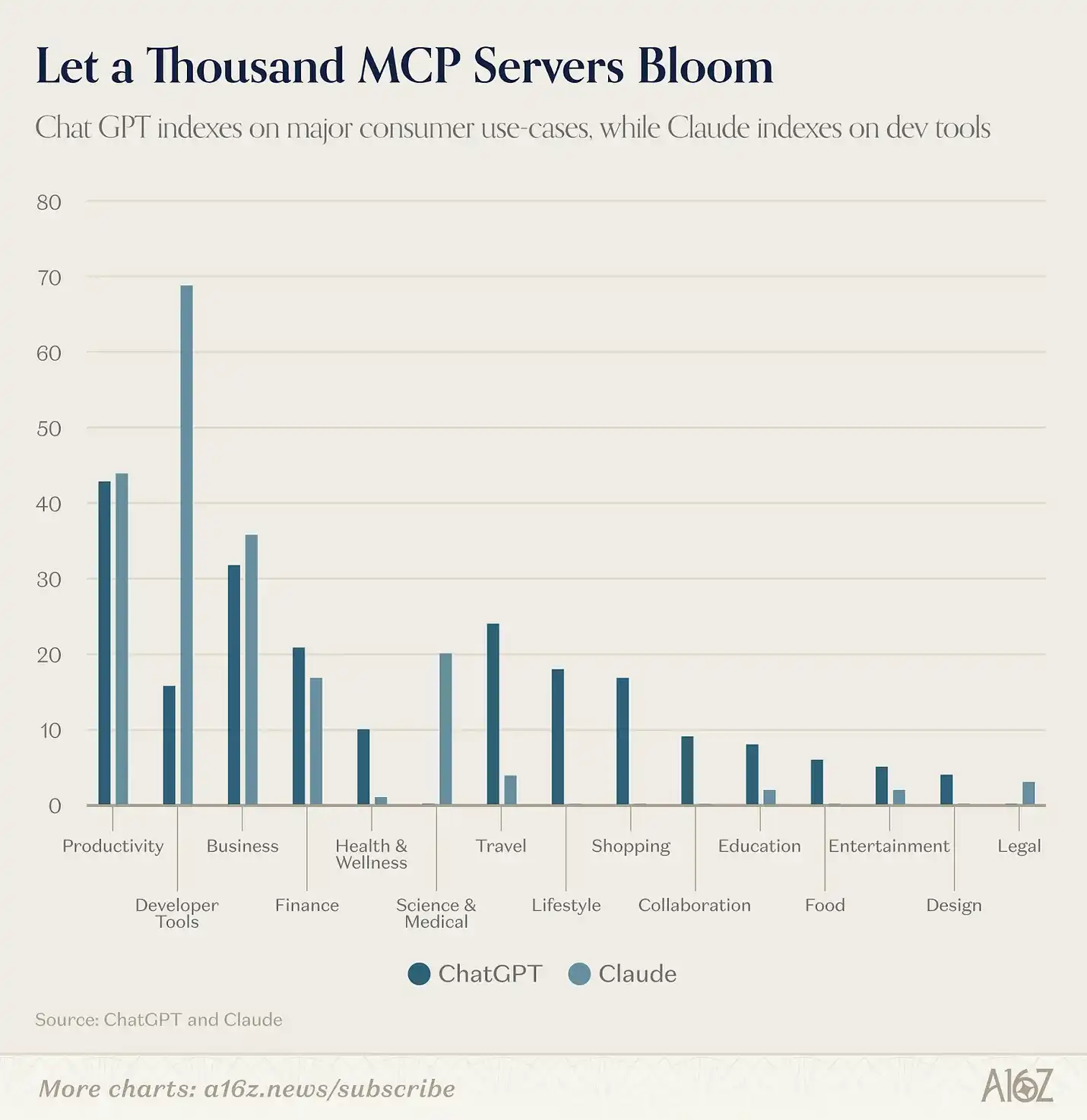
Anthropic seems to be focusing on AI heavy users (such as developers, knowledge workers, etc.). These users are more willing and able to pay for higher-cost direct subscription services. While ChatGPT has also launched products aimed at the same group (such as Codex, Frontier), OpenAI has clearly stated a desire to make ChatGPT a platform truly geared towards mass users. As the user base continues to expand, this may open more monetization channels. They have already begun testing ad models, and taking a cut from platform transactions (take rate) will also likely be a natural direction for expansion.
If AI assistants ultimately evolve from being just chat windows to becoming an operating environment, then the outcome of this competition may not resemble the search wars of the past, where one player captured 90% of the market; it may instead resemble the mobile operating system wars: two fundamentally different platforms each building trillion-dollar ecosystems.
Global Usage Patterns Are Fragmenting by Product
In terms of geographic distribution, the AI market is gradually fragmenting into three independent ecosystems, with the gaps between them continuously widening.
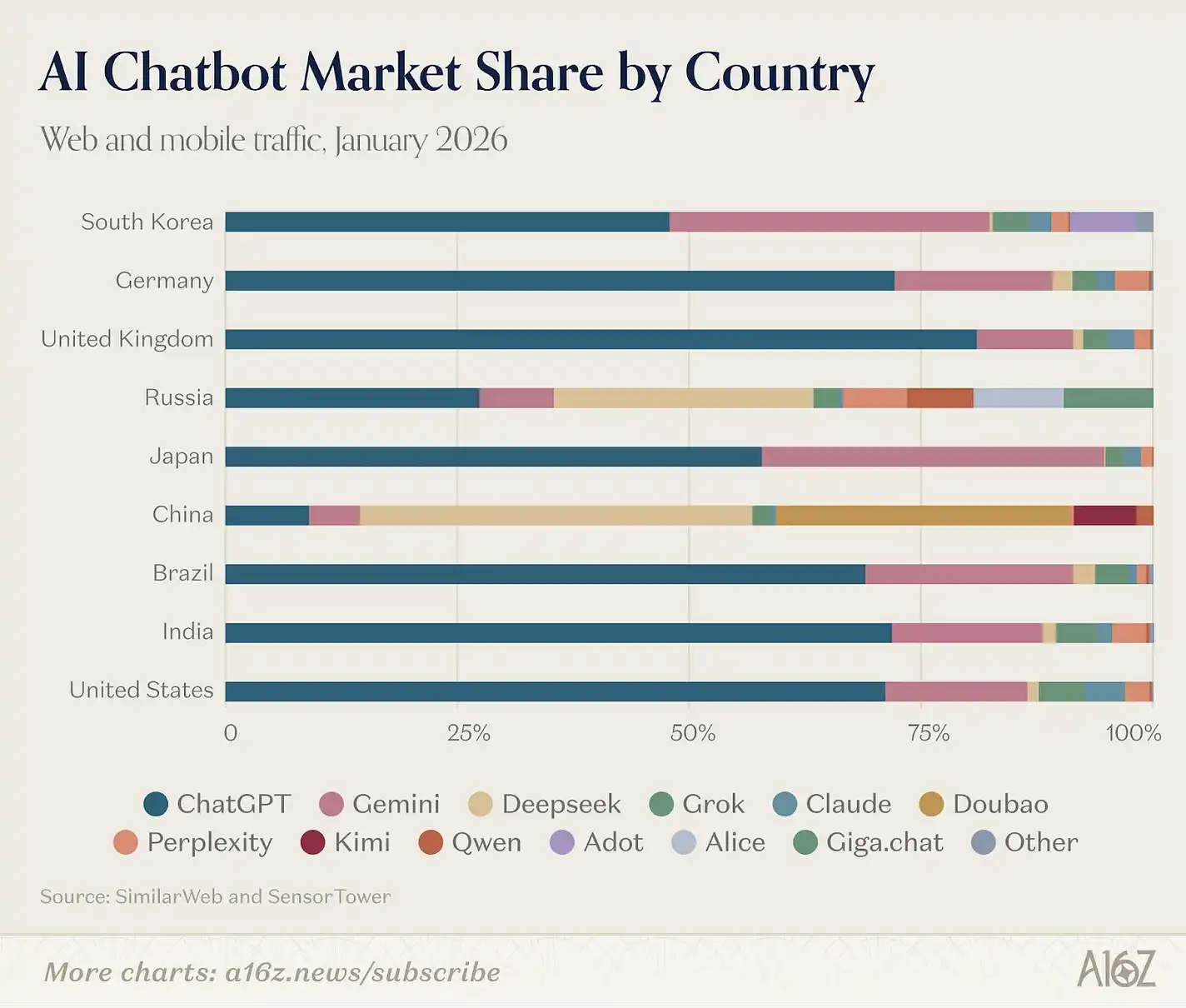
The user structure of Western AI tools remains highly similar. The main user markets for ChatGPT, Claude, Gemini, and Perplexity almost come from the same group of countries: the United States, India, Brazil, the United Kingdom, and Indonesia (with only the ranking order differing). However, in China and Russia, these products have practically no substantive usage scale. This primarily stems from policy factors—since 2022, Western technological sanctions have restricted the use of U.S. AI tools in Russia; China has required AI service providers to complete record-keeping, ensure data localization, and comply with content review rules.
DeepSeek is currently the only product forming a "bridge" between these two major camps. Its web traffic distribution is: China 33.5%, Russia 7.1%, and the U.S. 6.6%, with similar structures on the mobile end. Meanwhile, Chinese users are also heavily using ByteDance's Doubao and the local model Kimi.
Russia, which previously had almost no independent market in our prior lists, is now gradually becoming a third pole, boasting the second-highest penetration of DeepSeek. Yandex Browser, which integrates Alice AI assistant, has reached 71 million monthly active users (MAU), making it one of the top ten mobile AI products globally. Meanwhile, Sber’s GigaChat has also entered our web list for the first time. This pattern closely mirrors China’s development path, but at a faster pace: sanctions have created a market vacuum that local products have quickly filled within two years.
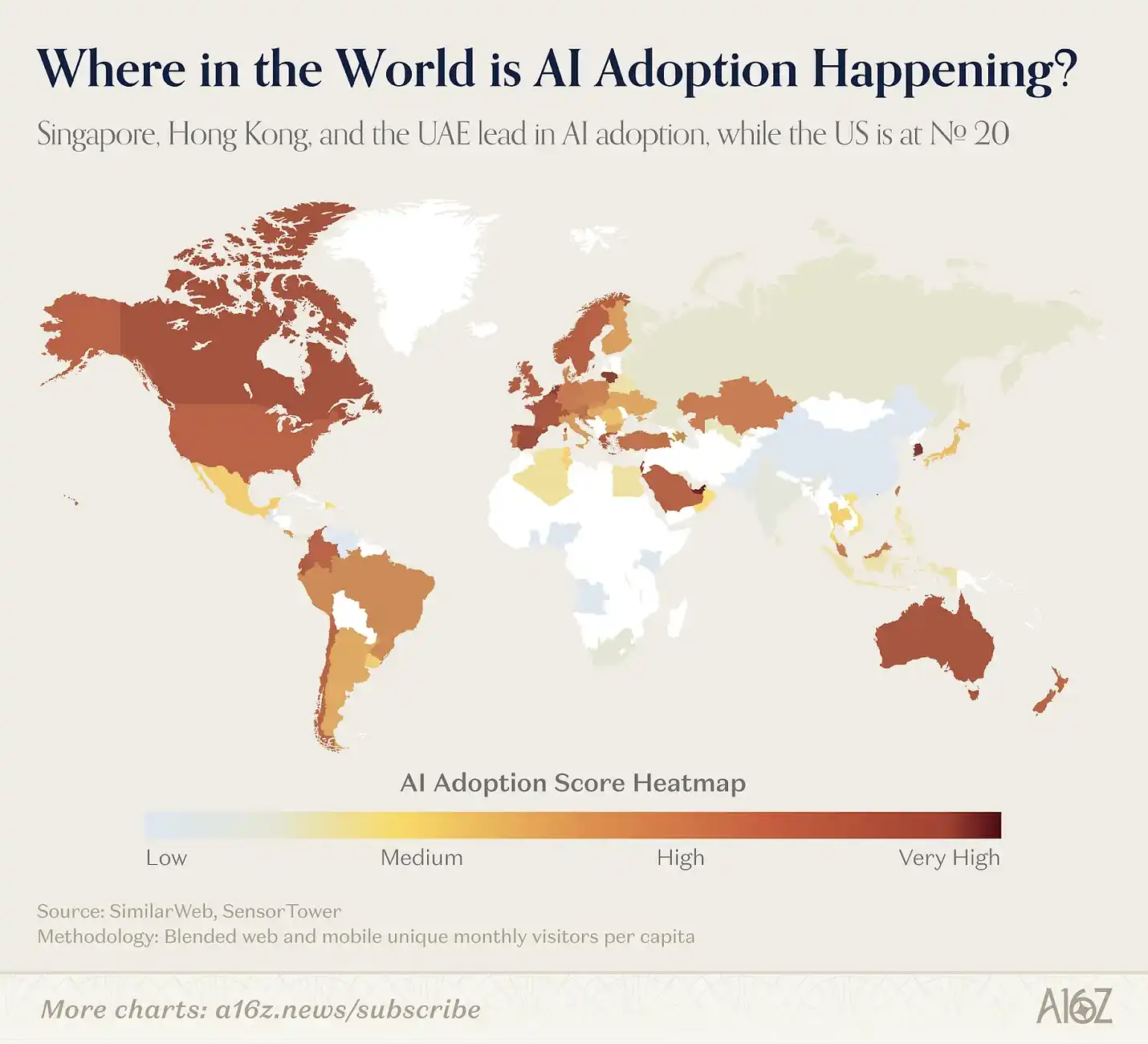
To examine AI adoption from a per capita usage perspective, we constructed a simple index: combining per capita web visits with per capita monthly active user numbers (MAU) to score the products in the list, on a scale from 0–100. The results reshape the global landscape: Singapore ranks first, followed by the UAE, Hong Kong, and South Korea. Meanwhile, the United States, where most AI products were born, ranks only 20th.
Creative Tools Are Changing
Midjourney, DALL-E, and Stable Diffusion were among the first to expose a large number of early users to generative AI, all launched before ChatGPT. In the early stages of generative AI, image generation tools dominated creative applications (video and audio generation appeared later) and occupied an absolute advantage in our initial few lists. However, this field has now undergone noticeable evolution.
In the first version of the list released in September 2023, 7 out of the 9 products in the web creative tools list were image generation tools. Three years later, only 3 image generation products remain on the list, but the total number of creative tools is still 7. The shift lies in the categories filling the gaps: video, music, and voice generation products have replaced the positions once occupied by image generation tools.
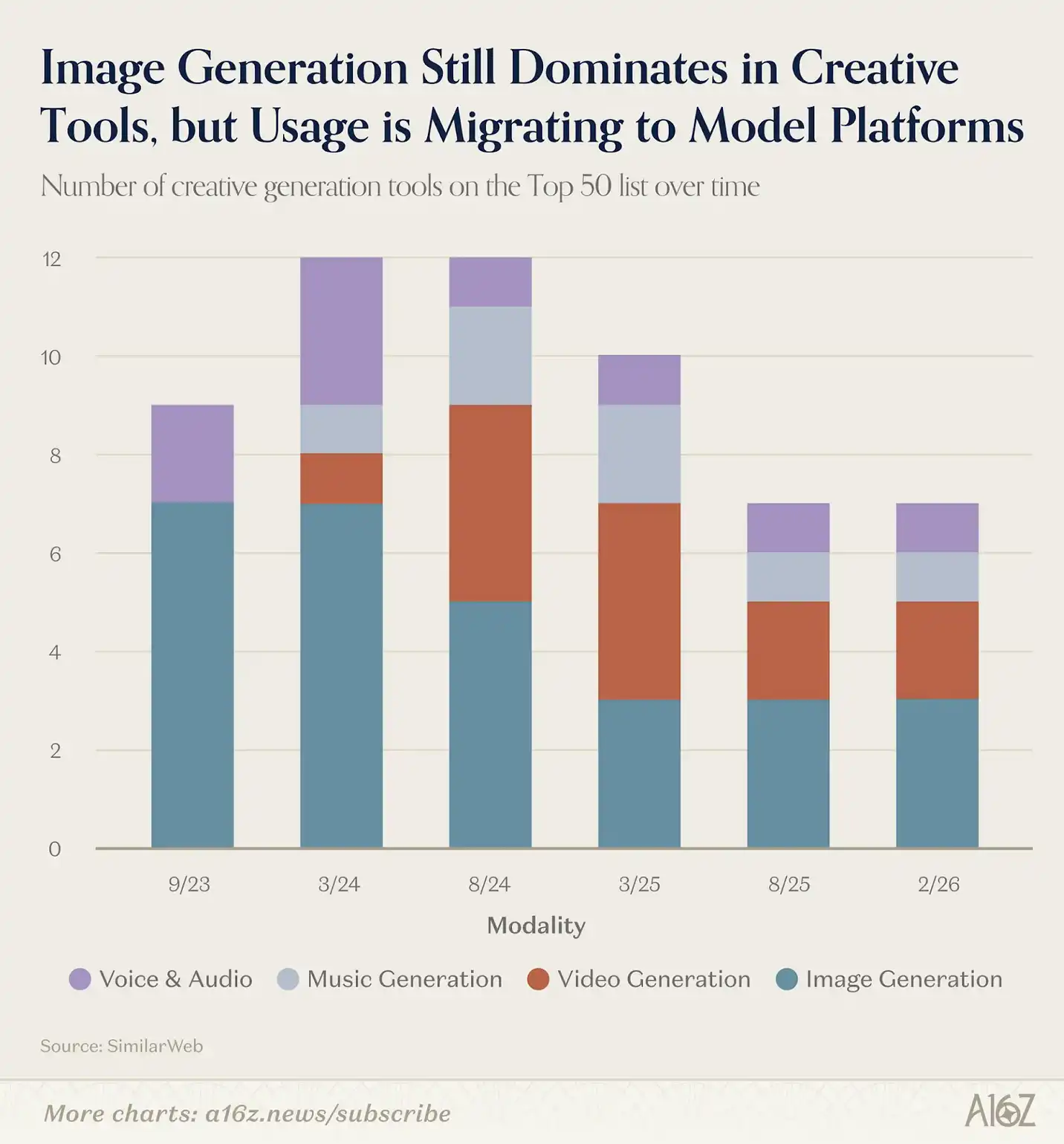
Changes in the image generation domain are essentially the result of "bundling" effects. As the image model capabilities within ChatGPT (GPT Image 1.5) and Gemini (Nano Banana) continue to improve, the competitive threshold for standalone image generation products has been rapidly raised. In our earliest list, Midjourney was once in the top 10, but has now dropped to 46th place. The products that remain on the list, such as Leonardo, Ideogram, and CivitAI, serve specific creator communities more by providing distinct functionalities to meet segmented needs rather than competing head-on with general generative capabilities.
In this latest list, the changes in the video generation domain are most noticeable. Kling AI, Hailuo, and Pixverse have all amassed real user scales, and Chinese-developed models are leading in generation quality. If applications based on Seedance 2.0 appear in the next list, we would not be surprised. Meanwhile, Veo 3 has become the first U.S. model to come close to this quality level, significantly boosting the traffic for Google Labs, moving its ranking from 36th to 25th.
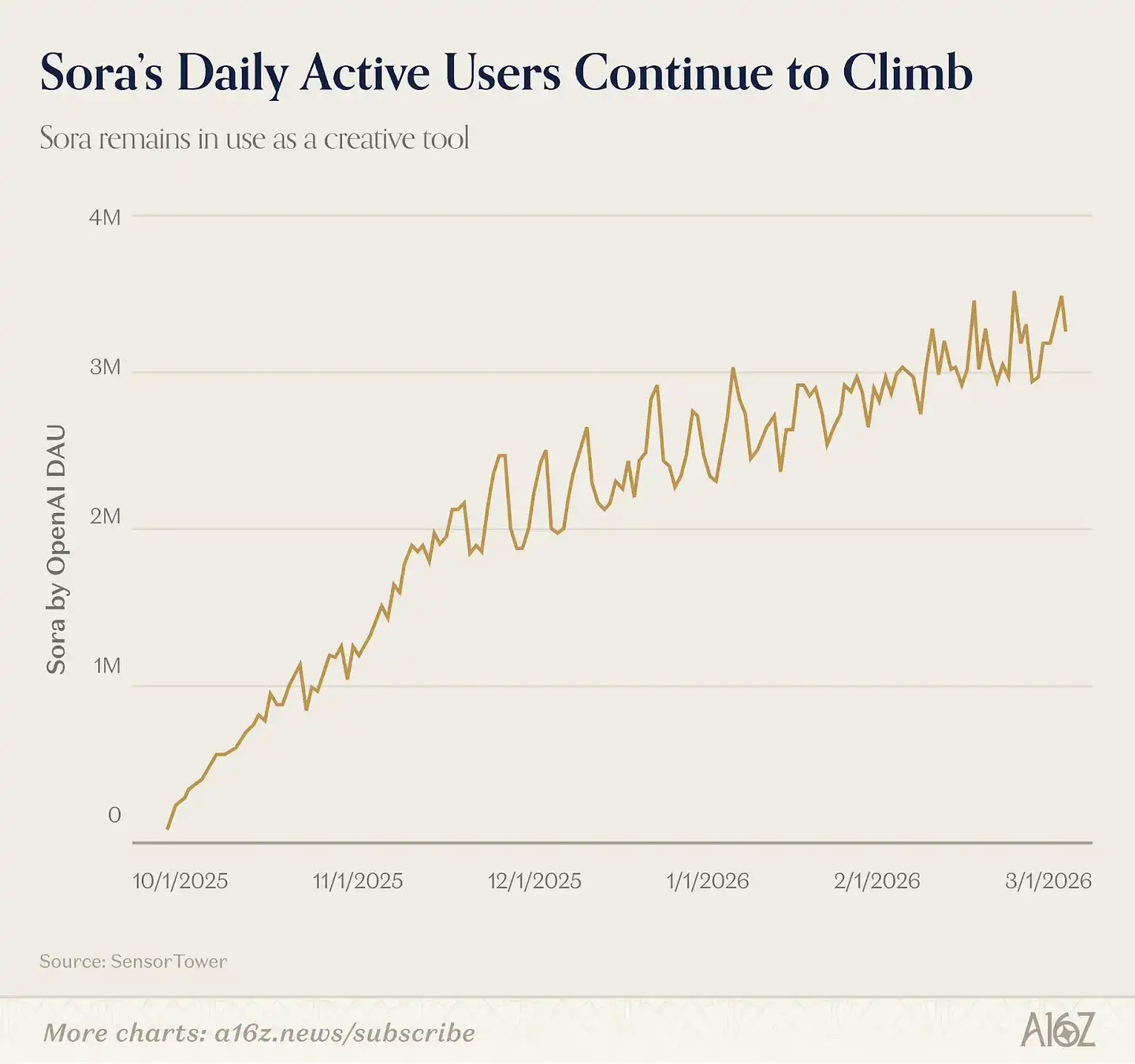
Who is absent? Sora. OpenAI launched its flagship video model Sora 2.0 in September 2025 as a standalone application, allowing users to upload their digital avatars (Cameo) to generate videos containing real people. Sora topped the U.S. App Store for 20 consecutive days and reached 1 million downloads faster than ChatGPT. However, its downloads gradually declined afterward because Sora did not evolve into a viral social application (no one has truly cracked the "AI × social" combination yet), thus failing to make it onto the current mobile list. However, according to Sensor Tower data, the mobile Sora still has over 3 million daily active users. Many AI video creators continue to use this model, but the generated content is often published on other platforms.
Music and voice domains are showing more stability.
Suno (ranked 15th) has maintained its rank from the previous list; while ElevenLabs has been on the list in every edition since September 2023. Its core abilities—voice cloning, dubbing, and audio production—remain sufficiently specialized and have not yet been simply replicated as a "feature option" in large model products.
The underlying pattern behind this trend is that when model giants and existing platforms (such as Google, OpenAI) centralize creative capabilities in certain fields (such as images and increasingly more videos), the traffic space for independent products gets compressed. However, even so, there remain opportunities to craft more stylized products that may also have higher monetization potential for specific user groups. Conversely, markets where giants have yet to enter on a large scale (such as music and voice) retain relatively larger spaces.
Agents Have Emerged
The transition to Agentic AI did not begin with this list but from the previous one, where the term "vibe coding" emerged. When Lovable, Cursor, and Bolt entered our rankings in March 2025, they represented a new product form: AI was no longer just answering questions or generating content, but began to "build things" for users. This is a form of Agent behavior aimed at specific verticals.
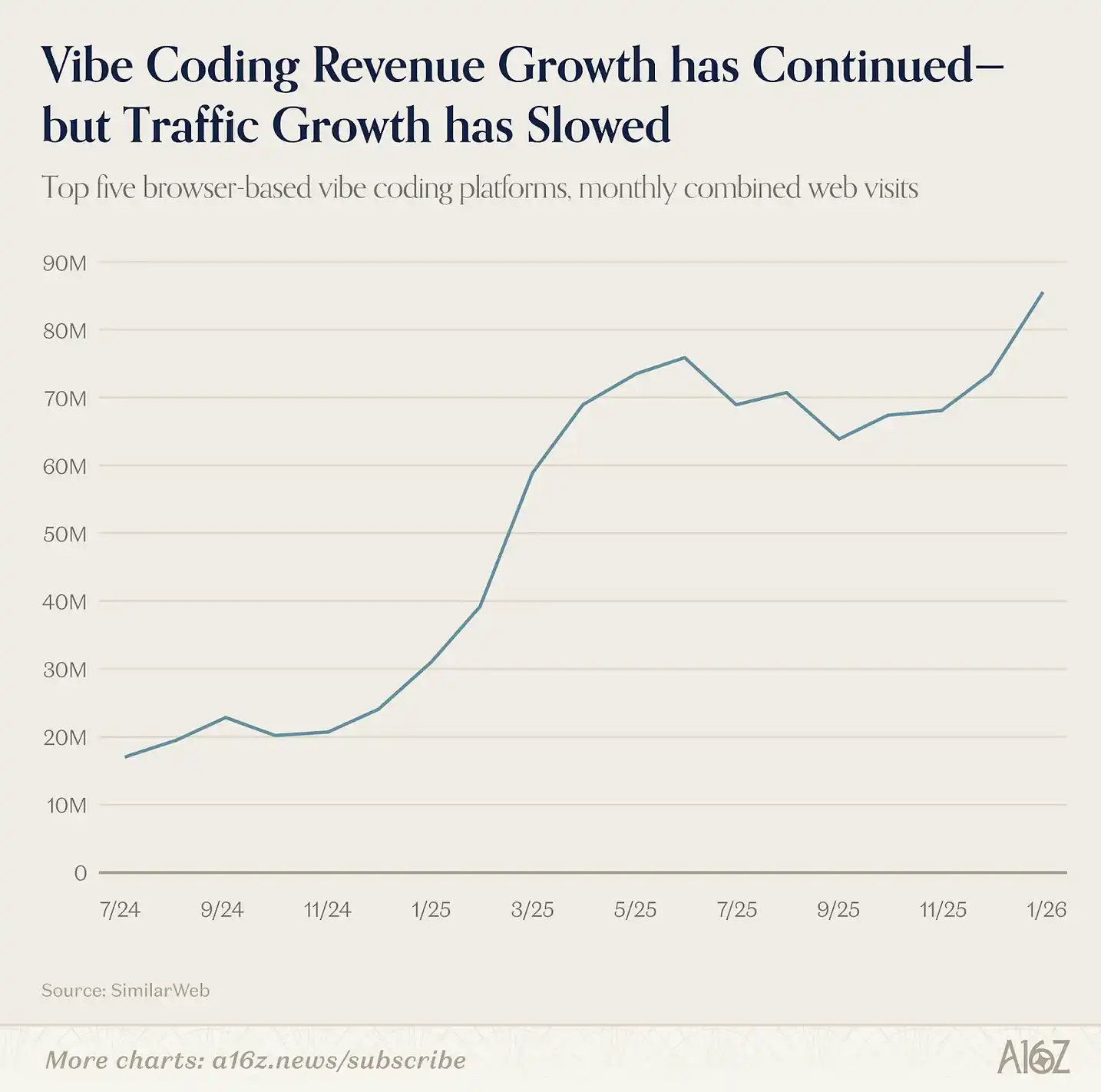
It turns out that vibe coding has strong retention capabilities among technical users (and some semi-technical users). In this edition’s list, Replit and Lovable still made the cut, while Claude Code (through Claude) also entered the rankings. There remains more growth potential ahead, as this trend has yet to truly reach the mass market. Currently, the top five vibe coding platforms are still experiencing growth in overall traffic, although this has slowed compared to the initial explosive period—but as developers and teams use these tools more deeply, many products' revenues continue to rise.
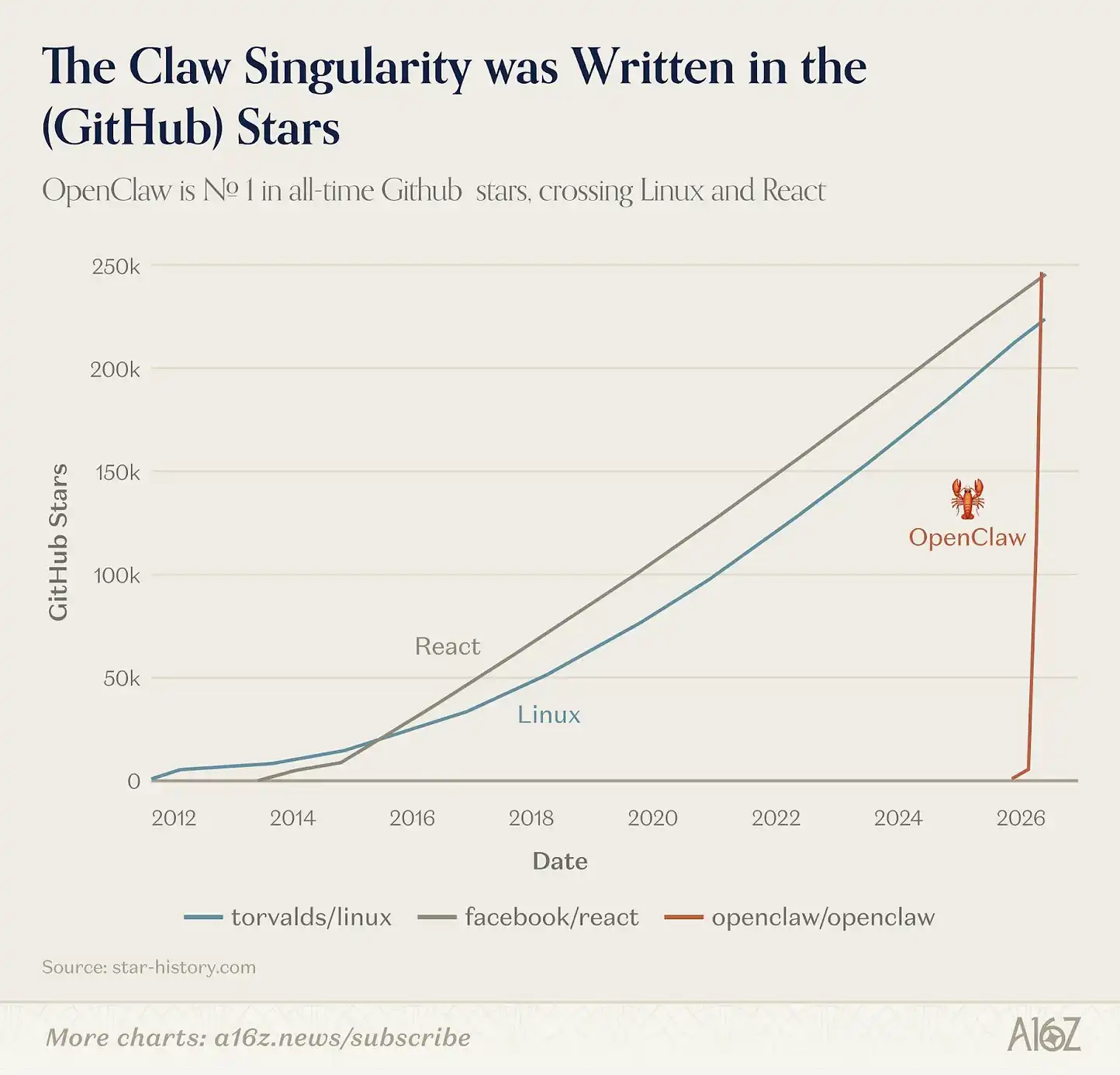
Recently, horizontal Agents have also begun to emerge. In January 2026, an open-source project named OpenClaw rapidly grew from a developer's personal side project to 68,000 GitHub Stars within a few weeks, gaining mainstream media attention. Created by Austrian developer Peter Steinberger, it is a locally running AI Agent that can connect to users' messaging apps and perform multi-step tasks on their behalf.
If ChatGPT marked the moment consumers first realized AI could "converse," then OpenClaw may represent their first realization that AI can "act." This product has quickly become popular in developer communities, and if we extend our statistical period to February (instead of January), OpenClaw would likely enter the top 30 of our web list.
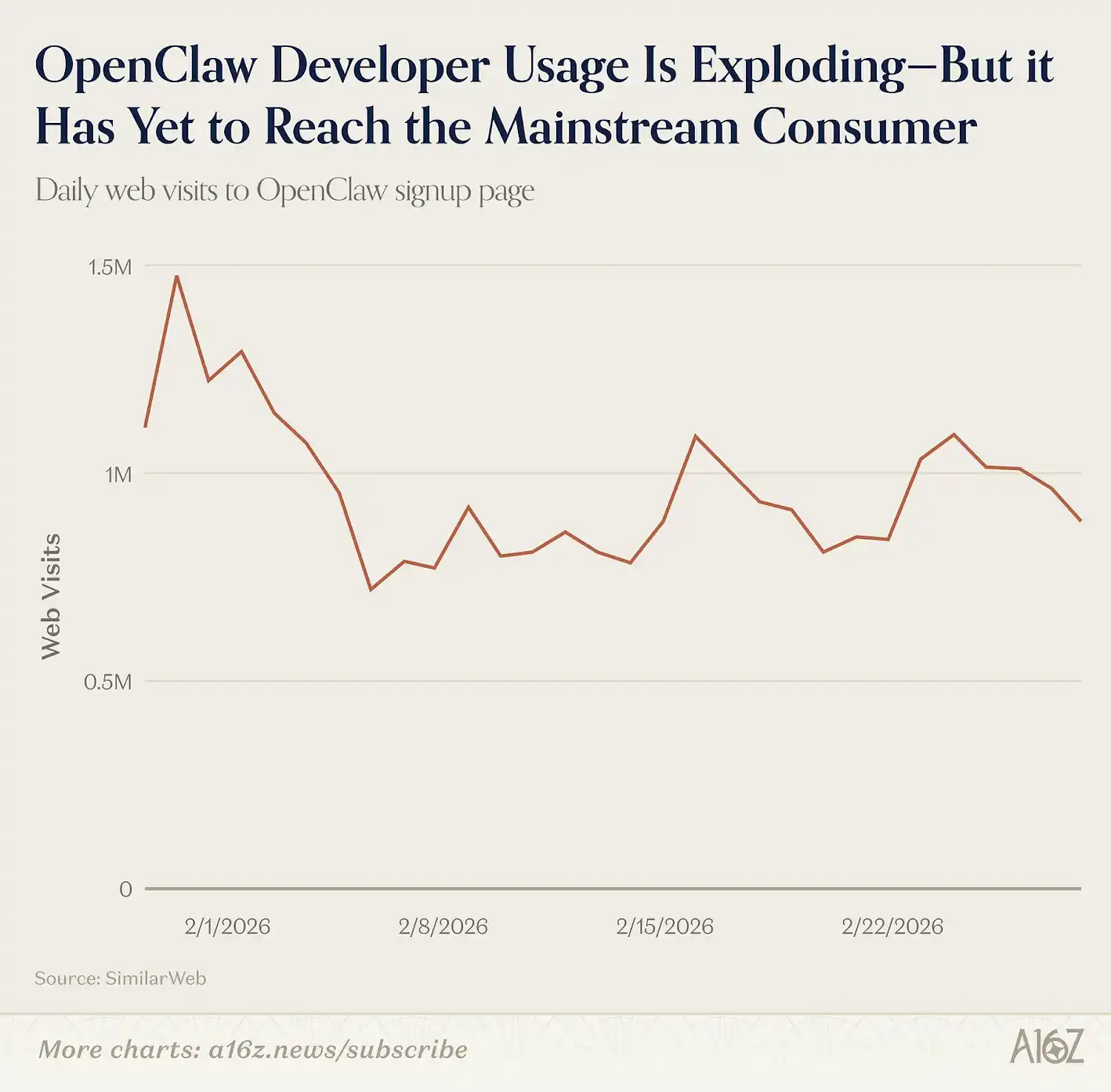
However, OpenClaw is not yet a product aimed at ordinary consumers; installation and maintenance still require some knowledge of Terminal (command line) operations. Nevertheless, it continues to gain traction among technical users, becoming the project with the most stars on GitHub by early March, even surpassing React and Linux. But based on new user numbers visiting its installation site, the product has yet to truly enter the mass market; relevant traffic remains relatively steady.
In February 2026, OpenAI acquired OpenClaw, which may indicate that a more user-friendly version aimed at ordinary users could be coming soon.
OpenClaw is not the only horizontal Agent on the list.
Manus and Genspark have also entered the rankings. These platforms allow users to delegate open tasks (like research, spreadsheet analysis, or slide generation) to AI, which completes the entire workflow from start to finish. This is Manus' second time on the list; since its debut, it has been acquired by Meta in December 2025, for an estimated $2 billion. Meanwhile, Genspark is making its debut in this edition and completed a $300 million series B financing earlier this year, announcing its annualized revenue has reached $100 million.
On mobile, user interactions with Agents typically do not occur through dedicated applications but are completed through text messaging. For instance, with OpenClaw, users connect it to platforms like WhatsApp, Telegram, or Signal during the initial setup, then communicate with it just like messaging friends, while AI performs tasks in the background. Similar products like Poke even provide Agent experiences directly through SMS.
These products will compete with the general LLM assistants that consumers regularly use, such as ChatGPT, Claude, and Gemini's Agent features. As these platforms build their connectivity networks through Connectors and application ecosystems, a key question is: will users designate one of these products as their "primary Agent"?
The next six months may provide clearer answers.
AI Is Moving Out of Browsers and Applications
Previous versions of the list measured AI products using two metrics: web traffic and mobile MAU. However, a new class of AI products is emerging that cannot be fully captured by those metrics. In fact, over the past year, some of the most significant growth in consumer-level AI has occurred in products that do not reflect in both web traffic and mobile application MAUs.
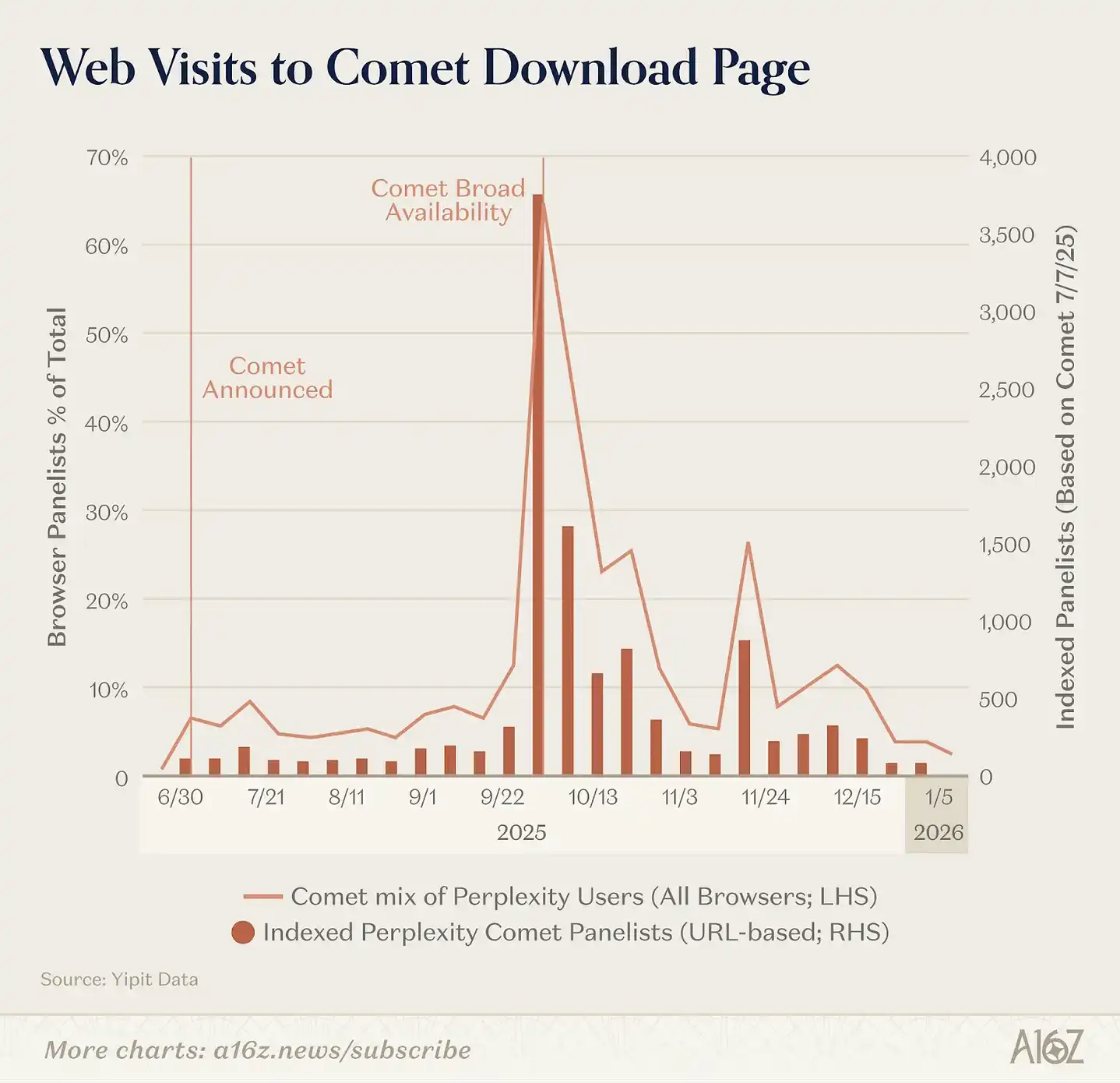
The most apparent change is that browsers themselves are becoming AI products. Over the past nine months, OpenAI launched Atlas (a browser with ChatGPT built into every web page), Perplexity released Comet, and the Browser Company (later acquired by Atlassian) introduced Dia. According to Yipit’s data, among these products, Perplexity’s Comet has the most significant market impact (measured by downloads), yet currently, no AI browser has shown sustained accelerated growth.
At the same time, some AI giants have chosen to add AI features within existing browsers instead of launching standalone AI browsers. Google has integrated Gemini into Chrome and launched Disco (beta), which dynamically generates web applications based on the user's currently open web tabs. Anthropic has also introduced Claude in Chrome, which can connect to users' Claude or Claude Code sessions, enabling actual operations within the web environment.
The growth of native desktop AI tools is even more rapid, particularly among developer communities.
For example, Claude Code, a command-line Agent for developers, achieved $1 billion in annualized revenue (ARR) in just six months. OpenAI has also released a Mac version of the standalone Codex application, disclosing that as of early March, Codex has reached 2 million weekly active users and continues to grow at a rate of 25% per week. Meanwhile, Cursor remains in our web top 50 rankings.
For ordinary consumers, the most common standalone AI desktop applications are centered around voice-related tools.
For example, meeting note-taking products like Fireflies, Fathom, Otter, TL;DV, and Granola mainly reach users through a product-led growth (PLG) model and are gradually penetrating the enterprise market. The monthly visits for these five leading products collectively reach about 20 million. Additionally, some workspace products, like Notion (which entered the list for the first time this edition), are also continuously integrating AI into their products, such as meeting notes, research Agents, and even task automation functionalities.
Ultimately, AI is increasingly being embedded into the software people are already using.
Anthropic has launched Claude in Excel and Claude in PowerPoint; OpenAI has released ChatGPT for Excel; while Google has further strengthened Gemini's integration in Workspace—now Docs, Sheets, Gmail, and Meet all possess native AI functionalities. Google also launched Personal Intelligence in January 2026, linking Gemini with Gmail, Google Photos, YouTube, and Search, allowing the assistant to automatically reference users' hotel bookings, shopping history, photo libraries, and viewing habits without requiring additional instructions from users.
This trend's significance for the list is that our rankings increasingly underestimate the AI products most used by people in practice.
A developer spending 8 hours a day using Claude Code, or a knowledge worker drafting all emails through Wispr’s voice tool, are heavy AI users, yet their usage hardly reflects in web traffic data. As AI transitions from a destination product (where users specifically open a product to utilize AI) to a foundational feature, our statistical methods will inevitably need to adapt accordingly.
免责声明:本文章仅代表作者个人观点,不代表本平台的立场和观点。本文章仅供信息分享,不构成对任何人的任何投资建议。用户与作者之间的任何争议,与本平台无关。如网页中刊载的文章或图片涉及侵权,请提供相关的权利证明和身份证明发送邮件到support@aicoin.com,本平台相关工作人员将会进行核查。