Source: lbq's Token2077
Once there was Bitcoin, now there is OpenClaw
After value goes on-chain, actions also come to the fore. We may be standing on the eve of the birth of silicon-based avatars.
Preface
How many times has the sound of iron pierced through the night rain,
Yet it hasn’t hindered the lantern’s light from recognizing new sprouts.
Old hands still forge the moon in the human realm,
While faint souls on the screen have already tested the thunder.
Before, long chains buried the intent of snow,
Now look at the lone claw breaking the pile of clouds.
If in future years history reopens its scroll,
It should recall the first time of silicon beings.
Some thoughts are not consciously conceived.
It’s not about finishing all the information, streamlining the logic, and resolving concepts one by one, only to slowly reach a conclusion.
It feels more like a gust of old wind suddenly blowing in, awakening many things you saw, thought about, yet never truly articulated years ago all at once.
Today, I saw Dr. Xiao Feng share an article from Ramble, comparing today's OpenClaw AI with early Bitcoin.
After reading it, the feeling inside me was not just, "This analogy is interesting."
Rather, it was a profound sense of familiarity.
Like many years ago when I first approached Bitcoin, that old circuit in my brain was lit up once again.
Like you are clearly just reading an article, but you hear echoes from farther away.
Like the old tide hasn’t completely receded, yet the new tide has already risen, both shores are still unclear, but the dark current beneath the water has already collided ahead.
Then almost at that same moment, two things flashed into my mind.
One is the external avatar from A Record of Mortal’s Journey to Immortality.
The other is Huang Zhan's A Sound of Laughter from the Vast Ocean written in The Smiling, Proud Wanderer.
One is about cultivating immortality, the other is about the martial world.
One speaks of spirit awareness projecting outward, the other tells of freely indulging in the universe.
Logically, they seem to be far removed from today’s AI, from OpenClaw, from Bitcoin.
But precisely at that moment, they suddenly connected in my heart.
I didn’t even have time to explain it clearly first, just felt that:
These things are interconnected.
Not superficially connected.
Not to force a few grand terms together for writing.
Rather, they all point to a deeper thing:
Can humans escape from the old ways of existence?
Can people release a part of themselves from the original shell?
It was in that moment that I grasped more clearly why I felt:
Once there was Bitcoin, now there is OpenClaw.
This is not just the juxtaposition of two popular names.
Nor is it yet another lighthearted analogy in the tech circle.
It feels more like two civilizational nodes, separated by many years, suddenly rhyming together.
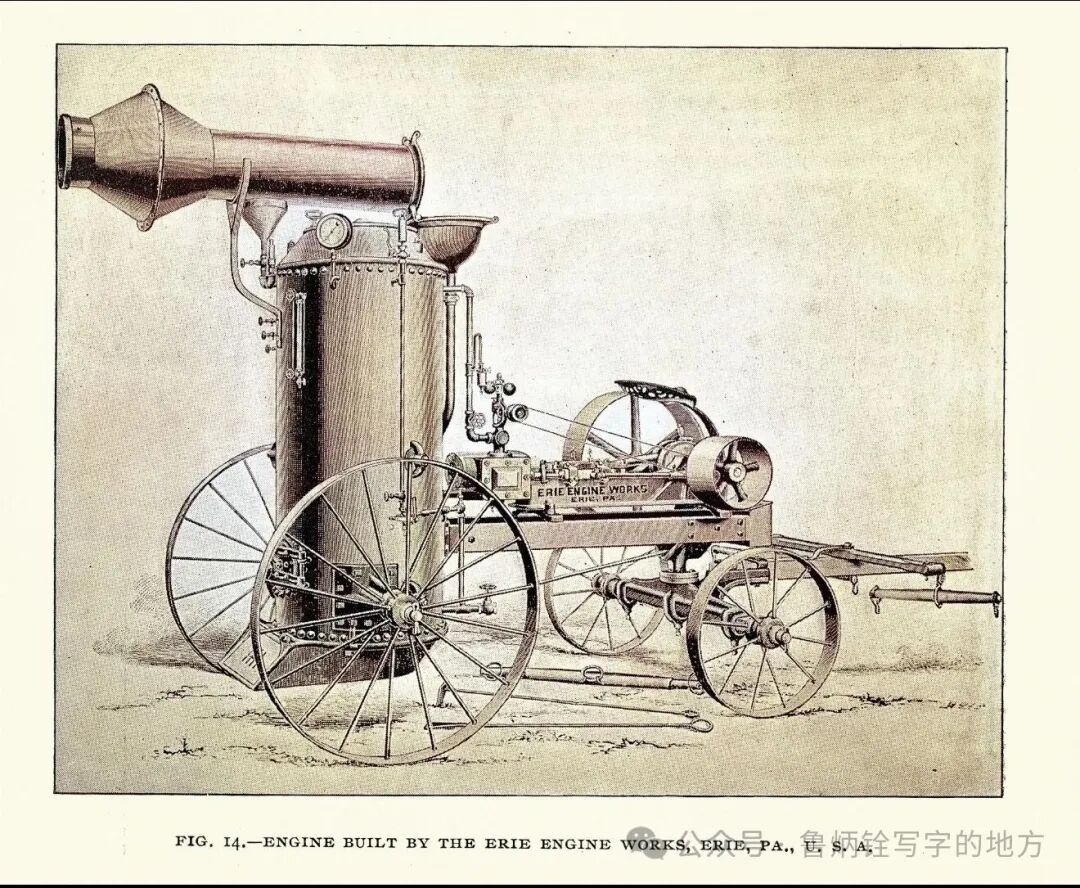
1. If OpenAI is a steam engine, OpenClaw is more like a machine tool
If we compare this round of the AI revolution to the industrial revolution, then in my mind, OpenAI is more like Watt's steam engine.
What truly changed history about the steam engine was not just that efficiency increased, or that the machines became more powerful, but that it first released a new productivity on a large scale.
It took "power" out from natural constraints, transforming it into a general capability that could be called upon, deployed, and expanded.
This is very similar to what OpenAI represents in today’s AI.
It’s not that intelligence didn’t exist before, but after ChatGPT, intelligence was first socially perceived on a large scale, for the first time, accessed directly by ordinary people, enterprises, and institutions almost like a public utility.
It made "intelligence" for the first time burst forth like steam.
But the industrial revolution truly entered deep waters not just relying on steam engines.
More importantly, it was machine tools.
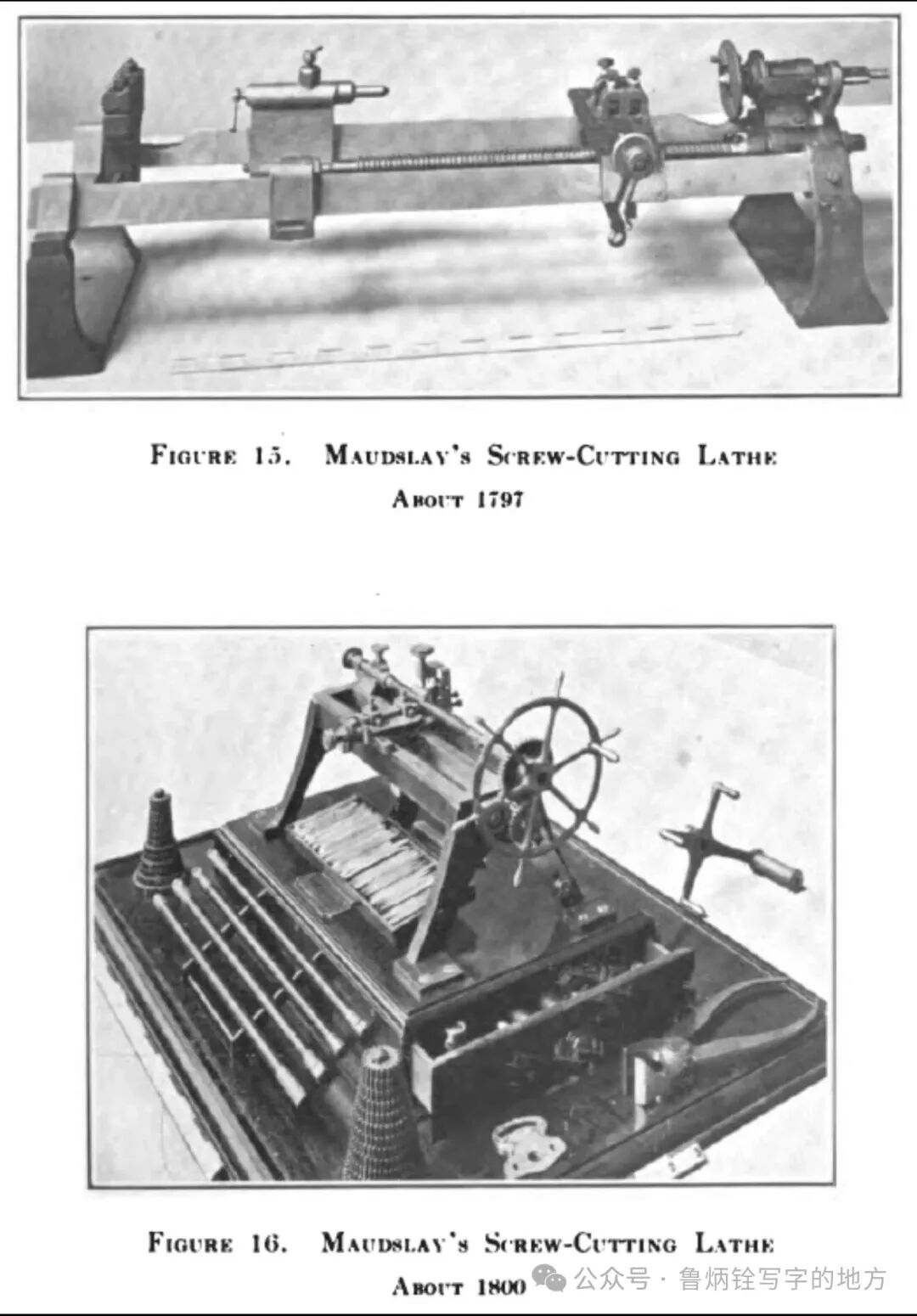
That’s why I thought of Henry Maudslay.
He’s not the loudest name in industrial history, but is often the person whose significance is only realized in hindsight.
Because from precision lathes onward, the industrial system truly entered a new phase:
Machines were no longer just manufactured, machines began to manufacture machines.
It is precisely for this reason that I feel:
If OpenAI is like a steam engine, OpenClaw is more like a machine tool.
It's not just another speaking AI added to the mix.
What really makes me feel is that it allows AI to transition from "answering you" to gradually "doing work for you"; moving from a language interface to connecting with workflows, entries, tools, workstations, and real tasks.
It’s not just more human-like; it’s more like a system that can start to function.
This is why I believe that OpenClaw’s position in this round of AI is not just a product, not just an assistant, but a structural node.
2. Why I feel it resembles Bitcoin
My initial analogy between OpenClaw and Bitcoin arose not because they are both popular, nor because they both carry the open-source narrative.
What truly made me see the similarity is something much deeper:
Neither of them invented the world from scratch; instead, they stood on the shoulders of giants, recombining existing things, ultimately producing a new civilizational lingua franca.
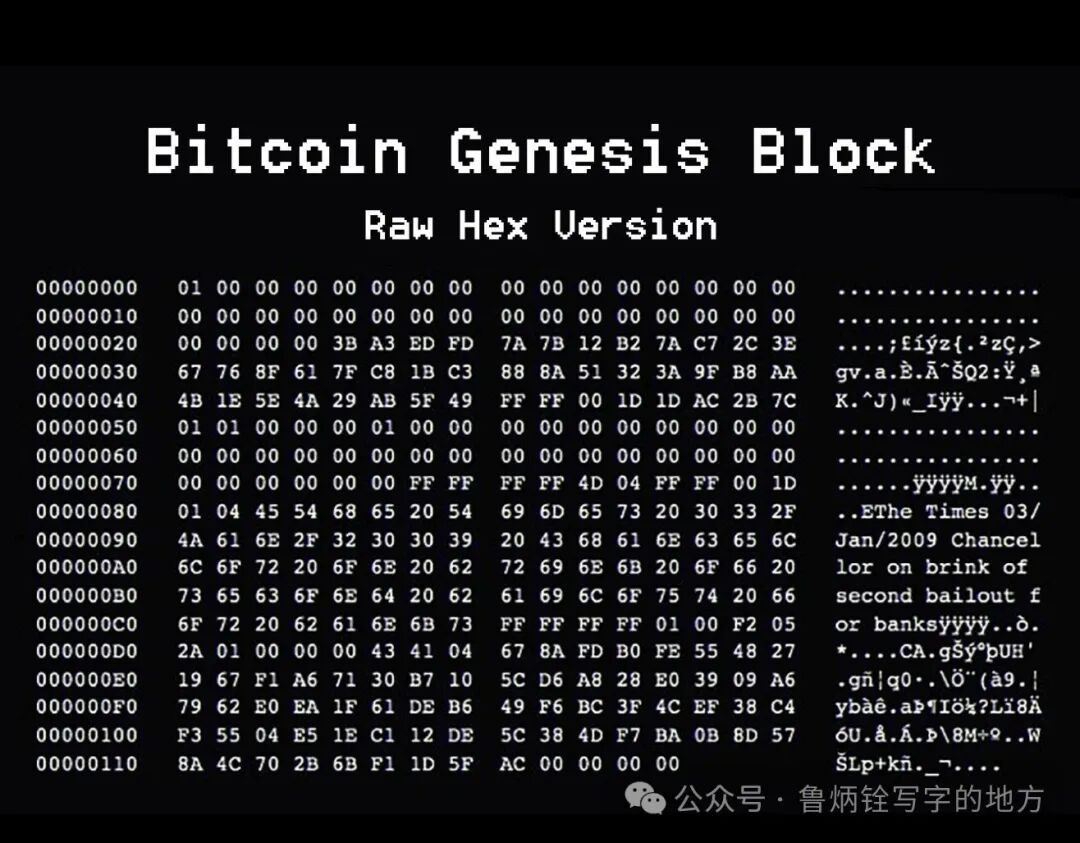
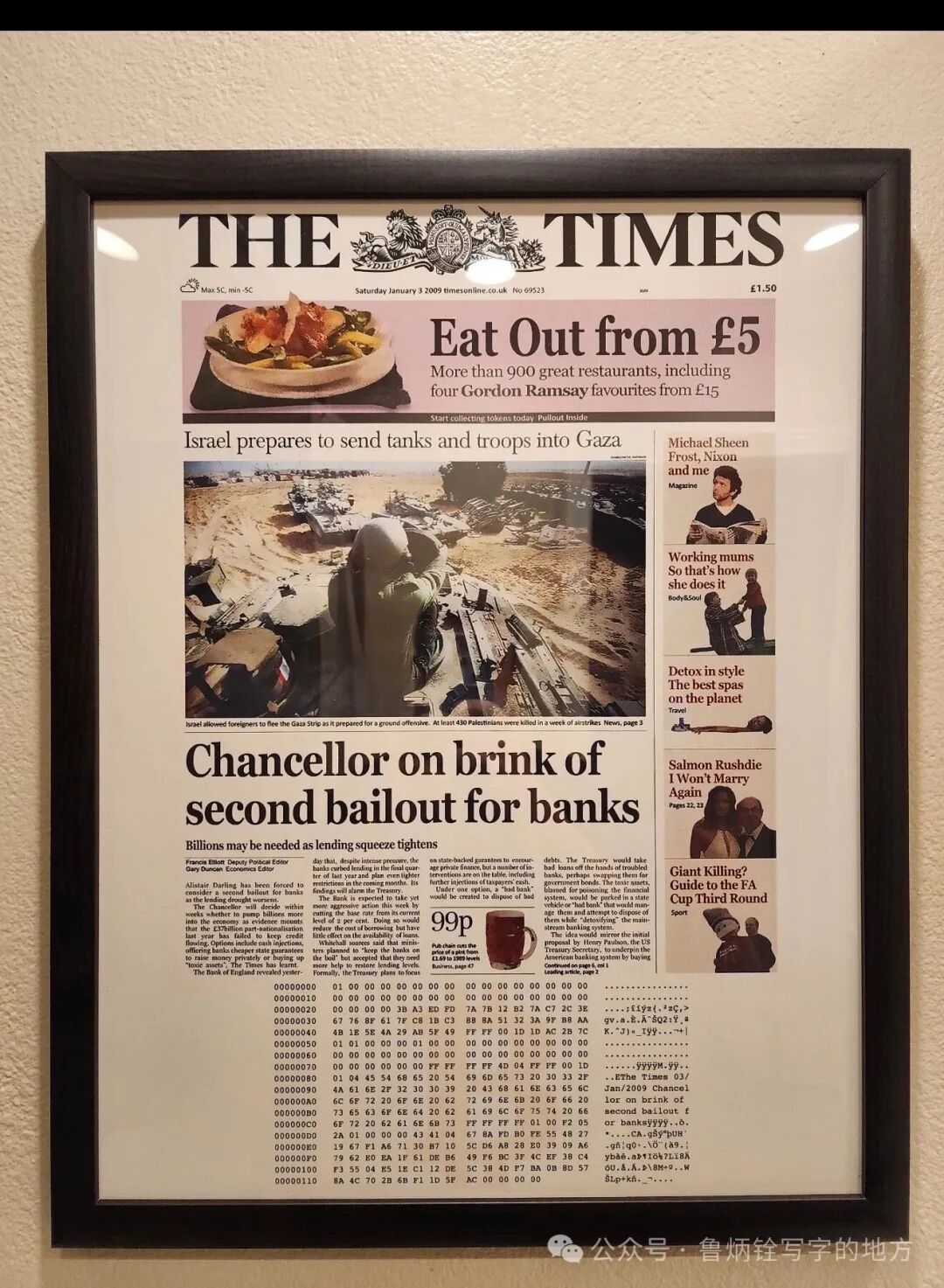
Bitcoin did not invent cryptography, it did not invent hashing, it did not invent P2P, nor did it invent timestamps.
What it actually did was reconnect these existing things, reorganize them, and finally enabled the digital world to have a value system that was permissionless, non-centralized, and self-sustaining for the first time.
OpenClaw has this flavor as well.
It did not invent large models, it did not invent tool use, it did not invent workflows, it did not invent chat interfaces, nor did it invent automation.
But it is trying to tighten, reconnect, and reorganize these elements, eventually giving "action" a native carrier within the digital world.
Therefore, I became increasingly convinced that my initial intuition was not wrong:
Bitcoin is the open-source protocol of value, OpenClaw is the open-source protocol of action.
The former addresses the question of how value can inherently exist in the digital world.
The latter advances the question of how action can inherently exist in the digital world.
This is the real reason I initially drew the analogy between it and Bitcoin.
It’s not about riding the wave. It’s not about saying something pretty. Rather, it’s because they both address an extremely critical question:
Can a capability that used to only exist through old systems, old subjects, and old intermediaries, begin to exist in a new world in its own right for the first time?
Bitcoin's answer is: Yes, value can.
OpenClaw’s ongoing endeavor is to answer: Yes, action can too.
3. Why this analogy resonates so strongly with me
Eventually, I gradually understood why this matter struck me so deeply.
I had heard about Bitcoin long ago.
At the end of 2013, when I first talked about it with a middle school classmate, it seemed more like a distant signal— I heard it, but hadn’t truly tried, verified, or practiced it myself yet.
It wasn’t until 2016-2017, during my first summer internship at Babita, that I received my first Bitcoin. Looking back now, that felt like the moment I truly connected with that world.
Later, I moved through roles in exchanges and primary investments.
But many of my subsequent inquiries— protocols, voices, payment interfaces, second brains, AI agents, silicon-based avatars— were no longer just extensions of my professional identity or mere spillovers from business judgments. More often, they were a form of self-exploration that lasted for years.
What I’ve been persistently questioning is actually the same issue:
Can humans externalize some of their core capabilities from their carbon-based bodies?
Can value be externalized?
Can memory be externalized?
Can semantics be externalized?
Can judgment be externalized?
Can action be externalized?
Bitcoin showed me for the first time:
Value can.
And OpenClaw again evoked that familiar feeling, almost feverish, because it seems to indicate:
Action can also begin to be externalized.
So it’s not coincidentally striking a chord with me.
It merely happened to illuminate a multitude of my scattered intuitions at once.
I previously thought of a voice library not just to create voice content, but to question: Can sound become a native carrier of identity, assets, memory, and connection?
Later, when I considered a second brain, I wasn't simply thinking of note-taking, but rather, pondering: Can a person’s cognitive structure be organized, invoked, and inherited?
Then with AI + payment interfaces, agent systems, silicon-based avatars, I had continuously approached the same question:
If a digital entity is really going to operate for me, how does it gain interfaces, permissions, payments, identities, and agency?
Thus, when OpenClaw reminded me of Bitcoin once more, that sense of familiarity became so strong.
Because in my heart, they’re not just two popular terms; they are two nodes along the same unseen line.
4. The external avatar in "A Record of Mortal’s Journey to Immortality" might be more accurate than many technical terms
Just now I suddenly thought of a term from "A Record of Mortal’s Journey to Immortality": external avatar.
This made me better understand why the concept of "silicon-based avatars" has persisted in my mind.
The allure of an external avatar is never merely "having one more substitute."
But rather: the entity no longer has to remain confined within itself.
The physical body has its own exhaustion.
A physical body can only be in one place at a time.
The time of the physical body is linear, and energy is limited.
Every day you are gradually worn down by these single-threaded limitations.
Often, it's not that you lack judgment, it's not that you lack ideas, and it's not even that you lack direction.
It’s just that the carbon-based body is too slow, too limited, and too easily disrupted by schedules, trivialities, fatigue, and reality.
But deep within humans’ desires has always been more than just living longer.
It’s a desire to live broader, to live with more threads, to live in a way that expands the self.
Thus, I have always believed that the true future of AI will not be just a chat window, it won’t just be a tool for polishing grammar, nor will it be merely emotional companionship.
The truly significant future is when you start to possess a certain digital avatar:
It remembers your preferences,
inherits your judgment,
is familiar with your workflow,
maintains part of your connections,
handles some of your tasks for you,
takes on tasks that originally could only be completed by your carbon-based body, and distributes them.
Isn't that another form of external avatar?
If Bitcoin opened up digital ownership, then OpenClaw points to: digital agency.
Further along, it could be: digital avatar rights.

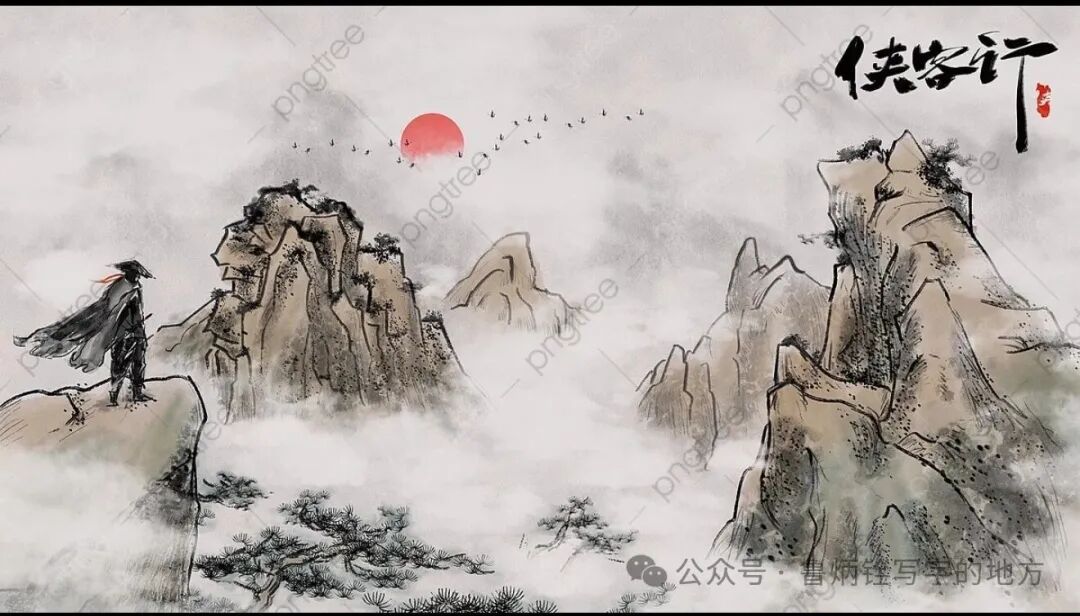
5. Huang Zhan, "A Sound of Laughter from the Vast Ocean," and the true emotions of this era
Another thing that suddenly flashed back was Huang Zhan's "A Sound of Laughter from the Vast Ocean."
Why did this song suddenly come to mind?
Because it’s not a minor emotion.
It comes out with rivers and seas, old shores, new tides, and the vastness of the universe.
Its spirit isn’t localized, but rather reflects winds sweeping across the entire water surface.
And I suddenly feel that today’s node has a bit of that flavor.
It’s not just "a certain AI product has upgraded," it’s not just "a certain model has won the benchmark test," but rather a collision at an interface between the old world and the new world.
On one side are the old modes of human labor.
On the other side is the new structure of intelligent action.
On one side is the schedule of the physical body.
On the other side are continuously online, trainable, delegable, and replicable silicon-based avatars.
That’s actually another kind of martial world.
In the past, the martial world was swords and music, solitary boats in mountain rains, and solitary howls under the moon.
Today's martial world consists of models, protocols, agents, wallets, identities, and avatars.
But what matters in people's hearts hasn’t changed.
The impulse to break free from constraints, to extend oneself, to regain subjectivity in a new world, remains unchanged.
Therefore, what truly moved me is not just the history of technology.
But also a deeper sense of life.
6. Why I will remember Peter Steinberger
I feel that if the future still has books and enters a clearer silicon-based era, then the name Peter Steinberger may receive a more equitable evaluation than today.
Because history often unfolds this way.
Those first remembered are not always the ones who shine the brightest, but often the ones who reorganized everything existing, enabling some new order to actually begin to operate.
Just like how many people later look back at the industrial revolution to grasp the weight of Henry Maudslay.
Some may not stand in the brightest place, but they touch the underlying gears.
And once those gears interlock, history will move forward on its own.
7. Once there was Bitcoin, now there is OpenClaw
So in the end, I still want to condense it into the simplest sentence:
Once there was Bitcoin, now there is OpenClaw.
Bitcoin allowed code to hold value for the first time.
OpenClaw enables code to begin having agency.
If Ultraman and OpenAI are more like steam engines, symbolizing the true release of the power source behind this AI industrial revolution;
Then OpenClaw is more like machine tools, indicating that this revolution has started entering the phase of "machines organizing machines, machines making machines."
And my original analogy of OpenClaw to Bitcoin was not just a rhetorical exaggeration, but a very simple, warm judgment in my heart:
Bitcoin first realizied the innateness of value, OpenClaw first realizes the innateness of action.
Taking one step further, perhaps the next step is:
People start to extend themselves through machines.
At this point, silicon-based avatars will no longer be just a fantasy, but will become a new way of being.
And today, our discussions, still carrying a sense of experimentation, geekiness, and even a hint of playfulness, might eventually come to appear as a sort of prelude.
Like monks first separating their avatars.
Like heroes drifting in boats at midnight, silently gazing at the moon.
Like before the tide has fully risen, some are already far away, hearing that laughter.

免责声明:本文章仅代表作者个人观点,不代表本平台的立场和观点。本文章仅供信息分享,不构成对任何人的任何投资建议。用户与作者之间的任何争议,与本平台无关。如网页中刊载的文章或图片涉及侵权,请提供相关的权利证明和身份证明发送邮件到support@aicoin.com,本平台相关工作人员将会进行核查。


