Original editor: Aeneas KingHZ
Original source: New Intelligence
Introduction: A senior student, ten days of Vibe Coding, secured 30 million investment in three months, turning his graduation project into a company! With the domestically developed open-source project MiroFish topping GitHub's trending list, the era of a "super individual" creating global hits on their own has truly arrived.
Waking up to find the domestically developed open-source AI project MiroFish topping GitHub's trending list!
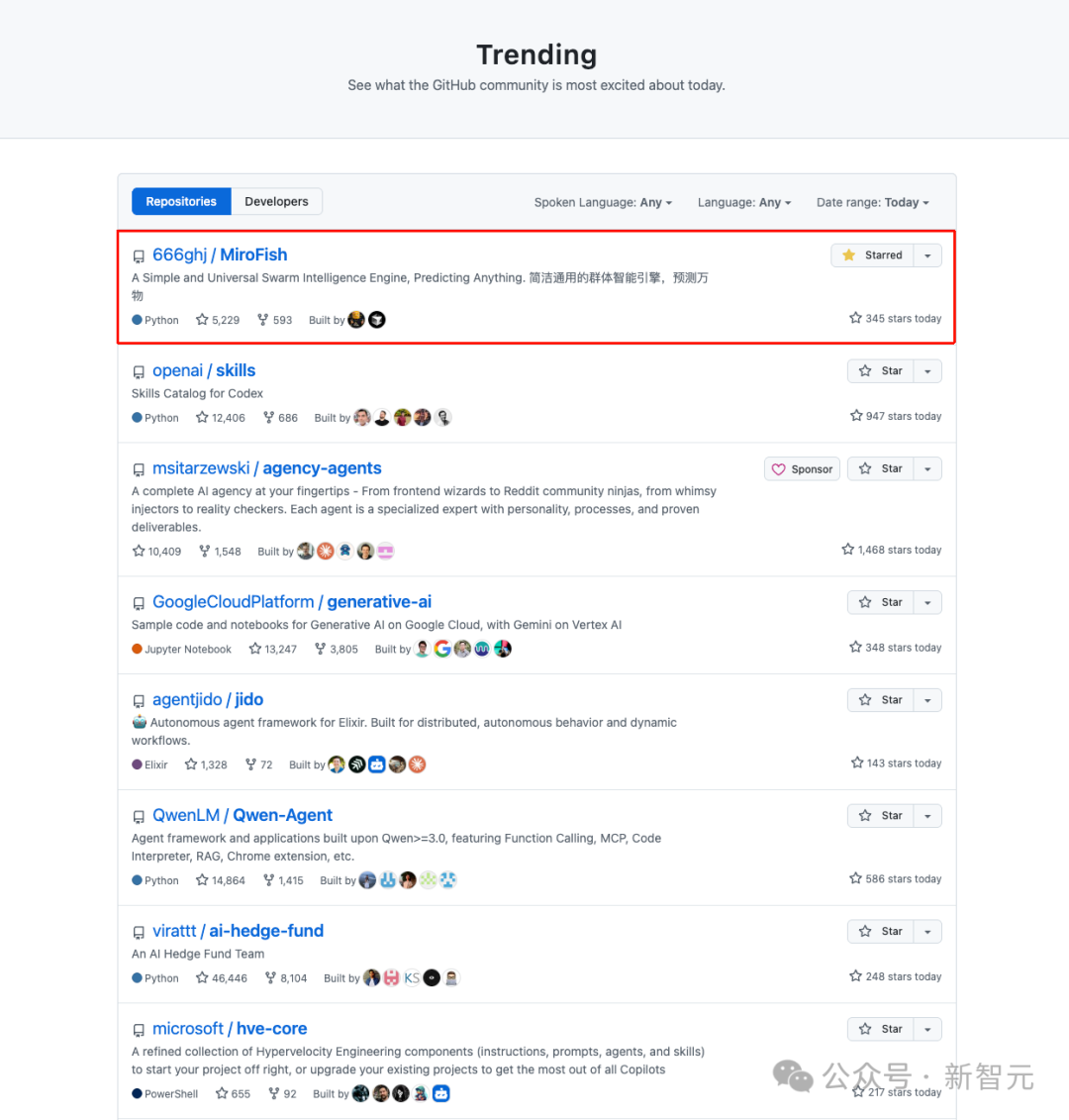
What is surprising is that the open-source project MiroFish, surpassing institutions like OpenAI, Google, and Microsoft, is backed by a domestic senior student who secured 30 million in investment in just three months.
With just one AI open-source project, he directly transformed his graduation project into a startup and became the CEO of the company?
This is no myth; it is a real story happening in the AI era in China.
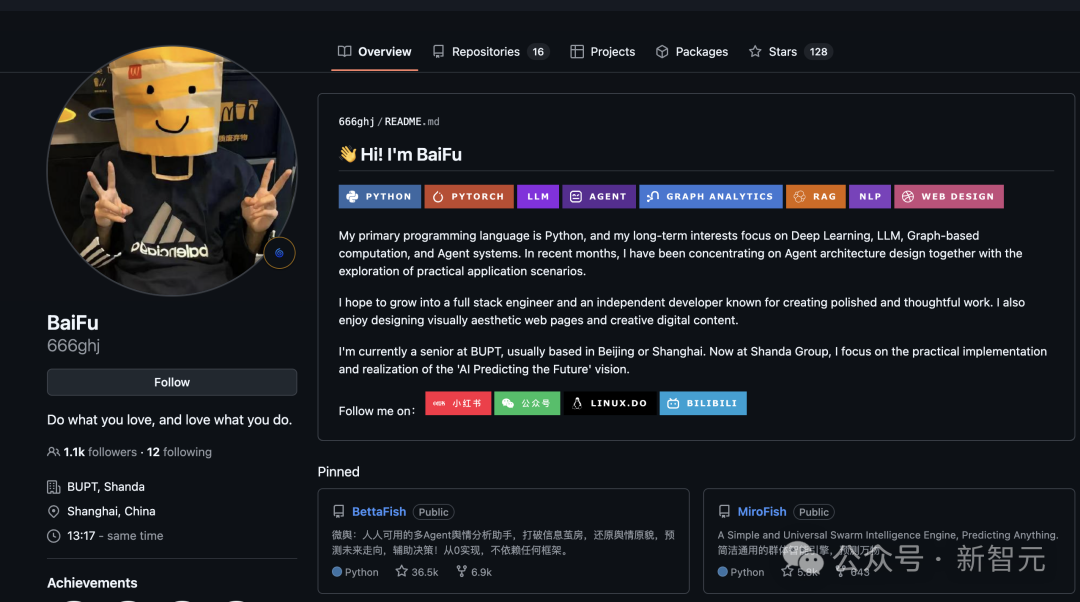
More amazingly, his previous project BettaFish also ranked first on GitHub's global trending list.
Both projects not only reached the top but were also vibed coded by this post-00s kid within ten days.
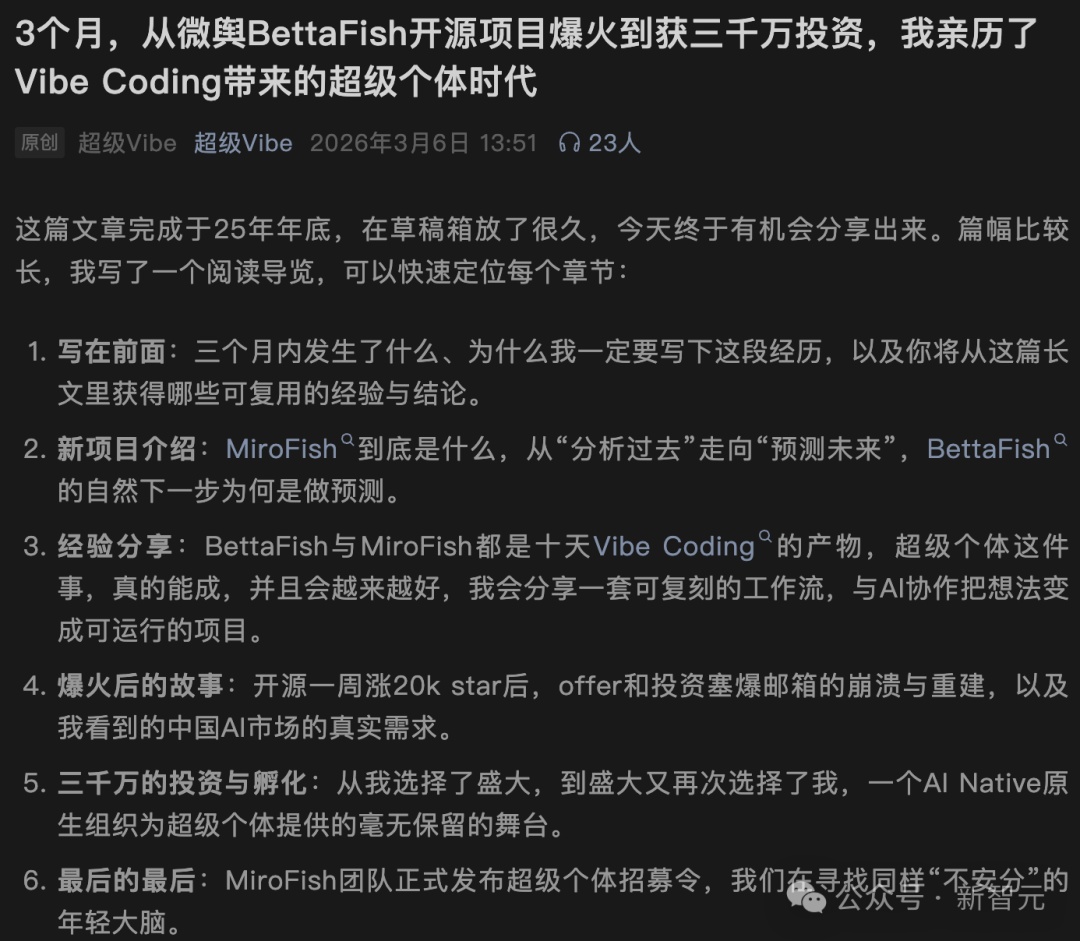
Link: https://mp.weixin.qq.com/s/UyYVjlBCvQRJI6B_MmZbsA?scene=1&click_id=22
When we delve into the details, we will discover the underlying significance of the era: The age of the super individual has truly arrived!
When the power of AI tools, open-source communities, and young developers converge, one person can constitute a legion of innovation.
In the future, there will be more super individuals, generating more entrepreneurial myths in the AI era.
Three Months of a Senior Student: From GitHub Sensation to 30 Million Investment
The story begins quite ordinarily.
In the summer of 2025, senior student BaiFu was still anxious about internships.
At that time, his future academic direction had been settled, so he wanted to finish his graduation project in advance, allowing him to free up time to look for an internship.
He chose not to write tens of thousands of lines of code from scratch but instead opened tools like Claude Code and began the very popular development method at the time—Vibe Coding.
Within ten days, he transformed years of accumulation into an open-source project called BettaFish.
This is an AI public opinion analysis tool that can automatically scrape online public sentiment information and generate structured analysis reports.
“Weiyu” helps everyone break through information cocoons, restore the essence of public opinion, predict future trends, and assist in decision-making.
Users only need to make analysis requests as they would in a chat, and the intelligent agent begins to analyze data from over 30 major domestic and international social media platforms and millions of public comments automatically.
Technologically, it combines automated data scraping, large model analysis, and automated report generation, ultimately producing a dozens-page public opinion analysis document.
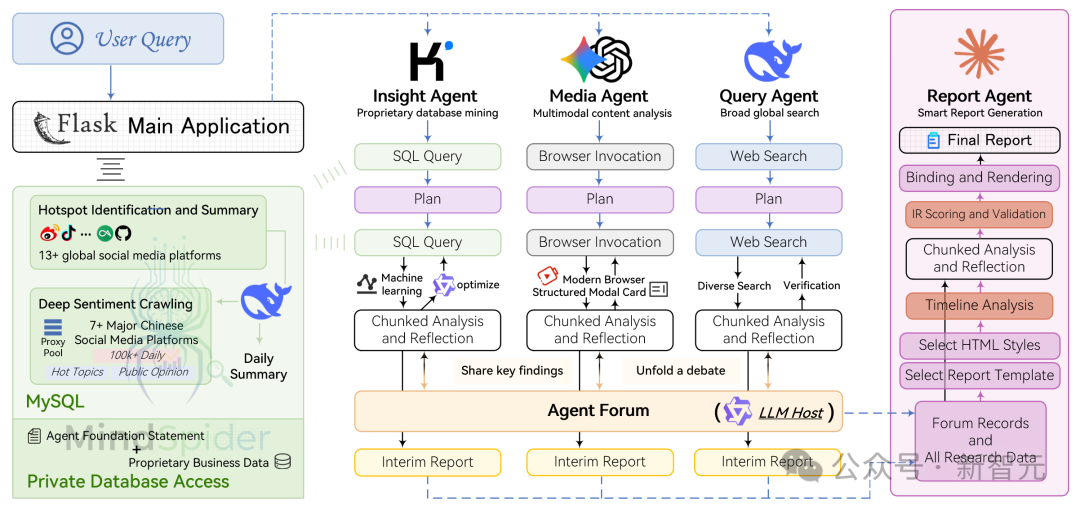
For many companies, such work typically requires an entire team, while BettaFish tries to automate this whole process using AI.
However, when BettaFish was just completed, there were not many expectations placed on it. Even BaiFu's doctoral senior directly criticized it: "This is not a qualified graduation project; you need to put more thought into it."
After 1000 stars, a miracle occurred
Once the project launched, it indeed did not create much noise.
Like many independent developers, BaiFu tried various forms of promotion, such as submitting articles to open-source newsletters and public accounts, posting videos on Bilibili, and creating threads in technical communities, but the results were not significant.
After persistent promotion, the project finally reached 1k stars, surprisingly marking the first turning point in traffic for BettaFish.
BaiFu felt very satisfied, so he wrote a summary article titled "What a 1K+ Star Open Source Project Can Bring to a College Student" and posted it on Xiaohongshu.
Who would have thought that a week after the article was published, a miracle happened!
The article was shared and recommended by several major figures in the technical community.
Subsequently, BettaFish's GitHub page began to see a significant traffic explosion, with stars growing at an astonishing rate—5K, 10K, 20K, 30K…
In just a few days, the project gained over 20,000 new stars!
As a result, BettaFish quickly reached number one on GitHub's global trending list and became one of the most discussed open-source projects in the domestic AI development community at that time.
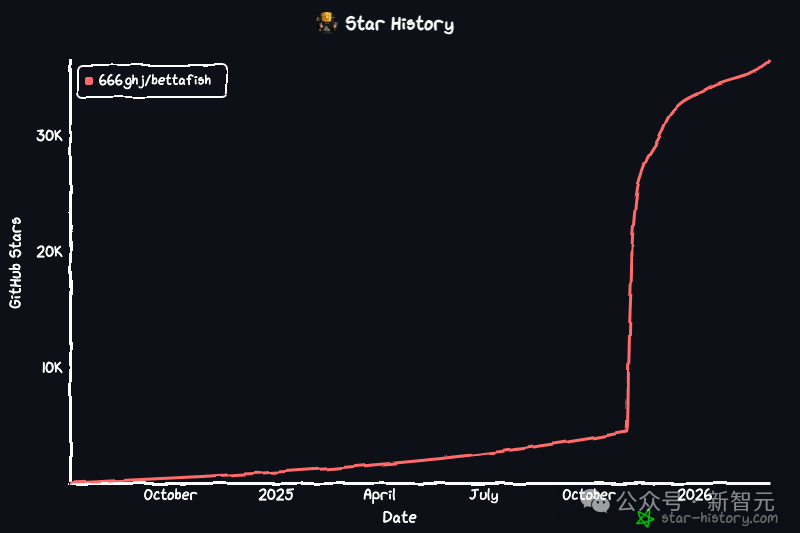
After this project blew up, a flood of emails began pouring into BaiFu's inbox, including internship invitations from big companies, technical collaboration requests, and even offers from investment firms.
Later, the number of project users increased, and related demands surged! The drastic increase in users brought him enormous pressure.
A grand phone call
After a long period of hesitation and confusion, BaiFu decided to go all in on entrepreneurship; at this time, a phone call changed the course of events.
Chen Tianqiao, the founder of Shengda Group, showed great interest after seeing BettaFish and hoped to communicate further with him.
BaiFu, whose inbox was overflowing at the time, had almost no time to reply, but the Shengda team persistently reached out to him. Ultimately, he was moved by their enthusiasm and agreed to chat.
During the subsequent conversation, BaiFu was moved. He genuinely felt that Shengda was more serious about "embracing super individuals" than any other company.
Chen Tianqiao bluntly stated that the technical level of BettaFish is not exceptionally outstanding.
However, BaiFu's demonstration of complete planning from data collection, analysis to prediction in the project, as well as his ability to "see and define genuinely valuable problems and attempt to solve them with new AI methods," were precisely what Shengda valued.
After hanging up the phone, BaiFu didn't hesitate for a moment, packed his bags, and went to Shanghai alone to start working with Shengda.
MiroFish is born: Developing the second project in ten days
With the support of Shengda and ample freedom given, BaiFu began to implement a new idea.
If BettaFish addressed the analysis of the past, then the new project aimed to predict the future.
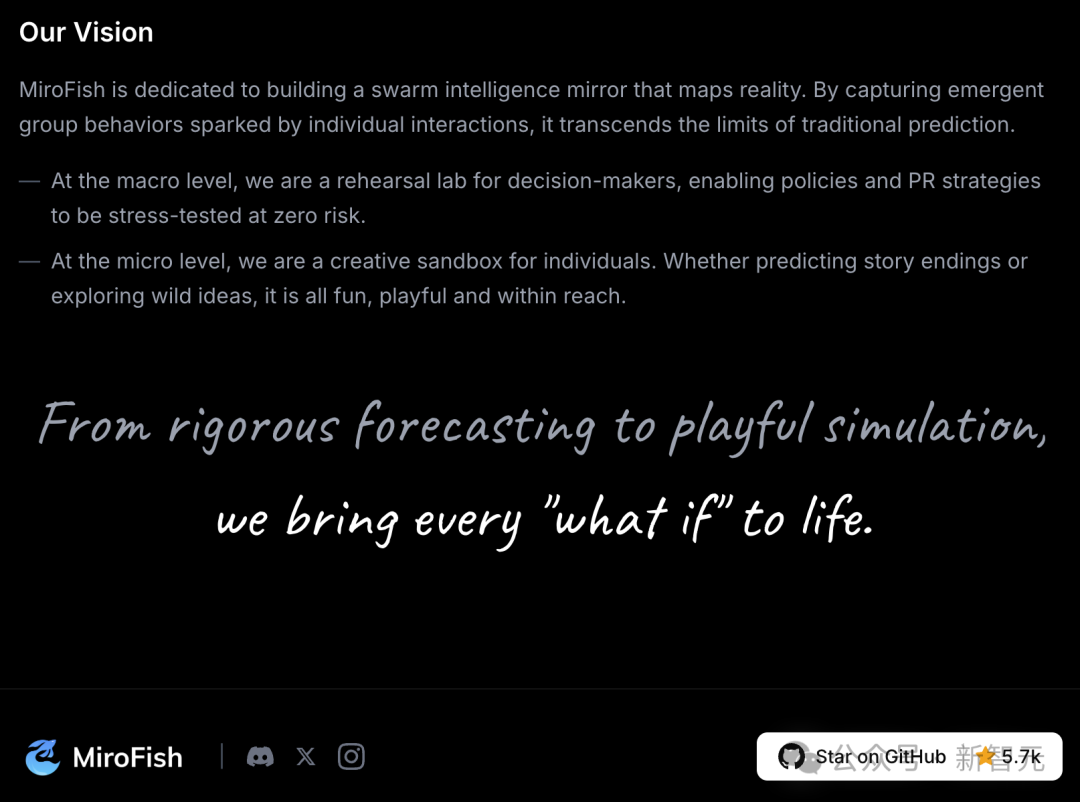
The project, named MiroFish, fundamentally focuses on constructing a digital sandbox that simulates the real world.
Essentially, MiroFish is an AI prediction engine driven by multi-agent technology.
It can extract seed information from the real world, such as breaking news, policy drafts, and financial signals, and automatically construct a high-fidelity parallel digital world.
Within this space, thousands of agents have created a "parallel universe."
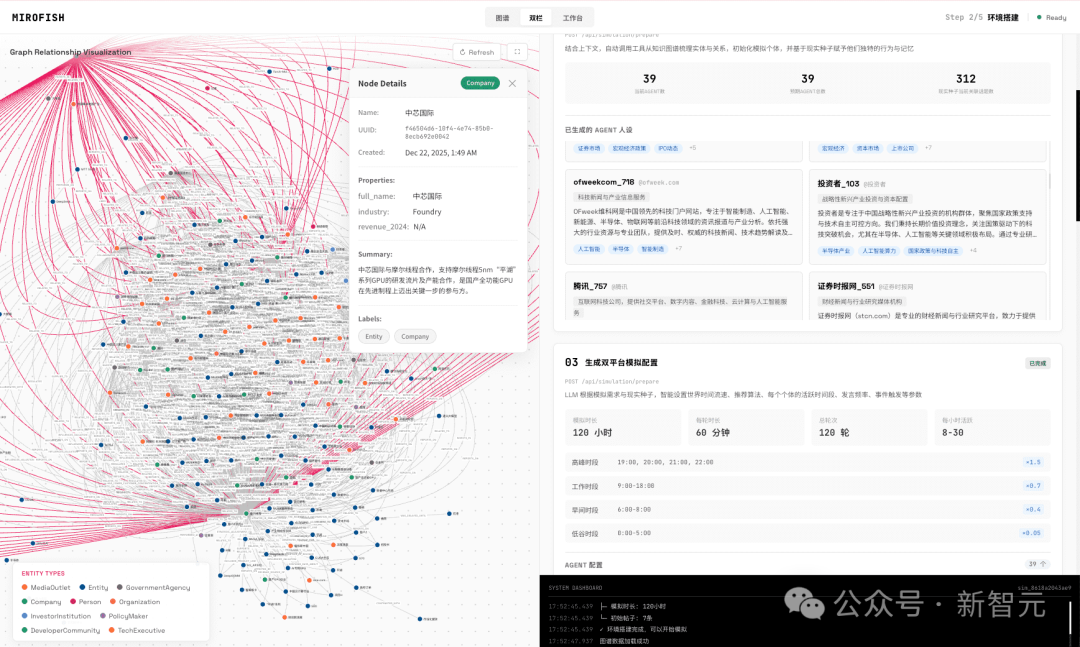
Each agent possesses independent personalities, long-term memories, and behavioral logics, allowing free interaction and social evolution.
This time, BaiFu again opted for Vibe Coding and moved swiftly—
MiroFish was developed in just ten days.
That evening, watching the running program, BaiFu excitedly recorded a rough demo and submitted it directly to Chen Tianqiao.
Within 24 hours of submitting the video, the two had a second conversation, during which Chen Tianqiao immediately decided: The group invests 30 million, fully supporting the deep incubation of MiroFish!
Overnight, BaiFu transformed from a Shengda intern into the CEO of an AI startup.
MiroFish traveled further than BettaFish:
The endpoint of BettaFish's analysis has become the starting point of MiroFish's predictions.
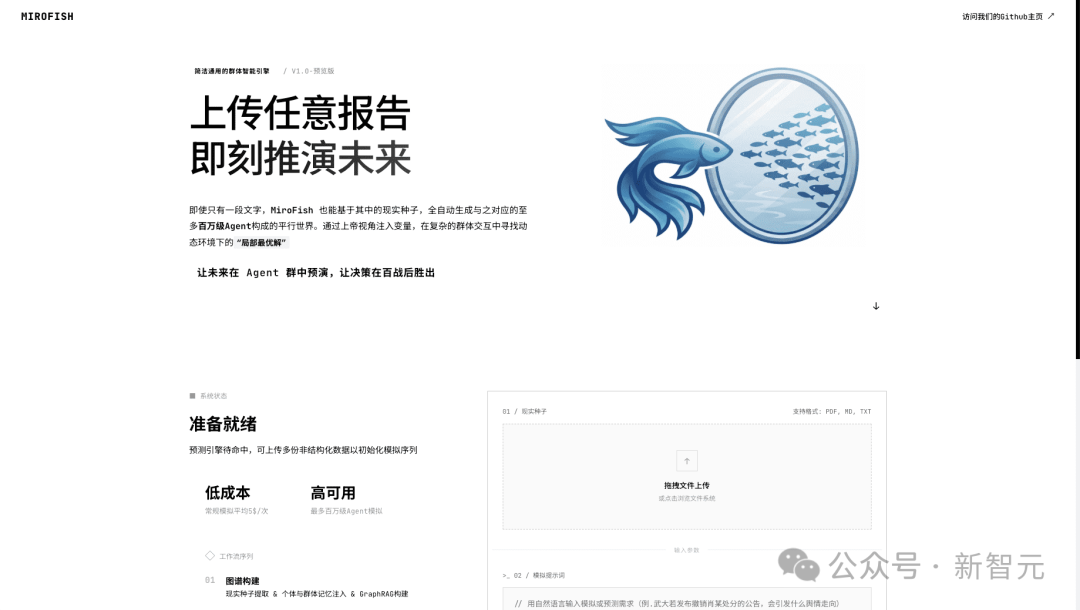
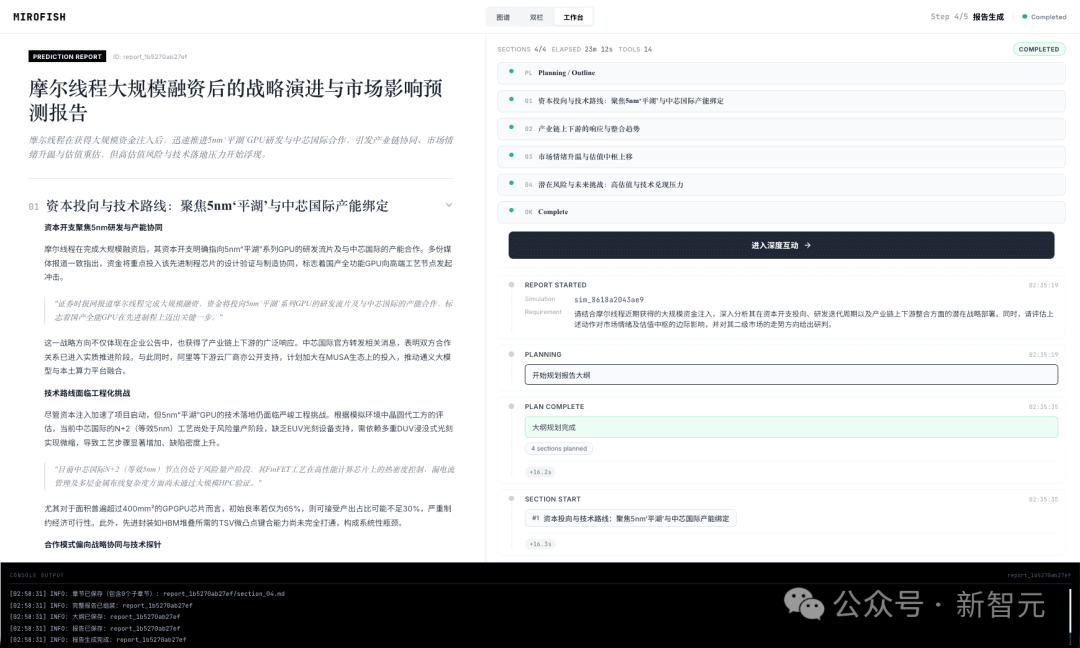
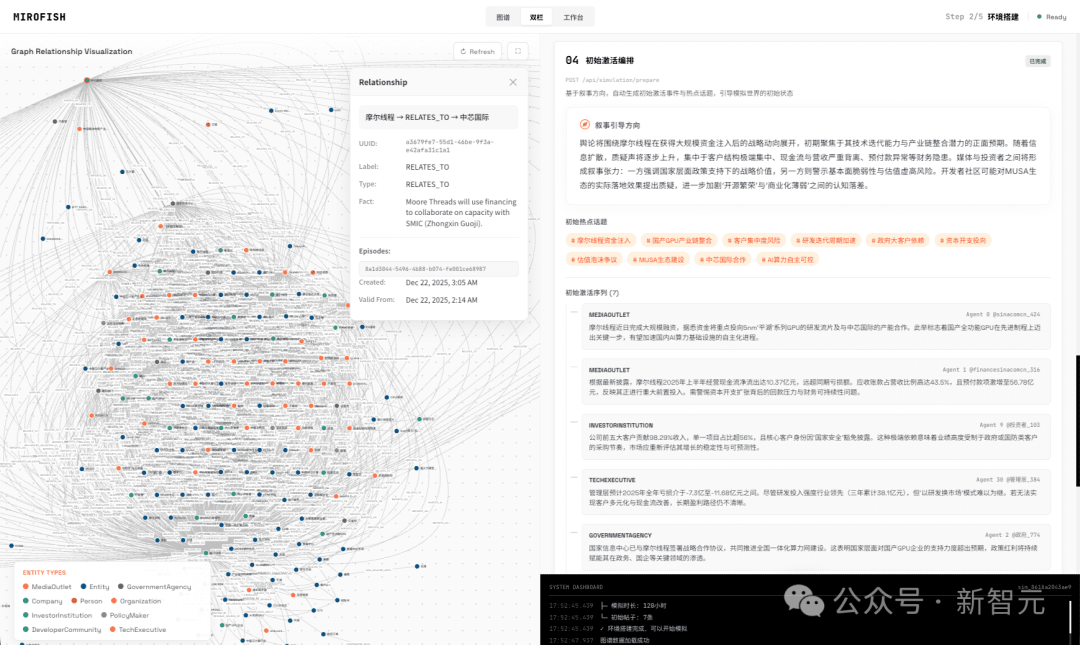
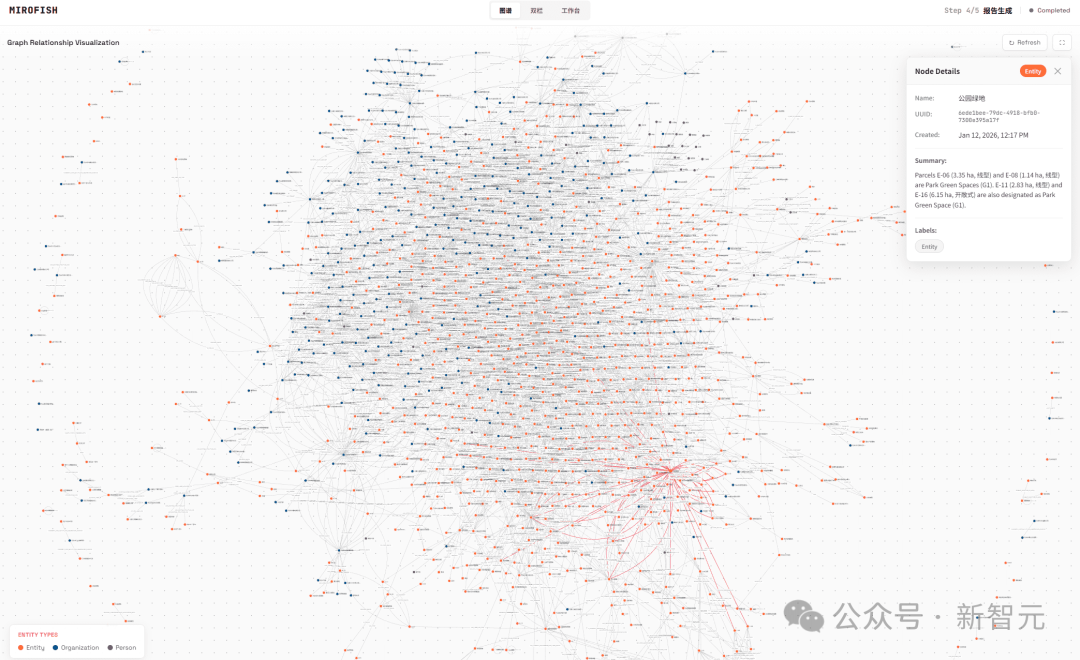
From raw data to intelligent decision-making, a true closed loop begins to form.
The goal of the MiroFish team is clear: to create an AI prediction system capable of simulating the real world, from financial markets to social events, from business decisions to creative experiments, allowing the future to evolve in the digital world ahead of time.
Any predictive task that can be monetized in reality is a target scenario for MiroFish.
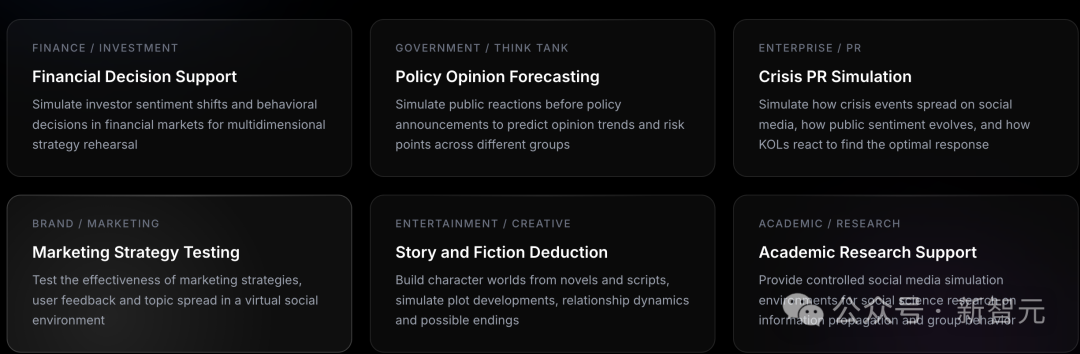
MiroFish's target application scenarios: financial decision support, policy public opinion prediction, public relations crisis simulation, marketing strategy testing, narrative and fiction simulation, academic research support.
Currently, the project has 5.7K stars on GitHub 🌟, and the experience website is as follows:
Link: https://666ghj.github.io/mirofish-demo/
Both open-source projects have topped GitHub's trending chart for the second time, and both took just ten days.
BaiFu successfully proves that "Vibe coding has limitless potential," and he himself is a Chinese example of a super individual!
Beyond Silicon Valley, One-Person Companies are Becoming Mainstream
The reason these two projects could both be completed in ten days is largely due to the new development model of Vibe Coding.
It is evident: AI is changing the boundaries of personal productivity.
In the past, a complete product required a large number of positions to achieve. Now, one person can become a team with the help of AI tools.
The former can take 10 days to produce a 100-point product, while the latter can produce a 70-point product within one day. In the AI era, speed itself is a competitive advantage!
This concept of a "one-person company" (OPC) has already become mainstream in Silicon Valley.
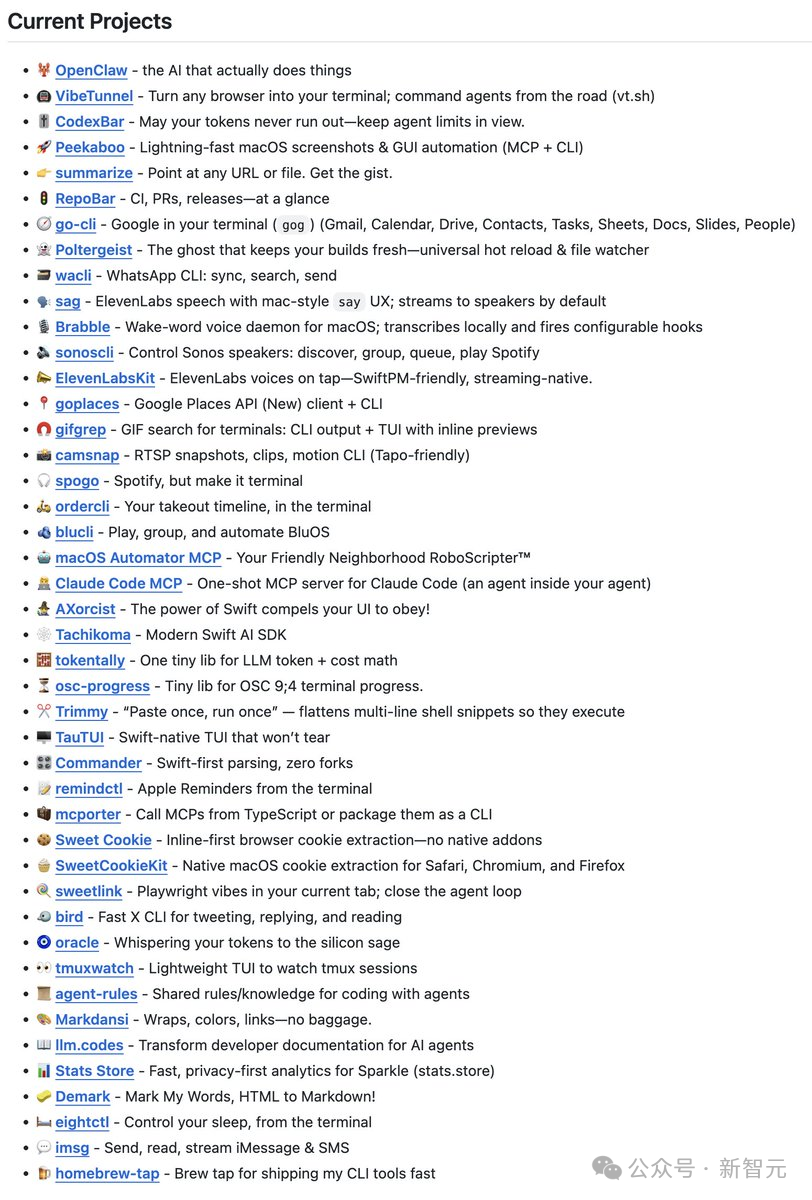
The most obvious example is the recently popular "Father of Lobster" — Peter Steinberger.

The globally popular lobster AI agent OpenClaw was created entirely by him.
With just one person's effort, the OpenClaw he developed completely transformed consumer-grade AI agents!
Coincidentally, the paradigm shift represented by OpenClaw provides the most essential virtual employee for one-person companies, making this revolution possible.
Another similar example is Boris Cherny, the father of Anthropic's Claude Code. It's worth noting that Claude Code is entirely one of his side projects!
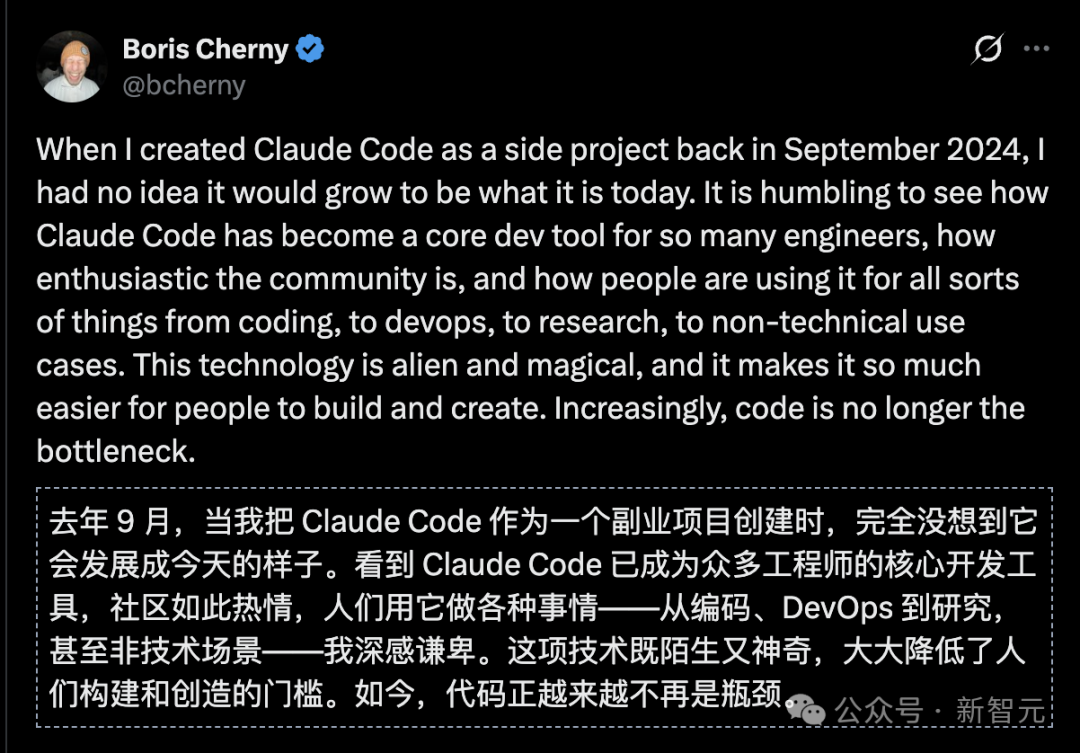
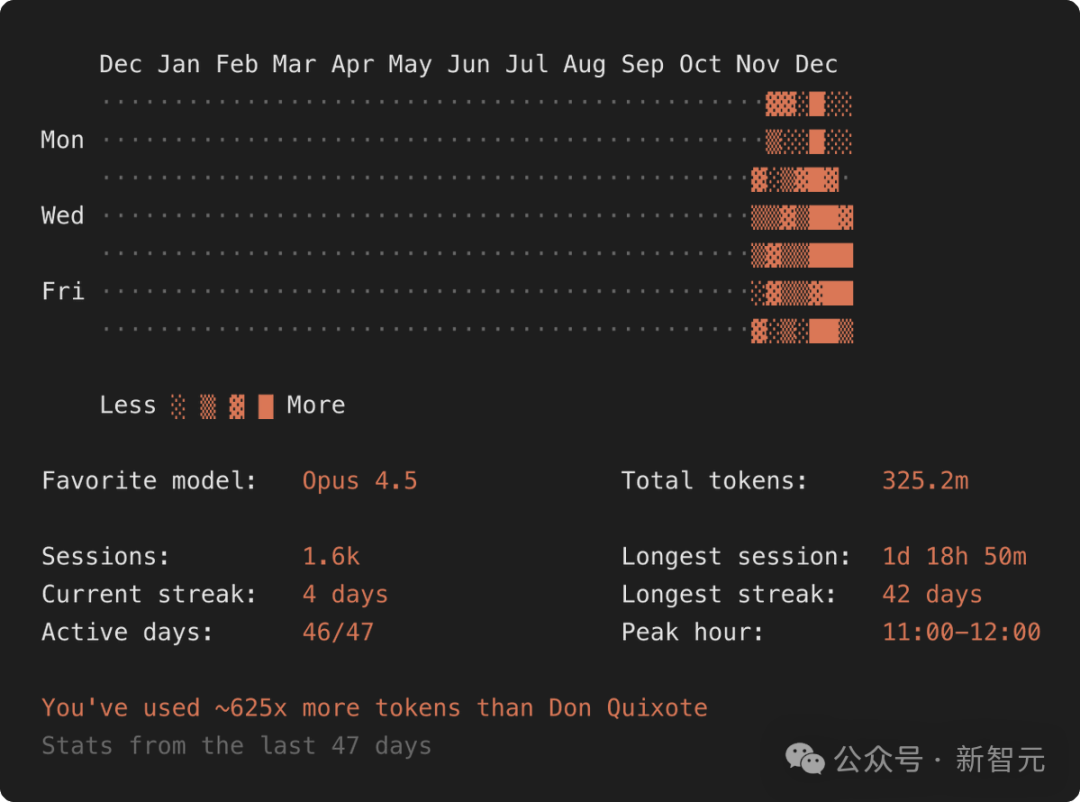
In 30 days, Boris Cherny added 40,000 lines of code and deleted 38,000 lines, but every line of code was written using Claude Code + Opus 4.5.
Additionally, there’s 23-year-old CEO Jaspar Carmichael-Jack, who ignited a city with AI marketing.
With a controversial billboard on the streets of San Francisco, he catapulted his one-person company Artisan to fame overnight, raising over 35 million dollars.
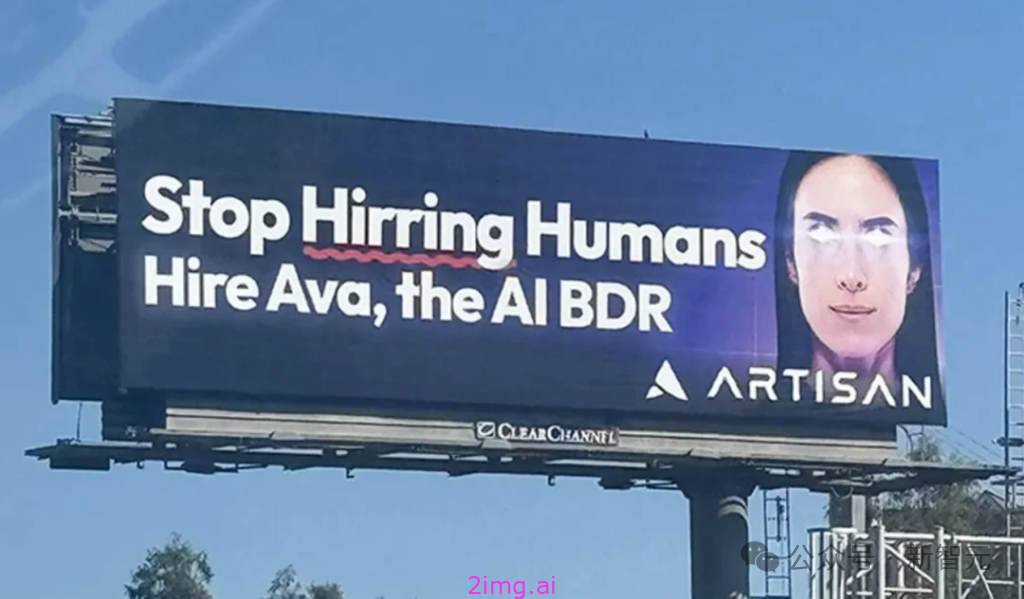
Billboard: “Stop hiring humans; hire AI sales agent Ava.”
21-year-old Karun Kaushik and his classmates created the AI tool Delve in their MIT dormitory, targeting a highly specialized field—data compliance, addressing the tightening constraints faced by all companies amidst the AI boom.
Eventually, Delve became a large company with 35.3 million dollars in funding, created solely by two college students.

The most successful practitioner of the "one-person company" business model must be Dan Koe.
One of his articles, "Repair Your Entire Life in One Day," gained 150 million views on the X platform, but his true wealth secret lies in the 4 million dollars per year he earns from paid subscriptions, e-books, and his AI tool empire.
He has taught countless people how to leverage AI to assist with writing and build personal brands, turning the concept of "becoming a super individual" into a significant business.

Similar examples abound.
These cases point to the same reality:
AI is compressing the capabilities that were previously scattered across multiple positions into one person.
As early as 2024, OpenAI's CEO Altman openly predicted: "The one-person unicorn is coming soon."
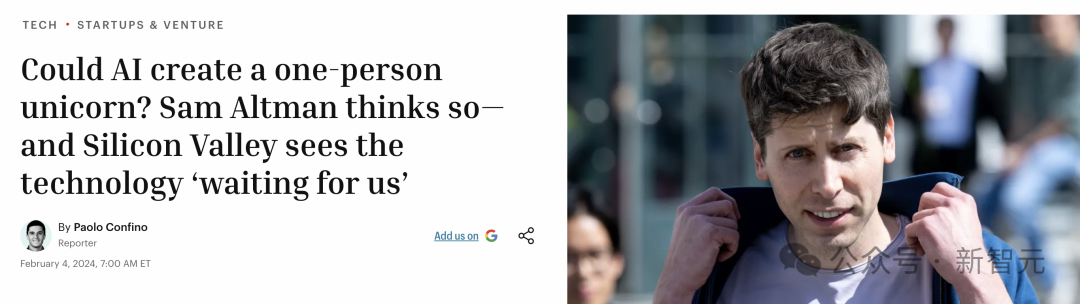
Subsequently, this viewpoint was amplified into a consensus by VC firms like YC and a16z.
Quantitative data from Carta indicates: Currently, 36.3% of new companies are founded by solo founders.
This further proves that the idea of "one-person companies" is not just hype but reflects real changes in registration and fundraising behavior.
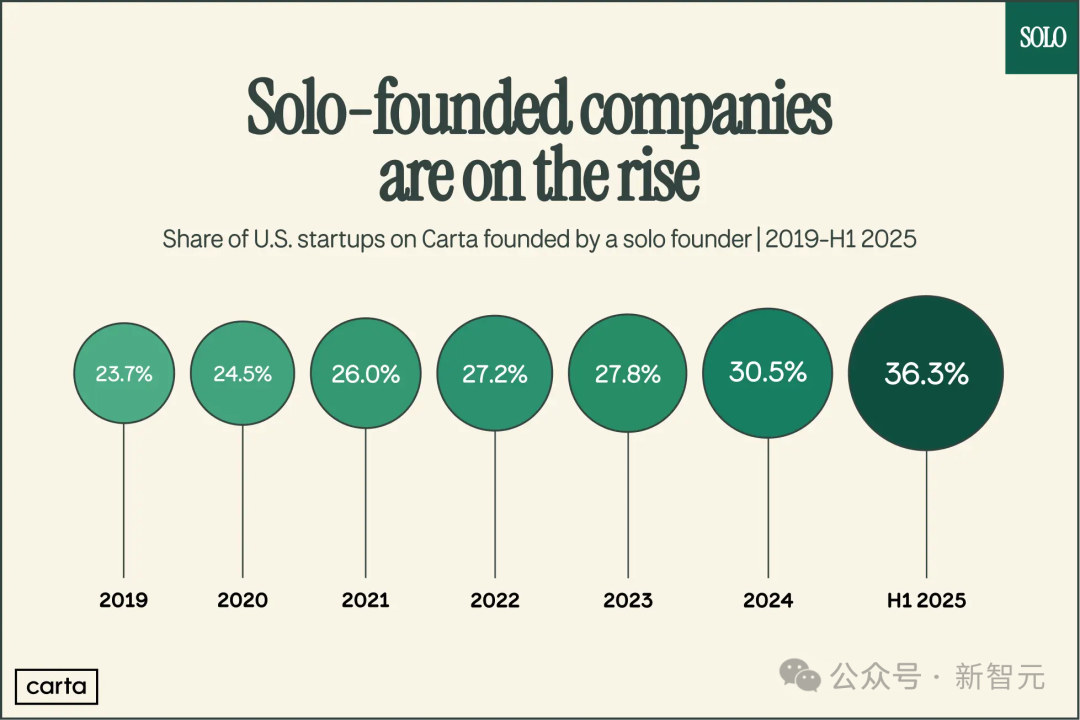
Silicon Valley has demonstrated through countless cases that "one-person companies" are becoming a mainstream entrepreneurial path. China is also rapidly catching up.
Regarding this era, BaiFu already has his judgment: "Knowledge is being democratized. Many things that used to require ten or a hundred times the effort to reach a threshold will soon be brought to the masses; it’s just a matter of time."
The idea of the "super individual" is not only reflected in programming.
In the past, finding someone who understood programming, AI, and also knew how to edit and animate was almost impossible; but now, with AI video editing + Vibe Coding tools, it is not difficult to achieve "programming + AI + animation editing."
We are still in the early stages, but it is entirely conceivable that in one or two years:
It will become increasingly common for one person to complete all actions of research, design, art, development, and marketing; costs will decrease, but the upper limit of returns will rise.
Tools are accelerating, collaboration paradigms are accelerating, and human boundaries are being pushed wider.
In the future, he believes that imagination and ideas will become the new productivity, with AI being the key—
We should learn broadly and skillfully master various AI tools, allowing imagination to become the primary productivity;
Technology is no longer the only barrier; an idea resonating with the zeitgeist will have its value amplified like never before;
Speed determines life and death; market opportunities are fleeting;
The ability to turn ideas into reality and bring them to market within days lies in leveraging AI tools.
This is what he understands as Vibe Coding, and what he believes in as the era of super individuals.
What truly excites people about MiroFish is that it tells everyone: The next person to rewrite the industry may not be in a big company's conference room, but in a dormitory, rental house, café, or even right next to you.
The wave of super individuals has already arrived.
The future is here, and will the next wave of people include you?
References:
https://666ghj.github.io/mirofish-demo/
免责声明:本文章仅代表作者个人观点,不代表本平台的立场和观点。本文章仅供信息分享,不构成对任何人的任何投资建议。用户与作者之间的任何争议,与本平台无关。如网页中刊载的文章或图片涉及侵权,请提供相关的权利证明和身份证明发送邮件到support@aicoin.com,本平台相关工作人员将会进行核查。


