This Monday, global investors' hearts probably missed a beat. The fire of war in the Middle East shows no signs of extinguishing and has directly burned into the "artery" of the global economy.
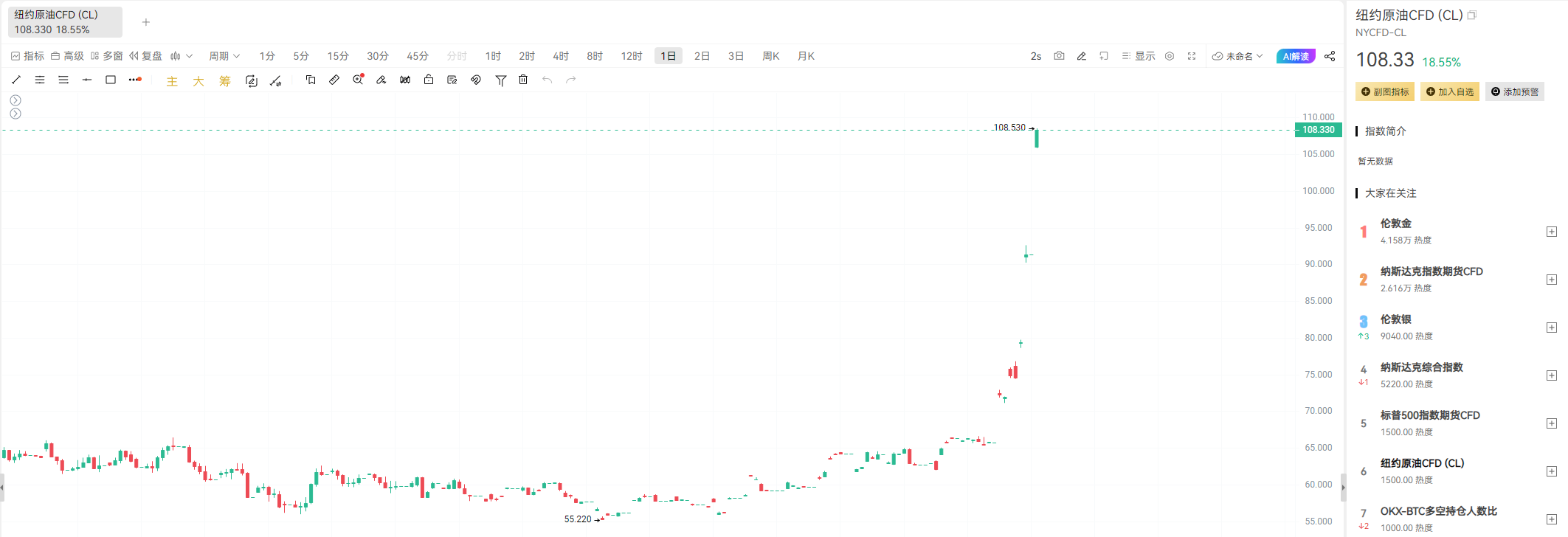
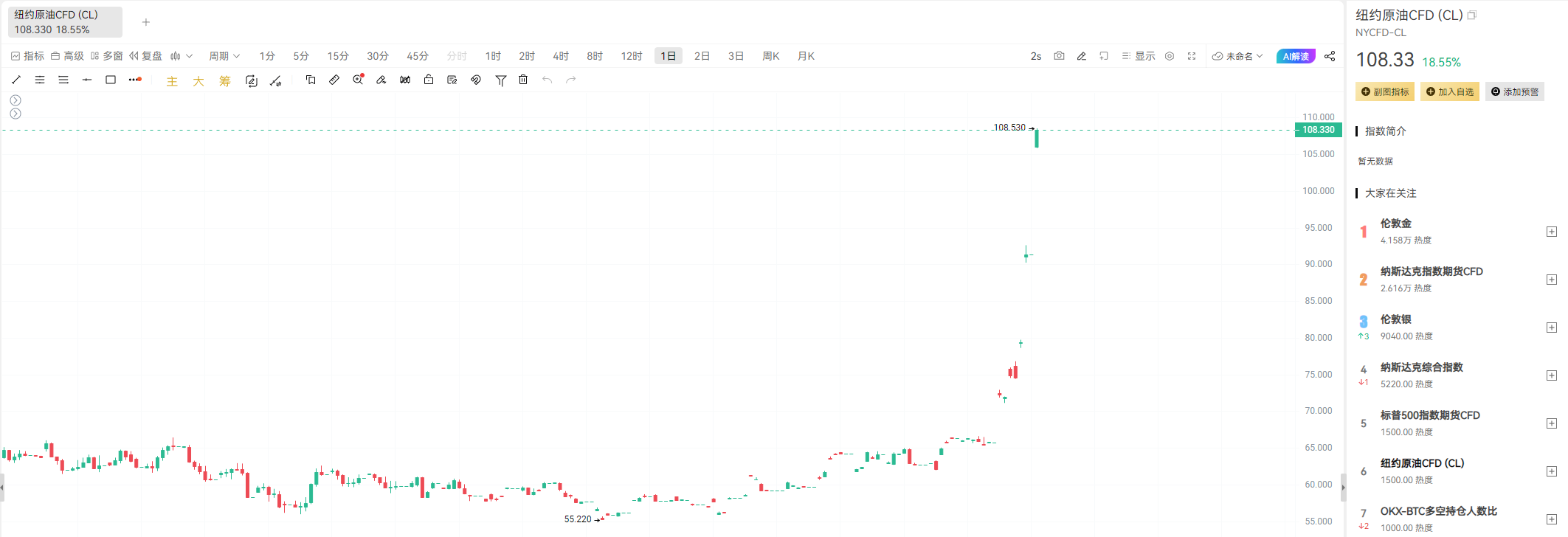
As the Asian trading session opened on March 9, international oil prices soared like wild horses, with WTI crude oil futures surging 22% at one point, easily breaking through the $110 mark, while Brent crude oil reached a high of $111, instantly awakening memories of the 2022 energy crisis. But this was just the first ring of a chain reaction. Following was a panic sell-off in the global stock markets, a rare crash in the bond market, and even traditional safe-haven asset gold was not spared. This is not just a geopolitical conflict; it feels more like a "preview of a perfect storm".
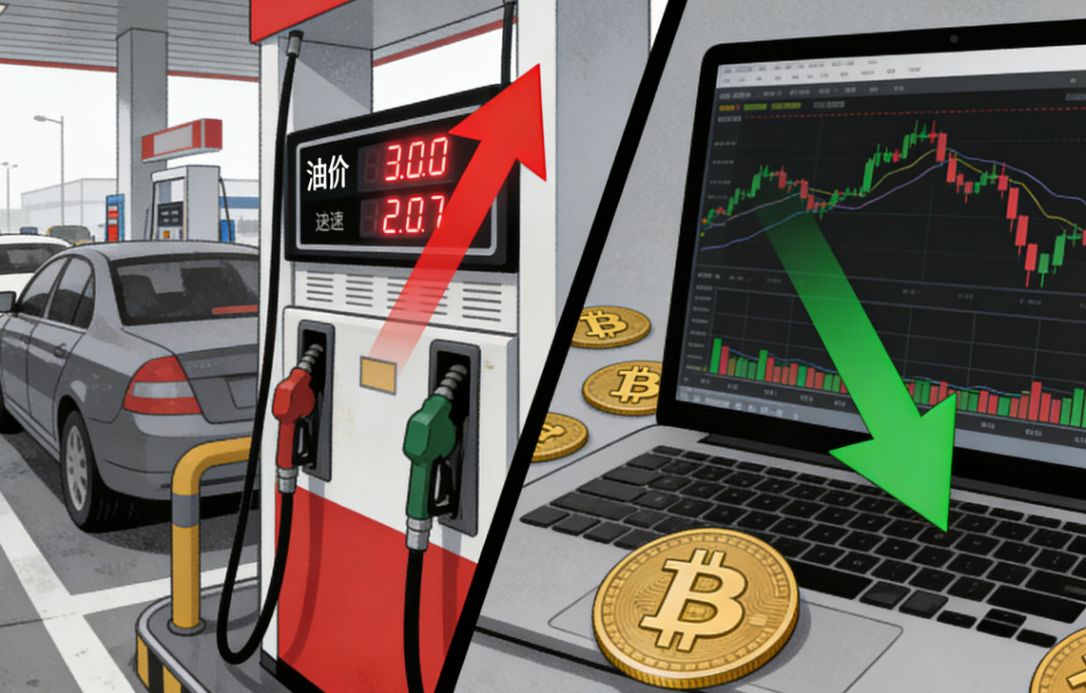
1. Panic of "Supply Disruption" in Crude Oil: From Production Interruptions to Surge in Spot Premiums
● The direct trigger of this market turmoil points directly to the "throat" of global oil transportation— the Strait of Hormuz.
● With the US-Israeli coalition targeting Iran's civilian energy facilities for the first time, the conflict rapidly escalated. In response, regional tensions surged, directly impacting the vital route for about one-fifth of global oil trade. Data provider Kpler noted that the major oil storage facilities in Saudi Arabia and the UAE are rapidly filling up, expected to reach capacity within three weeks.
● More alarming data is reflected in the futures market: The spot price differential for Brent crude (the difference between the two most recent contracts) broke through $8.50 per barrel in early trading, reaching the highest level since 2013. This extreme spot premium structure indicates that traders are willing to pay sky-high prices to secure immediate supplies, and the market's panic over "running out of oil at any moment" has reached a peak.
● Iraq's oil production has plummeted by about 60%, and Kuwait has also implemented "preventive cuts." Citigroup estimates that the global crude oil market is losing about 7 to 11 million barrels of supply every day. Macquarie's energy strategist issued a stern warning: if the situation does not quickly cool down, oil prices reaching $150 would not be implausible.
2. The "Great Escape" in Global Stock Markets: From Circuit Breakers in Japan and South Korea to Plummeting US Stock Futures
The violent surge in oil prices is akin to an "economic bomb" for economies reliant on energy imports.
● The Asia-Pacific market is hit first, with blood flowing. The South Korean composite index quickly expanded its losses to 7%, with major stocks like Samsung Electronics and SK Hynix plummeting, directly triggering a program trading pause mechanism (sidecar), evidence of the market's extreme vulnerability. South Korean President Lee Jae-myung urgently convened relevant departments to discuss, even considering the unprecedented measure of restoring a cap on oil prices for the first time in nearly thirty years.
● The Japanese stock market was equally grim, with the Nikkei 225 index at one point dropping over 6%, falling below the 53,000 mark, recording the largest single-day drop since April last year. The Australian S&P/ASX 200 index also fell to several months' lows.
● This wave of selling quickly crossed time zones, impacting Europe and the US. Dow futures plunged over 1,000 points at one point, while S&P 500 and NASDAQ 100 futures both fell nearly 2%. The market logic is simple: rising oil prices = rebound in inflation = increased expectations for central bank interest rate hikes = greater risk of economic recession.
● Wedbush analysts bluntly stated, "Market risks are building up," and Stephen Innes from SPI Asset Management pointed out the word that central bankers fear most—stagflation.
3. The "Alternative Panic" in the Crypto Market: Why is Bitcoin No Longer a Safe Haven?
In this bloodbath, Bitcoin, once highly regarded by some investors as "digital gold," performed shockingly poorly.
● In sync with gold, Bitcoin also faced heavy selling pressure. Data shows Bitcoin dropped from a high of $68,200 to below $65,700, with a 24-hour drop of about 2.8%, and the total liquidation amount in the futures market reached as high as $342 million. More worrisome is that the fear and greed index, which measures market sentiment, plummeted to 8, signaling a prolonged state of "extreme fear" in the market.
● Why, as geopolitical conflicts escalate, does Bitcoin drop instead?
● The core logic lies in the "dollar squeeze" effect. The soaring oil prices have heightened inflation expectations, forcing funds to flow back into the dollar in search of safety, with the dollar index DXY rising to 99.5 at one point. As a representative of risk assets, Bitcoin often becomes the first to be sold off under tightening liquidity expectations.
● Its correlation with US stocks is strengthening, while its connection to safe-haven properties is weakening. As analysts point out, if the dollar index stabilizes above 100, Bitcoin is likely to further test the support range of $62,000 to $64,000.
4. Gold Dulls, Bonds Under Pressure: Traditional Safe Haven Logic Temporarily Fails
In this financial market reaction, the most unusual aspect is the failure of traditional safe-haven assets.
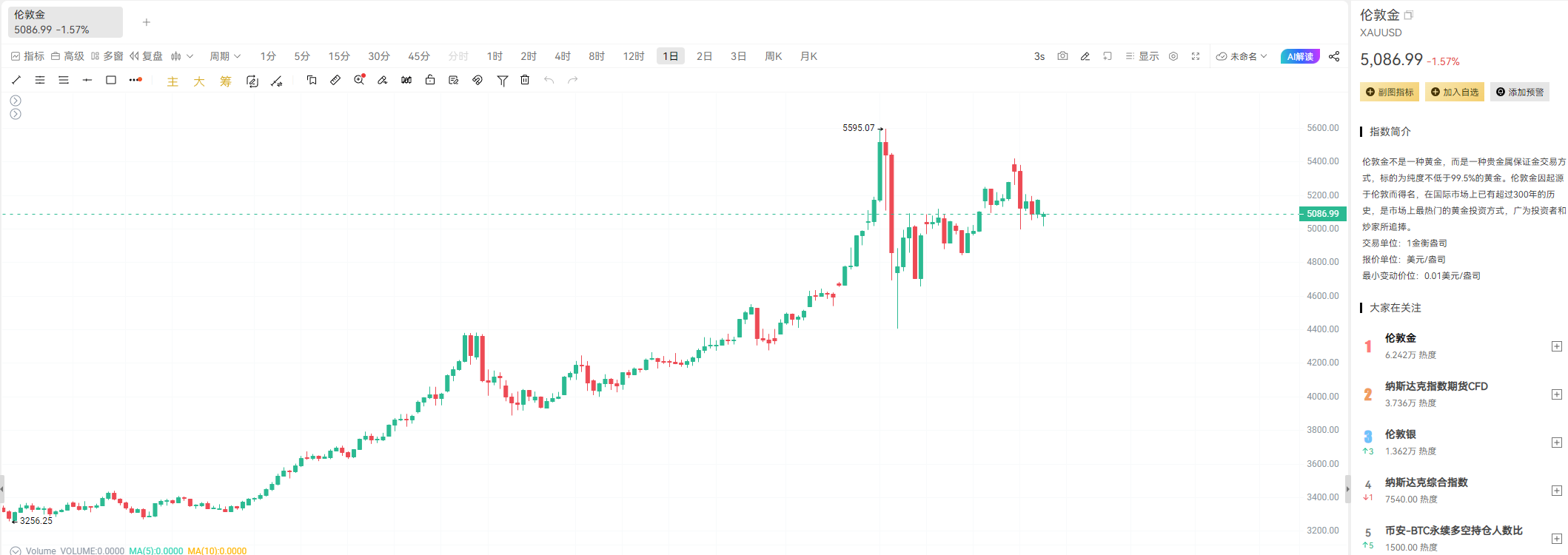
● Gold no longer shines. Normally, it is only natural to buy gold during war. But this time, spot gold dropped over 2% in a day, once falling below $1,050 per ounce, while silver's drop exceeded 4%. The market explains that inflation expectations induced by rising oil prices may prompt central banks to raise interest rates more aggressively, thereby increasing the opportunity cost of holding non-yielding gold. At the same time, some investors may sell gold to cover margin losses in the stock futures market.
● The bond market suffers a double whammy. Global bond yield curves have risen across the board, with prices falling. US treasury futures plummeted, giving back all the gains from last week due to weak non-farm data; German 10-year treasury futures fell to the lowest level since July 2011; and Australian 3-year treasury yields reached a new high since 2011. This indicates that market concerns about inflation have overshadowed the safe haven demand due to recession, and the pattern of both stocks and bonds falling is a typical characteristic of "stagflation" trading.
5. Outlook: Looking for Opportunities in the Eye of the Storm
● In the face of this global financial tsunami, the White House is trying to calm the market. US President Trump stated on social media that the rise in oil prices is a "minimal cost for peace" and will soon recede. The US Energy Secretary also expects shipping to return to normal within weeks.
● However, the market is clearly not that optimistic. This week's market focus will be highly concentrated: first, on the evolution of geopolitical situations, particularly whether the Strait of Hormuz will remain closed long-term; second, on the upcoming US February CPI and PCE inflation data. These data will directly determine the Federal Reserve's stance in the March meeting.
For investors, this moment may be a crossroads:
● If the situation in the Middle East cools down and oil prices fall, then the repressed stock and crypto markets may welcome a rebound.
● But if the conflict continues or even escalates, the global economy will have to face the most challenging stagflation predicament of "high oil prices + low growth + high inflation." At that time, cash and upstream energy assets that can pass on costs may be the last safe haven.
Join our community, let’s discuss and become stronger together!
Official Telegram community: https://t.me/aicoincn
AiCoin Chinese Twitter: https://x.com/AiCoinzh
OKX welfare group: https://aicoin.com/link/chat?cid=l61eM4owQ
Binance welfare group: https://aicoin.com/link/chat?cid=ynr7d1P6Z
免责声明:本文章仅代表作者个人观点,不代表本平台的立场和观点。本文章仅供信息分享,不构成对任何人的任何投资建议。用户与作者之间的任何争议,与本平台无关。如网页中刊载的文章或图片涉及侵权,请提供相关的权利证明和身份证明发送邮件到support@aicoin.com,本平台相关工作人员将会进行核查。


