The smoke of war in the Middle East has not dissipated with the death of an old man; instead, at the moment of a power transition, it ignited an even fiercer flame. Just a few days after the US-Israeli coalition launched a decapitation operation, killing 86-year-old Ali Khamenei, the power center in Tehran completed a reshuffle at a staggering speed.
On March 9 (UTC+8), a special meeting of the Iranian Expert Assembly was held, overwhelmingly electing Mojtaba Khamenei as the third Supreme Leader of the Islamic Republic of Iran. The 56-year-old mid-level cleric and second son of Khamenei took over the highest scepter of this theocratic regime amid the tumult of war.
This was not just a transfer of power, but a resounding slap in the face to Washington. Just before the appointment was formalized, President Trump publicly claimed that Khamenei’s son was an "unacceptable" candidate and even asserted that "he must get our approval." Now, Tehran’s choice has given the most direct response: not only was he chosen but the one who made Washington hop mad.
A new act, named “Age of Avengers,” has begun.
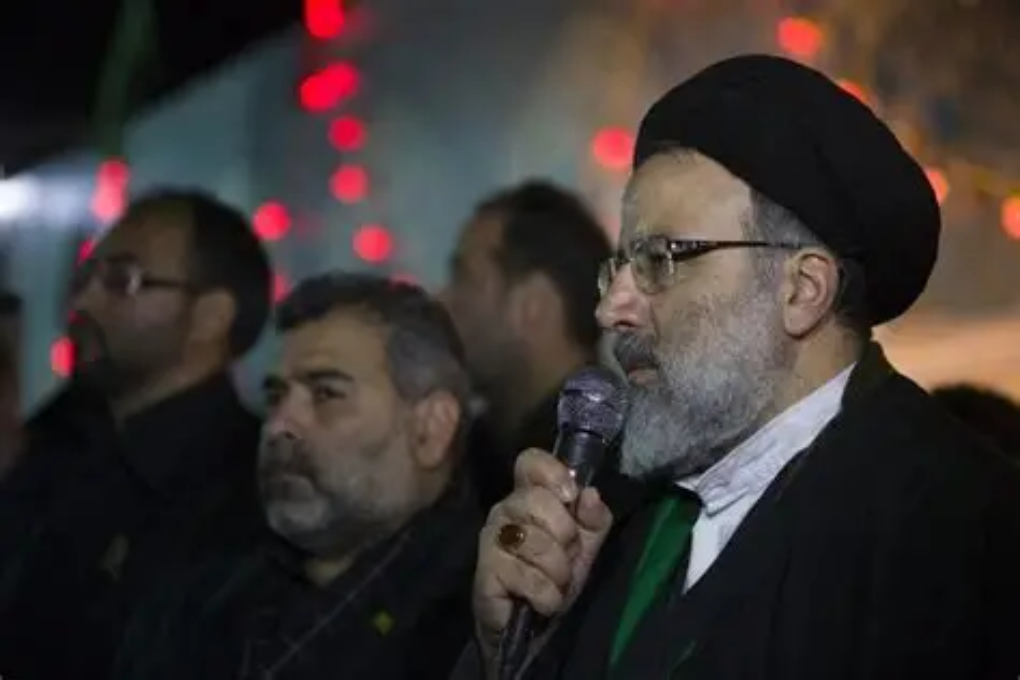
1. The Gatekeeper Rises: From Shadow to Center Stage
● Unlike his father and Iran's founding father Khomeini, Mojtaba previously did not possess the religious qualifications required to hold the position of Supreme Leader. He only held the title of "Hojjat al-Islam," which is below "Grand Ayatollah." But in this country where religious authority and iron fist are intertwined, the barrel of a gun is often more persuasive than scripture.
● For a long time, Mojtaba played the role of gatekeeper for his father in Iranian politics. He has never held any elected or formal government position but had a close relationship with the Islamic Revolutionary Guard Corps to the core. The US Treasury sanctioned him back in 2019, stating that he “represents the Supreme Leader in an official capacity” and is a coordinator between the Quds Force and Basij militia.
● If the old Khamenei was the helmsman of Iran’s great ship, then Mojtaba was the steward managing the cabin's lower door. Now, this steward is sitting at the helm.
2. Blood Feud and Iron Fist: A Hardline with No Alternatives
Mojtaba’s rise has seen more blood than ballots.
● In the joint airstrike that led to his father’s death, Mojtaba also lost his mother, sister, and his wife—Zahra, daughter of conservative politician Hossein Adel. His family fell victim to US-Israeli bombs; this hatred is personal and deeply engrained.
● Alex Vatanka, a senior fellow at the Middle East Institute, pointedly remarked that for the US, this signifies a massive strategic defeat. Washington took a colossal risk by launching military action, resulting only in the death of an old man and leading to a younger, more hardline successor deeply tied to the Revolutionary Guard.
● In fact, Mojtaba has no alternatives. Analysts state that under his leadership, Iran’s internal and foreign policies will only tighten further. Domestically, he will face a discontented populace due to long-term turmoil and economic collapse, and to consolidate his power, he can only rely on the Revolutionary Guard to display an iron fist and further suppress dissent; externally, facing Israel's threat to "kill any successor" and Trump's continued pressure, compromise equates to suicide, and only resistance and revenge can maintain the legitimacy of the regime.
3. Factions Align: Consolidation of Power Amidst Flames
Despite the US and Israel’s uproar, Tehran's power center has demonstrated unusual unity.
● After the announcement of his appointment, Iran's key power institutions swiftly meshed like gears. The Islamic Revolutionary Guard Corps quickly issued a statement congratulating Mojtaba’s election, stating its members are “ready to fully obey and sacrifice themselves to execute the sacred orders of the Guardian Jurist.” The General Staff of the Iranian Armed Forces, the Iranian Parliament, and even Ali Larijani, previously considered a potential successor as secretary of the Supreme National Security Council, also pledged their loyalty.
● This speed is particularly striking against the backdrop of war. This is Iran’s attempt to showcase "stability and continuity" both domestically and internationally during a time when a long-term leader has been assassinated and the war with the US and Israel is escalating.
● However, this continuity is built on an extremely fragile foundation. Currently, the US-Israeli coalition’s military strikes against Iran have entered their second week. Trump has claimed to have destroyed 42 Iranian naval vessels and crippled its communication systems. In response, Iran launched a new round of missiles at US-Israeli targets in Gulf countries, even claiming to have destroyed four US "THAAD" missile defense system radars within 24 hours. The war has spread throughout the Gulf region, affecting government buildings in Kuwait, desalination plants in Bahrain, and residential areas in Saudi Arabia.
4. The Future in the Eye of the Storm
What Mojtaba has inherited is a burning hot potato fraught with internal and external troubles.
● Economically, currency collapse and hyperinflation have long eroded the foundations of the Islamic Republic; militarily, while the Iranian Revolutionary Guard claims to have the capability to sustain high-intensity warfare at the current pace for at least six months, how long this confidence can last under the saturation attacks of US-Israeli high-tech weapons remains uncertain.
● Trump has stated that he does not rule out sending special forces to seize Iran's enriched uranium. Israeli Prime Minister Netanyahu has been even harsher, bluntly stating a complete plan to “destroy the regime and bring about change.”
● For this new leader, the days ahead are extremely bleak. As Paul Salem, an expert at the Middle East Institute, states, Mojtaba is not the kind of person who can reach an agreement with the United States. He views Saddam after 1991 and Assad after 2012 as cautionary tales—those governments survived years of war and isolation, yet lost complete control over their states.
● Now, as black smoke pillars rise over Tehran due to oil depots being bombed, Mojtaba stands at the pinnacle of power. He faces not just the threat from Trump and Israeli missiles, but also the weight of an ancient nation teetering between theocracy and the suffering of its people.
Join our community to discuss and grow stronger together!
Official Telegram community: https://t.me/aicoincn
AiCoin Chinese Twitter: https://x.com/AiCoinzh
OKX welfare group: https://aicoin.com/link/chat?cid=l61eM4owQ
Binance welfare group: https://aicoin.com/link/chat?cid=ynr7d1P6Z
免责声明:本文章仅代表作者个人观点,不代表本平台的立场和观点。本文章仅供信息分享,不构成对任何人的任何投资建议。用户与作者之间的任何争议,与本平台无关。如网页中刊载的文章或图片涉及侵权,请提供相关的权利证明和身份证明发送邮件到support@aicoin.com,本平台相关工作人员将会进行核查。


