What has war changed, and what insights has it given us?
In the past two days, I have been using Binance's lobster Skill to help me monitor the rising list of Binance. While watching the market, I noticed a detail:
$SIGN has recently ranked on Binance's rising list for several consecutive days, with a strong price, and this kind of garbage market is rare in the market.
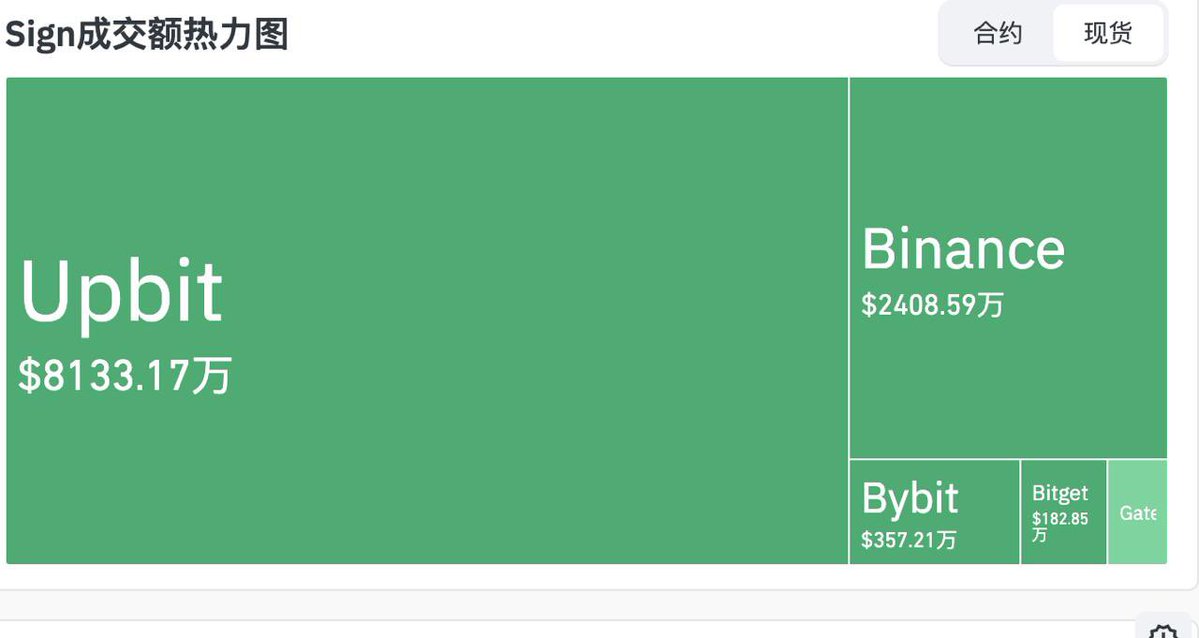
So I asked Openclaw to run a market trend analysis for me and found that in other markets, the SIGN/KRW trading pair in the Korean market has surged to the top six of Upbit's spot trading volume, with a daily trading volume of about 45.82 million dollars.
Interestingly, the lobster discovered that if you trace back the time of its volume increase and launch, you'll find that it coincides almost exactly with the period of escalation of the US-Iran conflict.
So is this a war concept token?
Of course, it cannot be simply understood as “war stimulates token price.” But it at least indicates one thing: As the war progresses, everyone will slowly realize the truly vulnerable areas of modern countries, which may not be just the more fragile oil and gas, ports, and borders, but often the systems that are normally invisible, yet operate daily: payments, identity, clearing, registration.
In peacetime, centralized systems seem highly efficient, but once conflicts, sanctions, cyberattacks, and financial fragmentation occur, the problems will emerge.
So what truly matters is whether these systems can continue to operate at critical moments.
I think this is also the reason why the market is beginning to re-evaluate projects similar to $SIGN.
After all, Sign is not merely a protocol or an ordinary payment project; it resembles more of a platform like TokenTable, which has real business capability for asset issuance/services + a foundational network like Sign Protocol that aims to build global trust and identity infrastructure.
Its focus is also very fundamental: digital identity, verifiable credentials, sovereign payment tracks, RWA.
Moreover, its previously announced collaboration directions are basically revolving around this theme: CBDC / digital som pilot in Kyrgyzstan, on-chain identity and residency credentials in Sierra Leone, collaboration with the UAE direction, and Singapore's identity interoperability integration.
So you see this logic; these elements may seem far away from the market in normal times, but once we enter such extraordinary periods, the market will suddenly realize: “Digital sovereignty” is not an abstract concept, but a form of national resilience.
In plain terms, what countries will compete over in the future may not just be resources, military strength, and financial size, but also who completes the upgrade of digital infrastructure first, and who can transform their core systems into a more disruption-resistant, verifiable, and independent network.
Therefore, from this perspective, the unusual movements of projects like $SIGN are reasonable; they may not only reflect emotions, but rather the market is preemptively trading one thing:
As regional conflicts become increasingly normalized, digital sovereignty will gradually transition from being a narrative to a necessity.
免责声明:本文章仅代表作者个人观点,不代表本平台的立场和观点。本文章仅供信息分享,不构成对任何人的任何投资建议。用户与作者之间的任何争议,与本平台无关。如网页中刊载的文章或图片涉及侵权,请提供相关的权利证明和身份证明发送邮件到support@aicoin.com,本平台相关工作人员将会进行核查。


