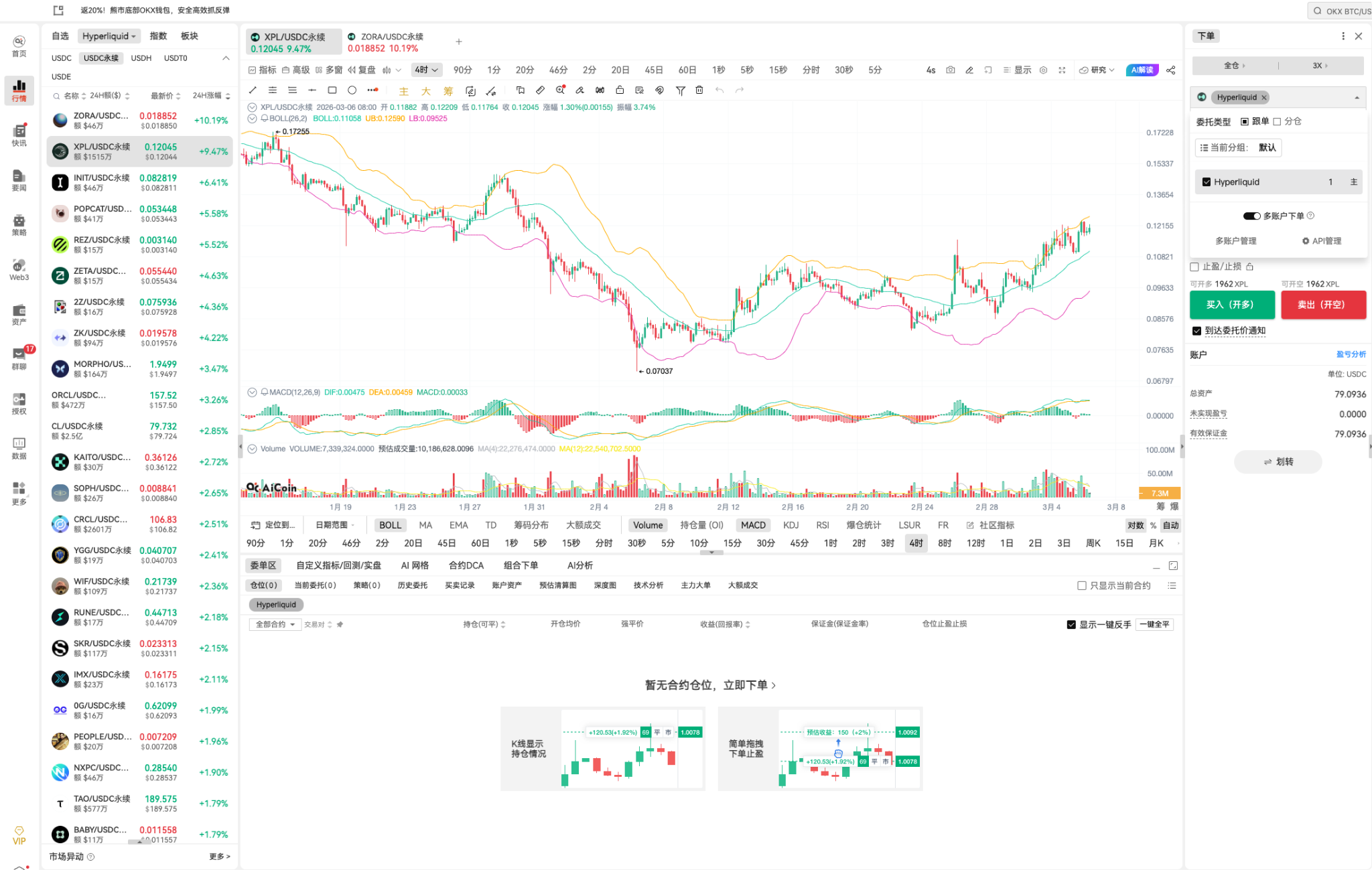
On March 6, 2026, NVIDIA shrinks AI external investments, publicly listed mining companies concentratedly sold over 15,000 BTC, Solana-related ETF net inflows reached approximately 1.5 billion dollars and other funding clues emerged within the same time window, twisting the stories originally scattered across AI and cryptocurrency into a single noose. On one side, the leader in AI hardware and capital presses the brakes, while highly leveraged mining companies are forced to deleverage. At the same time, institutions quietly increase their holdings in SOL and other on-chain assets through ETFs, creating sharp dislocations among different assets and infrastructures. The real question is no longer "is capital retreating?" but rather: which sectors are being drained, and which assets and underlying infrastructures are becoming new recipients?
Signals of NVIDIA's brake on AI investment
● Timing and background: At 8:00 AM UTC on March 6, it was confirmed that NVIDIA had halted new equity investments in AI companies. Previously, the market had reported from a single source that it invested approximately 30 billion dollars in OpenAI, symbolizing the extreme concentration and overheating of capital in the AI sector over the past two years. Now, this action is seen as a strategic withdrawal of NVIDIA from a "capital engine" to a "computing power seller," releasing clear cooling signals within the AI startup financing environment.
● Symbolic significance: NVIDIA's pause on new investments does not imply that AI demand has disappeared, but rather sets a termination line for the previously "high valuation, fast financing, and no profitability constraints" AI startup model. For small and medium AI companies that rely on NVIDIA’s endorsement and industry synergy, rising financing costs have become a foregone conclusion. The "high fever state" in the AI primary market is forced to cool down, and the narrative premium portion of the valuation is beginning to be systematically discounted, reshaping the entire risk pricing framework from the attitude of leading enterprises.
● Redistribution of risk preference: When industry capital represented by NVIDIA withdraws from AI startup equity, what is released is not merely "risk-averse funds," but rather a high-risk preference that has been passively driven out of overheated sectors. This portion of funds will seek cost-effectiveness in a global pool of high-volatility assets—including cryptocurrency assets, as long as they possess sufficient liquidity, volatility space, and narrative potential, they have the opportunity to become new recipients. The cooling of AI capital essentially opens a window for cross-sector reallocation.
Turning point for mining companies' liquidation-style selling
● The significance of the 15,000 BTC sale: Research data shows that listed mining companies have recently accumulated sales exceeding 15,000 BTC, contrasting sharply with the previous norm of "holding coins and waiting for a bull market" over the past years. This scale of concentrated selling can almost be seen as the end of an entire era of "mining companies buying spot, pricing their balance sheets in coins," with the industry passively entering a new phase centered around cash flow and debt repayment capability.
● Triple pressure driving the change: First, there is pressure on cash flow. With price fluctuations and tightening financing environments, mining companies find it difficult to roll over their survival through issuing more stocks or bonds; their electricity costs, operations, and capacity expansion all need genuine financial support. Second, the halving cycle has compressed the BTC output per unit of computing power, making the logic of "using future-mined coins to pay today's bills" increasingly untenable. Finally, accumulated deleveraging demands, with the past two years' strategy of overextending liabilities to seize computing power scale now caught between high interest rates and valuation adjustments, can only be addressed by proactively selling coins to reduce their balance sheets.
● Impact on prices and industry structure: In the short term, mining companies' sales have intensified selling pressure and panic sentiment on BTC, amplifying market concerns regarding top structures; but in the medium to long term, this round of liquidation-style deleveraging will force the mining industry to shift from being a "speculative by-product" to more closely resembling traditional energy and infrastructure industries—emphasizing cost control, long-term electricity contracts, and stable cash flows, rather than wagering on price curves. As mining companies lose their narrative star halo, the narrative power within the crypto ecosystem is shifting from the computing power end to on-chain assets and protocols.
The contrasting situation of SOL absorbing funds while bloodletting
● Comparison of 1.5 billion dollars net inflow: In contrast to BTC mining companies selling over 15,000 BTC in the secondary market, Solana-related ETF products have accumulated a net inflow of approximately 1.5 billion dollars, completing an "on-chain migration" from miners' ledgers to ETF channels within the same time window. This divergence in funding paths directly displays that the market's risk-reward perceptions of different types of cryptocurrency assets are undergoing a structural change.
● Institutional perspective on SOL narrative: The mainstream market characterizes the current SOL ETF as "having high institutional participation and a solid foundation," rather than being a mere speculative novelty. For institutions, Solana provides sufficient quantifiable data support in indicators like on-chain activity, DeFi, and on-chain trading volumes, facilitating its inclusion in investment committee reports as a well-structured asset allocation, rather than equating it with high-risk speculative targets.
● Why bypass mining companies and mining: Funds are opting to bypass mining companies and the spot mining segment, turning towards on-chain assets with high on-chain activity that can be converted into ETFs, driven by three pragmatic considerations—higher regulatory compliance and custody convenience; simplification of valuation logic from "machines + electricity prices" to "utilization rates + fee capture"; and clearer exit mechanisms, as ETF shares can be frequently adjusted in traditional markets. In a tightening liquidity environment, capital prefers these types of "liquid on-chain equities" over high fixed costs and high operational leverage mining operations.
Paths of internal migration in cryptocurrency
● Migration from computing power to on-chain: By observing the large-scale sale of BTC by mining companies, the continuous fund absorption by SOL ETFs, and the evolution of the Ethereum ecosystem in scaling and protocol upgrades together, a migration curve can be clearly delineated—funds are shifting from a heavy asset model of "holding computing power and hoarding BTC" to a lighter asset model of "holding tradable on-chain assets and protocol rights." Computing power and mining machines are no longer the core growth points, while on-chain activity and protocol revenue become new capital anchors.
● Macroeconomic data as a push factor: Strong performance in U.S. employment and inflation data extends expectations for a high-interest rate environment, suppressing overall liquidity. In this context, continued investment into high-cost, high-fixed expenditure mining operations shows significantly lower capital efficiency compared to on-chain products that can flexibly enter and exit the secondary market. The macroeconomic tightening spell has instead accelerated the rebalance from hardware capital expenditures to on-chain financial assets within the cryptocurrency space.
● Reconstruction of infrastructure and compliant asset pools: In this round of migration, some superficially less "eye-catching" details are equally noteworthy. For instance, OKX announced wallet maintenance, which, although not disclosing operational-level technical details, may indirectly affect the deployment pace for many institutions that depend on centralized custody and on-chain interactions. Additionally, changes in GUSD supply and upper limit structure indicate that compliant asset pools are being subtly reshaped, laying the groundwork for more future on-chain assets to be converted into ETFs or institutional custodial arrangements. These "invisible reconstructions" are two sides of the same coin as the migration of funds on the asset side.
Narrative collisions and the dislocation of calm capital
● Short-selling report and "pure nonsense": A short-selling report surrounding Ethereum has sparked controversy in the market, with criticisms ranging from technical routes to economic models. In response, Ethereum co-founder Vitalik's father publicly called it "pure nonsense", directly denying the report's professionalism and motives. This strong wording escalates the already sensitive long-short opposition to an opinion climax and shines the spotlight again on ETH's long-term narrative.
● Amplification effect of renewed narrative discussion: Against the grand backdrop of fierce competition between AI and public chains, any short-selling voices regarding Ethereum’s “stagnation” or “substitution” will be amplified by the market. The public rebuttal by the Vitalik family equals an invitation for the market to re-examine the fundamental data for Ethereum concerning L2 scaling, MEV governance, and protocol revenue, bringing previously hidden technical and economic discussions to the forefront. In the cooling climate of AI capital, whether ETH can still serve as a "universal settlement layer" to accommodate cross-sector inflows becomes a pivotal question.
● Institutional calm versus social media noise: Unlike the emotional and personalized social media disputes surrounding Ethereum, institutional layout trajectories in Solana ETFs appear calm and methodical—now building positions in batches, disclosing according to rules, and holding through compliant pathways. On one side, the Ethereum camp is at odds on Twitter, while on the other, Solana quietly gets incorporated into weighting tables. This dislocation of funding decisions versus the public opinion sphere reminds investors: prices are driven by the flow of real money rather than by the most retweeted quarrels.
Next round of AI retreat and crypto realignment
● Structural migration rather than a complete retreat: Linking NVIDIA’s contraction of AI investment, concentrated deleveraging by mining companies, and continuous fund absorption by SOL ETFs, it becomes evident that they collectively point to the same conclusion—global funds have not collectively retreated from high-volatility assets, but rather are undergoing a profound structural migration internally. From overvalued equity stakes in AI unicorns to heavy asset mining, and then to tradable on-chain public chain assets, capital is rearranging its risk-reward curve.
● Who will prevail in the tightening cycle: In the prolonged environment of tighter liquidity ahead, those likely to gain an advantage will be the cryptocurrency assets that meet three major characteristics: having mature ETF or similar channels, clear institutional participation and custody arrangements, and real, quantifiable data on on-chain activity. In other words, projects that can be included in institutions’ compliance manuals and risk management models, and prove their value through on-chain data, are expected to hold their ground in the next round of fluctuating risk preference.
● Observation checklist for the next few quarters: Looking ahead to the upcoming quarters, investors should closely monitor three threads—first, after NVIDIA stops new investments in AI companies, will some capital partially shift towards infrastructure, chip peripherals or other high-volatility assets including cryptocurrency; second, the pace of deleveraging on mining companies' balance sheets and whether new business models can support lower leveraged operations; third, whether more on-chain assets will achieve ETF conversion or other compliant financial packaging channels. The funding landscape is being rewritten, but more crucially, who can become a necessary stopping point on the new map.
Join our community, let’s discuss and grow stronger together!
Official Telegram community: https://t.me/aicoincn
AiCoin Chinese Twitter: https://x.com/AiCoinzh
OKX benefits group: https://aicoin.com/link/chat?cid=l61eM4owQ
Binance benefits group: https://aicoin.com/link/chat?cid=ynr7d1P6Z
免责声明:本文章仅代表作者个人观点,不代表本平台的立场和观点。本文章仅供信息分享,不构成对任何人的任何投资建议。用户与作者之间的任何争议,与本平台无关。如网页中刊载的文章或图片涉及侵权,请提供相关的权利证明和身份证明发送邮件到support@aicoin.com,本平台相关工作人员将会进行核查。