Original author: Ma He, Foresight News
The cryptocurrency market has recently welcomed a long-awaited strong rebound. On March 5, Bitcoin's price once broke through the $74,000 mark, increasing by nearly 8% within 24 hours, reaching a new high in almost a month. Currently, the BTC price oscillates between $72,000 and $73,000, and the overall sentiment in the crypto market is warming. ETH has risen to around $2,100, up over 7%, with some altcoin markets experiencing minor rebounds.
In terms of liquidation data, according to Coinglass, $595 million worth of positions were liquidated across the network in the past 24 hours, with $482 million in short positions liquidated. The market fear index has finally escaped the extreme fear zone, rebounding to 29.
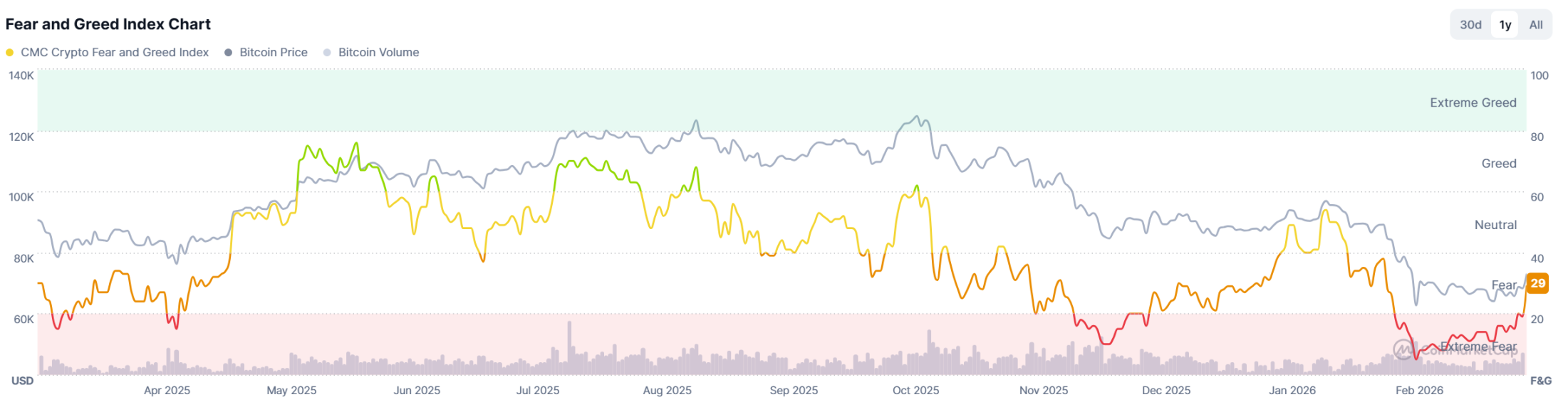
Recently, the White House officially submitted the nomination of Kevin Warsh to the Senate to serve as the Chairman of the Federal Reserve, and the U.S. Senate voted down a resolution to restrict Trump's military powers against Iran. These two significant political events quickly boosted global risk appetite. The market generally believes that Warsh, as a well-known economist, significantly enhances the continuity of Federal Reserve policy and market-friendly expectations. Meanwhile, the Senate's voting results effectively eased concerns about escalating geopolitical conflicts in the Middle East, avoiding the worst-case scenario.
Gold, as a safe-haven asset, has performed impressively, hovering around $5,150 to $5,300 per ounce. U.S. stocks related to the crypto sector saw broad gains, with MSTR rising by 10.37%, COIN by 14.57%, and CRCL by 5.63%. Additionally, according to Bitget market data, Japanese and Korean stock indices opened high; South Korea's KOSPI index rose by 565.69 points to 5654.72 points, an increase of 11.02%; and the Nikkei 225 index rose by 2319 points to 56564.54 points, an increase of 4.28%.
BTC Spot ETF Sees Continued Large Net Inflows Since Late February
Data shows that before the end of 2025 and before early February 2026, Bitcoin spot ETF data indicated occasional large net inflows but multiple instances of large net outflows.
Since Bitcoin hit an all-time high at the beginning of October last year, as of February 20, 2026, the cumulative holdings of U.S. Bitcoin spot ETFs experienced the largest reduction in this cycle, decreasing by approximately 100,300 BTC.
However, this trend began to change from February 20, showing multiple instances of large net inflows.
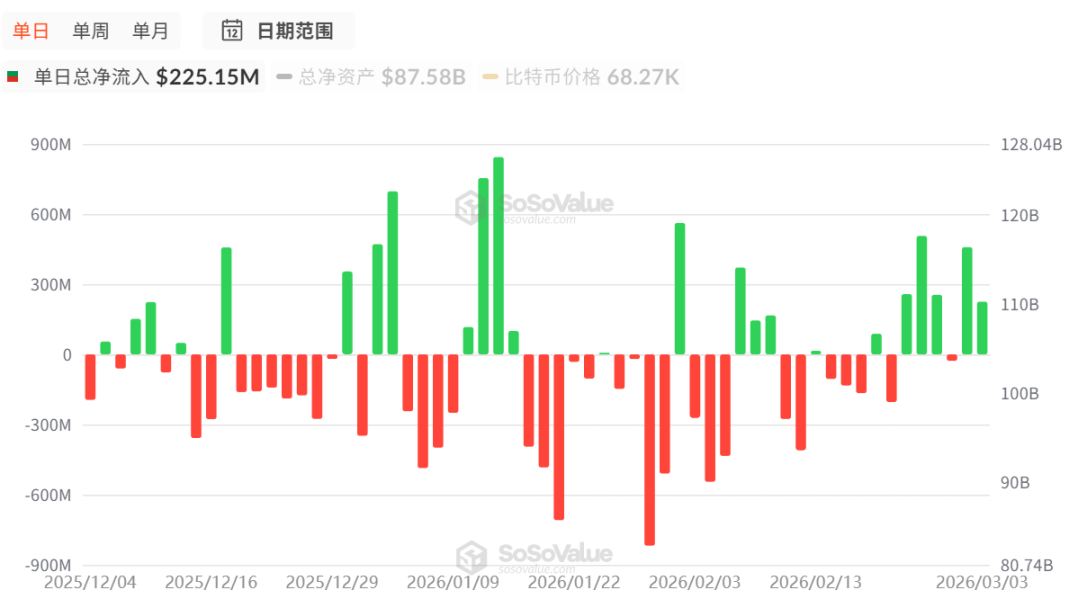
As of March 5, there were only 2 instances of net outflows, and the amounts were not significant. During this time, net inflows saw significant increases in single days, including $458 million and $506 million.
With incoming funds starting to warm up, it’s no surprise that the BTC price has begun to rise.
400,000 BTC Accumulated at $60,000 to $70,000, Selling Pressure is Easing
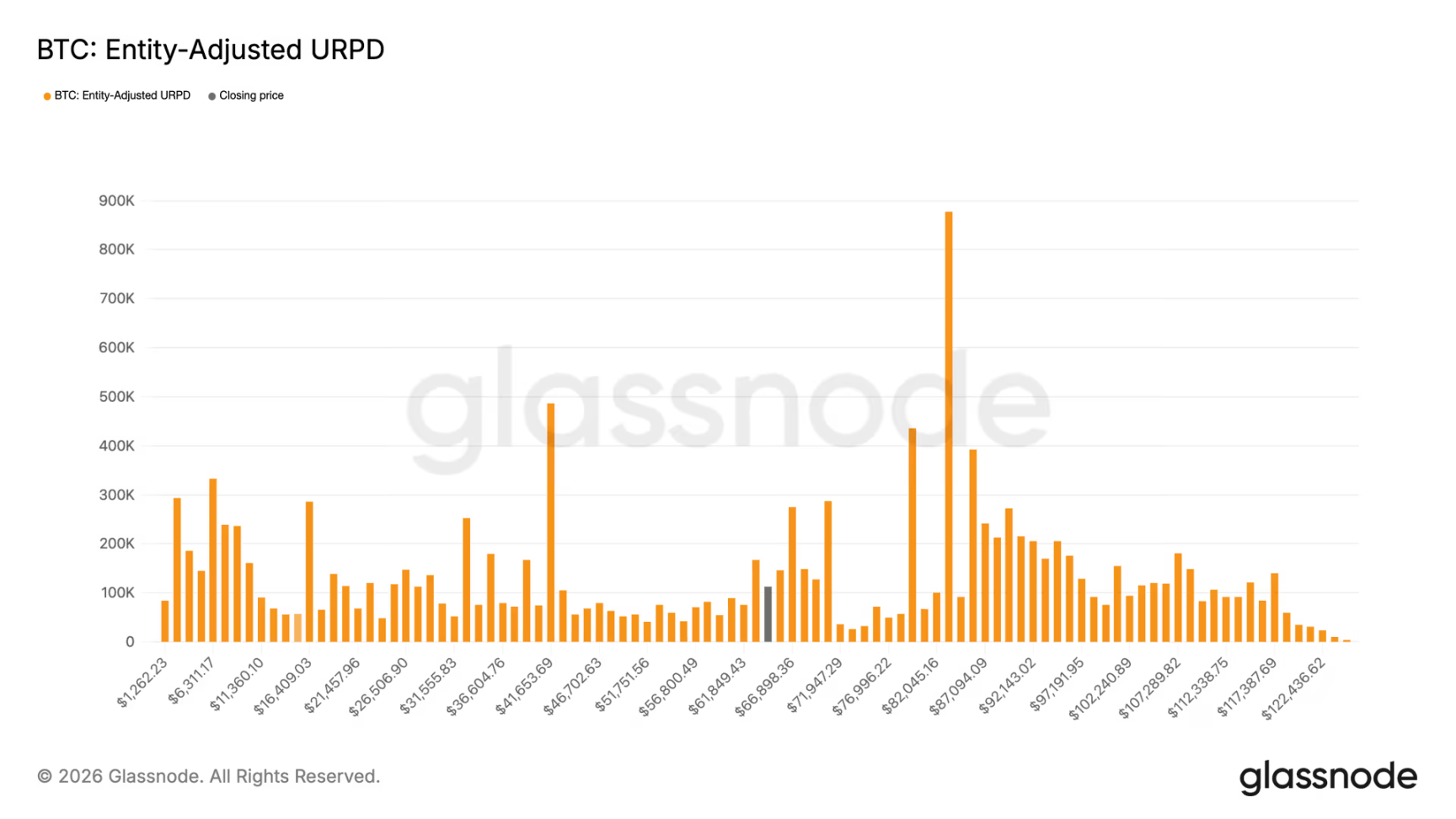
During Bitcoin’s correction in February of this year, data from Glassnode shows that during the significant pullback, there was considerable accumulation of chips in the $60,000 to $70,000 range, with over 400,000 BTC being absorbed by investors, indicating strong “buying the dip” behavior.
The supply of BTC in this price range has increased from about 997,000 coins on January 1 to approximately 1,430,000 coins currently, an increase of about 429,000 coins, a growth rate of 43%. Currently, over 8% of the circulating supply held outside of exchanges has a cost basis concentrated in this range, and a dense holding zone has already formed.
In addition, data from March 3 shows that after months of continuous net selling, the net position changes of long-term holders (LTH) are now trending towards moderation.
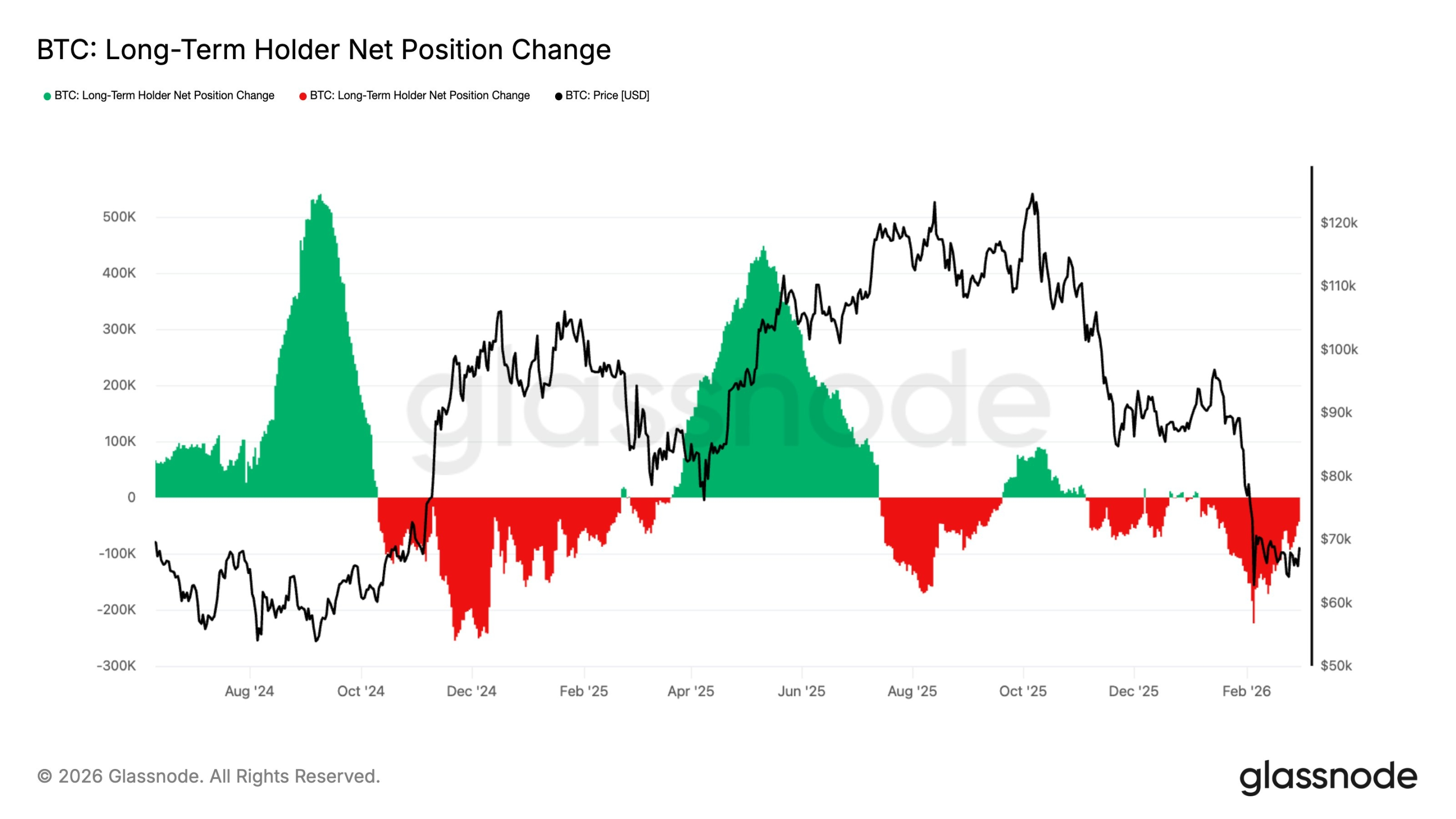
This indicates that as Bitcoin's price stabilizes, the selling pressure from experienced holders is easing. There is still resistance in terms of BTC supply, but the intensity of selling is decreasing.
Stablecoin Market Cap Remains High, Increasing by $1.737 Billion in the Past 7 Days
Stablecoin data remains one of the key indicators for observing market liquidity.
According to DefiLlama data, its total market cap currently remains at a high of $31.0848 billion. In the past 7 days, the total market cap of USDT increased by 0.03%, while USDC reached 1.84%.
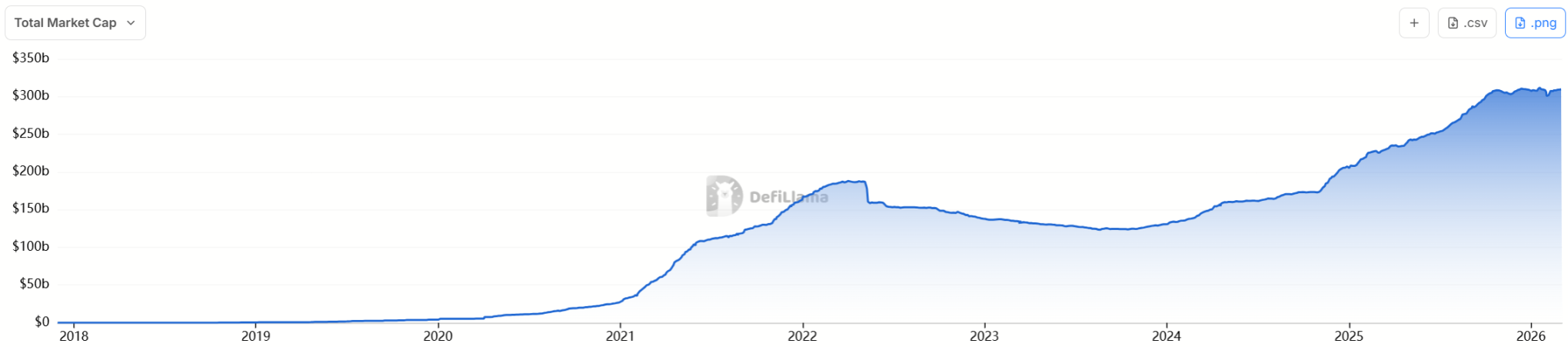
It’s worth noting that in the past month, USDC’s market cap increased by 8.6%, PYUSD increased by 16.7%, and U by 29.04%. USDG increased by 12.87%.
The high operation of stablecoins not only provides ample market liquidity but also reflects the ongoing capital inflow into the crypto ecosystem—trading volumes remain at trillion-dollar levels, serving as a bridge to build momentum for the next growth phase of assets like Bitcoin. Although there has not been explosive growth, stable supply itself is a manifestation of market maturity and confidence restoration.
Michael Saylor continues to increase his Bitcoin holdings through the company’s unlimited buy strategy, and his holdings have now exceeded 720,000 coins, with an average cost of around $76,000. He has repeatedly stated publicly: "We are in a stage similar to Apple’s early 'Valley of Despair,' where Bitcoin, as digital property and digital credit, will outperform traditional assets."
ARK Invest founder Cathie Wood pointed out in a report published at the beginning of February 2026 that the Bitcoin downturn cycle may be nearing its end. "The key to diversifying asset allocation is to introduce new assets that have low correlation with existing assets, and Bitcoin meets this criterion. The inclusion of low-correlation assets can enhance risk-adjusted returns in the long term. Therefore, Wood believes that institutions are indeed taking cryptocurrencies seriously. Previously, they may have hesitated due to the idea of a 'four-year cycle.' Regardless of whether there is a four-year cycle, the market has indeed experienced a significant decline and is now approaching what many technical analysts believe to be potential low points. Nearing the bottom, the market often experiences significant fluctuations. In hindsight, people often say: 'If only I had bought at that low point.' The V-shaped rebound has already been quite evident." Of course, this is not a commitment of any sort, but it seems like various factors are gradually aligning."
Tom Lee, chairman of the Ethereum treasury company BitMine, stated in an interview with CNBC, "No one wants to see the U.S. involved in conflict. But it must be pointed out that the market's performance has been much stronger than expected. I don’t think anyone can assert that we’ve hit the bottom now, but it looks like we’re building a bottom—bad news continues to emerge, yet the market can digest and remain stable. More importantly, I believe positions have been significantly reset. If we look back to last April, a simple signal was VIX rising above 40. It reached 80 last year, but this time it may not go that high. Another signal is: If panic news emerges again, gold continues to fall, while the stock market rises that day, that indicates the market has cleared out. I believe we are approaching that stage."
Tom Lee believes that March is a bottom formation period. The declines in software, Mag 7, and crypto assets have completed about 90%. They are outperforming the market, reflecting leadership. Even if global trade disruptions occur, you still need AI, and you still need Mag 7. The fundamentals of these companies remain strong. Investors need to remain patient and cautious, holding some cash. But I believe opportunities are arising.
免责声明:本文章仅代表作者个人观点,不代表本平台的立场和观点。本文章仅供信息分享,不构成对任何人的任何投资建议。用户与作者之间的任何争议,与本平台无关。如网页中刊载的文章或图片涉及侵权,请提供相关的权利证明和身份证明发送邮件到support@aicoin.com,本平台相关工作人员将会进行核查。


