Written by: Nancy, PANews
A dark horse has emerged in the open-source world. In just three months, OpenClaw has become the most popular and fastest-growing open-source project in history, becoming a new favorite among developers.
This wave of intelligent agents initiated by Peter Steinberger not only has placed him among the AI top-tier but has also won a large number of "lobster followers" globally. This hot lobster godfather, however, has shown a strong aversion to the cryptocurrency circle and has publicly criticized it multiple times. Such a stance undoubtedly brings more negative publicity to cryptocurrencies.
Topping GitHub star rankings, urgently avoiding association with crypto projects
There is no doubt that AI has become the golden narrative of collective migration of capital and talent. Its rapid rise has led many to see AI as the hope for revitalizing the cryptocurrency industry, creating new opportunities for many to seek investment or leverage the hype.
Especially with the recent popular OpenClaw. According to the latest data, OpenClaw's star count on GitHub has surpassed 250,000, surpassing Linux and React, making it one of the most popular open-source projects and setting a record for the fastest growth in open-source history.
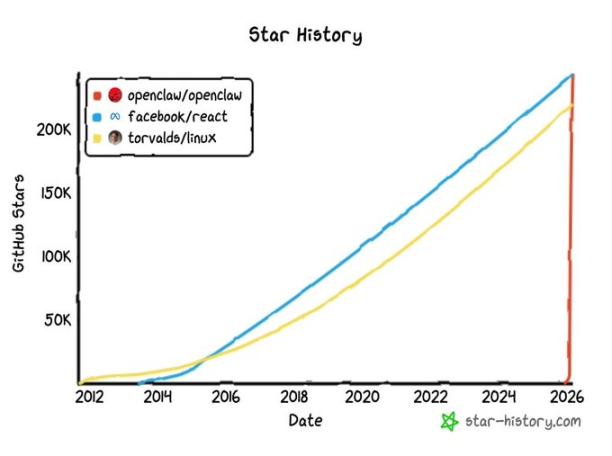
As "raising lobsters" has become a global trend, tutorials, monetization cases, and user experiences around OpenClaw have been constantly emerging, with even some people profiting from installing OpenClaw on-site. From independent developers to large companies to offline services, the "selling shovels" business of OpenClaw is exceptionally booming.
The cryptocurrency market naturally will not miss this hot spot. Recently, the AI project Venice on the Base chain has become the recommended model provider for OpenClaw and the only crypto-native project. With the popularity of top AI projects, the Venice token surged, briefly exceeding a market value of $900 million. This news quickly attracted the attention and sharing of crypto industry practitioners.

According to reports, Venice is a generative AI project focusing on privacy protection and no content censorship, integrating various open-source large models. It was founded in 2024 by Erik Voorhees, a crypto OG and founder of ShapeShift, and has recently gained attention due to the Agent privacy boom.
However, Steinberger clearly does not agree with such bundled hype. He immediately publicly clarified that "this is an oversight in previous documents, and we hope to maintain a neutral stance on this matter." At the same time, OpenClaw promptly deleted the relevant recommendation content.
In other words, OpenClaw's "avoidance" this time is not to deny or belittle the actual value and technical advantages of the Venice project but to proactively remove the "officially recommended" label that could lead to over-interpretation, to avoid unnecessary narrative hijacking and interest speculation. Especially as an open-source agent framework, with the founder having joined OpenAI, OpenClaw needs to maintain technological neutrality and avoid any suspicion of conflicts of interest.
Choosing to cut ties due to crypto "hustling", once considered abandoning the project
Unlike AI leaders such as OpenAI founder Sam Altman and xAI co-founder Musk, who have a positive or even open attitude towards crypto, Steinberger assumes a "no nuisance please" posture. This avoidance attitude inevitably causes discomfort in the crypto circle.
In fact, Steinberger, who has no interest in crypto, is very opposed to the "hustling" phenomenon in the crypto circle. Since last year, he has released dozens of public statements expressing strong dissatisfaction with the speculative culture of crypto, even stating "stay away from me."
Especially after OpenClaw became popular. In January of this year, OpenClaw's popularity surged, but it encountered a trademark dispute with Anthropic's AI model Claude due to its original name Clawdbot and received a cease-and-desist notice from a legal team. Subsequently, Steinberger went through two renamings, ultimately naming the project OpenClaw.
However, this renaming incident was seized and hyped by crypto speculators.
During the renaming process, there were snipers who quickly hijacked accounts through automated scripts, disguised themselves as official, and opportunistically issued fake tokens, such as CLAWD, among others. The market cap of some of these tokens once soared to millions of dollars, attracting large numbers of investors to participate.
In response to market speculation, Steinberger quickly stated that he would never issue tokens and emphasized that any projects issuing tokens in his name are scams. This move caused the prices of these tokens to plummet, resulting in heavy losses for many retail investors.
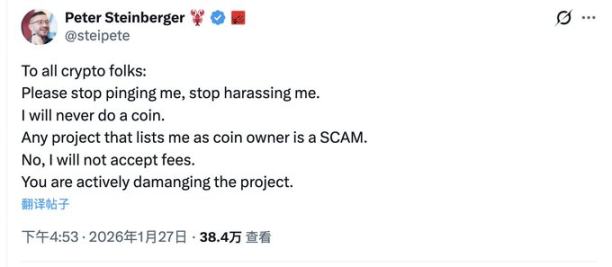
If this crypto farce only made Steinberger feel disgust, then the destruction of the community ecology enraged him.
As OpenClaw continues to gain popularity, a large number of crypto players have flooded into related communities, and some radicals have maliciously submitted code and sent insulting private messages, demanding Steinberger to claim transaction fees or to crypto-ify the project.
As a result, the official OpenClaw Discord server has begun to prohibit any mention of keywords like Bitcoin and Crypto, even neutral technical discussions are not exceptions; users have been removed for using Bitcoin block height as a benchmark for testing.
"I underestimated these people," Steinberger candidly pointed out in a recent interview, stating that there is a very special subculture in the crypto community; they rapidly tokenized anything that was trending. However, he has already achieved financial freedom economically and has no desire to support this (crypto) stuff. The noise from crypto has made it almost impossible for him to see any genuine project discussions; the related speculative hype is harming the project.
Because of the "harassment" from the crypto community, this genius developer confessed that he even once contemplated abandoning the entire project; he very much does not want the project to become a tool for crypto speculation.
Recently, Steinberger also publicly advised young people to "not waste time on cryptocurrencies," further exposing his dissatisfaction with the crypto industry.
This unintended confrontation between the open-source world and the crypto circle is not just a "self-defense" move of a popular project but also reflects the irreconcilable contradictions between technological purity and capital speculation in the current wave of AI.
免责声明:本文章仅代表作者个人观点,不代表本平台的立场和观点。本文章仅供信息分享,不构成对任何人的任何投资建议。用户与作者之间的任何争议,与本平台无关。如网页中刊载的文章或图片涉及侵权,请提供相关的权利证明和身份证明发送邮件到support@aicoin.com,本平台相关工作人员将会进行核查。


