On February 28, the US-led coalition launched "Operation Epic Fury" against Iran, conducting airstrikes on over 2,000 targets, resulting in the death of Supreme Leader Khamenei in the attacks.
This marks the largest geopolitical event in the Middle East in decades.
Global capital waited an entire weekend to validate one question: Is the narrative built over two years true? Is gold a hard asset in chaotic times? Is Bitcoin digital gold? Is the debasement trade a true proposition or just a narrative bubble?
The results are out.
Gold first rose to $5,400, then dropped over 4% along with stocks. Silver plummeted 8% in a single day. Bitcoin first fell, then fluctuated, ultimately returning to its original position. The dollar index rose by 1.1%.
Narrative Stress Test
Over the past two years, a nearly flawless narrative prevailed in the crypto and macro circles: US debt is out of control, the dollar is depreciating in the long term, and gold and BTC are hard assets that hedge against monetary dilution, both referred to as the "debasement trade." In 2025, the data supporting this narrative seemed rock solid—gold rose over 50% for the year, BTC reached a peak of $126,000, and the dollar index fell nearly 11%, marking the worst first half in 50 years. Ken Griffin of Citadel repeatedly mentioned this term in public, and BlackRock's BTC ETF assets under management approached $100 billion.
The core implicit assumption of this narrative is: when a real crisis occurs, people will leave the dollar and rush toward hard assets.
Last weekend, this assumption faced its first real intensity stress test.
On Monday, gold did rise initially—London gold hit a maximum of $5,418 intraday, nearly matching the historical high from the end of January. But then, as oil prices soared, inflation expectations reignited, and the market began to reprice the Federal Reserve's interest rate cut path, everything reversed. Gold closed down that day, and on Tuesday it further dropped over 4%, returning to the lows since February 20.
Silver fared worse. It broke through $96 on Monday, and on Tuesday it saw intraday declines nearing 8%.
The reasons are not complicated. Surging oil prices mean rising inflation expectations, and rising inflation expectations mean the Fed’s cutting room is narrowed, which means a stronger dollar—a direct adversary to gold and silver. Coupled with forced liquidations triggered by simultaneous sell-offs of risk assets, gold and silver became the most liquid and easily crushed positions "when they should have risen."
This is not the first time. When the Russia-Ukraine war began in 2022, BTC did not serve as a safe haven and fell alongside the Nasdaq; gold initially rose, only to be crushed back down by profit-taking—similar scripts, greater intensity.
BTC's situation is even more awkward. On the weekend when the war broke out, the crypto market was the only market still trading. BTC initially dropped from around $66,000 to below $64,000, then quickly rebounded, nearly filling the gap before the traditional markets opened on Monday. On the surface, this appeared as "resilience." But the reality is: institutional money had not yet entered the market, relying instead on retail and arbitrage traders searching for direction amidst the fluctuations. As the entire market continued to decline on Tuesday, BTC faced further pressure, oscillating around $68,000, showing neither the rise expected of "digital gold" nor the sharp declines expected of "risk assets"—it simply... hovered there.
The Strait of Hormuz, Chips, and a Korean Holiday
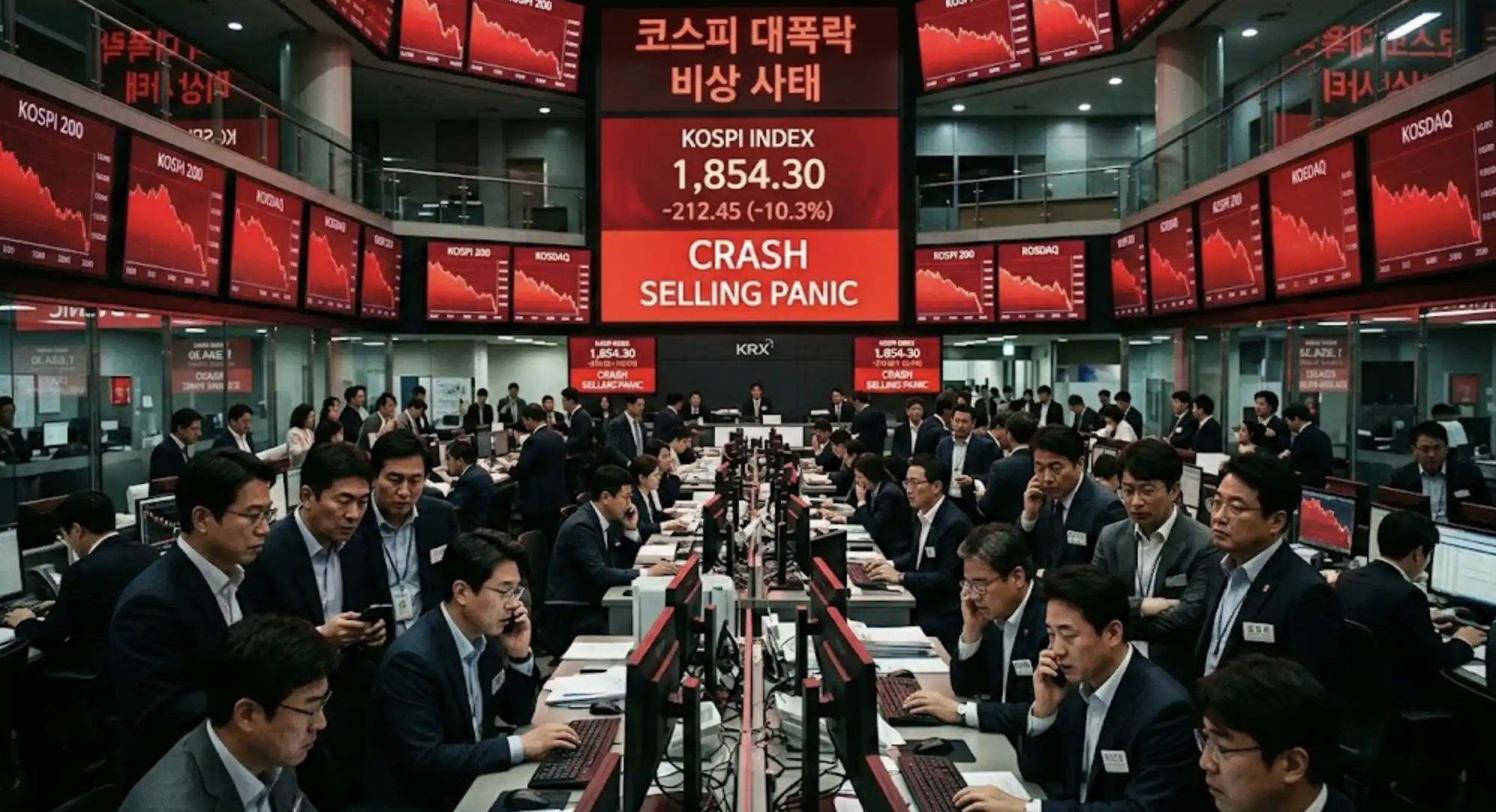
The stampede in Seoul came particularly ferociously, for a structural reason: Monday was Independence Day, and the entire country of South Korea was on holiday, with the exchanges closed.
Fear accumulated over the weekend with no outlet. At 9 AM Tuesday, all the sell-offs that couldn’t be executed during the three-day holiday unleashed at the same moment. The KOSPI opened to trigger a circuit breaker alert, ultimately closing down 7.24%, evaporating approximately 37.7 trillion won in market value, equivalent to about $25.7 billion.
This was the largest single-day decline since the yen carry trade crisis in August 2024. At that time, the KOSPI fell 8.77% in a single day, triggered by collapsing US non-farm data coupled with an unexpected interest rate hike from the Bank of Japan, representing a systematic unbinding at the financial leverage level. This time, the direct trigger was geopolitical—but an equally tight string lay behind it, albeit of different material.
Over the past year and a half, South Korean retail investors have experienced an epic level of FOMO. The KOSPI soared from 2,400 points at the end of 2024 to over 6,000 points by the end of February this year, achieving an increase of nearly 150% over 14 months. Some brokerages raised their target prices to 7,000, even 8,000. The number of accounts opened exceeded 100 million in January this year—an astonishing figure for a country with a population of 50 million, resulting in one million stock accounts. The South Korean government even included "KOSPI 5000" in its political agenda as a national policy goal.
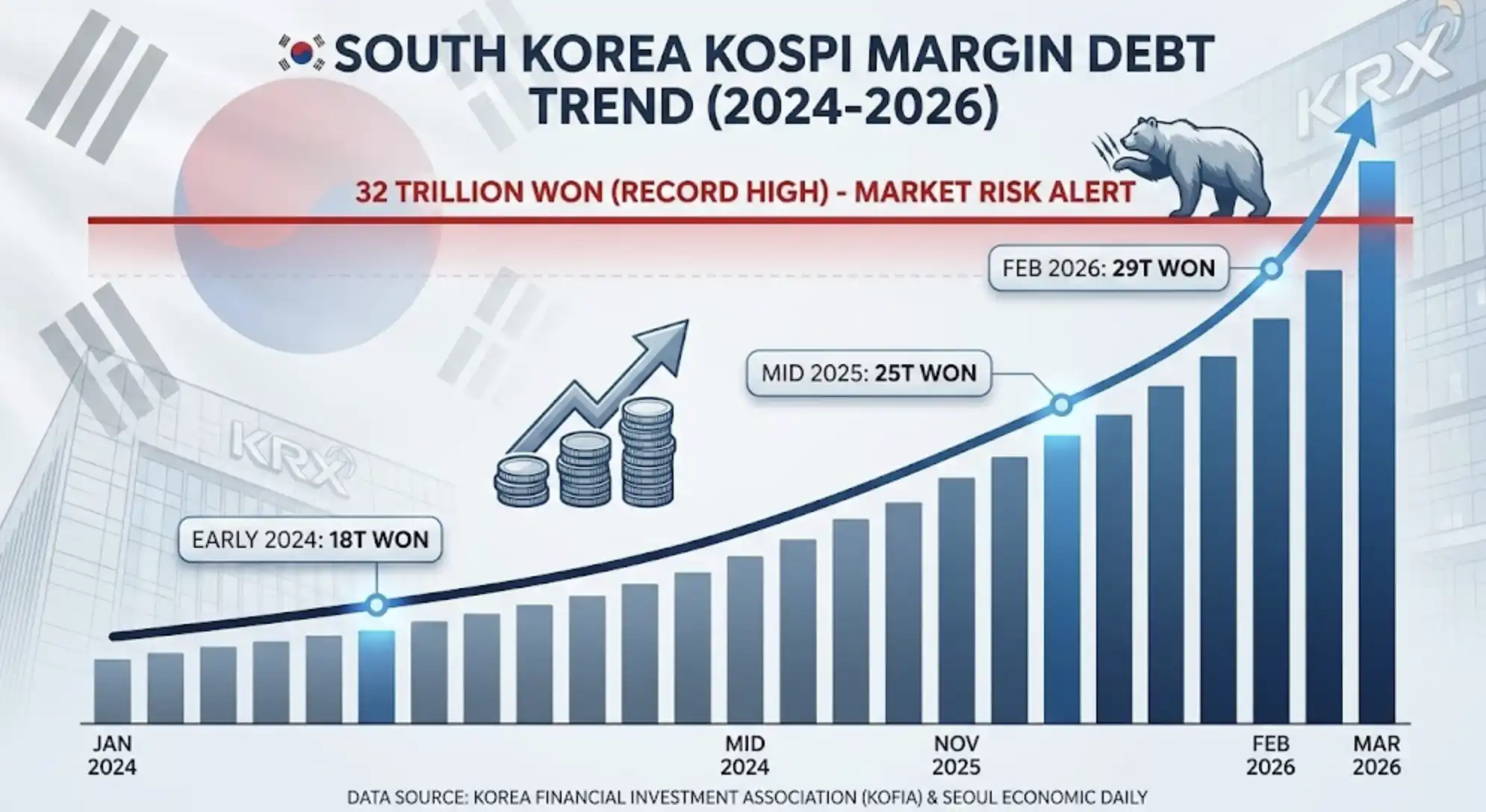
At the same time, the margin financing balance also expanded synchronously. Prior to the incident, the balance of margin loans in the Korean stock market exceeded 32 trillion won, approximately $22.4 billion, the highest level since 2021. There was an additional 26 trillion won in stock pledge loans, totaling nearly $37 billion. The market panic index VKOSPI had already skyrocketed to 54 by the end of February, more than double the "normal" level—while the entire market was setting new highs, the fear gauge had already entered the extreme fear zone.
This structure, when confronted with an acute shock, results in textbook liquidity squeezes.
Falling stock prices trigger margin warnings, brokerages initiate forced liquidations, which further depress stock prices, and the falling prices trigger more margin warnings—a self-reinforcing feedback loop. Foreign capital net sold over 51.7 trillion won that day, approximately $3.5 billion, marking the largest single-day net sell-off of the year. Retail investors, on the other hand, did the opposite: during the stampede, they bought the dip, continuing to increase positions in leveraged ETFs, betting on a rebound.
Other Asian markets were similarly pressured. The Nikkei 225 fell 3% that day, with Toyota down 5.5% and Sony down 4.3%. Hong Kong’s Hang Seng dropped 2.1%, leading declines in the Asia-Pacific region. The Thai stock exchange announced a suspension of short-selling for most securities. The entire Asia-Pacific MSCI index fell by about 2%.
But the most fundamental structural fragility remains in Seoul.
This decline didn’t just impact stocks. The KOSPI, often narrated as the "best proxy for the AI supercycle," also fell. Samsung Electronics dropped nearly 10%, breaking below the critical psychological support level of 200,000 won. SK Hynix fell 11.5%. These two companies together contributed approximately 40% of the KOSPI’s market value and are also two of the most critical nodes in the global AI chip supply chain—Samsung is the largest manufacturer of DRAM and NAND flash globally, while SK Hynix is a core supplier of HBM high bandwidth memory, most of which is used in Nvidia AI GPUs.
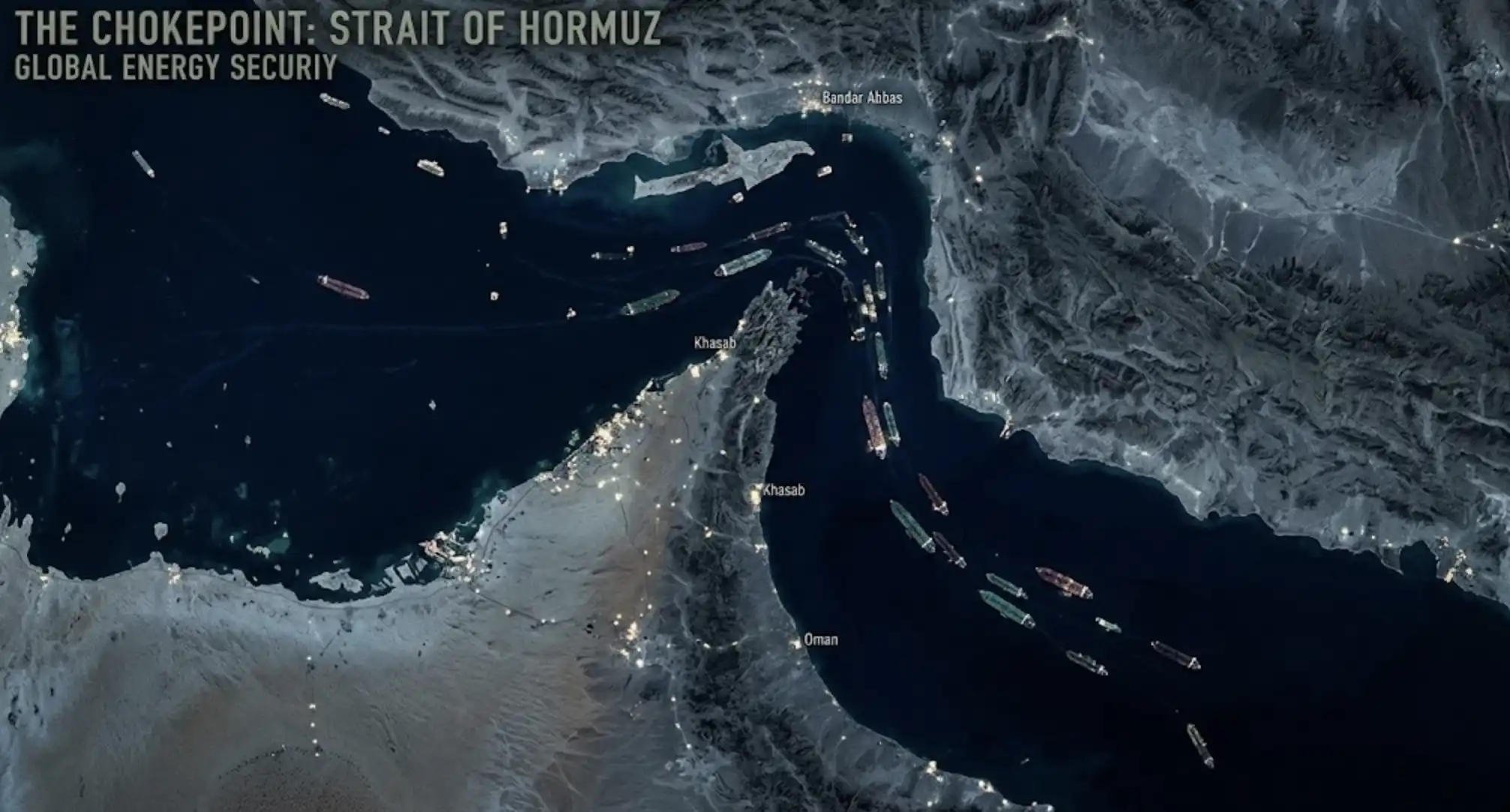
All these factories are in South Korea. The country imports 2.76 million barrels of oil daily, most of which comes from the Persian Gulf via the Strait of Hormuz.
Iran announced plans to close the Strait of Hormuz but later retracted that statement. However, insurance companies have unilaterally voted: war insurance has stopped underwriting, and shipping companies ceased scheduling. An unofficial blockade is effectively in place.
While the market was in turmoil, another message quietly surfaced: Samsung's wafer fab in Taylor, Texas, has again delayed its production timeline, pushed back from 2026 to 2027. This factory is seen as a core asset in America’s "chip supply chain" strategy, built in the desert of Texas—but the oil it needs still comes from the Persian Gulf.
The Dollar Won, Everyone Lost
Now comes the most uncomfortable conclusion.
Throughout this cycle, "de-dollarization" has been one of the most mainstream macro narratives. The dollar’s share of global reserves has fallen below 47%, central banks in various countries are accumulating gold at a record pace, BRICS has established the mBridge cross-border settlement platform, and the scale of on-chain stablecoins has expanded from $205 billion to over $300 billion. Almost everyone in the industry is betting in some way: the golden era of the dollar is over, and the next era belongs to multipolarity, hard assets, and decentralization.
Then the war broke out, and the dollar index rose by 1.1%, marking the largest single-day increase since May of last year.
On this day, there was a widespread sell-off: stocks fell, bonds fell, gold fell, silver fell, and commodities fell. The flow only had one direction: the dollar.
This is the essence of liquidity squeeze. It’s not that the dollar has improved; it’s that the dollar is the asset with the deepest liquidity in the global financial system. In acute crises, when everyone needs to exit simultaneously, the dollar is the broadest exit. Liquidations require dollars, margin calls require dollars, and the first step in escaping cross-border assets also requires dollars. No other option has this scale.
Iran provided the clearest annotation to this logic.
The Iranian rial has depreciated over 30% since the beginning of the year. Nobitex is Iran's largest crypto exchange, handling over 87% of the nation's on-chain crypto activities. Within minutes of the airstrikes beginning, Nobitex's withdrawal volume surged by 700% (data from Elliptic). Chainalysis traced the flow of funds: large amounts flowed out, ultimately landing in foreign exchanges historically accepting inflows from Iran, continuing to be exchanged for USDT and USDC.
In the true现场 of a currency crisis, what people are doing through crypto networks is escaping into dollars.
This is not to say that the debasement trade is a false proposition. The US's debt issue, inflation problem, and the long-term erosion of the dollar's purchasing power—these structural pressures are real. The logic of gold outperforming in the long run was not overturned by this stress test.
But this time it taught us one thing: the debasement trade is a slow variable narrative; it requires the scale of time to hold. Geopolitical shocks are acute variables; they have only one measure—today.
When two time frames are placed at the same moment, slow variables yield.
The dollar won. In the next crisis, it's highly probable the dollar will win again. Until one day, it doesn’t win—but that day is unlikely to be as dramatically staged as today.

免责声明:本文章仅代表作者个人观点,不代表本平台的立场和观点。本文章仅供信息分享,不构成对任何人的任何投资建议。用户与作者之间的任何争议,与本平台无关。如网页中刊载的文章或图片涉及侵权,请提供相关的权利证明和身份证明发送邮件到support@aicoin.com,本平台相关工作人员将会进行核查。


