Written by: Liang Yu
Edited by: Zhao Yidan
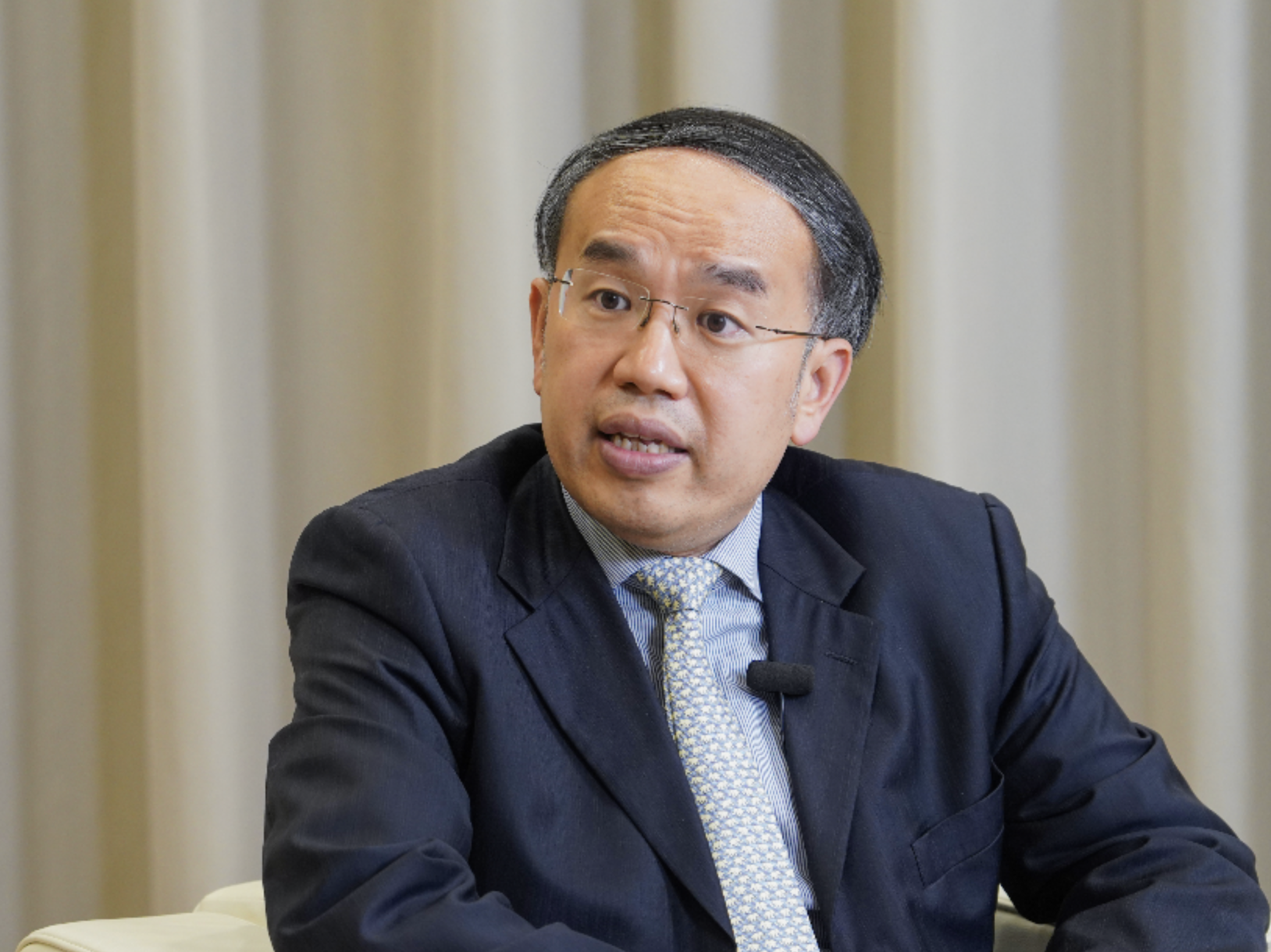
In early March 2026, the Secretary for Financial Services and the Treasury of Hong Kong, Xu Zhengyu, announced a series of tax incentive optimization measures for funds, family investment control tools, and accompanying rights during a meeting of the Legislative Council's Financial Affairs Committee. According to reports from Zhitong Finance, this optimization covers six specific measures, among which the most noteworthy is the expansion of the types of eligible investments for funds and family-controlled tools—adding all real estate located outside of Hong Kong, carbon emission derivatives, insurance-linked securities, private debt investments, digital assets, precious metals, and specific commodities to the scope of tax-exempt investments.
On the surface, this appears to be a routine adjustment of tax incentive policies. However, if we observe this policy alongside Hong Kong's recent continuous actions in the fields of gold clearing systems, stablecoin licensing, and the implementation of the RWA project, a grander picture begins to emerge: Hong Kong is systematically building a bi-directional closed loop from "asset digitization" to "digital assetization," and at its core lies the most imaginative track in global financial innovation—tokenization of real-world assets.
This article will dissect the deeper logic behind this policy adjustment from the perspective of the RWA Research Institute and explore how Hong Kong quietly lays a high-speed road for RWA compliance by placing digital assets alongside traditional alternative investments.
1. What exactly has changed in the new policy? The deeper meaning behind a list
To understand the far-reaching significance of this policy adjustment, it is essential to clarify what it has changed.
According to the optimization measures announced by Xu Zhengyu, the core contents of this revision include six aspects: expanding fund definitions to include retirement funds, donation funds, and specific single investor funds; expanding the types of eligible investments for funds and family-controlled tools; abolishing the 5% threshold for accompanying transactions; relaxing the tax exemption treatment for specific purpose entities; easing the anti-avoidance provisions in the unified fund tax exemption system; and optimizing the tax relief arrangements for accompanying rights.
Among these, the most eye-catching is undoubtedly the second point—expansion of eligible investment types. The new investment scope explicitly includes real estate outside of Hong Kong, carbon emission derivatives/carbon emission limits and carbon credits, insurance-linked securities, equity interests in non-corporate entities, loans (including private debt investments), digital assets, precious metals, and specific commodities.
At first glance, this is merely an additional investment target list. However, delving into its inherent logic raises a key question: why are these seemingly unrelated asset classes combined?
The answer may lie in the fact that this list precisely covers the two core asset types of RWA tokenization. One category is traditional "real-world assets"—real estate, private debt, precious metals, and commodities, which have physical forms, predictable cash flows, and mature valuation models, but face long-standing pain points like insufficient liquidity, high investment thresholds, and complex ownership transfers. The other category consists of digital assets—they inherently possess characteristics of being divisible, programmable, and globally circulating but have long been outside traditional financial regulatory frameworks, making it difficult to gain trust endorsements from mainstream institutional funds.
By including these two asset classes in the same tax incentive framework, a clear regulatory signal is being conveyed: Hong Kong is attempting to understand and embrace digital assets using the prudent framework governing traditional assets while also leveraging the technological advantages of digital assets to activate the liquidity potential of traditional assets. This represents a bi-directional "breaking of walls."
According to Xu Zhengyu's explanation, this optimization measure complements the government's policies in related fields—such as promoting carbon trading, digital assets, and trade in precious metals and commodities. In other words, this is not an isolated tax policy adjustment but part of Hong Kong's strategy to build a multi-tiered financial center.
Notably, this optimization also abolished the previous 5% threshold for accompanying transactions, providing greater flexibility for funds, family-controlled tools, and their specific purpose entities to earn profits through eligible investments. As long as profits are earned from eligible investments and meet specified conditions, they will be exempt from profits tax. This means that in the future, interest income, rental income, and other earnings obtained by funds through holding RWA-related assets may enjoy tax incentives, significantly enhancing institutions' willingness to allocate such assets.
Alongside these measures, Hong Kong has also stipulated substantive activity requirements for the unified fund tax exemption system—an average of no less than two qualified employees and a total annual operating expense in Hong Kong of no less than HKD 2 million. This threshold aims to ensure that funds benefiting from tax incentives have a genuine business presence in Hong Kong, rather than being mere "mailbox companies." For institutions looking to establish RWA business in Hong Kong, this implies the need to build substantive teams and operational capabilities locally, which is beneficial for the healthy development of the industry in the long run.
2. From approved cases to a hundred billion market, Hong Kong's RWA has started running
The establishment of the policy framework is just the first step. What truly gives this tax system optimization practical significance is Hong Kong's accumulated experience in the implementation of RWA and the continuously expanding market demand over the past year.
Just before this policy announcement, Hong Kong welcomed the formal release of its first real estate RWA project. Two RWA tokenization products from DeLin Holdings Group were recently approved by the Hong Kong Securities and Futures Commission. Specifically, this involves DeLin Securities distributing RWA tokens and DeLin Digital Family Office tokenizing fund equity under its management. The two tokens to be issued represent a limited partnership fund holding the DeLin Building in Central Hong Kong and a limited partnership fund investing in private equity projects.
The DeLin Building is located at 92-96 Wellington Street, the core business area of Central Hong Kong, about five minutes' walk from the International Finance Centre and about seven minutes from the Land Tower. DeLin Holdings purchased all units and naming rights for a total of over HKD 280 million in 2023. Tokenizing the ownership interests of such an actual commercial real estate not only enhances the liquidity and trading efficiency of the asset but also provides a replicable compliance model for the integration of traditional commercial real estate and digital finance.
As global financial markets and institutional investors accelerate their embrace of real-world assets mirrored on-chain, tokenization is becoming an important bridge connecting traditional finance and decentralized finance. The Hong Kong Special Administrative Region, with its clear, robust, and comprehensive legal, regulatory, and policy framework, is rising as a global digital asset hub and a super connector between quality assets and on-chain capital.
Market-level data also corroborates this trend. According to data from CryptoRank.io cited by Cointelegraph, the total locked value of tokenized real-world assets has reached USD 21 billion. McKinsey estimates that the market for tokenized assets could reach USD 2 trillion to USD 4 trillion in the future. In terms of user scale, the number of RWA holders has experienced about tenfold growth over the past year, currently nearing 800,000 users. Among them, public stock RWA holders number 294,000, while commodity holders number 206,000, with these two categories making up the majority of RWA participants. This data reveals an important trend: standardized, high-liquidity asset types are becoming the main force in the expansion of the RWA market.
The ecosystem of family offices in Hong Kong is also rapidly expanding. Market research estimates that a single family office in Hong Kong employs nearly 10,000 people and generates economic benefits of nearly HKD 13 billion annually. The Hong Kong government's goal is to have at least 220 family offices newly established or expanded in Hong Kong over the next three years. In addition, according to Xu Zhengyu, the number of applications for the new capital investor entry program approached 3,200 by the end of last month, with all applications expected to bring in about HKD 95 billion in investment. These family offices and ultra-high-net-worth investors are natural target customers for RWA products—they are familiar with the allocation logic of traditional assets while being open to the application of new technologies.
3. The bi-directional pursuit of money and assets, a closed loop is forming
If we consider the aforementioned policies and cases together, a more imaginative picture begins to emerge: Hong Kong is building an RWA ecosystem closed loop of "asset on-chain" and "funds into the real."
The so-called "asset on-chain" refers to the process of tokenizing traditional forms of real-world assets—whether office buildings in Central Hong Kong, private credit assets in London, or gold from mines in Africa—through a compliant tokenization process, transforming them into digital tokens that can be divided, traded, and circulated on the blockchain. The core value of this process lies in lowering investment thresholds, enhancing liquidity, achieving 24-hour tradability, and ensuring transparent information.
Some analysts point out that large financial institutions' enthusiasm for RWA layouts is heating up, and the demand is highly consistent—there is a strong willingness to explore RWA for standardized assets like gold, foreign exchange, stocks, and high-rated bonds. These asset types possess clear rights confirmation, mature trading rules, and high market recognition, aligning closely with regulated institutions' risk preferences and large-scale operational needs. Tokenizing these standardized assets can leverage traditional finance's mature systems to reduce the costs of asset verification and cross-border compliance while fully utilizing blockchain technology's strengths in real-time net value accounting, enhanced trading efficiency, and cross-domain circulation.
As standardized assets become the mainstream layout direction, the risk preferences of compliant on-chain ecosystems are gradually upgrading. Some mature compliant on-chain ecosystems are actively exploring high-risk, high-return asset types, with industrial assets, traditional non-standard assets, and even early-stage projects not yet listed gradually entering the layout vision of compliant institutions. The RWA of these assets can enrich the supply structure of on-chain assets and effectively address the industry pain points of opacity in traditional private equity asset management data, delayed cash flow monitoring, and untimely valuation adjustments through transparent data on-chain.
"Funds into the real" represents the other half of this closed loop. The tax optimization allows funds to invest in digital assets, meaning that in the future, compliant fund capital can directly purchase digital tokens representing ownership of real-world assets. This is particularly important for Hong Kong's rapidly developing gold market.
According to 21st Century Business Herald, the Hong Kong gold market is set to witness a key infrastructure breakthrough in 2026—the gold central clearing system will begin trial operations within the year and has signed a cooperation agreement with the Shanghai Gold Exchange. On this basis, Hong Kong is promoting its upgrade to an international gold trading center through tax incentives, assisting in the formation of industry associations, and establishing talent training frameworks. The Secretary for Financial Services and the Treasury, Xu Zhengyu, emphasized, "Establishing a gold central clearing system is a concrete measure for the Hong Kong government to consolidate and enhance its position as an international financial center, which will bring new financial growth points to Hong Kong."
Imagine such a scenario: a family office established in Hong Kong purchases a digital token representing gold output from a South African mine through a compliant digital asset trading platform. This token is backed by physical gold stored in a vault recognized by the London Bullion Market Association, with clear traceable ownership, real-time transaction settlements completed on the blockchain, enjoying tax benefits under Hong Kong's favorable treatment. This is indeed the reality of "funds into the real."
In the carbon trading sector, a similar logic applies. Hong Kong is actively promoting a carbon trading market, and the inclusion of carbon emission rights derivatives/carbon limits and carbon credits in the scope of eligible investments means that funds can participate in global carbon market pricing and trading by holding carbon credit tokens.
Research reports indicate that with the issuance of the first batch of licenses this year, the introduction of digital asset policy regulations, and the launch of digital asset platforms, digital assets may gradually become an important part of mainstream financial infrastructure under compliance premises. Hong Kong's policy deployment regarding digital assets in the 2026 Budget has clarified the timetable for subsequent regulatory implementation, infrastructure construction, and digital asset-related legislation, marking a systematic acceleration of Hong Kong's planning under the "Policy Declaration 2.0."
4. Hong Kong's next step: becoming a connector for global assets
Placing Hong Kong's policies within the global competitive landscape reveals increasingly clear strategic intentions.
A research report by China Galaxy Securities establishes a "Six-Dimensional RWA Policy Research Framework," categorizing global RWA policy regulation into two paths: "strong regulation and safety first" versus "innovation-driven and pilot-first," through examining the regulatory arrangements for tokenizing physical assets in different countries and regions. Countries like the United States, the United Kingdom, and Japan continue to uphold traditional financial regulatory thinking, maintaining high institutional thresholds in rights confirmation, licensing, and trading circulation, emphasizing a "safety first" policy orientation. In contrast, Singapore, the UAE, and Korea focus on regulatory sandboxes, optimization of access mechanisms, and tax-friendly policies, reflecting an "innovation-driven" regulatory orientation.
Hong Kong's positioning is relatively centrist—supporting innovation in tax systems, rights confirmation, and stablecoin paths but maintaining high levels of control over licensing thresholds and circulation restrictions, embodying a "open + strict admission" compromise model. The advantage of this model lies in its ability to obtain institutional investors' trust through a clear regulatory framework while attracting innovative capital clusters through flexible tax designs.
However, Hong Kong has a unique advantage that other competitors find hard to replicate—its deep linkage with the mainland market.
In February 2026, the People's Bank of China and eight other departments jointly issued a notice on "further preventing and handling risks related to virtual currencies," and the China Securities Regulatory Commission published regulatory guidelines on "domestic assets overseas issuing asset-backed securities tokens." These two documents first clarified the official definition of RWA tokenization within the mainland context, namely, "the activity of using cryptographic technologies and distributed ledgers or similar technologies to transform ownership, income rights, and other rights into tokens (or rights with token characteristics) and to issue and trade them."
More importantly, the guidelines reserve a compliance pathway for domestic entities to engage in real-world asset tokenization activities overseas. Within the industry considered as the background of the "new RWA regulations," there is a common expectation that related projects approved in the mainland may conduct RWA tokenization businesses in Hong Kong. This means that the massive real estate stock, trade receivables, and infrastructure projects in the Guangdong-Hong Kong-Macao Greater Bay Area may achieve asset tokenization through Hong Kong's compliance channel, tapping into global liquidity.
Returning to this tax optimization measure, Xu Zhengyu stated in his remarks that he believes the proposed optimization measures will attract more funds and family offices to establish and operate in Hong Kong, creating new business opportunities for Hong Kong's asset and wealth management industry, and consolidating Hong Kong's position as a leading asset and wealth management hub, especially helping to further attract private debt investment activities in the region and complementing Hong Kong's developments in other fields, such as digital assets and the trading of precious metals and commodities.
This statement clarifies the ultimate aim of the policy—not merely a competition for tax incentives but through tax leadership, to transform Hong Kong into a "super connector for RWA tokenization" linking global liquidity and physical assets. In this connector, sovereign wealth funds from the Middle East, family offices from Europe and America, and institutional investors from the mainland can allocate digital shares of global real-world assets through compliant channels; while real estate, infrastructure, and commodities scattered around the world can achieve tokenization issuance through Hong Kong's regulatory framework, reaching a wider range of capital sources.
When your family office can conveniently allocate digital shares of an office building in London or a gold token from a mining site in Africa as easily as purchasing stocks, how will the underlying logic of asset allocation change? Hong Kong has already pressed the start button for this future. For practitioners, the focus now should not be on "whether they will come," but rather on "how to participate compliantly."
(Risk Warning: This article is based on public policy information and industry reports for analysis and trend discussions, and does not constitute any investment advice. Digital assets and RWA investments carry high risks, and market participants must strictly comply with relevant laws and regulations, making decisions cautiously based on their risk tolerance. Specific investment operations should be based on formal guidelines released subsequently by regulatory bodies like the Hong Kong Monetary Authority and the Securities and Futures Commission.)
References:
1. Zhitong Finance. (March 2, 2026). Xu Zhengyu: Hong Kong plans to launch six tax optimization measures to improve the attractiveness and competitiveness of its tax incentives. Investing.com.
2. Jinwu Finance. (February 26, 2026). DeLin Holdings' (01709.HK) RWA tokenization plan received no objection from the Hong Kong Securities and Futures Commission, promoting the tokenization of the DeLin Building and Animoca Brands LPF. Securities Star.
3. Guo Congcong, Yu Jixin. (February 28, 2026). Two significant financial initiatives in Hong Kong! Competing for gold pricing rights, stablecoin licensing underway. 21st Century Business Herald (via Sina Finance).
4. Jinse Finance. (January 22, 2026). Data: Tokenized RWA TVL has reached USD 21 billion, with US Treasury accounting for 42.4%. Mitrade.
5. Jiao Jian. (February 28, 2026). Hong Kong launches its first real estate RWA project. Caijing Magazine (via Caijing.com).
免责声明:本文章仅代表作者个人观点,不代表本平台的立场和观点。本文章仅供信息分享,不构成对任何人的任何投资建议。用户与作者之间的任何争议,与本平台无关。如网页中刊载的文章或图片涉及侵权,请提供相关的权利证明和身份证明发送邮件到support@aicoin.com,本平台相关工作人员将会进行核查。