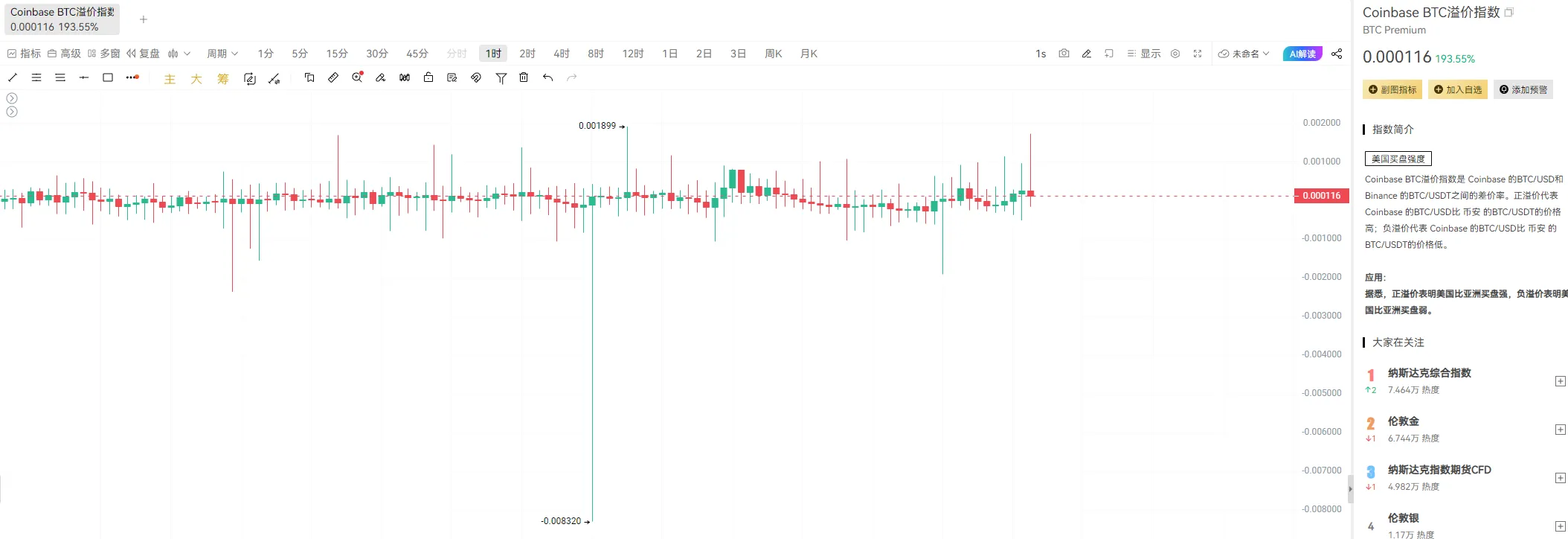
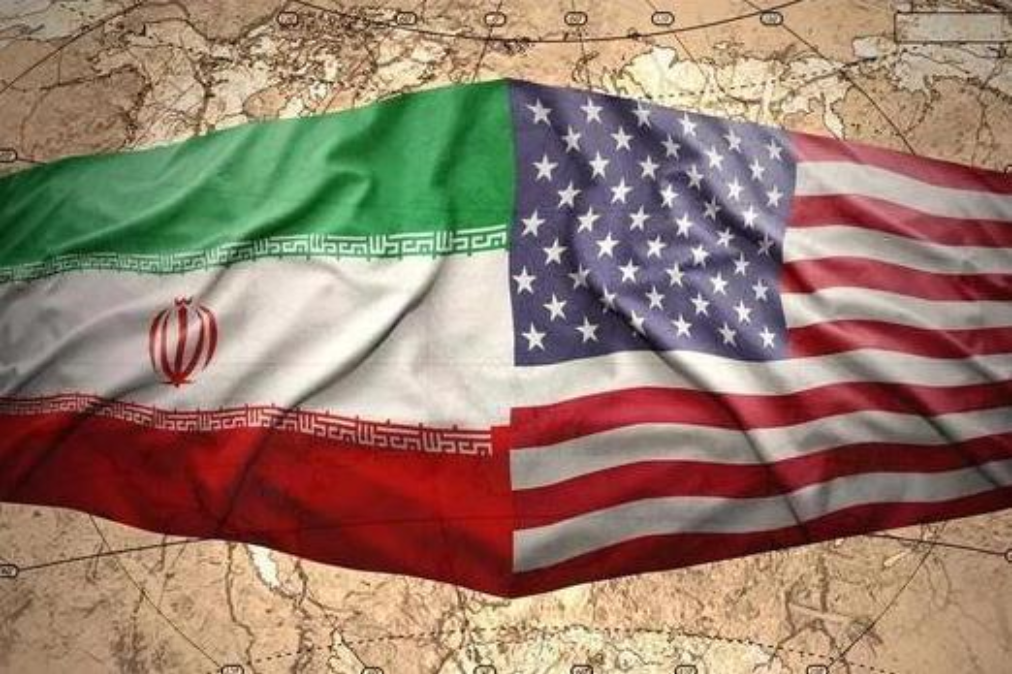
As the night sky of Tehran was torn apart by anti-aircraft fire and oil tankers in the Strait of Hormuz fell into flames, global financial markets experienced a heart-stopping "stress test" during the past weekend. On February 28, the large-scale airstrikes initiated by the US and Israel against Iran not only claimed the life of Iran's Supreme Leader Khamenei but also instantly ignited a already fragile global geopolitical fuse.
As the conflict entered its sixth day, the situation not only showed no signs of calming but instead exhibited a dangerous trend of prolongation and expansion. US President Trump has made it clear that military action "could extend well beyond four to five weeks." Behind the smoke of this "new Middle East war," a core question relevant to the wallets of global investors is surfacing: What will the Federal Reserve do when the US once again becomes mired in war? And can Bitcoin, referred to as "digital gold," rise from the ashes in this chaotic era?
1. The Resurgence of War: From "Decapitation Strike" to Long-Term Attrition
● As of March 3, the state of the conflict has far exceeded the initial "limited strikes." The Israeli military has announced the mobilization of about 110,000 reservists and has unleashed 2,500 munitions on Iranian targets. Iran has vowed to retaliate, with its Islamic Revolutionary Guards not only using "Khoramshahr-4" ballistic missiles to strike targets within Israel but also announcing the closure of the global energy choke point— the Strait of Hormuz, warning that they would attack any ships attempting to pass through.
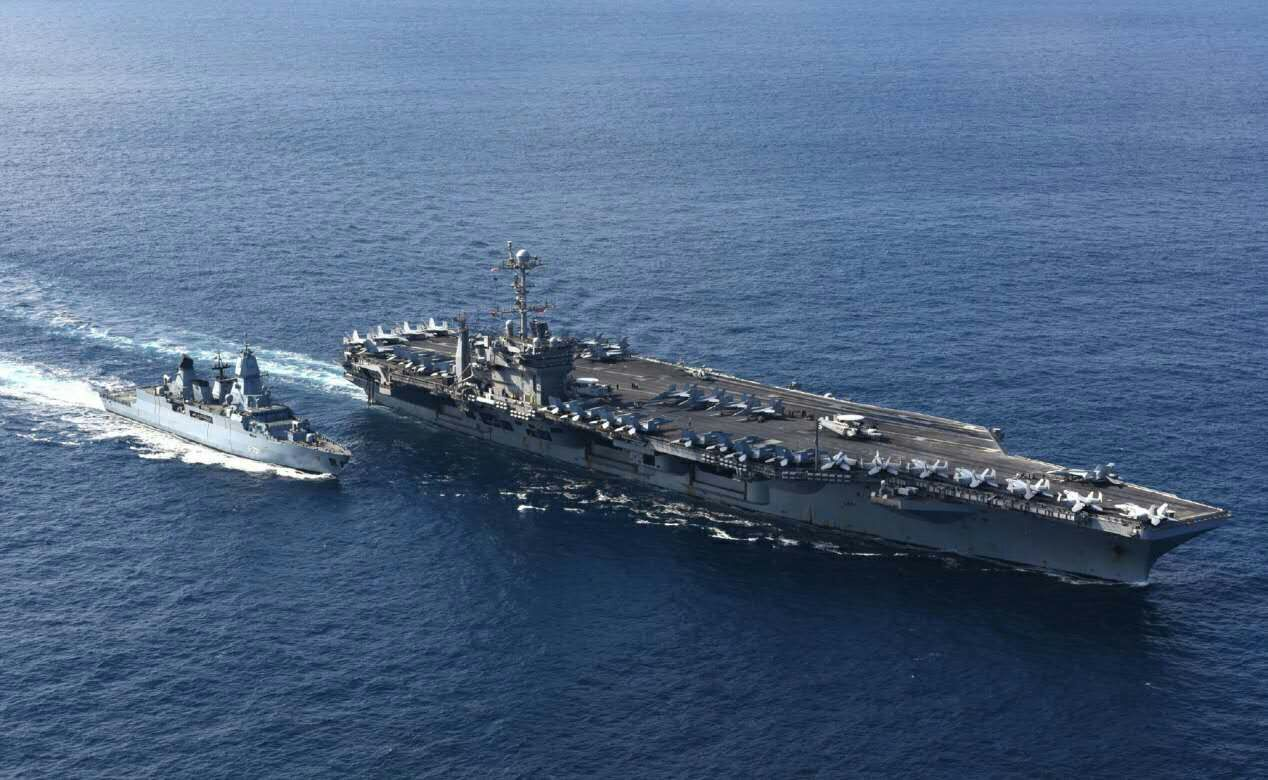
● The intensity of this conflict is spiraling out of control. The US Central Command has admitted that six American soldiers have died, and three F-15E jets were "friendly fire" shot down in Kuwait. Even more concerning, the fighting has spilled over into Lebanon, where the Israeli military has opened a dual-front operation, conducting large-scale airstrikes against Hezbollah targets throughout Lebanon.
● In the face of Israel's fierce offensive, the Lebanese Prime Minister has unusually ordered the immediate prohibition of all military activities by Hezbollah and demanded the surrender of their weapons. This reflects the helplessness and struggle of smaller nations in the power games of great powers. Moreover, the goals of the Trump administration have become increasingly clear: not only to destroy Iran's missile capabilities, navy, and nuclear facilities but also to completely sever its support for proxy armed groups in the region. This is a gamble to reshape the geopolitical landscape of the Middle East.
2. The Federal Reserve's "War Crossroads": Interest Rate Cuts or Anti-Inflation?
For the Federal Reserve officials far away in Washington, the thick smoke rising over the Middle Eastern desert is transforming into a cloud that looms over economic forecasting models.
● Just a few days ago, Minneapolis Fed President Kashkari expressed "great confidence" in the economic outlook, forecasting that a decline in inflation would allow the Federal Reserve to cut rates once in 2026. However, with the sudden onset of war, his tone has turned 180 degrees.
● "We need to assess how long this shock will last. How significant will its impact be? Is it more like a long-term attrition war like the Russia-Ukraine conflict, or a short-term violent event like the Hamas attack on Israel? Different paths have different impacts on monetary policy." Kashkari acknowledged that the war has thrust the outlook for monetary policy into a "completely ambiguous" territory.
This is exactly the dilemma currently facing the Federal Reserve, or what Arthur Hayes referred to as the "war crossroads":
● On one side is the specter of "stagflation." War drives up oil prices. The threat of Iran closing the Strait of Hormuz has already caused European gas prices to spike over 50% during trading, and Brent crude futures surged above $82 per barrel. Energy prices are the locomotive of inflation; if oil prices remain high, the Federal Reserve's efforts to combat inflation over the past two years may become futile. To curb inflation, the Federal Reserve would need to maintain high interest rates or even raise them.
● On the other side is the risk of "recession." War undermines confidence. Historical data clearly shows that large-scale military conflicts severely damage business and consumer confidence, dragging down economic growth.
○ After the "9/11" incident in 2001, the Federal Reserve quickly cut rates to stabilize the market;
○ During the Gulf War in 1990, the Federal Reserve also ended with interest rate cuts. To support the economy and provide cheap financing for the war machine, the Federal Reserve needs to cut rates and print money.
● Within this game, divisions have emerged inside the Federal Reserve. New York Fed President Williams asserted in a speech on March 3 that if inflation eases as expected, further rate cuts would be reasonable, and he did not even mention the Iran war in his speech. Such deliberate avoidance may reflect an inner struggle.
● For investors, historical experiences may be more valuable for reference. As Hayes has pointed out, from George H. W. Bush to George W. Bush, from Obama to the current Trump, when "American peace" requires substantial payment, the Federal Reserve ultimately chose to bow to the Treasury and the Pentagon, using cheaper and more currency to finance war.
3. Bitcoin's "Trial by Fire": Safe Haven Asset or High-Risk Volatility?
At the start of the war, Bitcoin's performance resembled that of a high-risk asset rather than "digital gold."
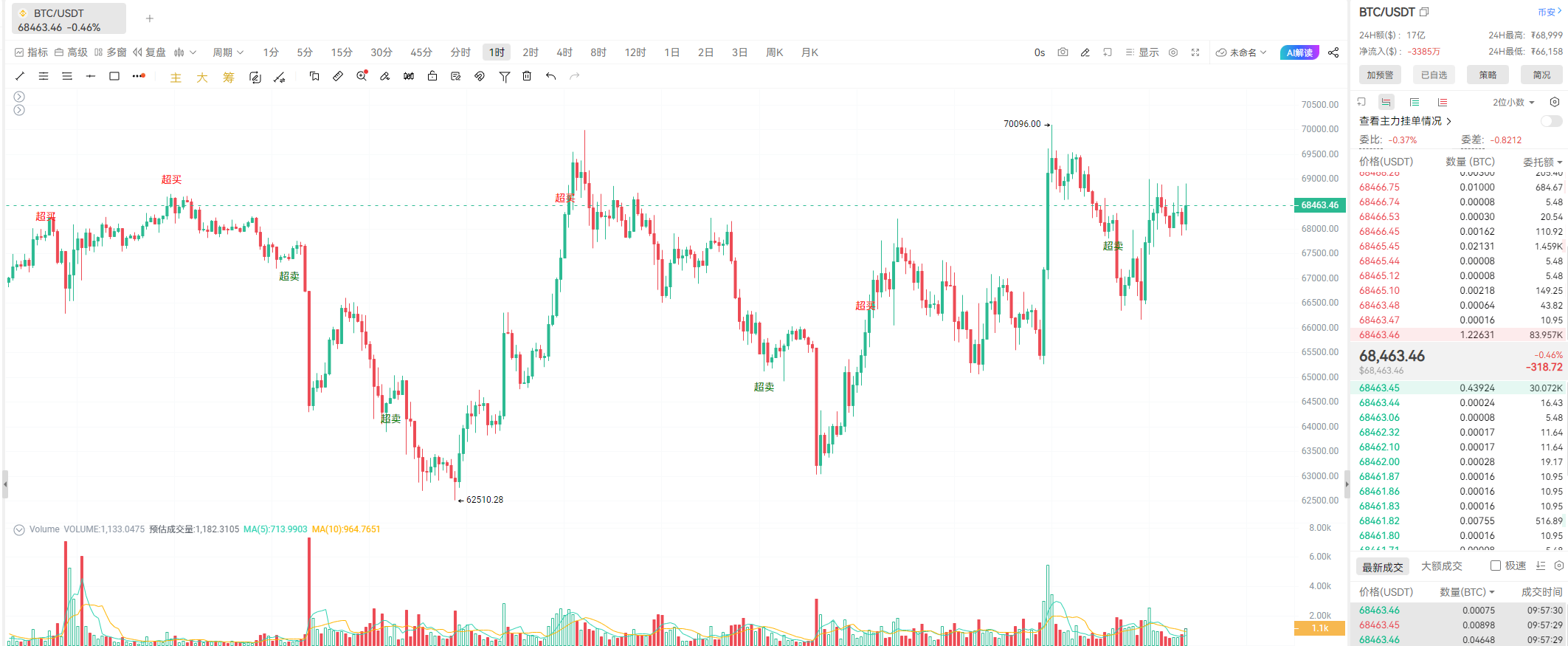
● In the first few hours after the missiles fell, Bitcoin and Ethereum experienced a "high dive." Bitcoin plummeted $2,500 within 45 minutes, falling below the $63,000 mark, with over $200 million in long positions being liquidated across the network. The market's initial reaction is always panic and seeking liquidity, and cryptocurrencies trading 24/7 became the best outlet for this panic.
● However, the plot turned after that. As of March 4, Bitcoin's price had quickly rebounded above $68,000, nearly recovering all its losses since the outbreak of war. This "V-shaped" reversal is significant.
● On one hand, this indicates that the market is beginning to reevaluate Bitcoin's role in extreme geopolitical conflicts. The CEO of VanEck pointed out that in times of heightened financial uncertainty, when traditional markets are closed or liquidity is drying up, cryptocurrencies are becoming essential tools for cross-border capital transfer and seeking safe havens. The friendly policies toward digital assets in some financial centers in the Middle East also make them potential havens for capital flow.
● On the other hand, Bitcoin's trend remains highly correlated with macro liquidity. If the Federal Reserve ultimately, as history has shown, is forced to shift to easing due to the war, then the massive influx of dollars into the market will drive up all dollar-denominated assets, and Bitcoin will naturally be no exception. In short, war consumes finance, and the consumption of finance eventually translates into a flood of currency. Bitcoin's capped total supply (21 million coins) makes it an ideal tool to hedge against this monetary overproduction.
4. The Cadence of History: War, Money Printing Machines, and Digital Gold
● Looking back at the Gulf War in 1990 and the Afghanistan War in 2001, the Federal Reserve initiated a rate-cutting cycle following the outbreak of these conflicts. The logic at the time was to use low interest rates to offset the recession risk posed by oil price shocks while providing a loose monetary environment for raising funds for the war.
● Today's situation is remarkably similar. The Trump administration not only faces a long-term war of attrition against Iran but also carries a huge national debt and domestic inflation pressure. As Hayes argues, if the Federal Reserve refuses to use cheaper funds to finance this new "nation-building project" (promoting regime change in Iran), it will be seen as "unpatriotic."
● Therefore, although a rise in oil prices in the short term may suppress expectations for interest rate cuts, from a longer time perspective, the longer the war lasts, the larger the hole in US finances, and the higher the likelihood that the Federal Reserve will ultimately be forced to turn on the printing press.
● For Bitcoin, this means a potential enormous catalyst. Although its performance has lagged behind gold, which has soared over 70% this year, raising doubts about its status as "digital gold," it is precisely this high volatility that gives it stronger price elasticity during periods of excess liquidity. Once the Federal Reserve's printing press starts running at full speed again, funds are less likely to flow into gold, which is already at high levels, and will more likely chase Bitcoin with a higher beta value.

The explosions over Tehran are the brutal echoes of great power games and the starting point for the repricing of global asset prices.
In this unpredictable conflict, investors need to closely monitor two lines: first, whether oil tankers can safely transit through the Strait of Hormuz, which determines the short-term height of inflation; second, whether the words of Federal Reserve officials will "turn dovish" again due to the economic costs of war, which determines the long-term breadth of liquidity.
For Bitcoin, each panic sell-off may be accumulating momentum for future monetary easing narratives. When the cost of "American peace" is finally reflected in the numbers on the Federal Reserve's balance sheet, the digital coins that have been mined may truly usher in their moment in the spotlight.
Join our community, let's discuss and become stronger together!
Official Telegram community: https://t.me/aicoincn
AiCoin Chinese Twitter: https://x.com/AiCoinzh
OKX Benefits Group: https://aicoin.com/link/chat?cid=l61eM4owQ
Binance Benefits Group: https://aicoin.com/link/chat?cid=ynr7d1P6Z
免责声明:本文章仅代表作者个人观点,不代表本平台的立场和观点。本文章仅供信息分享,不构成对任何人的任何投资建议。用户与作者之间的任何争议,与本平台无关。如网页中刊载的文章或图片涉及侵权,请提供相关的权利证明和身份证明发送邮件到support@aicoin.com,本平台相关工作人员将会进行核查。