Author: Liang Yu
Editor: Zhao Yidan
Is the efficiency bottleneck of cross-border finance truly at the critical point of being completely broken?
For companies engaged in international trade, the pain points of cross-border capital flow are all too familiar: a payment sent from the mainland needs to traverse various banks across different time zones, going through tedious reconciliation, auditing, and settlement processes, taking at least a few hours to a few days to finally reach the other party’s account. During this period, the costs of capital immobilization, risks of exchange rate fluctuations, and fees deducted by intermediary banks ultimately become the operational burdens of businesses. A study by the Bank for International Settlements indicates that the average cost of global cross-border payments still exceeds 6%, and transactions that take over 24 hours to settle account for more than 30% of the total.
On February 26, 2026, a special test jointly launched by the Digital Currency Research Institute of the People’s Bank of China and the Hong Kong Monetary Authority challenged this decades-long model of cross-border settlement. The core scenarios of the test were selected as cross-border infrastructure construction and agricultural products trade—two highly representative real-world asset domains. According to officially disclosed information, the test successfully achieved real-time exchange settlement between the digital yuan and a licensed stablecoin awaiting approval in Hong Kong, compressing the transaction time from two hours under traditional models to three minutes, with exchange costs reduced by more than 20%.

The difference between three minutes and two hours is not just a numerical jump. Viewed from a broader perspective, this may serve as a noteworthy reference point in the process of renminbi internationalization, as well as a crucial step for the emerging asset class RWA, moving from conceptual exploration to infrastructural implementation. It signifies that financial products supported by real assets from the mainland are expected to connect to global capital markets more conveniently through a channel that balances efficiency and compliance.
1. Payment Tools and Value Bridges: How Two Digital Currencies Collaborate
To understand the innovation of this test, it is essential to clarify its core mechanism—not “one or the other,” but “cooperating in combat.”
Traditional cross-border payments have long been plagued by inefficiencies, high costs, and lack of transparency. The system centered around SWIFT and intermediary bank models involves multiple intermediary steps, with every transaction going through layers of handovers, reconciliation, and settlement. A two-hour settlement time is already considered efficient, while fees can be as high as 5% to 7% of the transaction amount. For small to medium-sized enterprises with thin margins, this cost and time loss is often an unbearable burden.
The “dual-hub” model constructed for this test provides a brand-new solution.
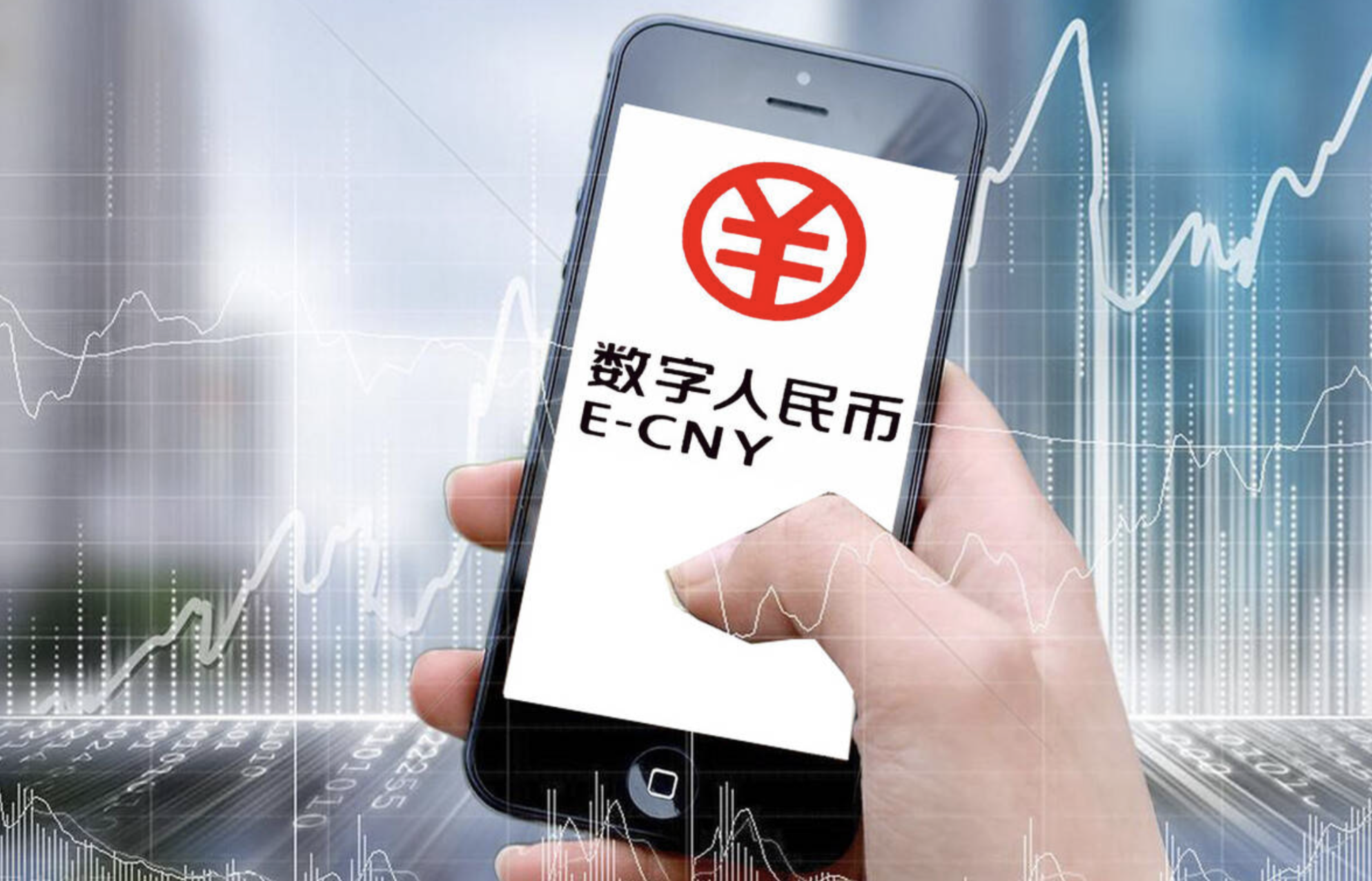
The first hub is the digital yuan. As the legal digital currency issued by the People’s Bank of China, the digital yuan's role is that of a “value anchor and compliance channel.” It is backed by national credit, possesses unlimited legal tender status, and serves as the ultimate settlement method and store of value for all transactions. During the process of cross-border flow of mainland assets, the digital yuan ensures compliance and traceability of funds coming in and out, providing the most basic legal credit support for the entire transaction.
The second hub is the licensed stablecoin in Hong Kong. According to the regulatory framework of the Hong Kong Monetary Authority, compliant stablecoins will be issued by licensed institutions, with a commitment to fully reserve the equivalent of offshore renminbi or Hong Kong dollars. The core advantage of stablecoins lies in their market-driven global liquidity and the capability for 24/7 continuous trading. They act as a “liquidity bridge,” connecting a vast array of crypto-financial markets—future fragmented trading of RWA, automated market-making, and smart contract programming will rely more on this vibrant digital ecosystem.
The synergistic effect between the two hubs is realized through “real-time exchange settlement.” When a transaction involving agricultural products requires cross-border settlement, funds can depart from the mainland in the form of digital yuan, be instantly converted into an equivalent compliant stablecoin upon arriving in Hong Kong, and then enter the global digital asset network; the reverse holds true as well. Throughout the process, the “anchoring” attribute of the digital yuan ensures the final confirmation of value, while the “medium” attribute of the stablecoin facilitates quick cross-border value transfer.
Fan Wenzhong, Vice President of the Beijing Academy of Social Sciences, summarizes this model as a “dual-track parallel system of sovereign credit as the anchor, driven by market efficiency.” In his analytical article, he further points out that this collaboration does not aim for complete unification of the underlying ledgers of the digital yuan and stablecoin but seeks to achieve safe exchange and circulation of value between the two through establishing regulated, standardized interactive interfaces. Specifically, this system consists of multiple layers: the sovereign layer centers around the digital yuan and its central bank infrastructure, ensuring transaction finality and compliance security; the market layer revolves around stablecoins operating on compliant blockchains and their ecosystem, enhancing circulation efficiency and global accessibility; at the core connecting both layers is the “regulated exchange gateway,” legally operated by licensed institutions, technically represented by smart contracts with atomic swap functionality.
The so-called atomic swap ensures that the two actions of “locking the digital yuan” and “minting or releasing an equivalent stablecoin” occur simultaneously or fail simultaneously on-chain, completely eliminating counterparty credit risk in traditional transactions. This technological design compresses cross-border settlements, which previously required two hours or longer and depended on multiple intermediaries, down to within three minutes.
2. Why Agricultural Products Became the First Breakthrough: A Carefully Selected Stress Test
This test chose agricultural product trade as one of its core scenarios, which is far from coincidental. Behind this choice lies deeper strategic considerations.
Agricultural product trade is a typical non-standardized real-world asset. It involves complex supply chains—from planting, harvesting, warehousing, and transportation to customs clearance, payment, and settlement, with every stage accompanied by information asymmetry and credit risks. Are the warehouse receipts genuine? Does the quality of the goods meet standards? Will the buyer pay on time? Will the seller deliver on schedule? These questions have long troubled agricultural trade financing, making it difficult for small farmers and traders to access low-cost financial services.
According to the latest data from the Asian Development Bank, the global trade finance gap has widened to a record $2.5 trillion, with unmet financing needs for small and medium-sized enterprises being a primary contributor. Agricultural product trade, due to its asset non-standardization and risk assessment difficulties, has become one of the prominent areas facing financing gaps.
The choice of the agricultural product scenario illustrates that the project team is targeting the most challenging issues. If the combination of digital yuan and stablecoins can successfully navigate the entire process of “rights confirmation—pricing—settlement” for complex assets like agricultural products, the potential for replicating this model will be vast. Supply chain finance, green carbon credits, trade receivables, and even intellectual property rights—all facing standardization challenges—are expected to follow the path opened up by agricultural products and gradually achieve compliance in international markets.
From an international perspective, putting agricultural products on the blockchain is not unique to China. The South African RWA platform AgriDex recently completed the first on-chain coffee transaction, exporting premium coffee from the UK to South Africa, with payment made in South African rand and settled in pounds through blockchain. According to the parties involved in the transaction, the fee was only 0.5%, significantly lower than the typical 5% to 7% charged for cross-border agricultural trade, and instant settlement was achieved, compared to a traditional system that usually requires a delay of 5 to 12 days. The AgriDex platform covers not only coffee but also livestock, wine, and olive oil, with pending transaction amounts from agricultural partners reaching $4.5 billion.
Even more noteworthy is Abu Dhabi Hub71’s agricultural trade fintech company Maalexi, which announced that it will launch the world’s first agricultural asset token exchange MAATEX on the Avalanche blockchain. The project aims to transform cross-border food trade through RWA tokenization, enabling global buyers and suppliers to trade Maalexi Agri Tokens—a tradeable digital asset representing insured, audited, and legally owned agricultural products. Maalexi claims to have delivered millions of kilograms of agricultural products, executed thousands of blockchain smart contracts, achieving a supply chain failure rate of less than 1%, while the industry average is as high as 50%, concurrently increasing buyer fund efficiency by 72%.
These international practices indicate that the combination of agricultural products and blockchain is moving from concept to reality. The uniqueness of this test in China lies in the introduction of a central bank digital currency as a sovereign credit endorsement, creating a channel for efficient and compliant cross-border circulation of agricultural product RWAs. For mainland agricultural traders, this means that in the future, they are expected to access global markets at lower costs and higher efficiencies; for agricultural partners in countries along the “Belt and Road,” this also provides a digital settlement solution that is controllable and independent of the dollar system.
The agricultural product scenario also embodies another layer of symbolism: a microcosm of inclusive finance. Behind agricultural product trade lies a large number of small and medium-sized farmers and traders, and a reduction of exchange costs by over 20% translates into substantial profit increases for them. This signifies the infrastructure's future vision—to allow more small-scale real assets to participate in global value exchange with lower barriers, rather than being excluded from the high walls of the traditional financial system.
3. From Funding Channels to Asset Pathways: How Mainland RWA's International Path is Reshaping
If a metaphor were to summarize the profound impact of this test on the cross-border financial landscape, the most fitting might be “from highways to overpasses.”
In the traditional model, mainland assets going global resemble driving onto a highway—limited entry points, fixed lanes, and dense toll booths. Compliant channels mainly rely on the agency networks of a few large banks; for each additional trading partner country, a new set of banking relationships must be established; for every cross-border settlement, multiple intermediary banks must verify, reconcile, and settle. While this route is feasible, it is congested, time-consuming, and expensive, making it often unattainable for small to medium-sized enterprises.
The emergence of a multilateral central bank digital currency bridge is already changing this pattern. This new cross-border financial infrastructure initiated by the Digital Currency Research Institute of the People’s Bank of China in conjunction with the Hong Kong Monetary Authority, the Bank of Thailand, and the Central Bank of the UAE, is constructed based on blockchain technology and will enter the operational phase in June 2024. Compared to traditional models, the currency bridge has three core advantages: first, a leap in efficiency, relying on a blockchain point-to-point direct connection model, compressing cross-border payment settlement time from the traditional “on-time” to “in seconds”; second, a reduction in costs, eliminating intermediary bank transfer steps and significantly lowering the overall cost of cross-border settlement; third, security and controllability, using distributed ledger technology to achieve synchronous sharing of transaction data, multi-party consensus confirmation, with full traceability, tamper-proof, and high transparency.

Recent implementations have already validated the practical efficacy of the currency bridge. On February 12, at the encouragement of the Jilin Branch of the People's Bank, the Changchun branch of Industrial Bank successfully conducted the first cross-border renminbi remittance and receipt transactions based on the multilateral central bank digital currency bridge for Jilin Province for two enterprises. Feedback from the enterprises indicated that using the currency bridge for cross-border renminbi settlements was efficient, convenient, and secure, with “second-level” arrival times and no conventional intermediary bank clearing fees. On February 25, the Karamay branch of the Bank of China successfully conducted Xinjiang's first cross-border digital renminbi payment for foreign direct investment based on the currency bridge, rapidly remitting an investment amount from a clean energy company to its overseas subsidiary, shortening the arrival time from one day to seconds. Earlier, the Shanghai branch of Construction Bank also successfully completed its first cross-border renminbi remittance to the Middle East via the currency bridge, marking a breakthrough in cooperation with local banks in the Middle East.
These cases demonstrate that the digital yuan cross-border infrastructure is rapidly expanding. However, the RWA settlement test jointly launched by the central bank's research institute and the Hong Kong Monetary Authority has elevated this process to a new height—it no longer confines itself to the cross-border flow of cash but extends its reach to the cross-border circulation of “assets.”
This is akin to upgrading from “highways” to “overpasses.” The digital yuan serves as the “main entrance” of this overpass, connecting to the vast asset base of the mainland; while the compliant stablecoin ecosystem in Hong Kong forms the “ramp network” of the overpass, leading to various directions in the global digital financial market. Once mainland assets enter the overpass via the compliant entry of the digital yuan, they can easily switch to stablecoin pathways, reaching investor groups and liquidity pools that were previously difficult to access.
For the asset side, this paradigm shift signifies diversification of issuance and circulation pathways. In the past, if mainland RWA projects aimed for global financing, they either sought traditional channels such as overseas listings, which have high thresholds and long cycles, or bypassed regulations to issue in offshore crypto markets, facing compliance risks. Now, a balanced, controllable pathway is taking shape: assets can achieve rights confirmation and digital yuan valuation in the mainland, then be converted into stablecoins through compliant channels in Hong Kong, and subsequently enter the global digital asset market, attracting international investors.
For the funding side, this paradigm shift lowers the investment threshold for global investors in mainland RWA. Global investors can continue to use their familiar stablecoin tools to indirectly invest in quality mainland assets anchored by the digital yuan through licensed exchanges or compliant platforms, without needing to master complex cross-border renminbi settlement processes or worry about compliance barriers for capital outflows. As Fan Wenzhong pointed out, this “public-private cooperative” structure allows participating countries to enjoy the conveniences brought by global stablecoins while introducing a “stabilizer” backed by sovereign credit through accessing the digital yuan network.
4. After Breaking the Efficiency Bottleneck, What Becomes the Key to RWA Competition
When transaction costs are no longer the primary barrier, the core competition in the cross-border RWA market will shift from “speed” to “asset quality” and “compliance framework.”
This test compressed transaction time from two hours to three minutes, with exchange costs reduced by more than 20%—these figures are indeed impressive, but what deserves more contemplation is: when everyone can enjoy “second-level” settlements, what becomes the key differentiator among projects?
The answer may very well be the quality of the assets themselves.
In traditional cross-border financing, information asymmetry and high transaction costs often veil the differences in asset quality. A project with flaws in its underlying assets might still secure financing as long as it is packaged well and has unobstructed channels; while a quality small and medium-sized enterprise asset might be excluded from access due to an inability to afford the high costs of cross-border settlements. The reduction in transaction costs will drive capital to flow towards truly quality assets, with market pricing efficiency expected to improve significantly.
This also means that future RWA project competition will increasingly focus on the capabilities on the asset side—can they obtain real, verifiable underlying assets? Can they achieve transparency and traceability throughout the processes of rights confirmation, valuation, and risk control? Can they fully disclose information to investors within a compliance framework? These capabilities will determine whether a project can quickly move onto the fast track once the "digital railway" is laid.
At the same time, the importance of compliance frameworks will become increasingly prominent. This test relies on the bilateral cooperation framework between the central bank’s research institute and the Hong Kong Monetary Authority, with both sides reaching a clear consensus on regulatory matters. In the future, as more nations and regions join this network, the depth and stability of cross-border regulatory cooperation will directly affect the coverage and efficiency of the “digital railway.” For RWA practitioners, closely tracking regulatory dynamics in various countries and planning ahead for compliance capabilities will become mandatory.
Of course, the dynamic balance between technological innovation and regulatory evolution still requires ongoing attention. While the “digital railway” has begun to be laid, the “trains”—the compliance of specific assets, the stability of cross-border regulatory cooperation, and the compatibility of various laws and regulations—are still factors that need to be continuously refined before large-scale application. For institutions intending to enter this field, it is crucial to recognize opportunities while remaining highly sensitive to policy details.
Looking back at the ordinary workday of February 26, 2026, when the central bank’s research institute and the Hong Kong Monetary Authority jointly announced the launch of the test, few may have realized that this day could mark a turning point in the development history of RWA. Two hours to three minutes is not just a jump in numbers; it is also the opening of a new door. Behind this door lies a “digital railway” paved by the digital yuan and stablecoins, linking the mainland’s physical assets with global digital capital. The next question is: when the tracks are laid and the trains are ready to depart, who will become the first passengers? How will the assets that first flow through this new channel transform our perceptions of cross-border finance?
Perhaps the answer will soon be revealed. As one industry participant in the test stated: “When speed is no longer the bottleneck, the value of the assets themselves will determine everything.” In this sense, this testing not only validates technology but also reshapes rules and paradigms—China is exploring an RWA development path anchored by real economy assets through the combination of “digital yuan + Hong Kong,” distinct from the US dollar stablecoin system. The endpoint of this path may be a new era where assets can flow freely, efficiently, and compliantly across the globe.
References:
· The Financial Committee Office of the CPC Jilin Provincial Committee (Jilin Provincial Local Financial Administration). (February 26, 2026). Jilin Province Successfully Launched the First Two-way Cross-border Renminbi Business Based on Multilateral Central Bank Digital Currency Bridge.
· Gate.io. (January 11, 2026). Application Case | South African Real Asset Platform AgriDex Completes the First On-chain Coffee Transaction, Exporting from the UK to South Africa.
· The Fintech Times. (January 11, 2026). Maalexi to Launch World's First Agricultural Asset Token Exchange on Avalanche.
· Fan Wenzhong. (January 6, 2026). Steadily Advancing the Collaborative Innovation of Digital Yuan and Hong Kong Stablecoin (Part 1). Hong Kong Wen Wei Po.
· Wang Yang, Bai Liang. (February 26, 2026). From New RWA Policies to See the Internal and External Cycles of Digital Yuan 2.0. Tencent. (Original article published in Hong Kong Wen Wei Po on February 13, 2026)
· Rural Finance Times. (February 26, 2026). New Order Added to Digital Yuan Cross-border Payment.
· Mobile Payment Network. (January 6, 2026). Vice President of Beijing Academy of Social Sciences: Digital Yuan and Hong Kong Compliant Stablecoins and Other New Payment Tools Are Reshaping the New Paradigm of Cross-border Payments.
· Mobile Payment Network. (February 26, 2026). The First Cross-border Renminbi Remittance Based on the Multilateral Central Bank Digital Currency Bridge in Heilongjiang Province’s Free Trade Zone Has Launched.
免责声明:本文章仅代表作者个人观点,不代表本平台的立场和观点。本文章仅供信息分享,不构成对任何人的任何投资建议。用户与作者之间的任何争议,与本平台无关。如网页中刊载的文章或图片涉及侵权,请提供相关的权利证明和身份证明发送邮件到support@aicoin.com,本平台相关工作人员将会进行核查。


