Original Title: Binance Gives Trump Family's Crypto Firm a Leg Up
Original Author: David Yaffe-Bellany, The New York Times
Translator: Peggy, BlockBeats
Editor’s Note: Against the backdrop of Trump’s return to the center of power and a shift in U.S. cryptocurrency policy, the stablecoin project involving his family is rapidly expanding. The technical support and incentives provided by Binance have given World Liberty Financial crucial growth momentum in a short period.
How will the intertwining of the exchange's commercial incentives, the profit model of stablecoins, and the highest level of policy-making authority affect the rules and boundaries of the cryptocurrency market?
Here is the original text:
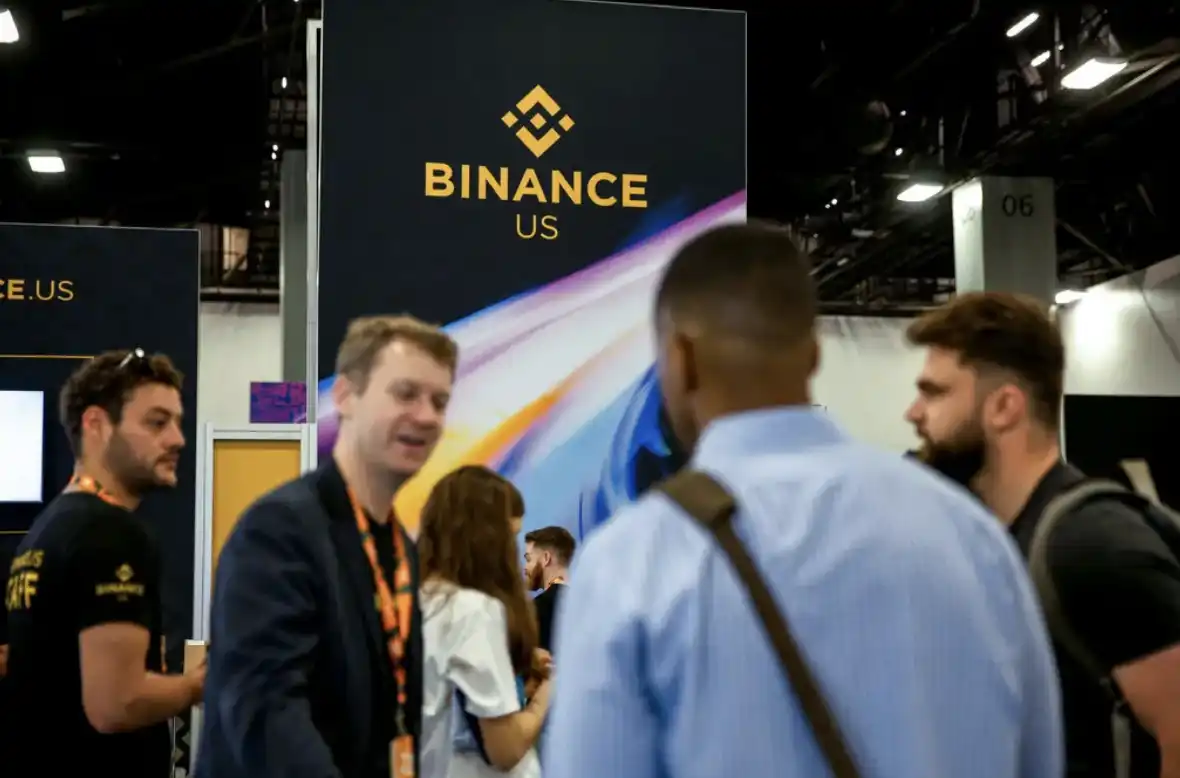
Binance has launched a series of marketing campaigns encouraging its users to purchase the stablecoin issued by World Liberty Financial. Image source: Reuters / Marco Bello
World Liberty Financial, the cryptocurrency startup founded by the Trump family, reached an important milestone last month. The total circulation of its flagship digital token surpassed $5 billion, placing it among the largest cryptocurrencies globally.
"Another milestone achieved," the company announced on social media. The president's second son, Eric Trump, also celebrated the moment with a series of flame emojis.
This achievement is largely attributed to the partnership between World Liberty and the cryptocurrency exchange Binance. Binance was founded by billionaire Changpeng Zhao, who received a presidential pardon from Trump last year.
As the world's largest digital currency exchange, Binance has become a key "engine" in the Trump family's business landscape over the past two months. The exchange has launched a series of marketing campaigns encouraging users to purchase USD1, the stablecoin issued by World Liberty. This type of cryptocurrency is pegged to the dollar at a 1:1 ratio, making it easier for payments and transactions.
According to data analytics firms Arkham and Nansen, approximately 85% of the $5 billion USD1 tokens in circulation are held in Binance accounts, despite the exchange not being open to users within the United States.
Jonathan Reiter, co-founder of cryptocurrency data company ChainArgos, stated, "Most of the funds are concentrated in Binance, and they have almost always been there. This is their primary trading venue."
The relationship between World Liberty and Binance has raised significant concerns among ethics experts and some members of Congress. They believe this collaboration constitutes a serious conflict of interest, as President Trump is now both a significant business figure in the cryptocurrency space and the highest policymaker in the industry. The White House has publicly supported legislation currently under consideration in Congress that would lower the operational threshold for cryptocurrency exchanges in the U.S.
In October last year, President Trump granted a pardon to Changpeng Zhao. Previously, Zhao and his company admitted to violating anti-money laundering regulations in 2023, resulting in Zhao serving four months in prison. Despite his felony record, Zhao is still allowed to continue as the controlling shareholder of Binance, and this pardon may pave the way for Binance to enter the currently unapproved U.S. market.
Since the pardon, the ties between Binance and World Liberty have deepened; meanwhile, the Trump family's crypto company is facing increasing political pressure from Democrats.
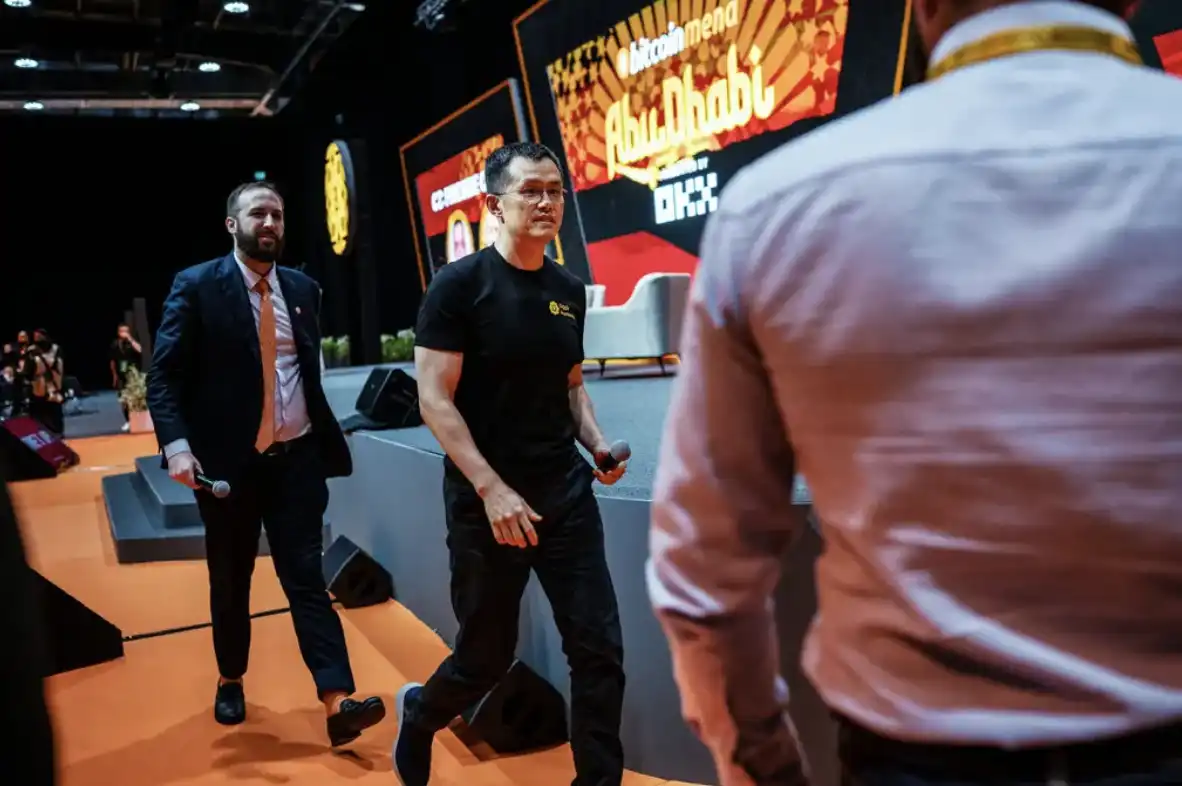
In October last year, President Trump granted a pardon to Binance founder Changpeng Zhao. Zhao had previously served four months in prison for money laundering violations. Image source: The New York Times / Tamir Kalifa
In December, Binance announced that its users could exchange stablecoins issued by other institutions for USD1 without any withdrawal fees. This concession is significant, as transaction fees are a primary source of revenue for cryptocurrency exchanges. In fact, Binance has significantly lowered the cost and threshold for users to purchase tokens issued by the president's family company.
Binance also offered users the opportunity to earn interest on their holdings of USD1, a promotional form that is currently at the center of intense legislative debate in Congress. On January 22, Binance announced that users who hold USD1 in their platform accounts would share a $40 million reward.
In the following week, the global trading volume of USD1 surged, increasing by nearly $2 billion.
Stablecoins are a highly profitable segment of the cryptocurrency industry. Issuers like World Liberty absorb funds from traders, issue tokens to them, and then invest those funds, with the profits going to the issuer. Exchanges play a key role in providing a platform for users to purchase these tokens.
According to financial reports released by World Liberty, most of its deposits are currently invested in government money market funds. These funds have an annualized return of about 4%, meaning that with a deposit size of $5 billion, the potential annual income could reach $200 million.
A spokesperson for World Liberty stated that the related promotional incentives are funded by Trump's crypto company, not Binance, and described this as a "standard practice" for stablecoin issuers.
He said, "World Liberty provided a marketing budget to Binance and other non-U.S. digital asset exchanges, and how it is used is entirely up to those platforms."
A female spokesperson for Binance responded that "it is not uncommon for large exchanges to hold significant amounts of specific tokens," and that Binance also offers promotional activities for various tokens, not just USD1.
She added, "We take legal and regulatory requirements very seriously and comply with the relevant laws and regulations in the jurisdictions where we operate."
Changpeng Zhao's lawyer stated, "There is no conflict of interest or quid pro quo." A female spokesperson for the White House also stated that Trump's assets are managed by a trust fund run by his children, "so there is no conflict of interest."
Since Trump returned to the center of power last year, he has led a comprehensive policy shift by the U.S. government towards the cryptocurrency industry, ending the regulatory crackdown that began during his first term and starting to embrace an industry that was once seen as a threat to the U.S. financial system.
At the same time, Trump and his children have built a vast crypto business network. Trump himself has promoted a token called $TRUMP; his two eldest sons have participated in founding a publicly traded Bitcoin mining company, American Bitcoin.
At the core of this family crypto empire is World Liberty. The company is jointly operated by Trump's sons and the family of Steve Witkoff, the White House special envoy for Middle East affairs. According to Trump's financial disclosure documents, he also holds shares in World Liberty.
Since its inception, Binance has played a key role in World Liberty's business.
During the development phase of USD1, Binance provided some underlying technical support for the stablecoin. A spokesperson for World Liberty told The New York Times last year that this collaboration "did not come with any return."
Binance was also involved in an important early transaction for World Liberty. In early 2025, an investment company called MGX, backed by the UAE government, announced it would invest $2 billion in Binance.
At that time, Binance stated that the transaction was entirely settled in USD1, marking the largest investment ever completed using a stablecoin.
World Liberty CEO Zach Witkoff, son of Steve Witkoff, announced this agreement at a conference in Dubai last May.
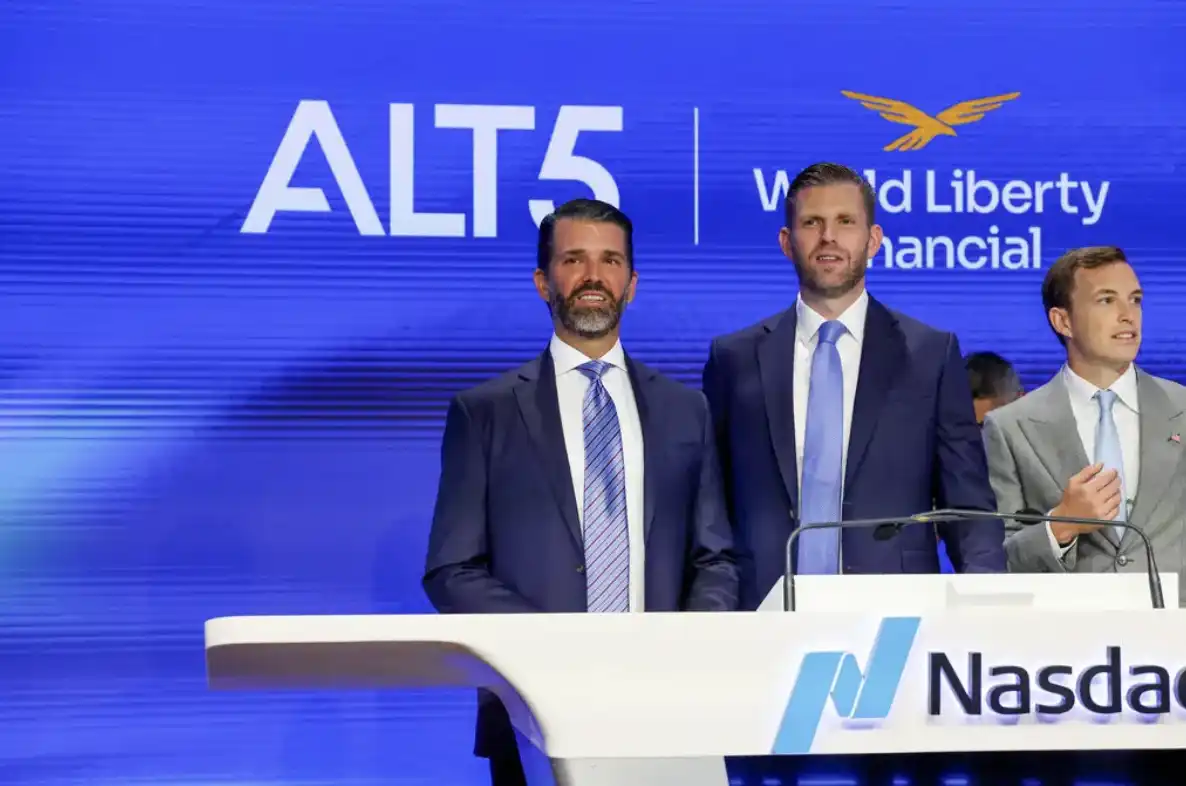
Trump's two eldest sons, Donald Trump Jr. and Eric Trump, became business partners with Zach Witkoff in World Liberty Financial. Zach is the son of Trump's Middle East envoy Steve Witkoff. Image source: Spencer Platt / Getty Images
"We thank MGX and Binance for their trust in us," Zach Witkoff stated at the time, "this is just the beginning."
This transaction publicly established the connection between Binance and World Liberty, immediately raising concerns in Washington about potential conflicts of interest. At that time, Changpeng Zhao was publicly seeking a presidential pardon; previously, he and Binance had pleaded guilty to related crimes that had allowed terrorist organizations and other criminals to trade on the platform.
"The rent-seeking space that exists is shocking— the Trump administration could provide policy conveniences to the UAE or Binance in exchange for their massive financial returns," wrote Massachusetts Democratic Senator Elizabeth Warren and Oregon Democratic Senator Jeff Merkley in a letter to U.S. ethics officials last year.
Although Changpeng Zhao ultimately received a pardon, Binance itself did not receive any leniency. Zhao is no longer responsible for the daily operations of Binance, but he retained ownership of the company at the time of his guilty plea. Today, Binance is co-led by two co-CEOs, one of whom is co-founder Yi He, who has children with Changpeng Zhao.
Since Yi He took on this management role in December, Binance has continued to work closely with World Liberty.
On December 11, World Liberty announced that Binance would waive transaction fees for some USD1 trades and use the stablecoin as collateral to support another cryptocurrency.
"Binance is making it easier for hundreds of millions of users to access USD1," Zach Witkoff stated in a statement at the time.
Twelve days later, Binance launched the "USD1 Booster Program," offering users up to 20% annualized returns to encourage them to hold the stablecoin issued by World Liberty.
Then, at the beginning of January, Binance rolled out another promotional campaign: for a month, it would distribute rewards weekly to users holding USD1, funded by a total "prize pool" of $40 million.
On social media, the founding team of World Liberty viewed these incentives from Binance as a key step in the company's expansion, while also publicly supporting the exchange multiple times.
Last month, a World Liberty executive, Zak Folkman, defended Binance on social media in response to criticism regarding its role in the recent market downturn. He suggested that these accusations were "an organized smear campaign."
Some of the promotional measures launched by Binance intersect with domestic policy debates in the U.S., where Trump himself will have significant decision-making power on these issues.
Last year, Trump signed legislation known as the "GENIUS Act," which established relatively friendly regulatory rules for stablecoins. The act explicitly prohibits stablecoin issuers (like World Liberty) from directly offering interest to users.
However, the act also left a "loophole": while issuers cannot pay interest, it does not prohibit exchanges from providing related returns, creating conditions for similar incentives through commercial arrangements on U.S. platforms. The largest U.S. exchange, Coinbase, offers users interest on their holdings of USDC (issued by Circle).
Currently, Congress is reviewing a broader bill to comprehensively regulate cryptocurrency exchanges and other areas of the industry. In related discussions, banking lobbyists are pushing lawmakers to close this loophole, fearing that these incentive mechanisms will compete with traditional bank deposit accounts.
The specific details of the arrangements between World Liberty and Binance remain opaque. However, given that these incentives are funded by World Liberty, some experts question whether these promotional activities would comply with the provisions of the GENIUS Act if they occurred within the U.S.
Even if they barely comply within the legal framework for stablecoins, such operations are precisely the "typical loopholes" currently being fiercely debated in Congress, according to Corey Frayer, a former official responsible for cryptocurrency matters at the U.S. Securities and Exchange Commission.
The White House has intervened to coordinate this dispute, convening representatives from the banking and cryptocurrency industries this week in an attempt to reach a compromise. Since Binance primarily operates overseas, it can continue to offer rewards regardless of the outcome in Congress; however, if a law prohibiting rewards is ultimately passed—and requires Trump's signature to take effect—Binance will not be able to launch similar promotions in the U.S. market.
"Due to the existence of World Liberty and USD1, Trump has a direct economic interest in this game," pointed out Lee Reiners, a cryptocurrency policy expert at Duke University.
免责声明:本文章仅代表作者个人观点,不代表本平台的立场和观点。本文章仅供信息分享,不构成对任何人的任何投资建议。用户与作者之间的任何争议,与本平台无关。如网页中刊载的文章或图片涉及侵权,请提供相关的权利证明和身份证明发送邮件到support@aicoin.com,本平台相关工作人员将会进行核查。


