Written by: Deng Xiaoyu, Li Haojun
Recently, the global decentralized prediction market platform Polymarket launched a simplified Chinese interface, attracting significant attention from the domestic market.
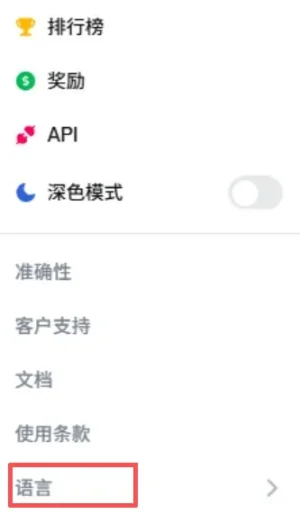
Does the introduction of a Chinese interface by an overseas financial platform mean it is opening the door to the Chinese market? The answer is likely affirmative.
In the eyes of regulators in our country, this behavior itself sends a clear signal— the platform intends to target residents within China for business, and thus will place itself under the jurisdiction and scrutiny of Chinese law.
Polymarket, an overseas prediction platform that has recently garnered attention for launching a Chinese version, allows users to "bet" on the outcomes of various events using cryptocurrency. Is this type of gambling-like business a financial innovation or does it tread the line of legal gray areas?
This article will penetrate its business model and clarify the true legal nature of Polymarket under Chinese law based on current domestic regulations, clearly revealing what legal red lines and specific risks ordinary users and promoters may face by participating.
Model Analysis: Named "Prediction," but Essentially "Gambling"?
On the Polymarket platform, users can "bet" on the outcomes of various events using USD stablecoins (such as USDC). However, from the perspective of Chinese law, its business structure primarily presents the following three key characteristics:
1. "Either-or" Gambling Structure
The Polymarket platform simply designs event outcomes as opposing options like "yes or no," where users buy and sell these options, and price fluctuations reflect the market's expectations of the probability of the event occurring. After the event concludes, cash settlement is made directly based on the outcome, with winners profiting and losers losing.
2. Speculative Behavior Entirely Based on "Luck"
Users' earnings depend entirely on uncertain future events (such as election results or sports outcomes), with no actual value creation involved, and it does not serve a risk-hedging function. Essentially, it is a form of probability-based speculation.
3. Entirely Cryptocurrency Settlement
All fund flows are completed through cryptocurrencies like USDC on the Polygon blockchain, completely detached from traditional banking and foreign exchange regulatory systems, and out of the sight of Chinese financial monitoring.
Legal Qualification: Financial Innovation or Illegal Activity?
Although in some countries like the United States, such prediction markets may fall under regulatory oversight, under the legal framework of mainland China, due to its lack of licensed access and obvious speculative attributes, its legal qualification is entirely different and more severe.
From the perspective of Chinese legal practice, Polymarket's business model is highly likely to be simultaneously classified as "illegal financial activity" and "online gambling," and it is also prone to becoming a money laundering channel:
1. Qualification as Illegal Financial Activity
According to the "Notice on Further Preventing and Handling Risks of Virtual Currency Trading Speculation" (Yin Fa [2021] No. 237) issued by the People's Bank of China and ten other ministries in 2021:
"Overseas virtual currency exchanges providing services to residents in our country through the internet also constitute illegal financial activities. Relevant domestic personnel of overseas virtual currency exchanges, as well as legal entities, non-legal entities, and individuals who knowingly or should have known that they are engaged in virtual currency-related businesses and still provide marketing, payment settlement, technical support, and other services for them, shall be held legally accountable."
As an overseas platform, if Polymarket provides derivative trading based on virtual currency to residents in China through a Chinese interface, it clearly falls within the scope of the aforementioned prohibitive regulations.
2. Substantially Recognized as Online Gambling
Judicial authorities adopt the principle of "substance over form" in their determinations. Although the platform is named a "prediction market," it fully meets the three elements of gambling:
- Investment of funds
- Reliance on random outcomes
- Existence of winning and losing of property
In the absence of a financial license and not serving the real economy, its nature is no different from online gambling.
3. New Type of Money Laundering Channel Risk
Due to its anonymity and hedging mechanism, the platform is easily used for "hedging money laundering": actors can control multiple accounts to bet on opposing outcomes simultaneously, and after paying a small fee, disguise illegal funds as "betting profits," thus violating the money laundering crime in the Criminal Law.
Legal Risk Analysis for Participants in Mainland China
Based on the degree of participation and roles, the legal risks faced by entities in mainland China (including individuals and institutions) vary significantly.
1. Ordinary Users: Risks of Personal Participation
For individuals in mainland China who access the platform and conduct personal transactions solely through technical means, the main risks are administrative penalties and fund compliance risks.
Administrative Violations:
They may face public security management penalties for participating in gambling with significant stakes, including detention and fines.
Criminal Risks:
Since Polymarket uses virtual currencies like USDC for settlement, if users come into contact with criminal funds related to telecom fraud or gambling during the deposit and withdrawal process (OTC trading), they may be deemed to be concealing or disguising criminal proceeds.
Political and Censorship Risks:
Participating in predictions involving political figures or sensitive events may attract the attention and investigation of relevant authorities.
2. Promoters and Agents: High-Risk Roles
For entities in mainland China that promote Polymarket through social media, private community groups, publish invitation links, provide trading guidance, form signal groups, or offer technical access services, they face extremely high criminal legal risks.
Gambling Operation Crime: If they develop subordinates through invitation links and take a cut, judicial practice often recognizes this as "acting as an agent for gambling websites." Those with serious circumstances may face imprisonment of five to ten years.
Assisting Information Network Criminal Activities: Even if they do not directly profit, knowingly providing advertising promotion, technical support, and other assistance to a platform suspected of criminal activity may also constitute this crime, facing imprisonment of up to three years.
Regulatory Trends and Compliance Recommendations
Currently, China maintains a strict crackdown on cross-border online gambling and illegal virtual currency trading. The launch of a simplified Chinese interface by Polymarket is likely to attract significant attention from regulatory agencies. Based on the above risk analysis, Mankun Law Firm provides the following recommendations for different groups:
1. Practitioners and Promoters: Uphold Legal Boundaries
Please do not act as agents, promoters, or provide any support for overseas prediction platforms like Polymarket. If you are a self-media KOL or community operator, it is advisable to immediately cease related promotions and cut off any financial ties with the platform to avoid crossing the red line of "operating a gambling house."
2. Ordinary Users: Protect Your Finances
It is recommended that individual investors fully understand the legal attributes and financial risks of cross-border online gambling to avoid having their bank accounts judicially frozen by public security agencies due to participation in such transactions, or generating administrative violation records that could affect personal credit and career development.
3. Platforms and Related Parties: Recognize Legal Boundaries
By launching a Chinese interface and other measures, Polymarket has clearly shown its intention to serve Chinese users, which effectively places its business under the jurisdiction of Chinese law. Even if the operating entity is overseas, the platform and related service providers may still face risks of being blacklisted, having services blocked, or even bearing criminal liability. It is advisable for related parties to carefully assess the legal consequences of their involvement in China-related business.
免责声明:本文章仅代表作者个人观点,不代表本平台的立场和观点。本文章仅供信息分享,不构成对任何人的任何投资建议。用户与作者之间的任何争议,与本平台无关。如网页中刊载的文章或图片涉及侵权,请提供相关的权利证明和身份证明发送邮件到support@aicoin.com,本平台相关工作人员将会进行核查。


