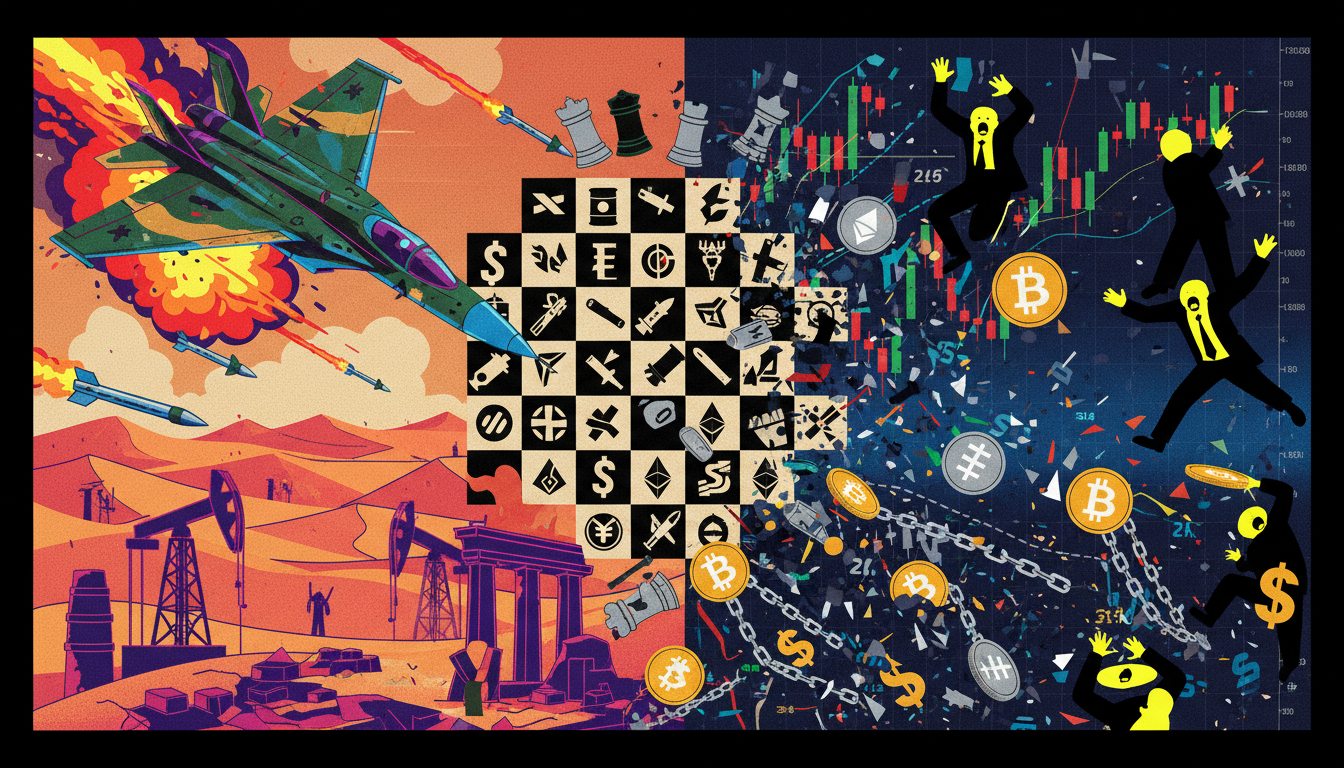
On February 3, 2026, at 8 AM UTC+8, Bitcoin fell below the $80,000 mark during trading, triggering approximately $2.55 billion in leveraged liquidations. According to historical data, this was only the tenth largest liquidation event in crypto history, yet it created a visceral shock comparable to a "bloodbath" on social media and trading terminals. The market maker Wintermute subsequently released a report attributing this significant adjustment to a natural deleveraging under multiple macro headwinds, rather than a systemic collapse triggered by a credit hub failure like FTX or Luna. The contradiction lies in the fact that on one hand, there are uncertainties in policy and valuation due to personnel changes at the Federal Reserve and weakening tech stocks, while on the other hand, on-chain TVL and traditional institutional allocations show structural resilience. The real question that needs to be answered is: Is this $2.55 billion liquidation the starting point of a new prolonged bear market, or is it a necessary cost to create leverage space for future capital inflows?
The Bloody Night of $25 Billion Liquidations
● Price Rhythm and Leverage Direction: On February 3, Bitcoin accelerated its decline after fluctuating at high levels, breaking below the $80,000 high-leverage concentration zone, with multiple instances of rapid $1,000-level retracements and rebounds during the day. Liquidation data indicates that this round of liquidations was mainly concentrated on the high-leverage long side that chased the price up, while short positions played more of a role as risk counterparties and liquidity providers. A typical scenario involved high-leverage longs being liquidated in a sudden spike, followed by the price stabilizing at a lower range.
● Tenth but "Epic" Sensation: In absolute terms, the $2.55 billion liquidation scale ranks only tenth on the historical list, far below the tens of billions seen on liquidation days during earlier periods of lower liquidity. However, this round occurred after Bitcoin reached a new level above $40,000, with nominal leverage being higher and more participants involved, compounded by the amplification effect of social media, leading to a market sentiment experience that far exceeded the data ranking itself. Many participants subjectively felt it was an "epic bloodbath."
● Differences Between CEX Contracts and On-Chain Lending: The peak of this liquidation was first reflected in perpetual contracts and futures on centralized exchanges, characterized by the automatic liquidation chain being triggered continuously in a short time, while on-chain lending protocol liquidations were relatively slower in rhythm and clearer in thresholds. From the known information, this appears more like a passive deleveraging within market rules, rather than a chain reaction caused by a technical failure, interruption of matching, or black swan event at a particular exchange. The price fluctuations and liquidation logic highly matched the pre-set risk parameters.
● Two Nights for Retail and Institutions: For retail traders using high leverage and focusing on short-term trends, this night presented a script of "liquidation alerts + failed margin calls + balance instantly dropping to zero"; while some institutions were more focused on monitoring liquidation data and depth changes, actively reducing positions, hedging, or even buying the dip at pre-set price levels. The experiences of these two types of capital regarding the same event were starkly different, setting the emotional contrast tone for the subsequent discussion on whether deleveraging improved overall leverage quality.
The Transmission Chain of Compounding Macro Headwinds
● Personnel Uncertainty and Fluctuating Interest Rate Expectations: Recently, personnel changes at the Federal Reserve and potential job shifts have caused market expectations for future interest rate paths and liquidity rhythms to fluctuate. The differences in judgment among various factions regarding inflation and the economy have been interpreted by investors as a policy oscillating between "faster easing" and "longer periods of high interest rates," leading to a repricing of all high-valuation, long-duration assets, causing an overall reduction in risk appetite as the macro backdrop for deleveraging.
● Weakness in Tech Stocks and Contraction of Risk Appetite: In the U.S. stock market, tech stocks, which represent high growth and high valuation, have frequently experienced high-level corrections and volume adjustments since the beginning of this year. The continuous pullback in leading companies' stock prices has conveyed a clear signal to investors: liquidity no longer unconditionally supports high-valuation narratives. The pressure on tech stocks is not an isolated phenomenon but an explicit window reflecting the collective cooling of high-beta risk assets, forcing some capital to begin reducing exposure to all high-volatility assets.
● Transmission from Stock Indices and Interest Rates to Crypto: Macro uncertainty is first reflected in the pricing of stock index futures and interest rate swap markets, and then quickly transmitted to other assets through credit spreads and dollar liquidity preferences. For funds requiring high liquidity and high leverage, Bitcoin, due to its deeper market depth and rich derivative tools, often becomes the preferred target for reducing positions and deleveraging: easy to sell, smooth to hedge, and capable of quickly reducing overall leverage without utilizing other risk assets.
● Wintermute's Macro Perspective: In its report, Wintermute viewed this Bitcoin crash as a link in the overall deleveraging chain of risk assets, emphasizing that the driving force came from macro-level liquidity repricing, rather than a new single-point explosion event within the crypto industry. This means that this round of impact is more a result of resonance with the stock market and credit market, rather than a "crypto-specific disaster" like FTX, which is crucial for assessing the subsequent recovery speed and cycle length.
This Time, It's Not the Deleveraging Logic of an FTX-style Collapse
● Credit Hub VS Price Volatility: Looking back at the stages of FTX's bankruptcy and Luna's collapse, the market faced the collapse of key infrastructure and the failure of core credit nodes—exchanges unable to withdraw funds, on-chain assets going to zero, and related parties defaulting in a chain reaction. However, in this round of Bitcoin's decline, there were no major exchanges halting operations, mainstream protocols failing, or core assets going to zero; the issues were concentrated on severe price volatility and the spontaneous clearing of the leverage chain, with systemic credit risk clearly manageable.
● Infrastructure Improvement and Shortened Cycles: Wintermute mentioned, "Infrastructure improvements may make this bear market cycle shorter than previous ones." This points to systematic upgrades in the risk control systems of exchanges, automatic liquidation mechanisms, risk reserves, and derivative market structures in recent years. Designs such as margin models, tiered margin requirements, and liquidation protection bands allow the system to digest leverage more orderly during extreme volatility, preventing it from evolving into exchange bankruptcies or widespread liquidation events.
● Automatic Deleveraging's "Within Rules" Clearing: From the distribution of liquidations, it can be seen that this round of liquidations was highly concentrated in the automatic trigger zones near key price levels. Once Bitcoin fell below $80,000 and Ethereum reached certain key thresholds, related margin ratios fell below limits, prompting the system to execute liquidations and position reductions according to pre-set rules. This type of deleveraging is a predictable "safety valve" behavior written into the rules in advance, fundamentally different from forced defaults caused by liquidity exhaustion or broken capital chains.
● Orderly Liquidations' Short Pain and Long Benefits: In the short term, this type of "orderly liquidation" will amplify volatility through chain liquidations, creating sharp price spikes and panic emotions. However, from a medium to long-term perspective, it helps to squeeze out high-leverage bubbles, transferring leverage from fragile high-leverage speculators to entities with stronger capital and more mature risk management. The result is an overall improvement in leverage quality, enhancing the market's ability to withstand shocks within the same price range in the future, laying a more stable leverage structure foundation for the next phase of upward movement.
The Underlying Reallocation of On-Chain and Traditional Funds
● JustLend TVL Maintaining High Levels: Against the backdrop of severe volatility, the total locked value (TVL) of JustLend DAO still broke through and maintained a high level of approximately $6.14 billion, indicating that mainstream on-chain lending protocols did not experience a comprehensive panic withdrawal. For long-term funds, moderate price corrections are not enough to change their yield strategies and asset allocation paths, reflecting the stickiness and patience of on-chain funds, rather than a blind flight from risk asset tracks.
● Liquidation Thresholds and Key ETH Price Levels: Research shows that some mainstream lending protocols have set key liquidation threshold ranges for Ethereum around $2,200 and $2,400. When ETH prices approach these nodes, automatic liquidations and additional collateral demands will suddenly heat up, creating a dual pull on the spot and contract markets: on one hand, selling pressure increases, while on the other, it attracts bottom-fishing and hedging funds. The existence of this on-chain deleveraging "trigger zone" results in price fluctuations exhibiting a more structured step-like trend, rather than a chaotic collapse.
● The "Buffer Layer" Preferred by Pension Funds: On the traditional finance side, Norway's pension fund KLP increased its holdings of MicroStrategy stock to approximately $13.5 million, sending a subtle signal: some long-term institutions prefer to indirectly take on Bitcoin exposure through equity holdings, using publicly traded company shares and regulatory frameworks as a risk buffer. This indirect allocation path provides an additional layer of insulation for traditional funds participating in crypto exposure, helping to diversify the price risk of a single asset in future shocks.
● Funds Did Not "Withdraw," But "Reallocate": Considering the resilience of on-chain TVL and the actions of traditional institutions increasing their allocations to related stocks, it can be seen that there is not a comprehensive flight of funds, but rather a redistribution of risk appetite and tool choices. Some high-leverage positions were forcibly liquidated, while another portion of long-term funds took over through low leverage or indirect tools, moving the capital chain between different levels, forming the structural undercurrents behind this round of deleveraging.
A New Leverage Cycle in the Global Crypto Restructuring
● The Geopolitical Implications of Moscow Exchange Derivatives Plans: The Moscow Exchange plans to launch derivatives around SOL / XRP / TRX in 2026, occurring against the backdrop of geopolitical games and financial sanctions, indicating that localized crypto financial infrastructure is being rapidly built. For regions heavily impacted by sanctions, establishing a self-built derivatives system is not only a hedge against external financial systems but also provides a new interface for local capital to participate in global crypto liquidity.
● Product Selection Reflecting Regional Preferences: The inclusion of SOL, XRP, and TRX in the first batch of planned products reflects the regional investors' preference for high liquidity, strong narratives, and relatively mature community assets, also laying the groundwork for potential protagonists in future regional leverage cycles. These assets have high volatility and strong stories, and once local derivatives intertwine with global liquidity, they are likely to become the core vehicles for regional capital games in the next market cycle.
● Tether's In-Depth Mining System Layout: On the other hand, Tether has released an open-source mining system MiningOS, extending from issuing dollar-pegged assets to the computing power and energy side, showing its ambition to control more underlying infrastructure. By influencing mining efficiency, computing power distribution, and energy utilization structures, Tether has the potential to exert deeper indirect effects on the stability of Bitcoin's supply side, mining profitability models, and even miner leverage behaviors in the future.
● Reconstruction of Risk Transmission Paths: As regional derivatives centers like the Moscow Exchange and infrastructure participants like Tether jointly shape a new market landscape, the risk transmission paths in the next bull-bear cycle will be significantly different from the FTX era. More decentralized derivatives and mining and liquidity will make it harder for a single exchange or project to trigger a "total collapse" chain reaction, instead being absorbed and redistributed by the market through multiple nodes and channels.
From Bloodbath to Inflow Expectations: How to Respond in the Second Half
● The Dual Significance of Liquidations: This round of liquidations, amounting to approximately $2.55 billion, undoubtedly accelerated the deleveraging process in the short term, amplifying price volatility and panic emotions, causing many high-leverage participants to exit passively. However, from a structural perspective, this round of clearing also improved the quality of existing leverage, weakening the market's vulnerability to liquidity shocks, and providing a more solid infrastructure and position structure for healthier price discovery and capital inflows in the future.
● Shorter Cycles and Inflow Time Windows: Wintermute's assertion that "this bear market cycle may be shorter than previous ones" resonates with the market view that "the second half of 2026 may see a capital inflow." For this judgment to hold, prerequisites include stabilizing macro policy expectations, tech stocks halting their decline and stabilizing, and risk assets overall finding a valuation anchor, while no new systemic credit events occur within crypto. In a scenario where these conditions are gradually met, the current deleveraging appears more like a preprocessing phase before the next round of inflows.
● Key Observational Indicators: In the coming quarters, three dimensions need to be closely monitored: first, after the Federal Reserve's personnel decisions are finalized, whether the policy path and forward guidance can stabilize interest rate and liquidity expectations; second, whether U.S. tech stocks can complete valuation digestion and stabilize, avoiding a continuous drag on risk appetite; third, the repair rhythm of on-chain TVL and leverage multiples, whether it shows a "low multiple steady recovery" rather than a dangerous pattern of aggressive re-leveraging.
● Viewing High Volatility Nodes as a Process Rather Than an Endpoint: In the absence of absolute certainty about future trends, a more realistic strategy for traders and institutions is to view this liquidation as a high volatility node in the middle of the cycle, rather than a signal of a terminal collapse. Short-term participants need to reassess leverage multiples and risk control boundaries, while medium to long-term funds can focus more on the structural resilience and allocation opportunities brought by infrastructure improvements—under the premise of confirming that this is a "deleveraging" rather than a "collapse," allowing for a calmer reconstruction of their risk-return curve.
Join our community to discuss and become stronger together!
Official Telegram community: https://t.me/aicoincn
AiCoin Chinese Twitter: https://x.com/AiCoinzh
OKX Benefits Group: https://aicoin.com/link/chat?cid=l61eM4owQ
Binance Benefits Group: https://aicoin.com/link/chat?cid=ynr7d1P6Z
免责声明:本文章仅代表作者个人观点,不代表本平台的立场和观点。本文章仅供信息分享,不构成对任何人的任何投资建议。用户与作者之间的任何争议,与本平台无关。如网页中刊载的文章或图片涉及侵权,请提供相关的权利证明和身份证明发送邮件到support@aicoin.com,本平台相关工作人员将会进行核查。