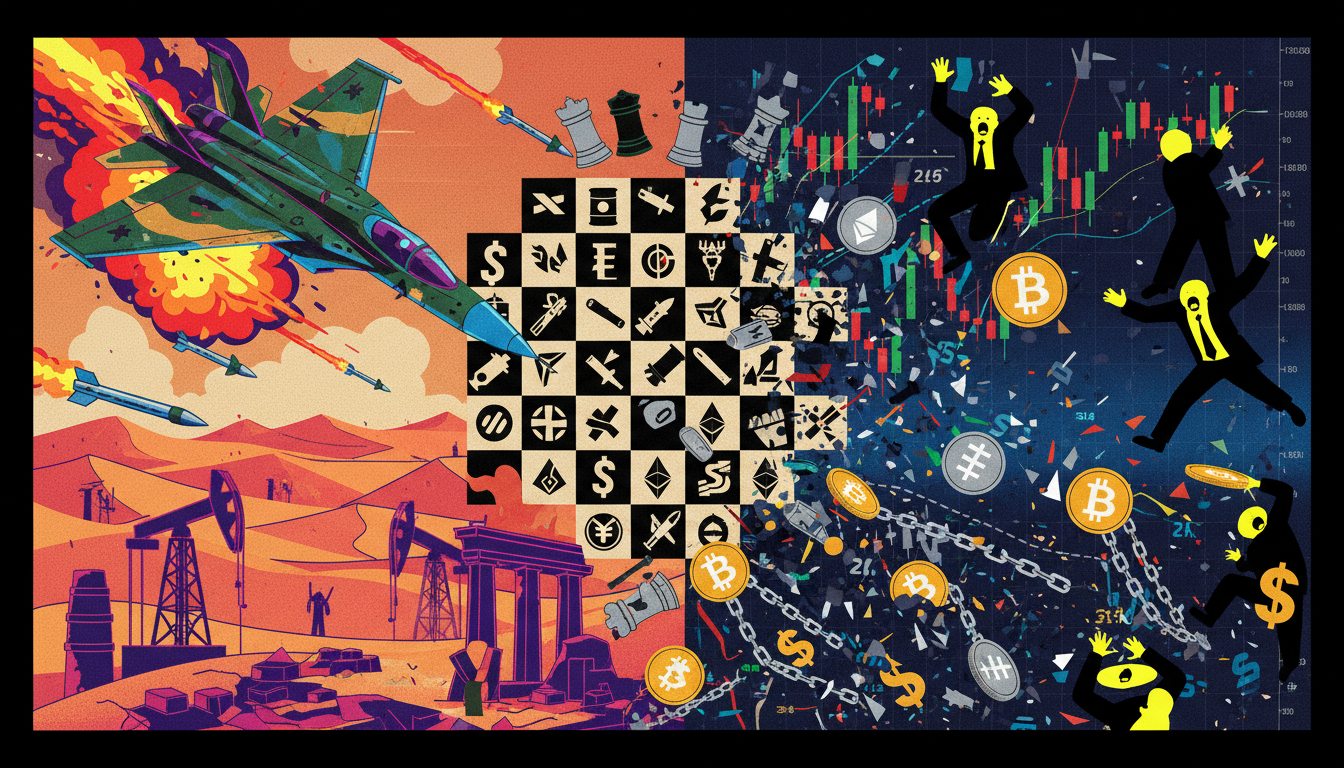
On January 29, 2026, the key price levels of BTC and ETH were rapidly breached, leading to a new round of systemic flash crashes in the cryptocurrency market. According to multiple market data sources, BTC fell below the critical range of $85,000, while ETH simultaneously dropped below the $2,800 mark, causing a collective pullback in mainstream and long-tail assets. Accompanying the sharp price decline, the total market liquidation scale over the past 24 hours was estimated to be around $650–800 million, with leveraged positions facing concentrated liquidation. Outside the market, a whale sold off at a floating loss of about $8 million, resonating with macro risk aversion sentiments due to the situation in the Middle East and the risk of a U.S. government shutdown, forming the core narrative framework for this round of correction.
Breach of Key Levels and Leverage Liquidation
● Market Characteristics: On January 29, in the East 8 Time Zone, BTC was rapidly smashed down in the range of approximately $84,910–$84,980, breaching the $85,000 mark, indicating that the previously strong upward channel was pierced both technically and emotionally. Meanwhile, ETH's price lost the $2,800 integer level around $2,798–$2,800, with the simultaneous breakdown of mainstream assets triggering algorithmic trading and passive stop-loss orders en masse, amplifying the instantaneous volatility.
● Leverage Liquidation Intensity: Multiple data sources indicate that the total market liquidation scale over 24 hours roughly fell in the range of $650–800 million, covering both long and short positions, but with a concentration on passive liquidation of high-leverage long positions. Although specific distribution data across platforms and varieties is still incomplete, the scale range indicates that this correction has reached a medium to high level of leverage liquidation, significantly impacting short-term liquidity and depth.
● Range Rather Than Point Value: It is worth emphasizing that all key prices and liquidation scales in this event are based on ranges and cross-verified by multiple reports. For example, the breakdown points for BTC and ETH are only positioned within narrow dollar ranges, and the liquidation scale is estimated at $650–800 million rather than a single precise number. This approach aligns with a cautious attitude under current information transparency and statistical discrepancies, helping investors avoid overinterpretation of "a specific precise value."
Whale Sell-off and Emotional Amplification
● $8 Million Floating Loss Sell-off: On-chain tracking shows that the address bc1qea…tfhx chose to sell 200 BTC in one go on January 29 while facing a floating loss of about $8 million. Considering its historical holding cost and the current market price range, this operation clearly belongs to a decision to cut losses during a high-level pullback phase, opting to abandon the time-space trade-off with the market, representing a typical "whale sell-off" event that adds an emotional label to this narrative.
● Emotional Demonstration Effect: The whale's active recognition of losses during the pullback has a high demonstration effect on market sentiment. On one hand, heavily leveraged long positions and small to medium holders may interpret this as "smart money no longer optimistic about the future," triggering follow-up reductions and profit-taking; on the other hand, high-leverage funds on the contract side, upon seeing large chips choosing to exit, are more inclined to quickly reduce risk exposure. This "upper-level chip loosening" signal will spread on social media and data platforms, amplifying the speed and depth of panic.
● Overlay with Leverage Distribution: It should be noted that the sell-off by a single whale cannot explain the entire decline; more crucially, its behavior overlaps with the concentrated distribution of high-leverage long positions. When the market has already accumulated a large number of long leveraged positions near key levels, the whale's selling pressure and the breakdown market can jointly trigger a chain reaction of liquidations, forming a self-reinforcing cycle of "whale sell-off—price drop—leverage liquidation—further decline," thereby exacerbating the short-term downward trend rather than being the sole cause.
Misalignment of Safe-Haven Assets with Gold and Silver
● Precious Metals Synced Pullback: Contrary to the traditional textbook logic of "risk assets falling, precious metals strengthening," on January 29, spot gold saw a maximum intraday drop of about 4%, while silver's decline was nearly 6%, coinciding closely with the pullback of Bitcoin and Ethereum. Precious metals, as traditional safe-haven tools, exhibited a significant retracement amid rising risk sentiment, raising questions in the market about whether "safe-haven assets still possess hedging attributes."
● Stage High Points and Profit-Taking: Spartan Capital Securities analyst Peter Cardillo stated in an interview that the current pullback in gold and silver futures may indicate that prices have reached recent highs, thus triggering concentrated profit-taking pressure. From this perspective, the decline in precious metals is more a result of previously accumulated profits being realized, representing a cyclical adjustment rather than a fundamental reversal of safe-haven logic.
● Positive Correlation Rather Than Inverse Correlation: The simultaneous decline of cryptocurrency assets with gold and silver reflects a short-term "positive correlation among safe-haven assets" rather than the traditional inverse correlation. In a phase where both liquidity and risk appetite are contracting, investors often choose to reduce high-volatility and high-valuation assets in a bundled manner, including BTC, ETH, and precious metals, to lock in paper profits and increase cash ratios. This "asset bundling reduction" behavior creates an apparent synchronous fluctuation in price performance.
Institutional Choices Amid Geopolitical Tensions and Shutdown Risks
● Background of Macroeconomic Uncertainty: As market volatility intensifies, macro-level uncertainties continue to accumulate. On one hand, the U.S. has increased military deployments in the Middle East, escalating geopolitical tensions; on the other hand, up to 78% of U.S. federal government departments face shutdown risks, further raising political risk premiums due to fiscal standoffs and budget deadlocks. While these factors are difficult to quantify into a single candlestick, they form the underlying sentiment of the market.
● Risk Asset Contraction Logic: In an environment of dual uncertainty regarding geopolitics and fiscal matters, institutional investors are more inclined to reduce positions in high-volatility risk assets. Cryptocurrency assets and precious metals have recorded considerable gains over the past period, making them natural priorities for reduction. For professional funds that need to meet drawdown control and VaR constraints, reducing exposure to risk assets amid rising macro uncertainty is a passive choice driven by models and discipline, rather than a simple shift in viewpoint.
● Position Management Response Path: From a position management perspective, institutions typically take three steps to address uncertainty at high levels: reduce leverage, shorten duration, and lower volatility exposure. Specifically, first, orderly reduce high-leverage long contracts in cryptocurrency assets to control strong liquidation risks under extreme market conditions; second, reduce allocations to long-cycle high-volatility varieties, shifting some funds to short-term instruments; third, overall compress positions in assets highly sensitive to macro factors. These behaviors, when aggregated in the market, manifest as systemic pullbacks in BTC, ETH, and precious metals within the same time window.
Capital Migration and Cross-Asset Rebalancing
● Rebalancing Rather Than Exiting: Observing this round of pullback, it can be seen that cryptocurrency assets and precious metals have not been "completely abandoned" by capital, but rather have jointly experienced a round of cross-asset rebalancing. After a long period of rising, allocation funds tend to moderately reclaim position ratios from high-volatility assets, redistributing to cash, short-term bonds, or other low-volatility assets to ensure that overall portfolio risk remains within target ranges, reflecting more of a weight adjustment rather than "fleeing the market."
● High Beta Assets Prioritized for Reduction: Within the cryptocurrency structure, institutional funds often prioritize withdrawing from high Beta assets outside of Bitcoin, including high-market-cap altcoins and high-leverage derivatives positions, then reallocating some of the recovered funds to cash, money market funds, or short-duration government bonds as low-risk varieties. The pullback of BTC and ETH as core assets stems, on one hand, from an overall decline in risk appetite, and on the other hand, from the price feedback after the reduction chain of high-risk peripheral assets is transmitted to the core.
● Multi-Factor Resonance Assessment Framework: Current information is still insufficient to support that "a single triggering factor" bears full responsibility for this round of pullback. The whale's recognition of losses, the synchronized pullback of precious metals, the elevation of geopolitical and shutdown risks, and the technical factors of leverage liquidation constitute a multi-variable resonance scenario. For investors attempting to understand the market, incorporating these factors into a unified assessment framework is more explanatory than fixating on finding a "single culprit," and aligns better with the decision-making logic of professional funds.
Survival Rules of High Volatility After Flash Crashes
● Portrait of Systemic Pullback: Integrating on-chain data, market performance, and macro environment, this flash crash resembles a systemic pullback driven by whale sell-offs, concentrated leverage liquidation, and misalignment of macro risk aversion. It includes emotional shocks from individual large sell-offs, as well as chain reactions triggered by previously accumulated leverage at key price levels, compounded by external forces of institutions uniformly reducing risk exposure amid geopolitical tensions and shutdown risks.
● Importance of Range Perspective: When reviewing similar market conditions, maintaining a "range perspective" on liquidation scales and price points is particularly crucial. Whether it is the estimated liquidation range of $650–800 million or the completion of key level breaches for BTC and ETH within extremely narrow dollar ranges, it reminds investors not to mythologize a specific number as the "turning point holy grail." More valuable is recognizing the chip density, leverage concentration, and emotional inflection points near the price, rather than debating the precision of a single data point.
● Operational Recommendations in High Volatility Environment: As high volatility gradually becomes the new normal, investors need a more refined risk management system. First, control leverage multiples and total risk exposure, avoiding establishing positions based on assumptions that must be "absolutely correct"; second, through cross-asset and cross-currency diversification, reduce the impact of a single asset's flash crash on the overall portfolio; third, proactively outline the timelines of geopolitical events, policy games, and macro data, incorporating potential key nodes that may trigger volatility into trading and risk control calendars. Only by structurally reserving sufficient safety margins can one retain the chips and mindset to continue participating in the next round of market movements amid severe fluctuations like those on January 29.
Join our community to discuss and become stronger together!
Official Telegram community: https://t.me/aicoincn
AiCoin Chinese Twitter: https://x.com/AiCoinzh
OKX Benefits Group: https://aicoin.com/link/chat?cid=l61eM4owQ
Binance Benefits Group: https://aicoin.com/link/chat?cid=ynr7d1P6Z
免责声明:本文章仅代表作者个人观点,不代表本平台的立场和观点。本文章仅供信息分享,不构成对任何人的任何投资建议。用户与作者之间的任何争议,与本平台无关。如网页中刊载的文章或图片涉及侵权,请提供相关的权利证明和身份证明发送邮件到support@aicoin.com,本平台相关工作人员将会进行核查。