Written by: Benjamin Wallace, The New York Times
Translated by: Yangz, Techub News
Two months after resigning from his job as a corporate registered accountant to fully immerse himself in prediction market trading, 26-year-old Joel Holsinger is steadily on the path to earning his first $100,000.
It was the Tuesday before Thanksgiving last year, just before noon, as Trump was about to deliver his annual turkey pardon speech. Holsinger placed a bet of over $700 on whether Trump would say two specific words. At that time, the two major prediction market platforms, Kalshi and Polymarket, had launched "word mention" prediction markets, allowing users to bet on whether the president would use a dozen preset words, including "hottest," "big beautiful bill," "radical left/far left," and "rigged election/stolen election."
Based on his research into the frequency of words in Trump's past speeches, Holsinger bought 500 shares of "no" at prices of $0.86 and $0.70, betting that Trump would not say the words "stuffing" and "cheaper." His reasoning was that while Trump often mentions "affordability," he has historically preferred to use "lower" instead of "cheaper." According to his statistics, Trump had not used "cheaper" since August, and the word "stuffing" had never appeared in previous Thanksgiving pardon speeches.
Despite feeling confident, Holsinger remained conservative with his betting amount. "The sample size is only four times," he referred to Trump's four Thanksgiving speeches during his first term, "I’m not going to go crazy with my bets."
On Holsinger's preferred platform, Kalshi, the market's expectation that Trump would not mention "stuffing" was declining, and the corresponding odds had dropped to $0.81. This meant that more people believed he would say that word.
"Does anyone know if there's some inside information about the word 'stuffing'?" Holsinger asked into his headset. At that moment, he was sitting cross-legged at a desk in a fourth-floor walk-up apartment in South Williamsburg, Brooklyn, wearing sweatpants and a T-shirt, analyzing the market via a live stream. Over a thousand viewers were watching the live commentary from the trader known as "PredictionMarketTrader." He and his fiancée had recently moved from Los Angeles, and there were Home Depot boxes piled in the corner.
In addition to the word mentions, Holsinger was also waiting for the key suspense to be revealed: which of the two turkeys would receive the ceremonial pardon, Gobble or Waddle? Holsinger had bet $2,500 on Gobble.
He hadn't originally planned to place this bet, thinking it was somewhat absurd and lacking any informational advantage. He had previously told his audience, "I don't see what chance Waddle has," and "Even though Gobble is the favorite, maybe I'm just falling into an information bubble."
However, just 30 minutes earlier, his friend had discovered a newly released video from the Associated Press that seemed to reveal the answer: during a White House press briefing, a voiceover clearly mentioned that while "both turkeys will be pardoned," Gobble "will be the official Thanksgiving turkey of the United States."
This subtle distinction, easily overlooked by the average person, was a valuable informational advantage for traders. The betting terms on large prediction platforms often hide extremely rigorous and even cumbersome criteria for determination. Other traders seemed not to have noticed this video, and Gobble's "yes" bet was still available for around $0.82. Holsinger quickly bought 2,475 shares. If he was correct, he would profit about $425.
At that moment, on the live stream from the Rose Garden, a turkey appeared, its flesh wobbling comically with its movements. "Is that Gobble?" Holsinger asked the live audience, raising his voice, "Can someone find a photo to compare?"
Trump rambled on, mentioning many of the words traders had bet on, including "affordable," "Walmart," and "egg." "Now," Trump said, "let's pardon Gobble—by the way, Waddle is not here today, but that's okay, we'll just pretend Waddle is here…"
Holsinger's eyes widened. He made a profit on Gobble, and also earned $250 on the words "cheaper" and "stuffing" (which Trump indeed did not mention). However, as Holsinger wrapped up his 55-minute live stream, a twinge of regret surfaced in his mind: why hadn’t he doubled down on his bets?

"I’ve completely lived online, I might not even recognize the neighborhood I live in. I spend about 16 hours a day in front of the computer; I really should get out more," Holsinger said.
"But at least we judged the direction correctly. We entered the market early. Just maybe a bit too early. I should have increased my position. But anyway, it’s been a good start to the week, guys. From Sunday until now, we’ve made $1,300."
A Defining Career of the 2020s?
Before 2020, the only specialized platform where one could attempt to make a living by predicting current events was PredictIt, based in New Zealand, which set a maximum bet limit of $850 and capped the number of traders per market. With the rise of prediction market platforms Kalshi and Polymarket, all of that has changed.
Now, there are thousands of questions open around the clock on these platforms, and anyone can choose a side to bet on: Will Iran's Supreme Leader Ali Khamenei step down by the end of July? Will the U.S. confirm the existence of aliens?
Prediction markets are rising culturally. CNN has partnered with Kalshi, and Google Finance now integrates data from Kalshi and Polymarket. This month, CBS's broadcast of the Golden Globe Awards displayed Polymarket's real-time betting odds chart before announcing the winners. The company's founder and CEO, Shayne Coplan, also attended the ceremony.
The industry has also gained political tailwinds. In 2024, Polymarket traders bet over $3.6 billion on the Trump-Harris election outcome—by the time polls closed on election day, prediction markets favored Trump, while average polling showed Vice President Kamala Harris with a slight lead. The Trump administration has been friendly toward the industry. Donald Trump Jr. is an advisor to Kalshi and Polymarket and an investor in Polymarket. Last November, the U.S. Commodity Futures Trading Commission approved Polymarket to operate legally in the U.S. Other investment and betting apps like Robinhood and FanDuel are also entering the prediction market space.
Making a living through prediction markets is likely becoming a defining career of the era—much like Wall Street traders in the 1980s, internet company founders in the 1990s, or influencers in the 2010s. The cultural conditions that have birthed this profession have been pondered by countless individuals. These include: an increasing number of young people attracted to screens and online communities; the disintegration of traditional career paths; the prevalence of a "bet it all, turn a motorcycle into a Land Rover" mentality in high-risk investments; a shift in cognitive approaches toward mathematical probabilities and collective wisdom in a post-trust, post-expert era; and the contemporary trend of "gamifying" everything. All of this may have found its ultimate convergence in full-time prediction traders.
Television commentators can speak freely without facing consequences; prediction markets are different, as money is bet on outcomes, representing "expert predictions with a personal stake," said a highly successful prediction trader who goes by the pseudonym "Domer" and requested not to disclose his real name. Many traders, like Domer, choose to operate anonymously to avoid attention from the IRS or disgruntled competitors. As Domer put it, "If I made $2.5 million last year, it means someone else lost that much." (Since Polymarket operates on a public blockchain, trading records are transparent.)
"The important thing is that we are looking for better ways to think about what will happen in the future," Domer continued.
Prediction markets are clearly attractive to potential insider traders. Last December, an anonymous Polymarket user made over $1 million in 24 hours, partly by betting on an extremely contrarian wager: that singer D4vd would become the most searched person on Google last year. This month, a mysterious account made over $400,000 by accurately predicting the timing of Venezuelan President Nicolás Maduro's ousting. Domer believes the likelihood that the Maduro trader is an insider is "85-90%," while the likelihood that the Google trader is an insider is as high as "98-99%." (Polymarket did not respond to a request for comment.)
However, the majority of users on the two major platforms are losing money, and betting on sports (which accounts for 90% of Kalshi's trading volume) has become the latest way for some young people (many of whom have no fixed jobs and carry student loans or credit card debt) to make high-risk bets through frictionless, gamified applications. Anyone over 18 can place bets through prediction markets, while most states require users to be at least 21 to bet on sports. Additionally, since Polymarket and Kalshi have received federal approval, gamblers can ultimately place bets on events in states where sports betting is still prohibited.
"We are creating a generation where financial prudence is thrown out the window, personal bankruptcy is inevitable, and mental health crises are worse than today," a CEO of a private credit market recently pointed out. A recent academic study found a correlation between the easy access to sports betting and significant declines in credit scores, rising bankruptcy rates, increased debt, and loan defaults.
Those who call themselves "experts" are often quick-reacting male risk-takers with quantitative talent and above-average information processing abilities. The current market's trading volume and liquidity are large enough that top traders like Domer can earn millions annually by finding inefficiencies in prediction markets that provide an advantage. It is estimated that there are "50" to "hundreds" of such full-time traders. According to an analysis, less than 0.04% of addresses on Polymarket account for 70% of the profits.
High-volume, high-margin betting projects often attract the same group of experts. Recent examples include: Will Zelensky wear a suit before July? (The ruling process was controversial because Zelensky's outfit at the NATO summit in June resembled a suit but was not entirely one.) Who will win the Romanian presidential election? In this betting scenario, many experts lost money betting on the ultimately unsuccessful right-wing candidate. It turned out their collective judgment was unreliable.

Ukrainian President Zelensky at the formal dinner before the NATO summit in The Hague in June.
"That was my biggest loss ever," said a trader using the pseudonym Iabvek, who lost $350,000 on the Romanian election bet. Iabvek requested not to use his real name, partly due to concerns about potential extortion. However, he stated that since November 2024, he has earned $2.5 million. He started trading with a $20 bet in high school—since he was underage at the time, he placed the bet in his mother's name on Liz Cheney's winning odds in the 2016 Wyoming House election.
Finding a Niche
Each expert has their own winning strategy. Many of them could have excelled on Wall Street but find prediction markets more interesting. For example, they might delve into legislative processes, study climate models, or read briefings in niche areas. According to Iabvek, the number of mature traders is still quite small, and even simple statistical modeling can yield profits.
In private Discord groups, many members exchange various intelligence, such as tips on "sure bets"—their jargon for low-risk, low-return wagers, which, while not as absolutely safe as U.S. Treasury bonds, are considered the closest to "guaranteed" trades in prediction markets. Last year, when all 12 singles from Taylor Swift's new album hit the charts, many experts made money. "Every expert I know said this was a bond-level opportunity for the year," said 34-year-old Long Island trader Jonathan Zubkoff.
Zubkoff started his career with a $100 bet and claims to have earned $1,034,153 in 2025. He once called a congressional office as a voter to inquire whether a certain congressman would attend a particular House vote. In the 2021 California recall election, Iabvek traveled to the state and "knocked on a thousand doors," concluding that polls underestimated Governor Gavin Newsom's popularity. During Elon Musk's hosting of Saturday Night Live in 2021, there was a prediction market about whether he would say "DOGE." According to two experts, traders stood outside Rockefeller Center, asking audience members who had attended the rehearsal for information.
Some experts rely on exceptional analytical skills to win. In January of last year, a trader named Caleb Davies began betting that Bad Bunny would defeat the then-favorite Taylor Swift to become Spotify's Artist of the Year. Davies (who still works in IT) observed that Bad Bunny was releasing an album in October 2023, while Taylor Swift was surging in the final stretch. Moreover, Bad Bunny's new album was released in January of last year, giving it more time to accumulate streams. Sure enough, on December 3, Spotify confirmed Bad Bunny's victory. Davies made over $20,000 from this.
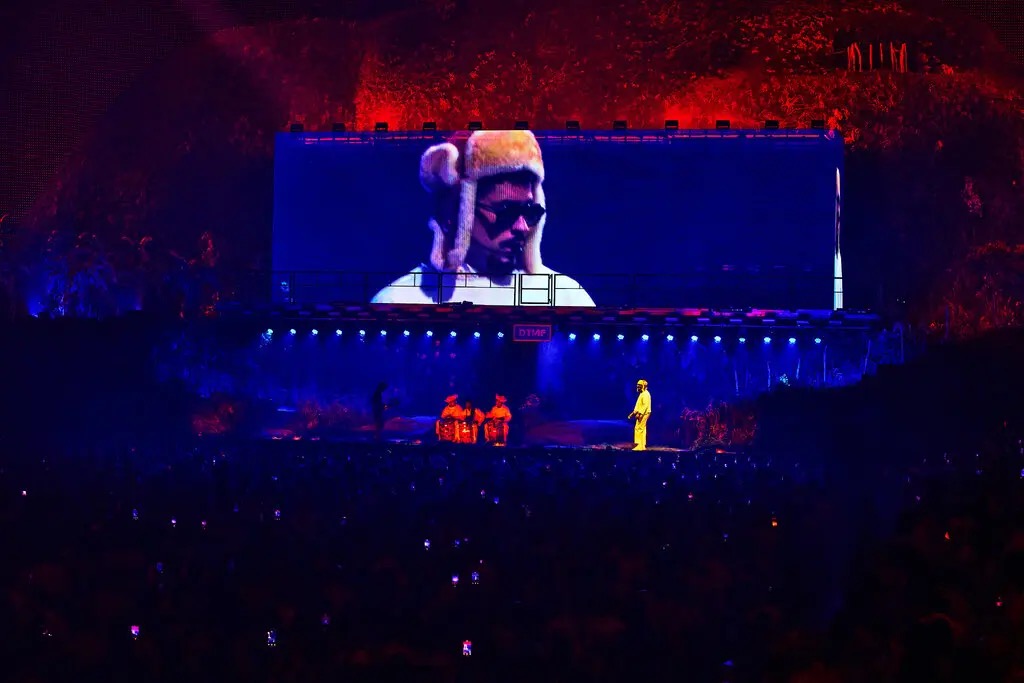
Last summer, Bad Bunny performed in Puerto Rico.
Additionally, some focus on specific areas. Besides trading in politics and weather events, Zubkoff has built a winning streak in predicting weekly Rotten Tomatoes scores for movies by creating what he calls a "Bloomberg terminal for Rotten Tomatoes" (a custom dashboard that integrates entertainment news feeds and other related information streams). He claims that even if someone replicates this system, "I would bet I can process the relevant information faster than anyone else."
For the experts, last year was a bumper year, and this year's prospects are even brighter. The chaos triggered by Trump means uncertainty, which translates to more events to bet on. There are also political enthusiasts, like Taylor fans, who will bet on their heroes no matter what. The explosive growth in interest in prediction markets (according to data from The Block, Polymarket's active trading volume reached a record 491,000 last month) means that gamblers from other fields (like sports) and ordinary people with a penchant for betting are injecting a lot of "newbie capital" into prediction markets.
Taking a Break from the Screen, Reaping Big Profits
Since January 2022, Domer has made $2.6 million just on Polymarket. But twenty years ago, he was just a freshly graduated college student focused on online poker. However, the irrational ups and downs in the poker world left him feeling frustrated. "If you played for 40 hours with the optimal strategy and still lost money, you start to question life." When you have no way of knowing whether your opponent is bluffing, losses become impossible to analyze.
So, during the boring gaps while waiting for the poker game to end, he began to ponder what else he could bet on. He found an Irish website called Intrade where he could bet on the Oscars and believed that film critic Roger Ebert had unique insights (Ebert had asserted that "Crash" should and would beat "Brokeback Mountain" for Best Picture in 2006), and he placed a $10 bet on "Crash," earning $80. "This opened up a new world for me: you can make money this way."
In 2008, when Senator John McCain was about to announce his vice-presidential pick in Dayton, Ohio, Domer and a friend began tracking flights to nearby airports. When they discovered a scheduled flight coming from Alaska, he decisively placed a big bet on Sarah Palin and made a substantial profit. Around the same time, Domer chose to abandon poker and fully immerse himself in prediction markets. He felt this field had less pressure and was more logical.
Now, he may hold over a thousand open bets at any given moment, with a risk exposure exceeding $2 million. He once bet nearly $260,000 that Pope Leo would not be named Time's Person of the Year—this was also his most profitable trade in 2025.
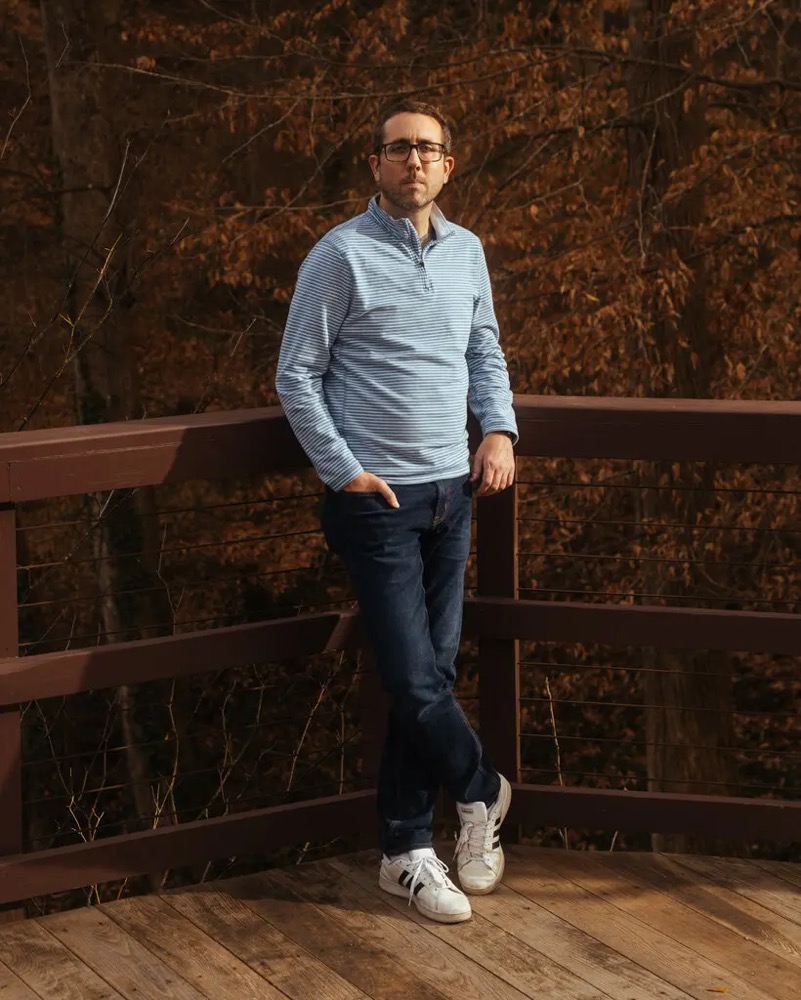
Domer, photographed in a park near downtown Greenville, South Carolina.
As the market expands and competition intensifies, trading has become increasingly time-consuming. Domer's "trading station" is equipped with four monitors and a television. He often orders takeout from Uber Eats. During the Israeli elections, his schedule completely followed Israel's time zone.
In 2017, when Domer met his now-wife, she had no idea what kind of life she was about to face. At that time, mainstream platforms were still Betfair and PredictIt, with very few events to bet on, less intense competition, and smaller amounts of money involved; Kalshi and Polymarket had yet to be born. "You can imagine what it’s like to marry me," Domer said, "My phone is always buzzing, and there’s always something distracting me. Sometimes, right after dinner with my wife, I might suddenly say, 'I have to run upstairs; Eric Adams just tweeted,'" he added, referring to the former mayor of New York City.
He continued, "The year 2024, the presidential election year, is going to be 'super chaotic.' I told my wife, 'It will be fine by July; we’ll go to Ireland and Basel, and it will be great,'" referring to the Swiss city of Basel. "I’ve been holding onto that thought to keep myself going."
But at the end of June, Biden's disastrous debate performance triggered what Domer called "the biggest political betting event in history": Will Biden withdraw? "I placed a big bet on this."
Interestingly, just weeks before Biden's potential withdrawal, Domer was overseas, busy "experiencing the real world," and did not get caught up in the whirlpool of speculation about "Will he withdraw?" Instead, he preserved most of his positions. Ultimately, he netted over $1 million.
Watching Domer's success, trading expert Holsinger, who once correctly bet on Thanksgiving turkeys, also dreams of bigger possibilities. This month, his total profits have surpassed $144,000, and he is starting to calculate his next target, perhaps $500,000. He realizes he needs to take on more risk: "My win rate is abnormally high, which means I've missed too many opportunities that I should have seized."
Fueled by citrus-flavored Zyn nicotine pouches and a few cans of Celsius energy drinks, Holsinger is currently fully focused on seizing the moment. "Right now, my mindset is: I have to go all in."
免责声明:本文章仅代表作者个人观点,不代表本平台的立场和观点。本文章仅供信息分享,不构成对任何人的任何投资建议。用户与作者之间的任何争议,与本平台无关。如网页中刊载的文章或图片涉及侵权,请提供相关的权利证明和身份证明发送邮件到support@aicoin.com,本平台相关工作人员将会进行核查。


