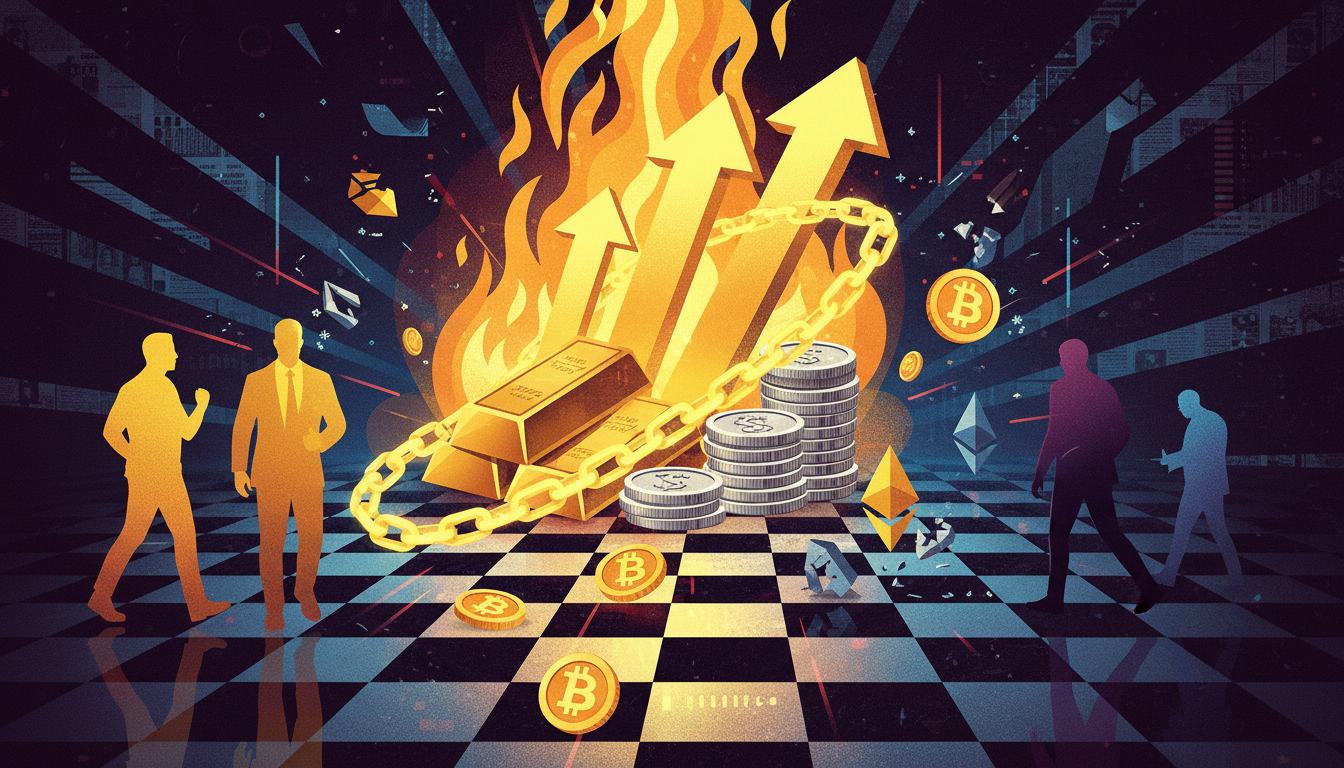
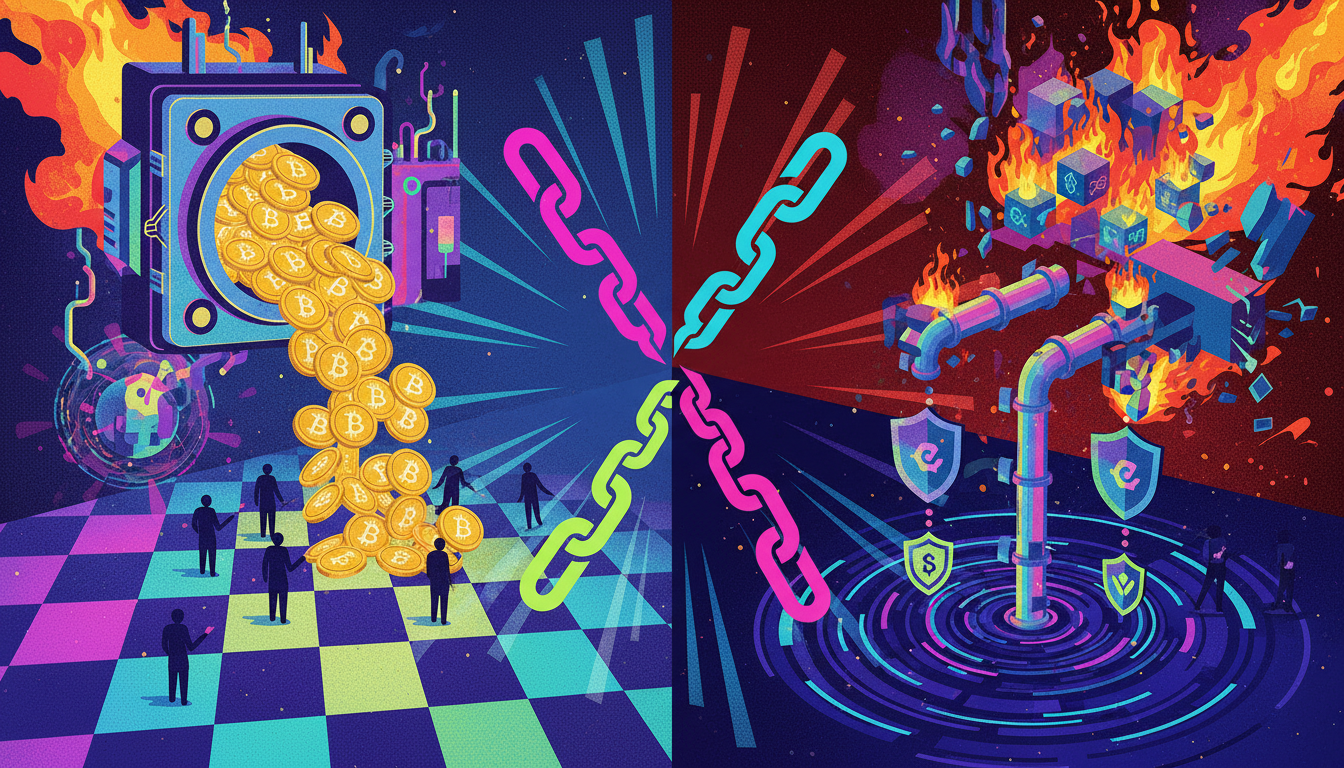
Eastern Standard Time January 26, 2026, Coinbase co-founder and CEO Brian Armstrong made a prediction on X: in the future, companies will be able to complete the public listing process entirely through blockchain, and on-chain IPOs will replace traditional listing models. Parallel to this judgment is the imbalanced pattern in the real world where early-stage IPO value appreciation is highly concentrated in the hands of private equity and credit investors, while ordinary investors are structurally excluded from the high-growth phase. On the same timeline, Hong Kong's Mox Bank was approved to provide virtual asset trading services and partnered with HashKey, marking the first time a traditional bank has deeply engaged with on-chain assets under a licensing framework; on the other end of the chain, the whale address 0x50b30 cycled through borrowing to extract 400 WBTC, crashing the market at an average price of about $86,694, with high-leverage speculation pulling market prices into the hands of a few. These three clues—regulatory opening, technological vision, and liquidity reality—together lay the groundwork for regulatory arbitrage and capital speculation in the context of "on-chain IPOs."
From Wall Street Roadshows to On-Chain Offerings
● The reality of traditional IPOs is a long and highly centralized industrial assembly line: companies need to conduct closed-door roadshows accompanied by multiple investment banks, repeatedly communicate their needs with institutional investors, and then have the underwriting syndicate complete the book-building and pricing, ultimately forming an issuance price dominated by a few participants. Throughout this process, the rhythm of information disclosure, inquiry results, and allocation ratios heavily rely on the judgments of intermediary institutions, leaving ordinary investors to passively take over in the secondary market after the listing day, unable to access the primary issuance stage.
● In Armstrong's envisioned full-link on-chain public offering, the core steps mentioned above are compressed into a verifiable on-chain process: issuers disclose rules through smart contracts, potential investors submit funds and bids globally through on-chain subscription interfaces, and book-building, allocation, and settlement are settled in real-time on a public ledger. Although he did not provide a specific technical route, the direction of "writing the entire process from registration, subscription to settlement into on-chain logic" has reimagined traditional elements such as underwriting, allocation, and lock-up periods as programmable and auditable open systems.
● The reason why early-stage IPO value is difficult for retail investors to access is quite clear: before companies enter the public market, they often undergo multiple rounds of private equity and credit financing, with valuations continuously elevated in a closed-loop pricing among institutions. By the time of the public offering stage, early discounts have been locked in by private equity funds and credit investors, leaving ordinary investors facing a pricing level that has been highly "warmed up," only able to bear volatility risks at a higher benchmark. This structural gap is the direct target of Armstrong's call to "let more people participate earlier."
● For this reason, the most attractive selling points of on-chain IPOs focus on three levels: first, the subscription and allocation process is open and transparent, with on-chain order books and allocation rules auditable by anyone, narrowing the space for information asymmetry; second, the range of participants is inherently global, no longer confined by geographical and account-opening restrictions of a single market, with cross-border small investments accessible after compliant KYC; third, the speed of capital formation is theoretically faster, with funds locked and settled in real-time within smart contracts, reducing intermediary and time costs, providing a more direct fundraising channel for high-growth companies.
Hong Kong Opens the Gate: Bank Licenses Tear Open Regulatory Gaps
● In the real regulatory landscape, Hong Kong's Mox Bank has been approved to provide virtual asset trading services and has partnered with licensed exchange HashKey, marking a symbolic event for traditional banks touching on-chain assets. After upgrading its Type 1 license, Mox Bank can provide customers with services related to crypto assets within a regulated framework, meaning that traditional deposits, payments, and on-chain asset trading are now interconnected within a licensed bank, with bank-level risk control directly interfacing with on-chain liquidity.
● Looking back at Hong Kong's path over the past few years, a typical gradual opening approach can be seen: starting with a few licensed exchanges as pilot projects, allowing trading services for retail investors under strict conditions; then licensed banks like Mox Bank intervened, connecting bank accounts with on-chain assets, bringing trading demands that were previously on the regulatory edge back into the licensing system. This evolutionary logic reserves imaginative space for future products like "on-chain IPOs" or tokenized equity—once regulators are willing to recognize compliant forms of on-chain issuance, banks and brokerages could become bridges.
● However, at this juncture, there remains a clear boundary between regulatory reality and technological vision: neither Hong Kong nor other major jurisdictions currently have clear regulatory rules for on-chain IPOs, nor is there any timeline or specific regulatory plan. The license upgrade of Mox Bank is more of a limited authorization for "virtual asset trading services," rather than a direct endorsement of on-chain equity issuance. This article thus deliberately avoids fabricating any roadmap, discussing only the directional gaps that regulation may open based on existing public information, rather than outlining a definitive policy timeline.
Whale Leverage: Today's Market High-Pressure Testing Ground
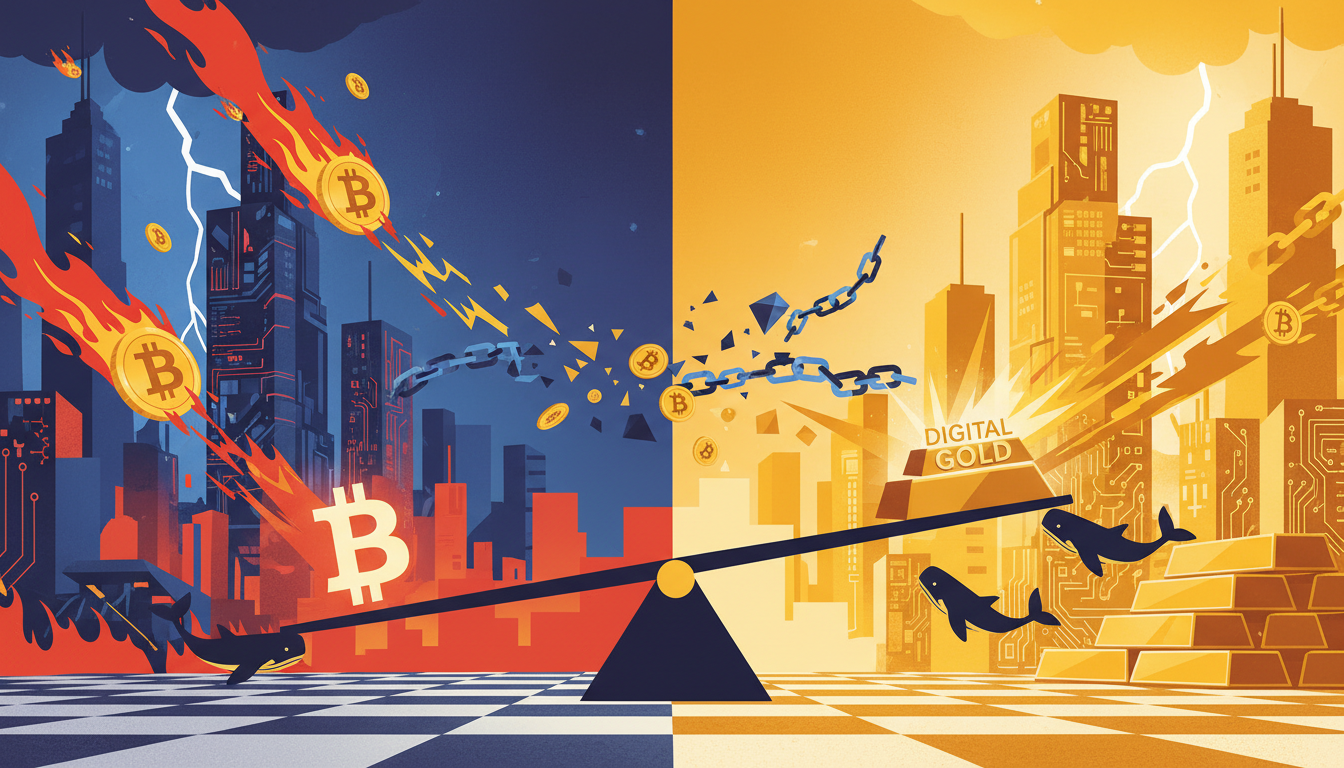
● In sharp contrast to the gradual regulatory opening is the reality that on-chain liquidity is highly dominated by a few high-leverage players. Briefing shows that address 0x50b30 extracted about 400 WBTC through a cycle of borrowing, selling these BTC at an average price of about $86,694, creating immense selling pressure. Its operational path is a typical high-level leverage play: collateralizing assets, borrowing BTC, selling to obtain stable positions, and then using the proceeds for further collateralization and borrowing, amplifying market influence through multiple layers of leverage.
● Behind such whale strategies is a liquidity structure shaped by heavy players and leveraged funds: under the surface of a seemingly "deep and sufficient" market, key price levels and transaction volumes are often controlled by a few large funds; once they choose to concentrate on selling or raising prices, the price can shift dramatically in a short time. Ordinary participants face not a "market consensus price" shaped by dispersed traders, but a fragile equilibrium pulled by large orders, with high leverage amplifying this pulling effect.
● If we map this liquidity structure to a hypothetical on-chain IPO scenario, the issues become particularly sharp: in a system where issuance and trading are integrated on-chain, the subscription, pricing, and first-day performance of new stocks may also be exposed to manipulation risks by whales and high-leverage funds. As long as the rules allow large funds to participate in subscriptions and secondary speculation at low costs, on-chain transparency does not inherently mean fairness; on-chain IPOs may even be more susceptible to programmatic arbitrage, flash pumps, and instant crashes than traditional IPOs.
Can On-Chain IPOs Really Break the Mold?
● Armstrong's statement on X is very direct—"in the future, companies will be able to complete the public listing process entirely through blockchain," betting on a capital formation model that allows retail investors to participate earlier and makes fundraising more global. In his vision, companies no longer need to bypass traditional investment banks and roadshow systems, but can directly issue to global investors through on-chain offerings, allowing retail investors to participate in earlier financing rounds and small investments in company growth, rather than waiting until the market value has been elevated by multiple rounds of private equity before having a buying opportunity.
● Directionally, on-chain transparent order books, smart contract allocation mechanisms, and cross-border compliant KYC indeed have the potential to change the competitive landscape of the primary market: the public and auditable order book allows everyone to see subscription demand and price distribution in real-time; smart contracts can automatically execute allocations under established rules, reducing the space for human intervention; cross-border KYC provides a unified access point for qualified investors across different jurisdictions. However, these can currently only be discussed as directional advantages, as the briefing did not provide any details about specific technical solutions or implementation frameworks, and any further depiction would slip into baseless construction, which this article deliberately avoids.
● In contrast to the ideal vision is a stark reality: in the current environment where whale leverage runs rampant and market-making concentration is extremely high, the power of capital in the crypto market is highly centralized. If on-chain IPOs sprout in such soil, the question of whether they will merely transplant the old games of traditional primary markets to a new venue cannot be avoided. Once subscription amounts, market-making depth, and secondary liquidity continue to be controlled by a few capitals, the so-called "everyone can participate" issuance mechanism may still just be a new type of arbitrage factory designed by a few players, rather than a true institutional innovation that reshapes opportunity distribution.
Shadows of Federal Reserve Personnel and Yen Intervention Lines
● Even if the issuance form migrates to on-chain, the true control over global liquidity gates still lies within traditional macro power structures. Predictive market Polymarket data shows that Rick Rieder is a popular candidate with about a 47% probability of becoming the next Federal Reserve Chair, and such personnel expectations represent potential repricing of the dollar interest rate path and asset valuation center over the next decade. Whether companies choose to list on the NYSE or complete public offerings on-chain, their financing costs and valuation multiples will ultimately settle within the interest rate and liquidity environment set by the Federal Reserve.
● Also significant is the "red line" in the foreign exchange market: State Street's Masahiko Loo pointed out that 162 is seen as the key exchange rate intervention level for Japanese authorities; once the yen to dollar exchange rate reaches this level, the market generally expects official intervention. Behind this number is the capital transmission chain between fiat currency and crypto assets—foreign exchange fluctuations affect interest rate differential trading and hedging costs, thereby changing the allocation weights of global capital among bonds, stocks, and crypto assets; the prices and transaction volumes of on-chain assets are still pulled by these off-chain parameters.
● When we juxtapose these macro and personnel variables with the vision of on-chain IPOs, the conclusion is not romantic: even if issuance moves on-chain, the real cost of funds and risk preferences are still dominated by central banks and fiscal policies. On-chain can rewrite the issuance process, but it cannot rewrite the anchor of the risk-free interest rate; it can increase global participation but cannot escape the constraints of macro winds. Armstrong outlines the disintermediation of the "front end" of capital formation, while the "back end" pricing focus remains deeply buried in Federal Reserve meeting minutes, yen intervention lines, and fiscal deficit curves.
The Countdown to On-Chain IPOs Has Not Yet Begun
● Looking back at the entire text, the embryonic form of on-chain IPOs is roughly outlined by three main lines: first, Armstrong's technological vision that "companies will complete public listings entirely through blockchain," representing a disintermediation impact on traditional IPO processes; second, the regulatory trial represented by Mox Bank's license upgrade in Hong Kong, showing that the traditional financial system is beginning to accept on-chain assets within a limited scope; third, the reality of high-leverage operations by whales like 0x50b30, reminding us that current market pricing power is tightly held by a few addresses. What these three elements piece together is not a mature solution, but an unformed outline sketch.
● The biggest gap between this sketch and reality is not actually at the technical level: blockchain has already proven itself capable of carrying the issuance, subscription, and settlement processes; what truly constrains is the regulatory framework and liquidity structure. Whether regulators are willing to recognize the legal validity of on-chain issuance, how to define the identity and obligations of cross-border participants, and how to constrain whales and leveraged funds from manipulating the primary market—these questions are far more difficult to answer than "can IPOs be written into smart contracts." Before these premises are clarified, any precise timeline for on-chain IPOs is closer to a market self-indulgent fantasy than an executable roadmap.
● A more realistic vision may be a slowly advancing middle path: in the coming years, companies will first introduce on-chain accounting and tokenized equity within the existing regulatory framework, establishing programmable and divisible equity mappings outside of traditional registration systems; subsequently, they will gradually attempt to complete parts of the issuance and allocation processes on-chain, with traditional exchanges, brokerages, and banks providing bridging services, until the regulatory, technological, and market structures are sufficiently mature, making it possible to approach a truly "full-link on-chain public offering." Until then, the question of "Will Wall Street make way?" feels more like a premature stress test rather than a countdown to a tangible agenda.
Join our community to discuss and become stronger together!
Official Telegram community: https://t.me/aicoincn
AiCoin Chinese Twitter: https://x.com/AiCoinzh
OKX Welfare Group: https://aicoin.com/link/chat?cid=l61eM4owQ
Binance Welfare Group: https://aicoin.com/link/chat?cid=ynr7d1P6Z
免责声明:本文章仅代表作者个人观点,不代表本平台的立场和观点。本文章仅供信息分享,不构成对任何人的任何投资建议。用户与作者之间的任何争议,与本平台无关。如网页中刊载的文章或图片涉及侵权,请提供相关的权利证明和身份证明发送邮件到support@aicoin.com,本平台相关工作人员将会进行核查。