Original author: Eric, Foresight News
2025 is considered a landmark year for Web3 practitioners as they make their first large-scale entry into the official agenda of the World Economic Forum (WEF). "Crypto at a Crossroads" made its debut in the main agenda, discussing whether cryptocurrency has entered the mainstream era. A year later, with the entry of Western financial giants, Web3 has transformed from last year's crossroads into a true mainstream.
This year, in the main venue of the World Economic Forum, tokenization and stablecoins became two important topics, and Binance founder Changpeng Zhao was invited to participate in a discussion themed "New Era for Finance." Unlike the free speech on CT, the statements from Web3 representatives in such a large setting were noticeably restrained, but still did not overshadow the ambition that "Web3 will change the world."
So, what did the big names specifically say at the 2026 Davos Annual Meeting, where Crypto was recognized as mainstream by traditional finance with a market size of trillions of dollars?
Changpeng Zhao: "If banks do not change, we will change banks"
The last time a well-known entrepreneur complained about banks at a large economic and financial conference may date back to the Bund Financial Summit in 2020.
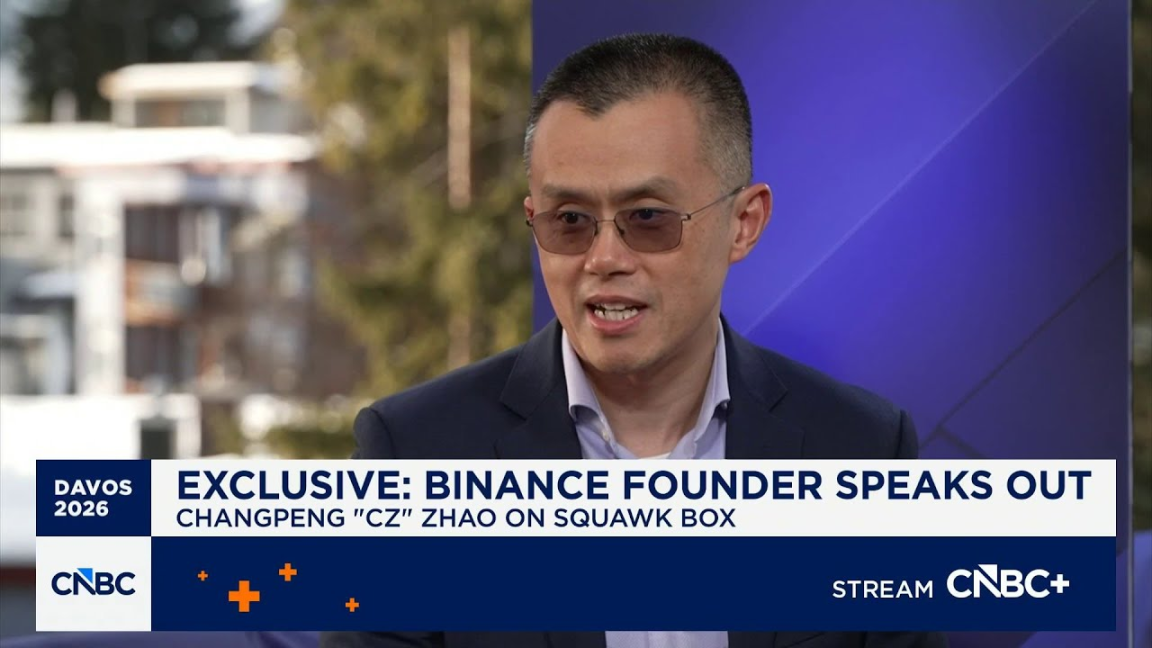
Changpeng Zhao (CZ) participated in a roundtable at this year's Davos Annual Meeting themed "New Era for Finance" and also accepted media interviews, including with CNBC. Overall, CZ's viewpoint is not to "replace banks," but rather to believe that banks should embrace blockchain infrastructure, as the two are complementary. His main points include:
- The reserve system of banks is the root of liquidity crises, making it difficult to handle withdrawals of billions of dollars in a short time without issues, while the 100% reserve model of cryptocurrency exchanges is safer and more reliable. Traditional banks have their value, but they should embrace blockchain as their infrastructure to improve efficiency and reduce costs;
- CZ is currently discussing national asset tokenization with governments of several countries (such as Pakistan, Malaysia, Kyrgyzstan, etc.), including infrastructure, real estate, commodities, government bonds, etc. Tokenization can avoid debt issues, improve liquidity, and attract a broader range of investors;
- The four-year cycle of Bitcoin will be broken, and 2026 will be a "super cycle" for Bitcoin. Meme tokens, similar to previous NFTs and the metaverse, carry extremely high risks and are highly speculative; culturally valuable meme tokens may exist long-term, but most meme tokens will disappear;
- Traditional payments are merging with crypto payments, but there needs to be risk awareness. AI Agents will use cryptocurrency as a native payment method, and in the future, AI will rely on blockchain for real-time, reliable payments, with cryptocurrency becoming the "fuel" for the AI economy.
- The crypto industry needs to focus on risk management and regulatory realities, rather than blind optimism, balancing innovation and compliance.
In addition to these points, CZ also revealed details about his mindset during his previous imprisonment during a CNBC interview and stated in a response on X that he would disclose more details in a new book to be published at the end of February or early March.
Coinbase founder debates the Governor of the French Central Bank
In a discussion themed "Is Tokenization the Future," Coinbase founder Brian Armstrong repeatedly interrupted the Governor of the French Central Bank, François Villeroy de Galhau, to refute his views on the returns of Bitcoin and stablecoins.
François Villeroy de Galhau expressed the following views:
- Strongly opposes private companies paying interest to holders of their issued stablecoins, believing this threatens monetary sovereignty and financial stability;
- Emphasizes that trust in currency must come from democratically authorized public institutions (central banks), not private issuers;
- Criticizes private currencies like stablecoins and Bitcoin for potentially causing systemic risks, promoting the digital euro as a tool for maintaining sovereignty;
- Warns that without improving financial literacy, tokenization could turn into a "disaster."
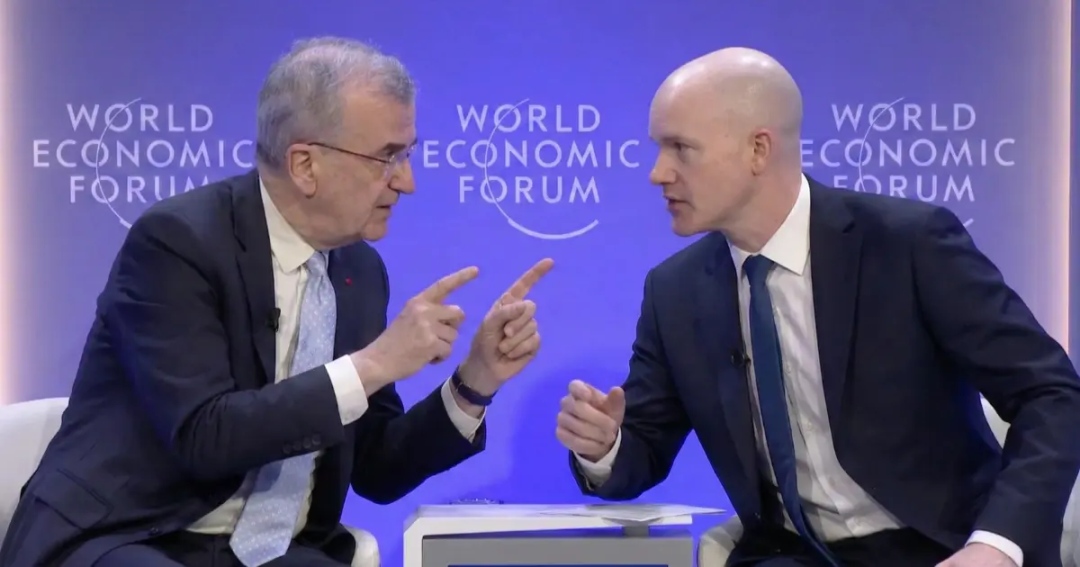
Brian Armstrong's "counterattack" includes:
- Arguing that Bitcoin has no issuer, and its decentralized nature makes it more independent and resistant to inflation than traditional currencies;
- Advocating that users have the right to earn returns from stablecoins and believing that allowing interest on stablecoins is part of national competitiveness;
- Emphasizing that Bitcoin and central banks should have "healthy competition," with public choice becoming the strongest accountability mechanism for fiscal deficits, pushing central banks to be more responsible;
- Refuting that stablecoins are fully backed by reserves, unlike bank deposits;
- Stating that tokenization can solve financial efficiency issues, achieve real-time settlement, reduce costs, and "democratize investment access," providing investment channels for 4 billion adults who cannot access brokerage services, with significant progress expected in this technology by 2026.
In addition to this highly anticipated clash between "old finance" and "new finance," Brian Armstrong also mentioned in interviews or other occasions that during the conference, an executive from a global top ten bank told him that cryptocurrency has now become the bank's "number one priority," even seen as a "matter of life and death." Armstrong noted that many financial leaders he interacted with at the conference not only held an open attitude towards cryptocurrency but were also actively seeking entry paths.
Furthermore, Armstrong stated that while AI has shifted some attention away from cryptocurrency, the two are actually closely related, and in the future, AI is likely to default to using stablecoins rather than the existing banking payment system for transactions.
In addition to these two main figures, many other well-known individuals from the Web3 industry attended and expressed their views, including Ripple CEO Brad Garlinghouse, who stated that the role of cryptocurrency has shifted from a "threat" to economic infrastructure, believing that stablecoins will become a global payment bridge, but must protect monetary sovereignty. Brad Garlinghouse did not express the view that crypto payments would "replace" traditional payments, but rather always believed that Ripple builds a bridge between the two.
Web3 industry representatives sign the "Davos Declaration 2026"
During the side event "Davos Web3 Roundtable" at the Davos Annual Meeting, dozens of Web3 industry leaders, investors, and policymakers, including Animoca Brands co-founder Yat Siu, Unstoppable Domains executive Sandy Carter, and 0G Foundation representative Jonathan Chang, signed the "Davos Declaration 2026."

The declaration emphasizes that while embracing powerful technologies like blockchain and AI, the following principles must be adhered to, ensuring that technology serves human welfare:
- Inclusivity: Allowing more people (especially in developing countries and marginalized groups) to benefit from Web3 technology.
- Decentralization: Maintaining the core values of Web3 and avoiding the concentration of power.
- Sustainability: Promoting environmentally friendly and long-term viable innovations.
- Accountability and Trust: Emphasizing compliance, transparency, and responsible development.
- Long-term value creation: Shifting from "hype" to practicality, regulatory friendliness, and institutional-level infrastructure.
Traditional finance re-examines Web3
At this conference, in addition to some criticisms of Web3 from the Governor of the French Central Bank, there was also recognition of Web3 from financial giants.
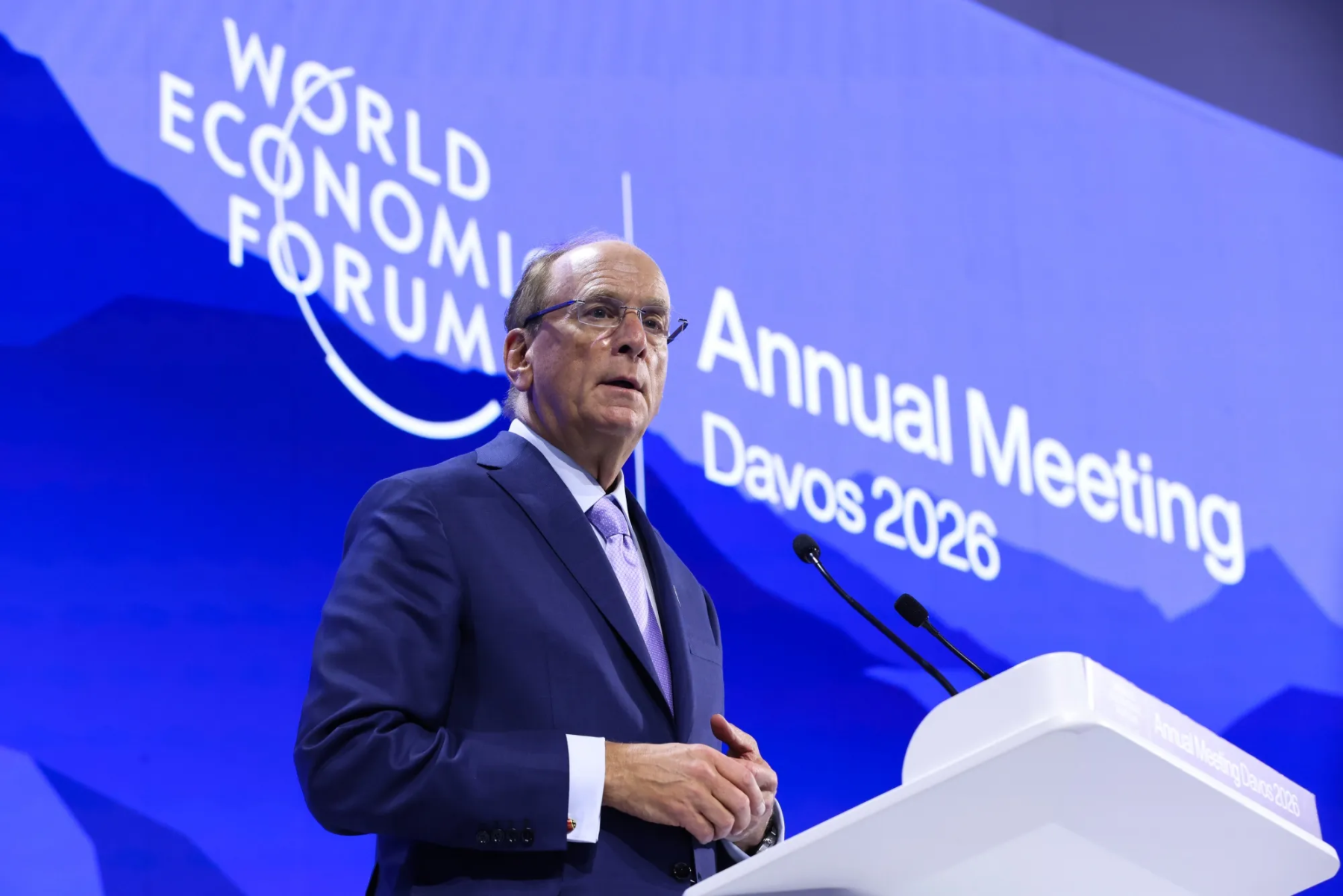
Larry Fink, CEO of BlackRock, believes that tokenization is the future of the financial system, and the entire financial system should quickly migrate to "a common blockchain" (which Garrett Jin refers to as Ethereum) to achieve seamless asset transfer. Tokenization will solve liquidity issues, reduce costs, and make asset movement between money market funds more efficient. Crypto and tokenization have become the themes driving the market, and BlackRock views them as institutional-level infrastructure.
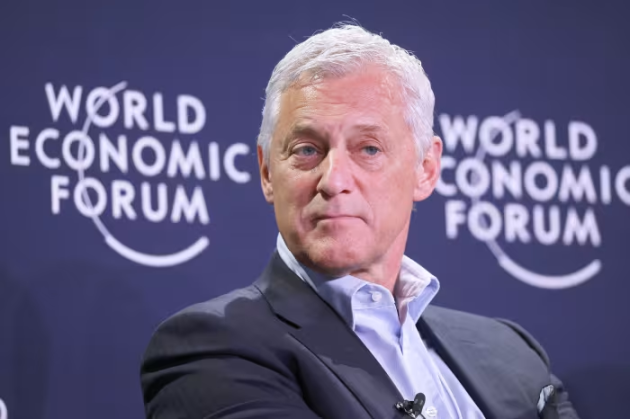
Bill Winters, CEO of Standard Chartered Group, stated that tokenization and stablecoins will bring advancements in global financial delivery, including reducing transaction costs and improving cross-border payment efficiency. The integration of traditional banks and blockchain has become a reality, and stablecoins have become the first truly universal blockchain use case.
Other traditional financial giants participating in the main venue roundtable also mostly expressed recognition of tokenization, digital assets, and programmable currencies in reshaping financial capabilities, but also believe that banks should collaborate with blockchain rather than confront it.
免责声明:本文章仅代表作者个人观点,不代表本平台的立场和观点。本文章仅供信息分享,不构成对任何人的任何投资建议。用户与作者之间的任何争议,与本平台无关。如网页中刊载的文章或图片涉及侵权,请提供相关的权利证明和身份证明发送邮件到support@aicoin.com,本平台相关工作人员将会进行核查。


