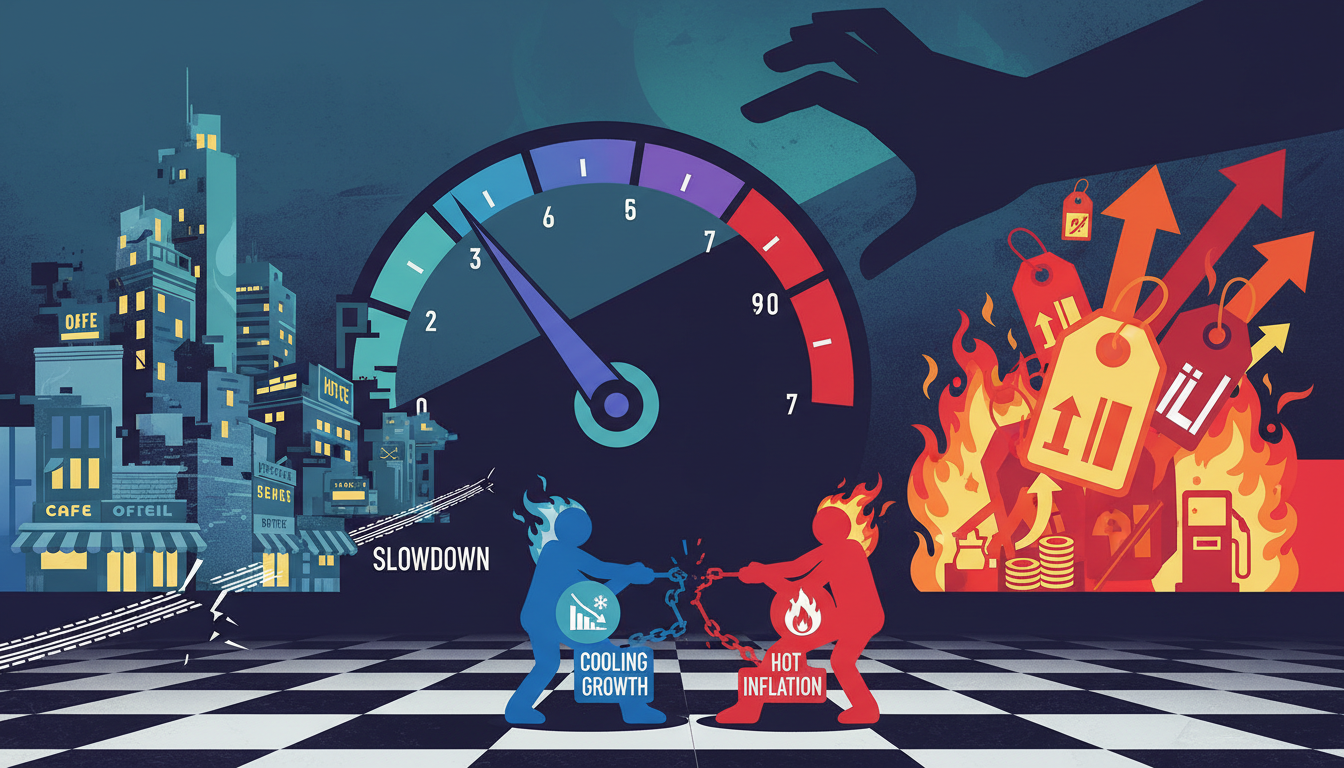
On January 25, 2026, at 8:00 AM UTC+8, the High Court of England held a procedural hearing regarding the civil recovery of 60,000 BTC in the money laundering case involving Qian Zhimin. The meeting did not discuss how to handle the assets themselves but focused on the procedural issue of "who is qualified to represent the victims." This case involves a massive amount of Bitcoin assets, with the assets online, the case in London, and the main group of victims in China, creating a typical scenario of cross-border rights protection. In parallel, on-chain and exchange data present a different picture: the internal BTC flow of exchanges has dropped to about 14,000 BTC, a new low since 2022, indicating a significant cooling of market-making activities. A subtle emotional echo is beginning to form between judicial freezes, cross-border recoveries, and market liquidity contraction, laying the groundwork for analyzing how this "court battle" is amplified by market narratives.
The London Court Opens: The Cross-Game of 60,000 Bitcoins
● Three Tracks in Parallel: According to publicly available information, the case currently presents a three-track procedural advancement. First, the UK criminal proceedings have concluded, establishing the illegal nature of the actions involved; second, the civil recovery process represented by the High Court in London is underway, focusing on how to identify and represent victims and recover assets; third, the Blue Sky Greys bankruptcy liquidation process is progressing in parallel, creating a real tension around "who gets to allocate first" concerning the same asset pool. This intertwining of established criminal, civil, and bankruptcy proceedings adds procedural complexity to any future developments.
● Boundaries of the Procedural Hearing: The hearing on January 25 was essentially a procedural hearing, focusing on victim representation rights, procedural arrangements, and the organization of future litigation, rather than making any substantive rulings on asset ownership or repayment rules. Under the chairmanship of Judge Turner, the court discussed which law firms would represent different groups of victims and in what manner, but did not touch upon the sensitive substantive issue of "how to allocate the 60,000 BTC." This means that for victims concerned about compensation ratios and repayment priorities, this hearing was more about establishing the rules of the game rather than revealing answers.
● Key Scale and Time Nodes: According to data disclosed by Caixin, the scale involved in this case is as high as 60,000 BTC, which is substantial enough to shake daily trading volumes in the current market environment. Research briefs also cite publicly available information stating that a bankruptcy hearing for Blue Sky Greys will be held on February 16-17, a timeline derived from a single public source, still subject to formal court scheduling. It can be confirmed that the civil recovery and bankruptcy liquidation processes are closely timed and will enter critical phases in the coming weeks, with the procedural game intensifying.
● Clear Information Boundaries: It is important to emphasize that current public information does not provide any reliable details on the final asset disposal plan or the court's preferential opinions on the representation structure. Whether the 60,000 BTC will be disposed of collectively in the future or how priorities will be allocated between different procedures remains in an "information vacuum." Any speculation regarding disposal paths, discount ratios, or timelines is currently irresponsible and could mislead public opinion and secondary market sentiment; this article will strictly remain within the framework of publicly verified information.
Fragmented Representation: How Chinese Victims Are Represented
● The Reality of Multiple Law Firms: From the currently disclosed information, it appears that the representation of Chinese victims is not by a single team but rather by multiple law firms taking on different geographic and channel-based groups of victims, each submitting materials to the High Court in London and vying for speaking opportunities. This "puzzle-like representation structure" is highly related to the complex backgrounds of the involved investors and their varied information channels, with many being introduced to different law firms through acquaintances or community referrals, ultimately forming an extremely decentralized representation map in London.
● Public Concerns from the Judge: According to reports from media such as Lydon, Judge Turner explicitly expressed concerns about the fragmentation of representation in court, believing that the current situation of multiple law firms acting independently could bring unnecessary complexity to subsequent procedures. For the court, if there are too many representatives with differing litigation strategies, coordination costs and hearing times will significantly increase, potentially affecting the clarity of fact-finding. This public statement from the bench indirectly confirms that the issue of representation has risen from a technical problem to a core variable affecting overall efficiency.
● Institutional Risks of Fragmented Representation: On a technical level, fragmented representation will first lead to a sharp increase in evidence integration costs—different law firms possess different materials, leading to overlaps and gaps. Additionally, it can prolong the entire litigation rhythm, as each firm needs to express, question, and supplement, passively extending the timeline. Furthermore, the victims' bargaining power is diluted among multiple representatives, weakening their overall negotiating capacity when dealing with liquidators or other procedural participants. Ultimately, the costs are likely to be borne by ordinary victims and the overall efficiency of repayment.
● Tension Between Freedom of Choice and Overall Efficiency: A deeper conflict exists between the freedom of individual victims to choose their lawyers and the overall litigation efficiency and concentrated negotiation power. Each victim wishes to find the most trusted and knowledgeable representative for their situation, which is a fundamental right; however, in a cross-border collective recovery structure, excessive fragmentation will inevitably slow down overall progress, making the prospect of "getting back even a penny soon" more elusive. How the High Court of London balances respect for individual choices with encouragement for concentrated representation will continue to manifest in subsequent procedures.
Bankruptcy Liquidation vs. Civil Recovery: The Underlying Battle of Time and Priority
● Priority Game Over the Same Asset Pool: The bankruptcy liquidation process of Blue Sky Greys and civil recovery share the same pool of potentially distributable assets, including the BTC in question linked to money laundering activities and their derivative values. The core subtext of these two lines is: will the asset disposal and distribution be led by the bankruptcy administrator, or will the victims construct a clearer "victim priority" framework through civil recovery, judgments, and settlements? This reality of "who gets to allocate first" is not just a technical issue but directly relates to the positioning of different parties in front of the asset pool.
● Key Time Node Arrangement: From a timeline perspective, the procedural hearing on January 25 primarily set the game rules and representation structure for the civil recovery line. Following this, the bankruptcy hearing on February 16-17 will focus on the progress and key arrangements of the Blue Sky Greys bankruptcy liquidation process. With less than a month between the two, it means that in the coming weeks, the High Court of England may continue to make phased decisions on the same batch of assets across different courts and procedures. This tight temporal misalignment makes each scheduling potentially a signal source for positions or priorities.
● Psychological Impact of Bankruptcy Path Priority: If we look at the speed of procedural advancement, the bankruptcy path is practically taking the lead, which may reinforce a sense of uncertainty among ordinary victims: will they be viewed as ordinary creditors or hold some degree of "recovery priority"? Differences in understanding repayment priorities and distribution ratios may inversely affect victims' judgments regarding collective litigation, settlement proposals, and even subsequent secondary market choices. Even if the court has not provided any clear rules, the mere order of procedures is enough to create an imagination of "who is prioritized" in public opinion.
● Rational Boundaries Amid Information Gaps: However, based on currently available public information, the specific connection mechanism between the bankruptcy liquidation process and civil recovery is almost blank, whether in determining the ownership of specific BTC or in delineating lines between bankruptcy creditors and specific victims, there are no details to rely on. Therefore, this article can only discuss the game structure within the abstract framework of "bankruptcy and civil proceedings running in parallel, sharing the same asset pool," without making any predictions about future distribution rules or priority orders, to avoid amplifying unnecessary panic or fantasies in an information vacuum.
Frozen On-Chain Flow: Court Battle and Bitcoin Market Sentiment
● Warning Signal of Low Flow: According to data sources such as CryptoOnchain, the internal BTC flow of exchanges has dropped to about 14,000 BTC, marking a new low since 2022. This indicator reflects the strength of net BTC transfers between mainstream platforms; when the figure drops to multi-year lows, it means that the chips available for trading and reallocation are continuously decreasing, compressing the market's "turnover blood volume." In this context, any news related to large BTC lock-ups or freezes is easily amplified into a narrative of "supply tightening further."
● Thin Trading and Market-Making Retreat: Public opinions from sources like Odaily point out that the continuous decline in CEX internal flow is highly correlated with a significant reduction in market-making activities, with narrowed quote depth and increased spread volatility becoming the intuitive experience for traders. Behind the relatively stable surface price of Bitcoin, the market is actually in a state of "thin trading"—concentrated transactions and weak liquidity mean that large orders or news stimuli in a single direction can more easily move prices. If the 60,000 BTC is viewed as potential variable chips, its narrative influence is magnified in such an environment.
● Judicial Lock and Supply Imagination: From a narrative perspective, the long-term locking of large amounts of BTC in cross-border judicial processes may be interpreted by some market participants as a signal that "circulating chips are being withdrawn," further reinforcing the imaginative framework of "supply tightening and prolonged halving effects." Especially when liquidity is already tight, keywords like "judicial freeze" and "long-term lock-up" are often actively embedded in bullish or long-term optimistic narratives, becoming a part of the support for price elasticity. However, this imagination remains more at the level of "potential impact" rather than immediately quantifiable reality variables.
● Necessary Distinction Between Narrative and Reality: It must be repeatedly emphasized that, to date, there has been no official timetable or disposal path announcement from the court or bankruptcy administrator indicating when and how these 60,000 BTC will be disposed of, whether they will be sold off in bulk or liquidated in stages. Therefore, equating the current procedural hearing directly with "selling pressure on the way" or "perpetual lock-up without circulation" is to treat narrative as fact. For traders and victims, a more rational approach is to view procedural progress as a long-term risk/opportunity variable rather than a direct signal for short-term trading.
The Mirror of Cross-Border Recovery: Jurisdiction and Victim Circumstances
● Misaligned Triangular Structure: This case presents a typical misalignment pattern in cross-border digital asset recovery—assets on-chain, the case in London, and victims in China. The borderless nature of Bitcoin allows the 60,000 BTC to flow across borders on-chain; however, once it involves freezing, recovery, and distribution, the procedural focus falls on London, which has a mature commercial judicial system, while the vast majority of funding sources and information asymmetries are located in China. This triangular structure makes language, legal applicability, time zones, and information channels natural "threshold costs" for victims.
● Why the High Court of England: Among many possible judicial stages, the High Court of England has become the focal point not only because of the flow of funds but also due to its long-standing reputation in commercial adjudication, fair liquidation, and global asset distribution practices. Historically, London has hosted countless cross-border bankruptcies and financial derivative disputes, with mature procedural tools for complex asset pools and cross-regional creditor collaboration. This combination of "rule of law credibility + liquidation tradition" makes all parties more willing to accept the enforceability and credibility of its final rulings.
● Rebalancing Rights Protection and Execution Efficiency: In cross-border rights protection, the protection of victims' rights and execution efficiency are constantly reshaped in the choice of jurisdiction, procedural paths, and lawyer negotiations. On one hand, it is necessary to ensure basic equality in procedural status between small victims and large institutions through open and fair procedures; on the other hand, it is essential to avoid the procedures being bogged down by litigation techniques and conflicts of representation through moderately centralized representation, collective litigation, or trust arrangements. The High Court of London needs to continuously adjust this balance in procedural design, while Chinese victims must make difficult choices between different law firms and paths.
● Guiding Directions for Future Disputes: From a broader perspective, this case indicates a clear trend: large cryptocurrency disputes will increasingly move towards multinational courts rather than being confined to a single regulatory jurisdiction. Professional collective litigation teams, cross-border clearing institutions, and legal service providers knowledgeable in on-chain evidence collection will play increasingly critical roles in similar cases in the future. For ordinary participants, how to connect with teams that have a global perspective and local communication capabilities early on may determine their bargaining power and final recovery rate in the lengthy procedures, rather than relying solely on single-point rights protection or fragmented representation.
The Next Act of Cryptocurrency Justice from a Procedural Hearing
The seemingly "technical" procedural hearing on January 25 did not provide any answers regarding how to recover and allocate the 60,000 BTC, but it set the tone for subsequent negotiations in terms of representation structure, procedural schedule, and court attitude: the reality of multiple law firms standing together, the judge's concerns about efficiency, and the temporal misalignment between bankruptcy liquidation and civil recovery will continue to ferment in the coming months. At the market level, the internal flow of BTC has dropped to about 14,000, with a retreat in market-making and tightening liquidity, resonating with the narrative of "supply tightening" due to the judicial lock on these involved assets; however, so far, there is no evidence indicating a direct causal chain between the two.
Looking ahead to the bankruptcy liquidation hearing in mid-February and the potentially dense procedural nodes that may follow, what truly deserves the attention of investors and victims is how the court delineates the boundaries of rights and responsibilities between bankruptcy and civil matters, and how it addresses the fragmentation of representation, rather than making subjective interpretations of disposal results and compensation ratios in advance. As the scale of cryptocurrency assets enters the "court era," the intersection of on-chain assets and offline procedures will become increasingly frequent. Those who can remain calm in a situation of high information asymmetry and emotional volatility, identifying verified facts and the boundaries of unverified speculation, are more likely to minimize losses in this prolonged game and capture real opportunities amid uncertainty.
Join our community to discuss and become stronger together!
Official Telegram community: https://t.me/aicoincn
AiCoin Chinese Twitter: https://x.com/AiCoinzh
OKX Welfare Group: https://aicoin.com/link/chat?cid=l61eM4owQ
Binance Welfare Group: https://aicoin.com/link/chat?cid=ynr7d1P6Z
免责声明:本文章仅代表作者个人观点,不代表本平台的立场和观点。本文章仅供信息分享,不构成对任何人的任何投资建议。用户与作者之间的任何争议,与本平台无关。如网页中刊载的文章或图片涉及侵权,请提供相关的权利证明和身份证明发送邮件到support@aicoin.com,本平台相关工作人员将会进行核查。