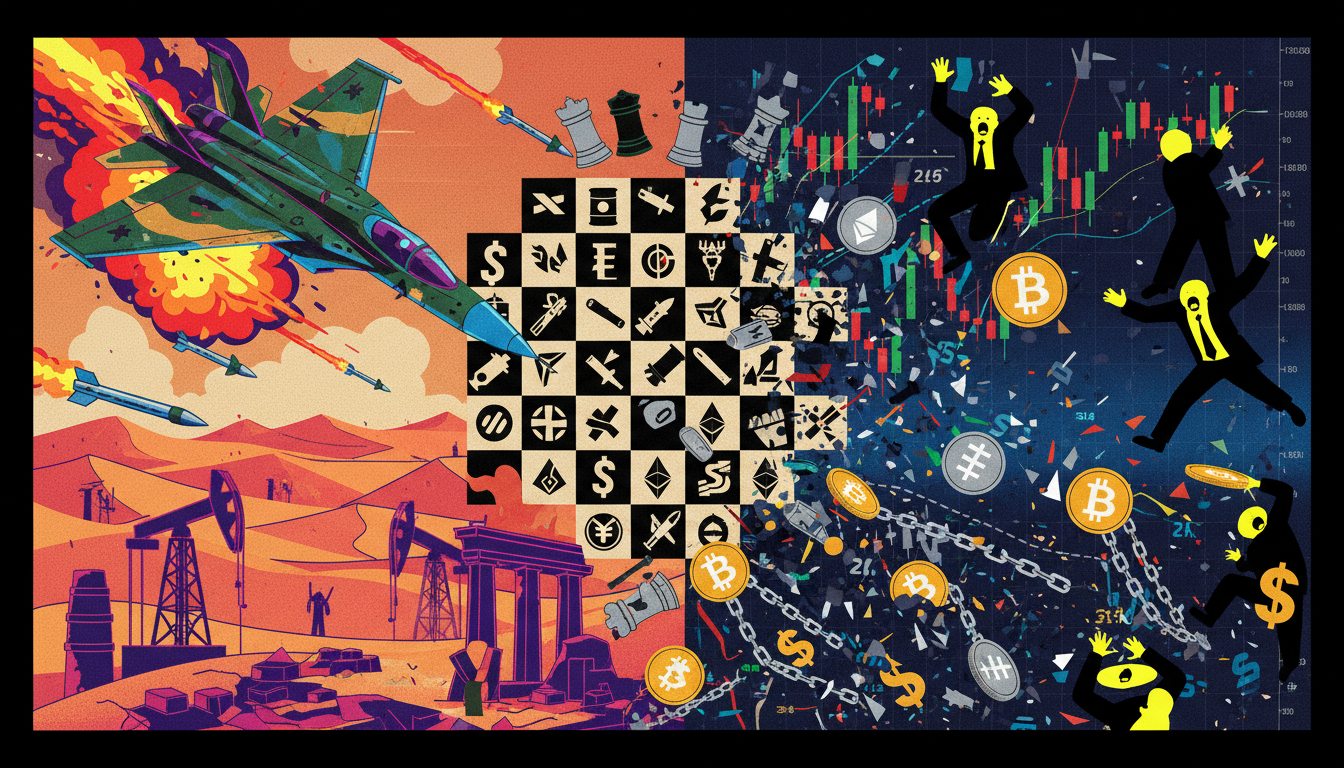
On January 24, East 8 Time, the Saga project suffered a hacker attack, with approximately $7 million in assets transferred in a very short time, including USDC, yUSD, ETH, and tBTC (according to a single source). Public tracking shows that about $6.2 million was quickly split into 5 wallet addresses, and most of the funds were subsequently funneled into the Tornado Cash mixer, attempting to sever the on-chain traceable path. This incident is not just a conventional "hacker theft," but a direct collision between on-chain anonymity tools and increasingly strengthened centralized regulation. This article will trace the flow of funds from the project to the hacker, then to the mixer and regulatory agencies, outlining a boundary that is being rewritten.
The One Hour Breakdown of $7 Million
● Timeline Reconstruction: On January 24, after the Saga wallet was breached, the project’s assets were concentrated and transferred out in a short time, with tokens worth millions of dollars flowing from controllable addresses to unknown accounts. Since the official did not disclose the exact block height and timestamp, the outside world could only reconstruct this timeline from on-chain records disclosed by security companies: the attack occurred almost simultaneously with the outflow of funds, and by the time the community became aware of the anomaly, the main funds had already completed the first round of transfers.
● Rapid Splitting into Five Addresses: After the hacker gained control of the funds, approximately $6.2 million was quickly dispersed into 5 independent wallets. The amounts received by each wallet varied, but the overall purpose was highly consistent: to reduce the risk of single-point exposure through address splitting. This multi-address splitting visually scattered the scale of funds, providing buffer time for subsequent multi-path transfers, cross-chain operations, or mixing, while also increasing the difficulty for security teams to reconstruct the full picture of the funds.
● The Impact of 2,400 ETH: According to a single source, a total of 2,400 ETH was transferred along the relevant path, amounting to approximately $7.0975 million at the time, which roughly aligns with the scale of "about $7 million stolen." For a single project, the evaporation of thousands of ETH from an officially controlled wallet within an hour not only shook the project's own financial security but also created a strong psychological impact at the community level, amplifying the collective anxiety that "hackers are everywhere."
● Traceability and Attack Occurring Simultaneously: Shortly after the attack, security teams such as CertiK issued warnings, stating that "the flow of funds has been identified by multiple security teams." This means that while the hacker was still completing the first round of fund splitting on-chain, the tracking mechanism had already begun to operate. The hacker and security teams engaged in a tug-of-war over the same batch of addresses: the former attempted to quickly send the funds into deeper layers of anonymity, while the latter raced against time to intercept every on-chain piece of evidence of the transfers.
How Five Wallets Disappeared into Tor
● The Operational Logic from Dispersion to Aggregation: The hacker first split approximately $6.2 million into 5 wallets, completing "horizontal dispersion," and then initiated multiple transfers from these addresses to Tornado Cash, completing "vertical aggregation." This path of dispersing first and aggregating later not only reduced the visibility of individual transfer amounts but also allowed the hacker to flexibly control the amount and timing of each injection based on the depth of the mixer’s pool and the current transaction congestion.
● The Working Principle of Mixers: Mixers like Tornado Cash essentially accept user deposits of the same asset and then "shuffle" the sources through smart contracts and cryptographic tools. After users deposit assets into the contract, they receive a proof (note) and can later withdraw an equivalent amount at another address. Due to the aggregation and unified processing of assets during the process, even if external observers see all transaction records, it is difficult to correlate the final withdrawal address with the initial deposit address, effectively "laundering" the stolen funds at the ledger level.
● Reproduction of a Typical Money Laundering Path: In the Saga incident, a textbook-style on-chain money laundering path can be observed: first, the project wallet was breached, and assets were transferred to the hacker-controlled main address; then, the funds were split into multiple intermediary addresses, completing a "slicing"; next, these addresses funneled funds to mixers like Tornado Cash, completing the mixing and shuffling; finally, the hacker could withdraw from new addresses over a longer time frame, exchanging for other assets or transferring across chains, thereby diminishing the connection to the original attack event.
● The Tension Between Public Visibility and Anonymous Tools: The market voice that "the flow of funds has been identified by multiple security teams" demonstrates the power of on-chain transparency, while also revealing the boundaries of anonymous tools: all transactions are publicly visible, but once they enter the black box of a mixer, it becomes difficult to accurately pinpoint the final destination of the funds within the current regulatory and technical framework. Thus, the Saga incident becomes a concentrated display of the tension between on-chain transparency and privacy tools.
The Direct Conflict Between Regulatory Hands and the Mixer Black Box
● The Regulatory Controversy of Tornado Cash: Over the past few years, Tornado Cash has been frequently used for laundering funds from hacker incidents and has been named by global regulatory agencies multiple times, with some developers even facing legal accountability. Regulators emphasize its extensive use for sanction evasion and illegal financing, while the crypto community argues that it is one of the few tools that truly protect on-chain privacy. The Saga incident once again tears open this regulatory rift, bringing Tornado Cash back to the old question of "evil tool or neutral infrastructure."
● The Technical Confrontation Between Traceable Chains and Anonymous Pools: On an open chain, all transaction records, amounts, and address changes are public, allowing security teams to trace back to the source along UTXO or account relationships. However, mixers cut this path into several segments that cannot be seamlessly pieced together through fund aggregation, shuffling, and delayed withdrawals. For hackers, mixers provide a "relatively optimal solution" between risk and efficiency, maintaining decentralization while posing substantial obstacles to regulation and tracking at this stage.
● Compliance Attempts to Block Mixer Flows: Security companies and on-chain analysis institutions typically mark mixer-related addresses as high-risk within the legal limits, providing blacklists or risk scores to exchanges, custodians, and compliant wallets. Law enforcement agencies attempt to intercept funds when they leave the mixer and re-enter fiat or compliant assets by requiring centralized service providers to implement KYC/AML. However, as long as hackers persist in circulating within the decentralized world or jump through multiple layers across chains, regulatory tools find it challenging to achieve complete interception.
● The Dilemma of Visible Paths but Difficult Recovery: In the Saga incident, the attack path, fund splitting, and mixer entry were almost entirely exposed on-chain; the outside world can "see" where the money went but still lacks the means for mandatory recovery or freezing. This "visible yet powerless" state reflects the current boundaries of regulatory capability—without centralized custody points or compliant bridges, on-chain transparency does not equate to executable judicial power, which is also the reality that emboldens hackers to continue using mixers.
From USDC to R3: Another Compliance Narrative Line
● The USDC Regulatory Approach Under the GENIUS Act Background: In another parallel narrative, the U.S. GENIUS Act has proposed that stable assets like USDC must be fully asset-backed (according to a single source), elevating reserve transparency and compliance to the core of the regulatory agenda. This logic emphasizes that "every token is backed by real, verifiable assets," supplemented by auditing and disclosure mechanisms, attempting to bring on-chain assets into a regulatory framework similar to traditional finance.
● R3's Tokenization Platform on Solana: At the same time, R3 plans to build a tokenization platform on Solana, intending to manage over $10 billion in assets (according to a single source), representing another heavyweight institutional compliance route. Its target audience includes banks, financial institutions, and large enterprises, aiming to bring real-world assets onto the chain for trading and settlement in a fully regulated environment, contrasting sharply with the open DeFi context of Saga.
● Two Worlds on the Same Chain: On one side, the stolen USDC and other assets from the Saga incident are funneled into anonymous mixing pools; on the other side, USDC is required to undergo stricter audits and reserve constraints under the GENIUS Act framework. This juxtaposition presents "two parallel orders on the same public chain": one pursuing transparency, auditability, and accountability; the other utilizing technology to obscure identity and funding sources, striving to stay as far away from traditional finance and regulatory oversight as possible.
● The Heavier Compliance, the More Reliance on Anonymity: As USDC regulation intensifies and platforms like R3 advance institutional-level infrastructure construction, the rules of the on-chain "bright side" become increasingly complete, and the reliance of hackers and gray market funds on anonymous tools also rises. In a high-pressure compliance environment, legitimate funds are more willing to enter compliant corridors like R3, while illegal funds are forced into shadow spaces like Tornado Cash, pulling the entire market further apart at the ends of auditable and non-auditable.
Retail Investors Waver Between Bloodshed and Meme Coins
● The Risk Appetite Behind PENGUIN's Market Value Surge: In stark contrast to the hacking of Saga, the meme coin sector remains fervent. According to GMGN data, a meme coin PENGUIN has surpassed a market value of $80 million (according to a single source), indicating that amidst frequent security incidents, there is still a significant amount of capital in the market chasing high volatility and high uncertainty assets. This emotional dislocation constitutes the true backdrop of the current crypto market.
● The Divergence Between Hacker Losses and Speculative Frenzy: On one side, project teams and users are overwhelmed by millions of dollars in losses; on the other side, retail investors are engaging in "tenfold, hundredfold" fantasy games in the meme sector. For many newcomers, hacker attacks seem to be just a fleeting negative event in the news stream, rather than a core variable to be included in investment decisions, and this psychological divergence exacerbates the intergenerational transfer of risk.
● The Era Footnote of Nifty Gateway's Closure: Meanwhile, the NFT platform Nifty Gateway announced it will shut down by February 23 (according to a single source), marking a somewhat desolate end to the previous round of NFT frenzy. Its exit reminds the market that stories once chased by countless people may quietly fade away under the tide of liquidity withdrawal and regulatory pressure, while new speculative narratives quickly take over on the other side.
● Retail Investors' Risk Choices and Apathy: In an environment characterized by tightening regulation, frequent hacker incidents, and unrelenting meme enthusiasm, ordinary investors' risk choices often oscillate between "fear" and "apathy." Some distance themselves from the on-chain world, while others selectively turn a blind eye to news of bloodshed and wealth myths, focusing solely on the immediate profit curves. This structural apathy lays the groundwork for the next security incident and liquidity crunch.
Hackers Will Not Disappear; Boundaries Are Being Redefined
The Saga incident, with a loss of approximately $7 million, $6.2 million in multi-address splitting, and the core role of Tornado Cash, has once again torn open the wound of the industry's compliance narrative. The on-chain public ledger makes the attack path clear, while the mixer cuts off the executable accountability link at critical nodes. Security teams and hackers engage in close combat over the flow of funds, yet it remains difficult to change the reality of "clear paths, hard to recover funds."
In the future, it is foreseeable that centralized regulation, on-chain transparency, and privacy tools will coexist for a long time and will continue to pull at each other on policy, technical, and market levels. Regulation attempts to incorporate more and more assets into a compliance framework through solutions like the GENIUS Act and platforms like R3; privacy tools seek survival space in the gaps of law and technology, providing infrastructure for both legitimate privacy needs and illegal concealment activities.
As USDC regulation strengthens and compliant platforms like R3 rise, the money laundering space for hackers at traditional financial exits and mainstream trading channels will inevitably be further compressed. However, this does not mean that risks will automatically disappear; rather, they are more likely to shift to more concealed and decentralized corners of the blockchain. For project teams, security budgets can no longer be seen as a "cost center" but must be regarded as a core production factor. For investors, asset selection and risk awareness need to be upgraded in sync, reassessing exposure from dimensions such as whether there is an audit, whether compliant custody is used, and whether there is exposure to high-risk contracts, learning to make more informed choices between light and shadow.
Join our community to discuss and become stronger together!
Official Telegram community: https://t.me/aicoincn
AiCoin Chinese Twitter: https://x.com/AiCoinzh
OKX benefits group: https://aicoin.com/link/chat?cid=l61eM4owQ
Binance benefits group: https://aicoin.com/link/chat?cid=ynr7d1P6Z
免责声明:本文章仅代表作者个人观点,不代表本平台的立场和观点。本文章仅供信息分享,不构成对任何人的任何投资建议。用户与作者之间的任何争议,与本平台无关。如网页中刊载的文章或图片涉及侵权,请提供相关的权利证明和身份证明发送邮件到support@aicoin.com,本平台相关工作人员将会进行核查。