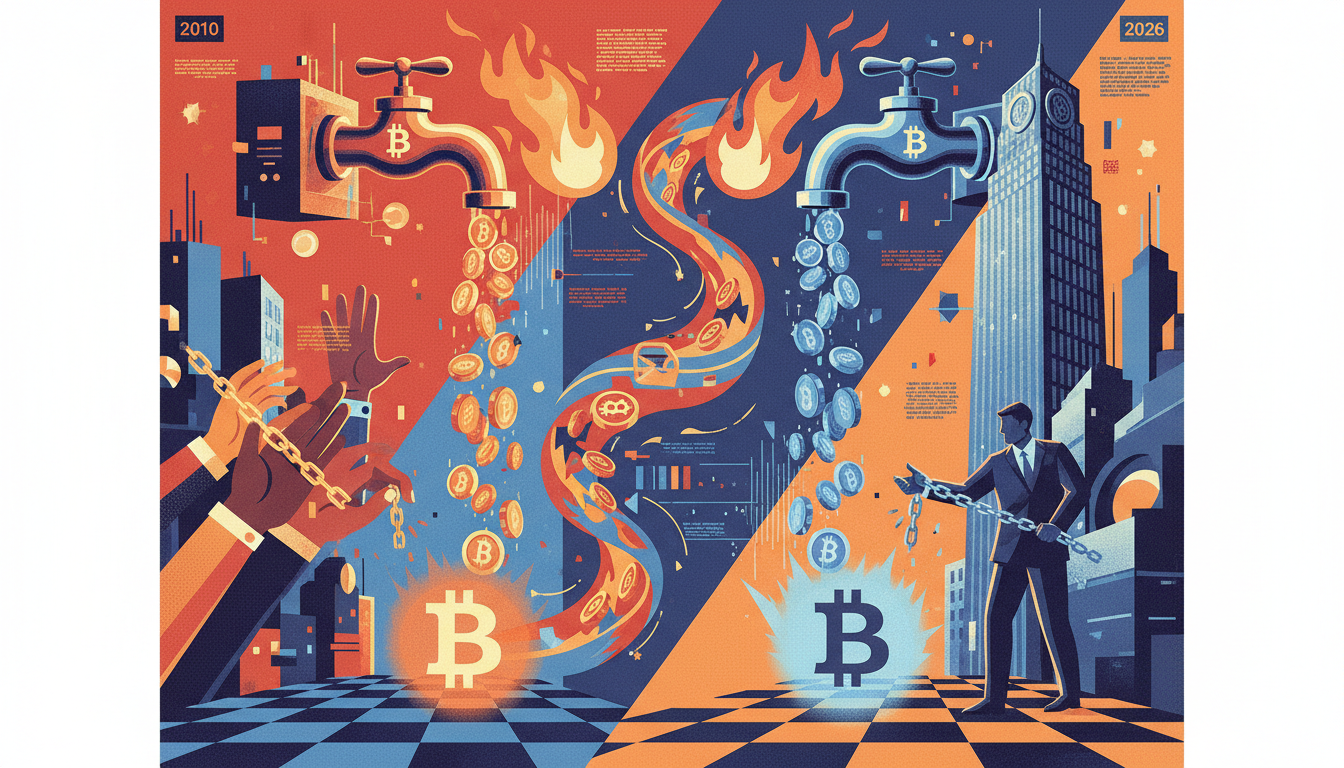
On the night of January 24, 2026, in the East 8 Time Zone, OKX brought the starting point of the "new cycle" to the forefront during its New Year's Eve dinner event. During the gathering, OKX founder and CEO Star clearly stated that the platform will take on more industry responsibilities moving forward, promoting cross-chain assets and RWA on-chain, upgrading X Layer and OKX Web3 Wallet, and actively distancing itself from the "get-rich-quick" narrative, instead betting on compliance and diversified financial services. At this point, those born in the 90s, 95s, and 00s have become significant participants in crypto assets; they chase stories of doubling their investments while also hoping for a more stable "asset entry." The upgrades in RWA, cross-chain assets, and Web3 infrastructure are forming the main storyline for this generation. The question is: in an environment where regulatory games and market speculation coexist, can OKX's chosen path win it a sustainable space for survival?
Farewell to Get-Rich-Quick: A Narrative Shift for Leading Exchanges
● Industry Responsibility and Narrative Shift: At this 2026 New Year's Eve dinner, Star systematically positioned OKX's future as a platform that "takes on more industry responsibility," rather than merely a high-leverage traffic machine. He emphasized the need to provide richer and more diversified financial services, actively moving away from the "get-rich-quick" marketing slogan, shifting the focus from short-term trading volume to long-term trust accumulation. This narrative shift from "riding the wave of sentiment" to "managing expectations" essentially migrates the platform's core assets from traffic dividends to compliance and reputation dividends.
● Young Mainstream and Asset Allocation Narrative: Data shows that those born in the 90s, 95s, and 00s have become important participants in crypto assets. This generation has more diversified income sources and stronger financial awareness, but they are also more easily swayed by social media sentiment. If the platform continues to use "casino-like experiences" and extreme leverage as its main selling points, it will struggle to retain this group of users who have higher demands for security and product transparency in the long term. Therefore, transitioning from a "gambling table" to an "asset allocation terminal" is both a necessary response to the changing structure of young users and a passive choice to extend its own survival cycle.
● Signals to Cool Down High-Risk Fantasies: Looking back at past bull markets, the culture of FOMO, extreme leverage, and all-in bets has almost perfectly overlapped with the growth curve of leading platforms. OKX's public cooling of the "get-rich-quick fantasy" at this time is akin to stepping on the brakes for high-risk plays in the ambiguous zone of bull-bear transitions. This is not only a signal of self-restraint in a compliance context but also a stance to regulators and institutional investors that "we no longer focus on liquidation narratives."
● Ongoing Tension of Speculative Views: However, the speculative narrative has not disappeared due to the shift of leading platforms. Yi Lihua boldly stated, "ETH price will definitely exceed $20,000," while Arthur Hayes claimed, "Japan's intervention in the exchange rate will be extremely beneficial for Bitcoin." These vividly visualized price predictions continue to provide short-term emotional fuel for the market, spreading widely on social media and trading groups. The long-term asset story that OKX attempts to tell can only run parallel to these high-multiple fantasies and cannot completely replace them.
From Speculation to Assets: Ambitions for RWA and Cross-Chain
● Evolution of Exchanges to Global Asset Interfaces: Star emphasized cross-chain assets and RWA on-chain at the New Year's Eve dinner, revealing OKX's ambition to upgrade the exchange from a "pure trading platform" to a "global asset interface." In short, it is no longer just about facilitating buy and sell transactions, but about allowing real assets such as equity, debt, art, and real estate to be discovered, circulated, and valued within the OKX ecosystem in on-chain form. This change in positioning shifts the platform's narrative from "price volatility" to "asset mapping."
● Bridging Centralized and On-Chain Infrastructure: In line with this goal, OKX is upgrading X Layer and OKX Web3 Wallet, intending to create a smoother entry point that connects users in the CEX with the on-chain world. Whether it is cross-chain asset migration or the issuance and secondary trading of RWA, only when users can complete "on-chain + centralized" asset management in a unified experience can the platform truly capture the dividends of multi-chain and RWA migration, rather than being fragmented by public chains and wallet projects.
● Fixed Income Products and Conservative Funds: The Buidlpad Vault Phase II offering 8% fixed income and a $20 million hard cap is a typical example under this narrative. Compared to the extreme price fluctuations of dozens of times, these "quasi-fixed income" products provide predictable returns for more conservative funds, allowing institutions and high-net-worth individuals to participate in on-chain yields through OKX within a compliance framework, thereby partially shifting the platform's revenue structure from transaction fees and leverage profits to asset management fees and interest income.
● Young Investors Transitioning from All-In to Portfolios: For those born in the 90s, 95s, and 00s, an 8% fixed income may seem far less exciting than the "get-rich-quick dream," but after experiencing repeated high-level standstills and extreme pullbacks, such stable expected returns begin to gain appeal. OKX is attempting to reshape their mindset with tools like Vault, RWA, and cross-chain assets—not to solely bet on a single cryptocurrency or contract, but to seek a longer-term yield curve through portfolio allocation in "high volatility + fixed income + RWA exposure."
Regulatory Split Scene: U.S. Inaction and U.K. Swift Action
● U.S. Restraint: On the regulatory front, the U.S. Office of the Comptroller of the Currency (OCC) has chosen to continue processing World Liberty Financial's application while simultaneously refusing to open any form of "special review channel" for it. This approach is neither a clear approval nor a blanket ban; rather, it extends the timeline through "normal process advancement," maintaining regulatory ambiguity and flexibility. For all institutions hoping to engage in new crypto businesses in the U.S., this "inaction" means they can try, but cannot expect a policy accelerator.
● U.K. Tough Enforcement: In stark contrast, the U.K. has taken a hardline approach by directly recovering £5 million related to a money laundering case. While no details of the case have been provided, the amount and action itself convey a regulatory style of "discovering problems and taking swift action." The U.S. is slowing down in the approval phase, while the U.K. is speeding up in enforcement, creating a regulatory landscape of "slow approval + fast enforcement."
● Institutional Risk Management for Cross-Regional Platforms: In this temperature differential environment, platforms like OKX that operate across regions cannot accurately predict how each locality will act next; they can only choose to position themselves in advance on compliance and RWA narratives. By actively promoting asset compliance on-chain, standardizing KYC/AML processes, and favoring traceable assets and explainable yield products, the platform aims to reduce the institutional risk of being "single-point exploded" by a particular jurisdiction in the future, moving itself down from the position of a regulatory target.
● Interpreting Boundaries and Risk Bottom Lines: Within the current information framework, one can only interpret how participants constrain themselves based on the actions of "OCC continues processing without a special channel" and "U.K. swiftly recovers £5 million," rather than extrapolating specific predictions about future regulatory policies. OKX's choice is more of a defensive response to "regulatory uncertainty" rather than a bet on any specific policy direction.
ETF and Whale Stop-Loss: Funds Diverging on Two Tracks
● Slow Institutional Accumulation Signals: On the secondary market funding side, the Fidelity SOL ETF has seen a historical total net inflow of $148 million to date, while a single day net inflow of $1.87 million was recorded for the Solana spot ETF (according to SoSoValue). This data indicates that despite severe short-term price fluctuations, institutional funds are still entering on-chain assets in a more restrained and rhythmic manner, participating in the market through compliant shells like ETFs rather than directly rushing into high-leverage spot and contract battles.
● Passive Exit of Whales: In contrast, a large holder recently chose to stop-loss 1,999 ETH, locking in a loss of $1.815 million. Behind this individual action is a whole group of short-term players who entered at high levels and are passively reducing their positions; they are facing unrealized losses amid volatility and have no choice but to make a cut between emotion and risk management. The passive stop-loss of whales, alongside the steady inflow of ETF funds, creates a stark "funds scissors difference."
● Resonance with OKX's New Narrative: In this market structure, OKX's emphasized route of "compliant products + long-term asset allocation" naturally aligns with the logic of slow accumulation in ETFs—those willing to enter through ETFs and regulated products are often funds with longer time horizons and more stable liability structures; while those frequently swept in the contract and high-leverage battlefield are short-term speculators. This divergence objectively provides a realistic foundation for OKX to promote Vault, RWA, and multi-asset combination products.
● Japanese Intervention and Bitcoin Imagination: Meanwhile, Arthur Hayes' assertion that "Japan's intervention in the exchange rate will be extremely beneficial for Bitcoin" reignited some speculative imaginations among funds. Under this narrative, macro events are translated into significant benefits for a single asset, guiding traders to bet on short-term surges, contrasting directly with the ETF's "slow inflow, long hold" approach. The story that OKX attempts to tell is closer to the latter.
Young Retail Investors Taking Over: What Kind of Platform Does the New Generation Need?
● Structure and Demands of Young Participants: Today's crypto market sees those born in the 90s, 95s, and 00s not just as marginal players but as the main force in transactions and discourse. Most of their income does not come from traditional high-paying jobs but is composed of salaries, freelance work, content creation, and side businesses, resulting in unstable cash flow but strong information acquisition capabilities. The risk preferences of these investors are polarized: on one hand, they are willing to try high-volatility assets, while on the other hand, they have higher demands for platform security, asset custody, and product transparency.
● From Single Trading to Multi-Scenario Asset Living: OKX is attempting to transition young users from "only staying on the trading page" to a broader asset living scenario through Web3 Wallet, X Layer, and yield product combinations—allowing them to conduct asset entry and trading on CEX, manage on-chain assets through wallets, participate in RWA and cross-chain assets, and form a more complete asset closed loop with yield products like Vault. This multi-scenario layout essentially extends the user lifecycle from "active only in bull markets" to "long-term asset management."
● Pressure for Old Models to Exit: In the last cycle, many platforms focused their revenue on contract fees and liquidation profits, with product designs centered around increasing turnover rates and leverage exposure. However, as compliance pressures rise and the user structure becomes younger, if leading platforms cannot timely upgrade to a composite of "asset allocation + compliance services," they will struggle to establish a sufficient trust moat in the minds of the next generation of users; relying solely on high leverage is becoming increasingly difficult to maintain attraction.
● Psychological Tension and Narrative Response: The issue is that young investors are still attracted by the "doubling myth" while also being aware that they cannot withstand the life impacts of extreme pullbacks. This psychological tension requires platforms to provide both stimulation and a sense of security in their products and narratives. OKX is attempting to find a balance in this gap by emphasizing responsibility, compliance, and the role of asset entry, but whether this is enough to cover the complex emotions of young people who "want to get rich but fear getting hurt" still needs time to validate.
Can the Compliance Story Win Over Myths?
● Narrative Shift and Industry Mainline: Overall, OKX is transitioning from the old era story of "get-rich-quick" to a new role of "taking on industry responsibility and acting as a global asset entry point." Cross-chain assets and RWA on-chain, upgrades to X Layer and Web3 Wallet, the 8% fixed income and $20 million hard cap of Buidlpad Vault, along with the continuous inflow of ETF funds into assets like Solana, collectively form a mainline of the industry moving from speculation to assetization, from disorder to regulation.
● Preemptive Positioning and Power Struggle: The division and game at the regulatory level will inevitably prolong the timeline for compliance to truly take effect. The U.S. is cautiously advancing, the U.K. is strengthening enforcement, and other jurisdictions are constantly wavering. In this uncertain environment, if leading platforms do not clearly position themselves in advance on compliance and RWA narratives, they may lose bargaining power and survival initiative by the time policies are finalized. OKX has chosen the path of "first stating its position, then waiting."
● Coexistence of Speculative Myths and Compliance Growth: It is foreseeable that in the short term, Yi Lihua's "ETH will reach $20,000" predictions and Arthur Hayes' stories of "macro events instantly benefiting coin prices" will not disappear from the market and will likely remain the most shareable content on social platforms. However, at the same time, the steady inflow of ETF funds, the expansion of RWA pilots, and the increase in fixed income products are making "compliance growth + long-term value" a slow but steady underlying mainline. OKX is betting on this seemingly more "boring" curve.
● Choices for the Next Cycle: Ultimately, it all comes down to personal choice: in the next complete cycle, would you prefer to stake your chips on a get-rich-quick story that could trend on social media, or on a gradually growing, possibly more boring but longer-lasting era of compliance that exists in the regulatory cracks? OKX has already indicated its answer with the New Year's Eve dinner in 2026, while investors' answers are still on the way.
Join our community to discuss and grow stronger together!
Official Telegram community: https://t.me/aicoincn
AiCoin Chinese Twitter: https://x.com/AiCoinzh
OKX Benefits Group: https://aicoin.com/link/chat?cid=l61eM4owQ
Binance Benefits Group: https://aicoin.com/link/chat?cid=ynr7d1P6Z
免责声明:本文章仅代表作者个人观点,不代表本平台的立场和观点。本文章仅供信息分享,不构成对任何人的任何投资建议。用户与作者之间的任何争议,与本平台无关。如网页中刊载的文章或图片涉及侵权,请提供相关的权利证明和身份证明发送邮件到support@aicoin.com,本平台相关工作人员将会进行核查。