Trump made a strong statement at the Davos Forum, but quietly retracted the tariff threat on social media, causing U.S. stocks to surge, yet the rift in transatlantic relations is no longer easily mended.
The issue of ownership of Greenland, the world's largest island, became the eye of the geopolitical storm in early 2026. The U.S. suddenly suspended the tariff threat against eight European countries, with the previously scheduled tariff measures set to take effect on February 1 indefinitely postponed.
Danish Foreign Minister Lars Løkke Rasmussen cautiously stated, "Today's ending is better than the beginning." However, he quickly added that Trump's ambition to control Greenland remains a "red line for the Kingdom of Denmark."
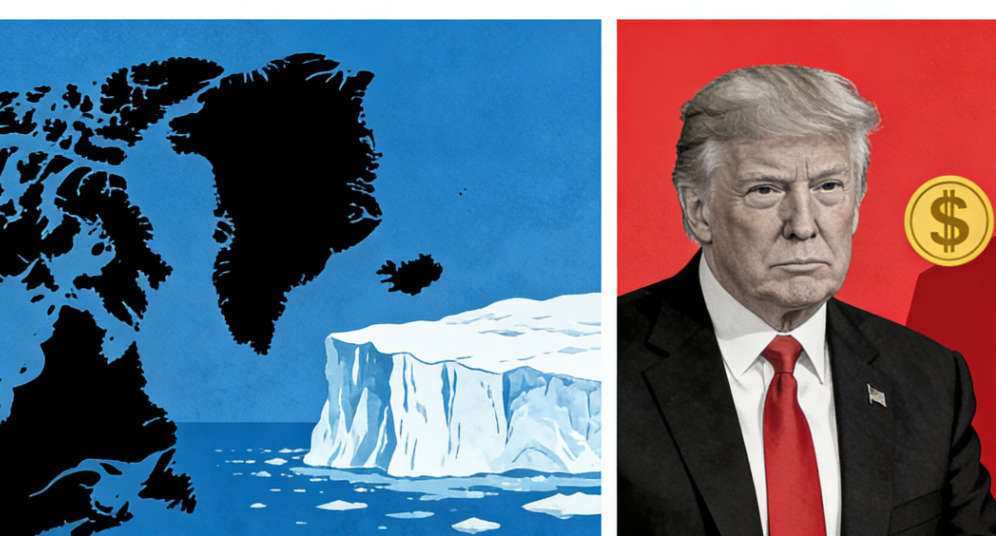
1. Situation Reversal
● Trump's dramatic shift in attitude occurred during the World Economic Forum in Davos, Switzerland. After meeting with NATO Secretary General Jens Stoltenberg, he announced on social media the suspension of tariff measures against eight European countries.
● He claimed to have formed a "framework for a future agreement" regarding Greenland and the entire Arctic region, stating that if this plan is finalized, it would be "great for the United States and all NATO countries."
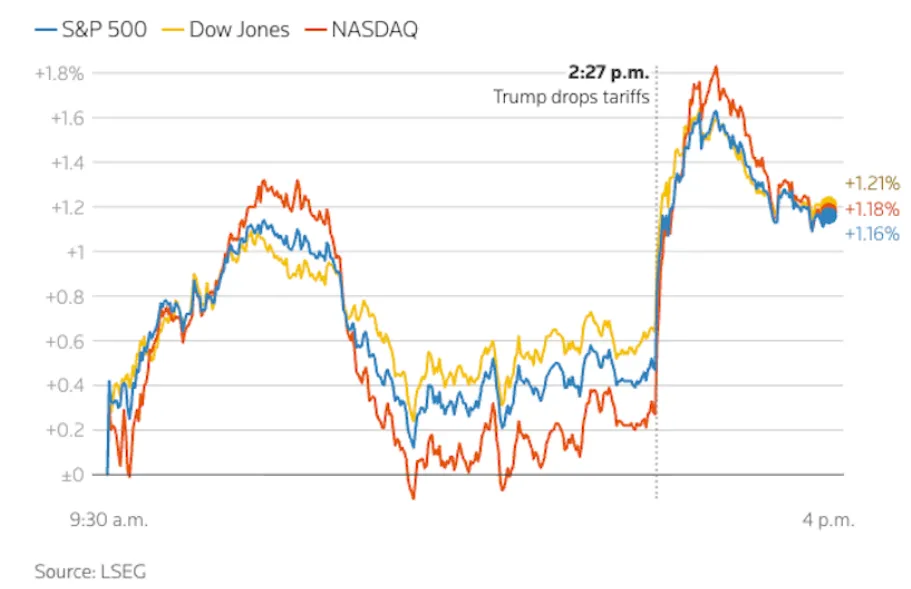
● The market reacted quickly and positively to this news. U.S. stocks surged, with the S&P 500 and Nasdaq 100 indices reaching intraday highs, U.S. Treasury bonds continued to rise, and the Bloomberg Dollar Index also hit a daily high.
2. Focus of the Game
● The core of the Greenland dispute lies in its irreplaceable strategic value. This island, located northeast of North America, is an autonomous territory of Denmark, with a high degree of self-governance, but defense and foreign affairs are still managed by the Danish government.
● As early as 1951, the U.S. signed an agreement with Denmark to establish a permanent U.S. military base in Greenland under the guise of NATO's collective defense. Trump has repeatedly justified seeking Greenland, claiming it is a "core national security interest" of the United States. His proposed "Iron Dome" missile defense system is strategically key to Greenland.
This system aims to protect the U.S. mainland from advanced aerial threats, and Greenland's Arctic location is precisely situated on the shortest polar route between the Eurasian continent and North America.
3. Deep Considerations
● The Trump administration's hardline stance on Greenland reflects its hegemonic core in foreign policy. White House Deputy Chief of Staff Stephen Miller publicly stated, "The world is dominated by power, force, and authority."
The U.S. has coveted Greenland since 1867, when it openly proposed to purchase the island.
● Trump explicitly stated in his Davos speech that he "would not use force to take" Greenland, but immediately added in a threatening tone, "You can say yes, and we would be very grateful; or you can say no, and we will remember that."
● This "strong-arm tactics" posture is essentially aimed at weakening Denmark and Europe's bargaining power through multi-faceted pressure, attempting to acquire rights related to Greenland at a very low cost.
4. Financial Turbulence
● Trump's tariff threats surrounding Greenland triggered severe fluctuations in global financial markets. Nick Twidale, Chief Market Analyst at AT Global Markets, noted: "Trump's tariff threats regarding Greenland have had a greater impact on the stock market than on the foreign exchange market as market risk sentiment weakens."
● Concerns that an escalation could lead to a full-blown trade war have put further pressure on U.S. stock index futures, with demand for safe-haven assets remaining strong. This concern is not unfounded. A large Danish pension fund has announced plans to liquidate its U.S. Treasury holdings by the end of the month, reflecting European capital's worries about the stability of U.S. policies.
● Meanwhile, the case regarding Trump's attempt to fire Federal Reserve Board member Cook is set to go to court, deepening investors' doubts about the stability of dollar assets and the independence of the Federal Reserve.
5. Transatlantic Rift
● The Greenland dispute has brought U.S.-European relations to a post-World War II low. Cui Hongjian, a professor at Beijing Foreign Studies University, pointed out that the Greenland issue marks a new phase in the deterioration of U.S.-European relations, showing "irreversible signs."
The conflict has escalated from past economic differences to a "friend or foe" contradiction, far exceeding the disputes over "cooperation or not" regarding the Ukraine issue.
● European Commission President Ursula von der Leyen made it clear in Davos: "The territorial sovereignty and integrity of Denmark and Greenland are non-negotiable." Danish Foreign Minister Rasmussen also responded firmly: "I would be willing to tell U.S. President Trump face-to-face that Denmark will not negotiate on the sovereignty of Greenland."
● A poll report from the European think tank European Council on Foreign Relations shows that most Europeans no longer view the U.S. as a reliable ally. French President Macron stated that Trump's trade strategy aims to "weaken and subjugate Europe."
6. Future Direction
● Although the Greenland deadlock has shown a superficial easing due to the tariff suspension, the deep-seated contradictions remain unresolved. While announcing the tariff suspension, Trump stated that Vice President Pence, Secretary of State Rubio, Special Envoy Vitkov, and "several others" would be responsible for subsequent negotiations.
● U.S. Commerce Secretary Ross hinted at a panel discussion in Davos that the situation "will end in a reasonable way." However, the definition of "reasonable" is understood very differently by both sides. Europe is accelerating its steps toward strategic autonomy. On the same day that Trump announced the tariff threat, the EU officially signed a free trade agreement that took 25 years of negotiation with the Southern Common Market.
● This agreement covers a market of over 700 million people, with a combined GDP accounting for about 25% of global GDP, seen as an important measure for Europe to reduce its dependence on the U.S. market.
The Northern Lights still shimmer over Greenland, but the clouds of geopolitics have not dissipated.
German military personnel have left Greenland after receiving emergency evacuation orders, and Dutch officers have also withdrawn. The rift in the transatlantic partnership extends from the podium of the Davos Forum to the financial markets and further to military bases in the Arctic Circle.
What Trump holds is no longer a list of tariffs, but a so-called "framework for a future agreement." On the desk of Danish Foreign Minister Rasmussen's office, the "red line of the Kingdom of Denmark" still remains.
Join our community to discuss and grow stronger together!
Official Telegram community: https://t.me/aicoincn
AiCoin Chinese Twitter: https://x.com/AiCoinzh
OKX benefits group: https://aicoin.com/link/chat?cid=l61eM4owQ
Binance benefits group: https://aicoin.com/link/chat?cid=ynr7d1P6Z
免责声明:本文章仅代表作者个人观点,不代表本平台的立场和观点。本文章仅供信息分享,不构成对任何人的任何投资建议。用户与作者之间的任何争议,与本平台无关。如网页中刊载的文章或图片涉及侵权,请提供相关的权利证明和身份证明发送邮件到support@aicoin.com,本平台相关工作人员将会进行核查。


