Original Title: "How to Calculate the 300 Million Investment with 900 Million Earned by Pump.fun?"
Original Author: angelilu, Foresight News
On January 20, Pump.fun, the most profitable meme coin platform in the Solana ecosystem, announced the establishment of its investment department, Pump Fund, and launched its first phase of a hackathon with a $3 million investment to support 12 projects. This figure, when compared to its cumulative revenue of nearly $900 million, presents a rather subtle contrast: it means that for every approximately $300 earned by the platform, only $1 is invested back into the ecosystem, accounting for about 0.33%.
New Attempts Under Competitive Pressure
The timing of the launch of Pump Fund is intriguing. According to trading volume data from Solana Launchpads, while Pump.fun still holds a dominant position, the emerging platform Bags has recently surpassed a market share of 10% in a short period, directly leading to a decline in Pump.fun's market share.
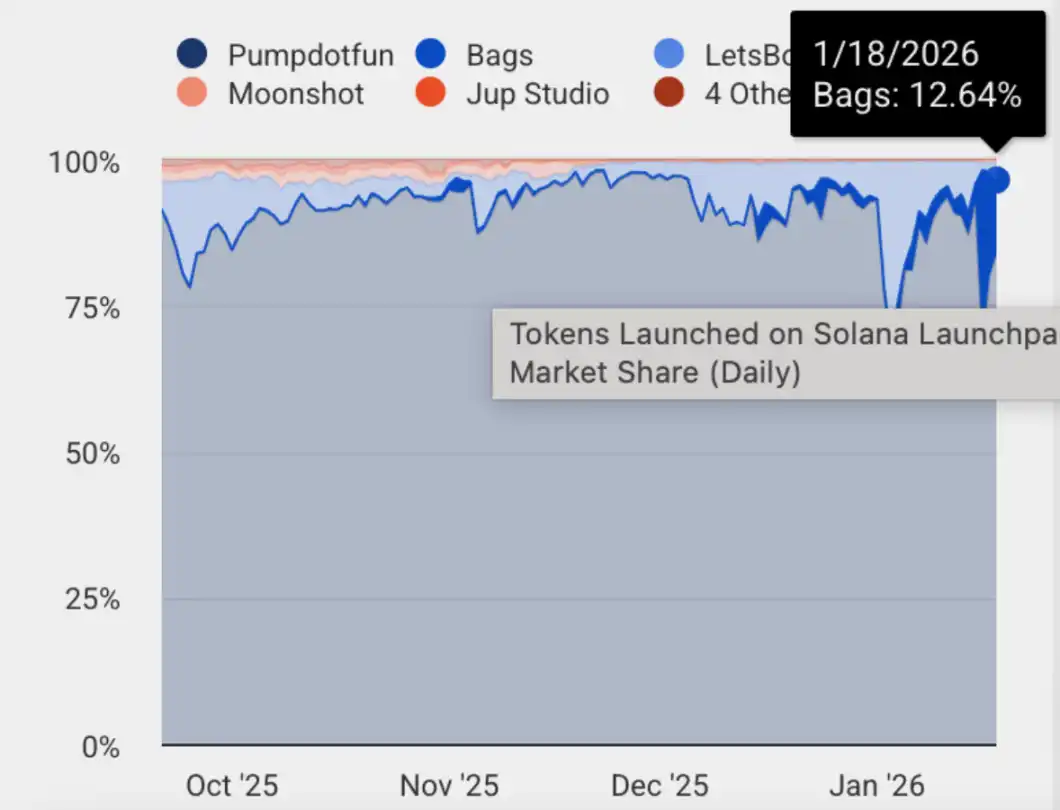
In this context, the $3 million ecological investment can be understood as an attempt at differentiated competition. When the technical barriers between platforms are extremely low and user loyalty is very limited, Pump.fun chooses to establish a new brand perception through ecological investment—not just as a trading platform, but also as a project incubator.
However, the question remains: is the investment ratio of 0.33% sufficient to support this positioning? In comparison, even relatively conservative tech companies have investment ratios that far exceed this figure by dozens of times. From a business logic perspective, this is more akin to a tentative market experiment rather than a comprehensive strategic transformation.
Let the Market Be the Judge
The question that Pump Fund's experiment aims to answer is: in the Web3 world, who should define a "good project"?
This global hackathon, named "Build in Public," adopts a set of rules that are completely different from traditional startup competitions: there are no expert judges scoring, no Demo Day roadshows; instead, the market decides directly.
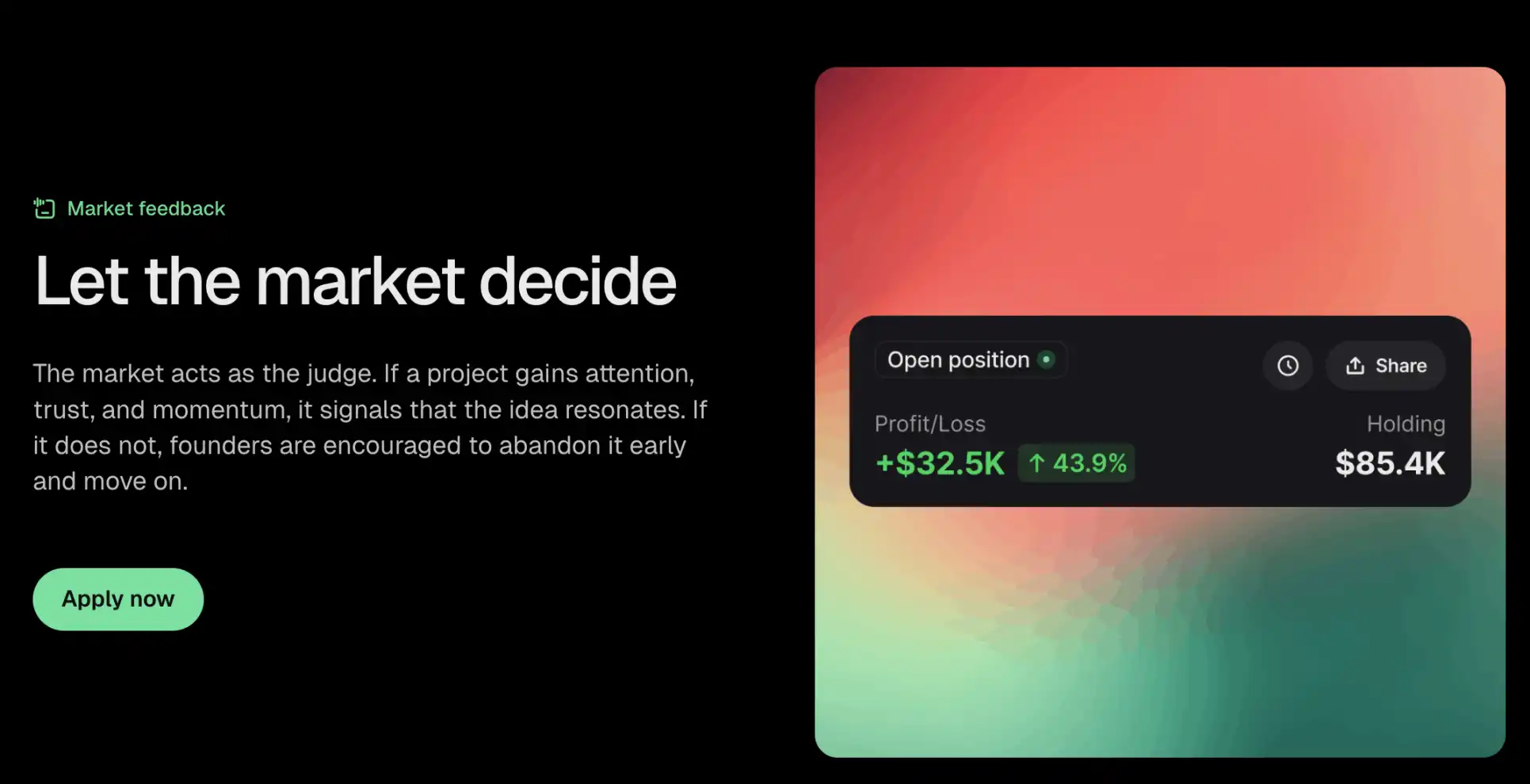
Specifically, participating teams must issue tokens on Pump.fun, publicly share their development progress daily, and showcase the building process through social media. The only criterion for judgment is market reaction. If a project gains attention, trust, and trading volume, it proves to be worthy of investment; otherwise, it will naturally be eliminated. From January 19, when applications opened, to February 18, when the first batch of winners will be announced, all projects will be subjected to real-time scrutiny in the open market. On February 18, at least one project will be selected and funded.
In the hackathon rules, the platform clearly states that "in addition to the appeal of social media, the long-term sustainability of the project will also be evaluated." However, how to find a balance between market heat and long-term value, and what the specific evaluation criteria are, remains unclear.
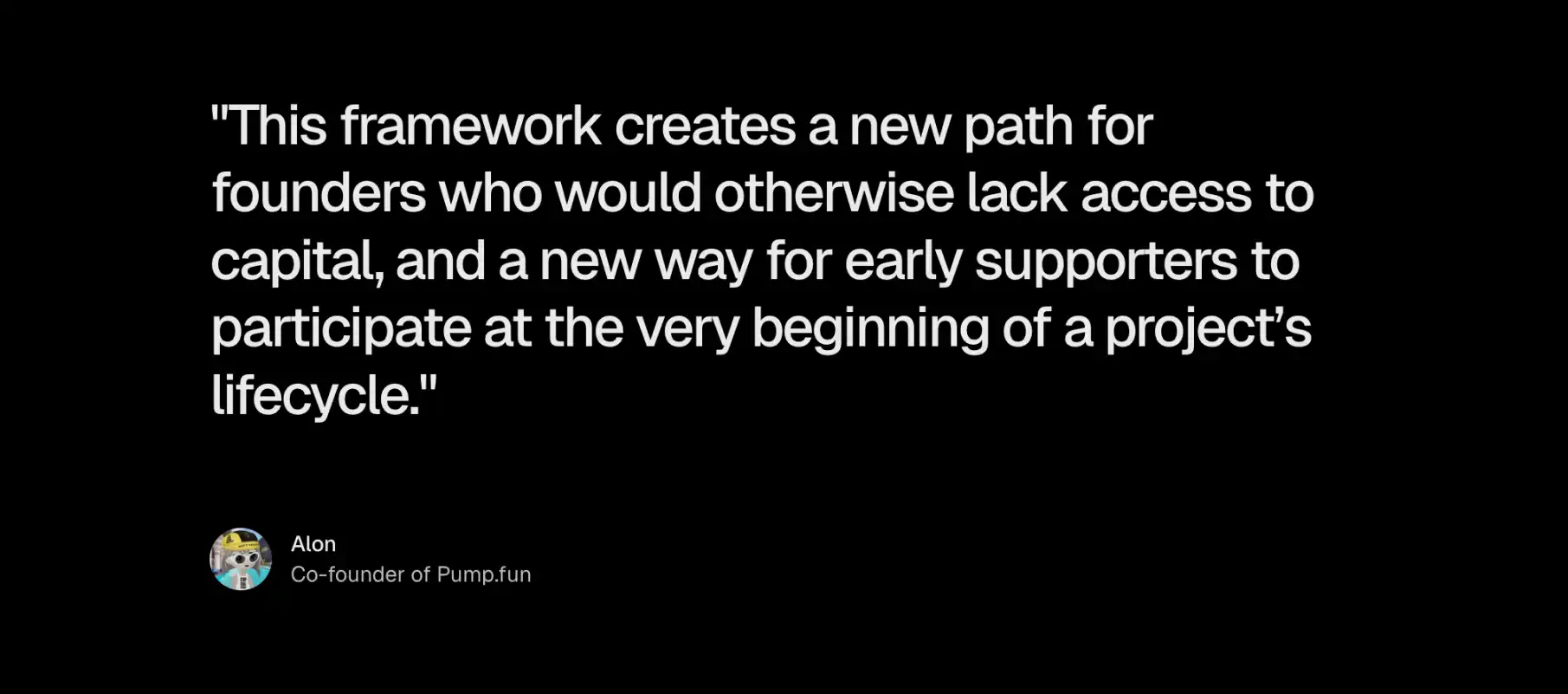
In the words of Pump.fun co-founder Alon, "This framework creates new pathways for founders who cannot access traditional capital." In a sense, this challenges the traditional VC investment logic—since Web3 emphasizes decentralization, why should the quality of projects be determined by a few investors?
A Deeper Business Dilemma
Setting aside the mechanism design, Pump Fund faces a more fundamental question: even if it successfully incubates high-quality projects, will these projects stay on Pump.fun?
This is the structural dilemma of meme coin platforms. Nasdaq trains tech companies for IPOs, and companies like Microsoft and Apple continue to trade on Nasdaq after going public, contributing long-term value to the platform. But the logic of meme coin projects is different. If a project achieves initial success on Pump.fun, accumulating a user base and market recognition, what will it do next? It is likely to migrate to platforms with greater liquidity, such as Binance or Coinbase, or even establish its own independent community.
Essentially, Pump.fun is a "launchpad," and once projects mature, they will naturally seek broader markets. More critically, the platform's revenue model makes it difficult to retain high-quality projects. Pump.fun earns fees from early high-frequency trading, but as a project matures, trading frequency often decreases, with more long-term holders and less speculative trading. From a revenue perspective, the platform is always most profitable from those short-term speculative "fast-moving consumer goods," rather than long-term built "value projects."
This may explain why the investment ratio is only 0.33%. Under the current business model, large-scale ecological investments not only have uncertain returns but may also end up benefiting others. This is not simply "stinginess," but a reflection of commercial rationality.
In four weeks, when the first batch of winning projects is announced, we may get preliminary answers. But the longer-term question remains: in the low technical barrier and weak user loyalty meme coin field, can ecological investment truly become a moat? As competitors like Bags continue to eat into market share, can this $3 million experiment help Pump.fun maintain its position?
免责声明:本文章仅代表作者个人观点,不代表本平台的立场和观点。本文章仅供信息分享,不构成对任何人的任何投资建议。用户与作者之间的任何争议,与本平台无关。如网页中刊载的文章或图片涉及侵权,请提供相关的权利证明和身份证明发送邮件到support@aicoin.com,本平台相关工作人员将会进行核查。


