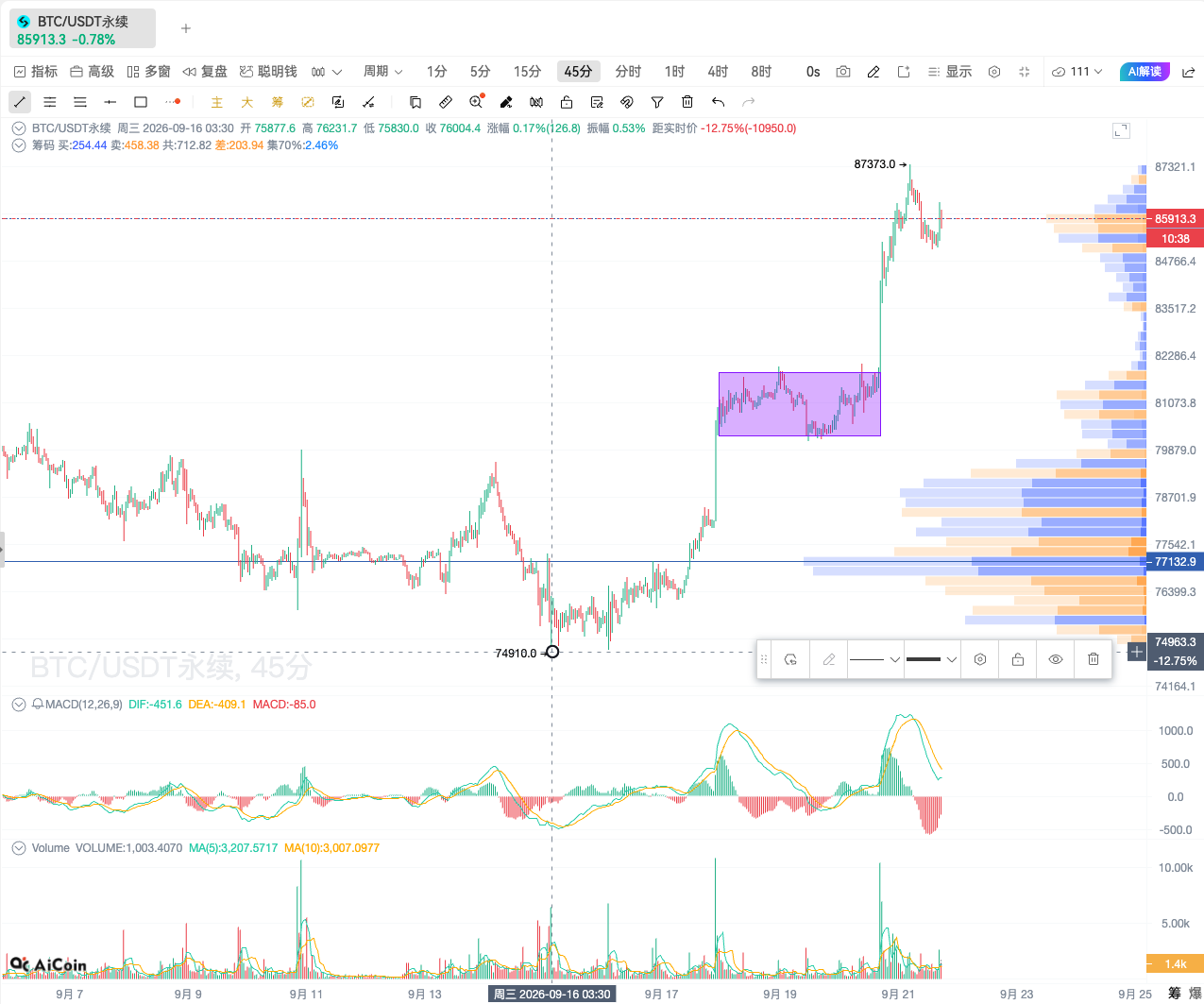
On January 14, 2026, Eastern Standard Time, the cryptocurrency derivatives market experienced severe fluctuations in a short period: nearly $577 million in short positions were liquidated across the network within 24 hours, with approximately $104 million liquidated in just the last hour (of which short positions accounted for $102 million). Under the pressure of passive buying, price fluctuations were instantly amplified. Meanwhile, the U.S. spot and quasi-spot channels quietly accumulated, with Bitcoin ETFs seeing a net inflow of 8,933 BTC (approximately $849.92 million) in a single day, Ethereum ETFs with a net inflow of 54,952 ETH (approximately $181.51 million), and SOL ETFs recording a net inflow of 42,888 SOL (approximately $6.22 million). The continuous buying from ETF funds contrasted sharply with the large-scale passive liquidation of short positions, forming the core contradiction of this market cycle: on one side, there is a net inflow that is more long-term and institutional, while on the other side, high-leverage shorts are concentrated in forced liquidations during short-term fluctuations. This article will explore the underlying logic behind this wave of volatility through three main lines: capital flow, macro expectations, and the structure of derivatives leverage.
Concentrated Liquidation of Shorts and Cyclical Resonance of Cleansing Peaks
● Capital liquidation rhythm: In the last 24 hours, the total liquidation of short positions across the network reached $577 million, setting a new record since October 11, 2025; among which, $104 million was liquidated in the last hour, with short positions accounting for $102 million, indicating a highly concentrated selling and passive buying in a very short time, forming a clear "overload" characteristic.
● Phase high point: Compared to the liquidation wave during the market crash on October 11, 2025, the current $577 million in short liquidations may not reach the extreme panic of that time, but it has constituted a phase peak since then, reflecting the cryptocurrency market's cyclical response to extreme volatility in a new cycle, rather than an isolated flash crash event.
● Structural bearishness: Structurally, short positions dominated the liquidations in the last 24 hours, and in the $104 million liquidation in the last hour, short positions accounted for $102 million, indicating an extremely imbalanced long-short ratio, pointing to a previous overall bearish market sentiment and high derivatives leverage, exposing shorts to systemic liquidation risks when prices slightly reversed.
● Result-oriented pressure: Current public information does not provide a specific "trigger" for this hour's peak liquidation, including details such as a single news event, specific platforms, or particular contract types. Within the range of verifiable information, it can only be explained from the results side: high-leverage shorts hit concentrated stop-loss and margin call thresholds under amplified volatility, triggering systemic liquidation, and forced liquidations transformed into large-scale buying, pushing prices "backward" in a short time, further squeezing out remaining short positions.
ETF Accumulation Against the Trend Creating Dislocation Between Spot and Derivatives
● Bitcoin main capital position: The U.S. Bitcoin ETF saw a net inflow of 8,933 BTC, equivalent to approximately $849.92 million at the day's market price, undoubtedly playing the role of the main force in spot and quasi-spot capital in this market cycle. This level of net subscription not only provides substantial support for spot buying but also hedges against the extreme bearishness in the derivatives market at the pricing expectation level.
● Secondary support from Ethereum and SOL: Compared to BTC, the Ethereum ETF recorded a net inflow of 54,952 ETH, equivalent to approximately $181.51 million, while the SOL ETF recorded a net inflow of 42,888 SOL, approximately $6.22 million. The three show a clear distribution structure of funds: the Bitcoin ETF is the absolute main battlefield, Ethereum is an important incremental channel, and SOL, while relatively smaller in scale, also reflects a tentative allocation towards high-beta assets.
● Dislocation of funds and liquidation: As an avenue for spot and quasi-spot transactions, ETF subscriptions and redemptions often continue to accumulate during low volatility phases to smooth costs and optimize allocations; meanwhile, high-leverage shorts in the derivatives market bear immediate pressure during short-term price fluctuations. Once prices break upward, the gradual buying from ETFs and the passive liquidation buying from contracts will experience a temporal dislocation, amplifying the upward price impact.
● Pull of different fund attributes: ETF funds are more long-term and institutional in nature, with buying motives often related to asset allocation, risk hedging, and compliance restrictions, leading to more disciplined and patient buying; in contrast, high-leverage shorts in derivatives are more focused on short-term speculation and trend trading. When "passive liquidation sellers" are forced out of the derivatives side and compelled to buy back, while "active buyers" continue to net subscribe on the ETF side, the forces on both ends resonate in the same direction, causing prices to exhibit significant violent pulls and short squeezes.
Macroeconomic Rate Cut Expectations and Recovery of Risk Appetite
Philadelphia Fed President Paulson recently released stronger rate cut expectation signals, interpreted by the market as an important guide for future marginal easing of the monetary environment. This statement cannot be simply attributed as a single trigger for this wave of volatility, but it undoubtedly constitutes an important macro backdrop for the recovery of risk appetite. As the turning point of the interest rate cycle approaches, interest in high-beta assets rises, providing macro soil for the "long crypto assets" narrative.
Generally speaking, rate cut expectations can influence asset prices through multiple channels. First, lower nominal interest rates compress real rates, reducing the risk-free return and raising the valuation center of various assets, provided that economic growth expectations do not significantly deteriorate. Second, expectations of marginal easing of dollar liquidity improve the credit environment, leading to a decline in risk premiums, making funds more willing to shift from low-risk assets to high-volatility varieties. Third, the repricing of the yield curve guides long-term rates downward, enhancing the discounted value of long-term asset cash flows. Historically, whether in traditional equity markets like U.S. stocks or in early rounds of crypto bull markets, similar monetary easing expectations have often accompanied the rise in valuations and trading enthusiasm for high-risk assets.
In the current environment of continuous net inflows into ETFs and simultaneous short liquidations, rate cut expectations further strengthen the narrative appeal of "longing crypto assets to hedge against currency depreciation and asset dilution." For institutions, increasing allocations to Bitcoin, Ethereum, or even some high-beta assets through ETFs can serve as a correlation hedging tool for traditional portfolios and can also be seen as a preemptive layout for future liquidity easing. However, it is important to emphasize that macro expectations carry a high degree of uncertainty, and the pace and magnitude of rate cuts may fluctuate with changes in inflation data, employment conditions, and policy orientations. Market participants who simply linearly extrapolate the current rise and liquidation rhythm while ignoring the potential repricing of the interest rate path may easily fall back into passivity in the next phase of volatility.
From the 2025 Crash to Today's Squeeze: Structural Echoes
Returning to October 11, 2025, the cryptocurrency market experienced a severe crash, accompanied by large-scale liquidations and a sudden withdrawal of liquidity. At that time, derivatives leverage was concentrated in a single direction, and risk management and margin mechanisms were continuously triggered under extreme market conditions, leading to a chain liquidation that dragged prices into distorted ranges. This extreme volatility left a profound "collective memory" in the minds of participants, influencing risk perception and behavioral choices during subsequent large fluctuations. The current $577 million in short liquidations is seen as a new peak since then, echoing this historical cycle.
The two events share clear structural commonalities. First, high leverage remains the core amplifier of price volatility; whether it is the one-sided drop in 2025 or the current concentrated squeeze, leverage will magnify slight price deviations into systemic risk events when sentiment becomes one-sided. Second, the one-sided market sentiment and high liquidity concentration on a few derivatives platforms lead to the accumulation of margin calls and forced liquidation orders in a short time, creating a "liquidation avalanche" effect, causing prices to deviate from the rational range of fundamentals and spot transactions in a very short time.
The difference is that the current market structure has significantly evolved compared to 2025: large-scale ETFs and other compliant spot channels provide a more stable trading bridge for mainstream assets. On one hand, these channels somewhat disperse liquidity risks; when severe volatility occurs on the derivatives side, the spot and ETF subscription and redemption mechanisms provide some price anchoring. On the other hand, the institutional funds in ETFs may also amplify long-short divergences; when sentiment on the derivatives side is extremely pessimistic, ETF funds choosing to accumulate against the trend will further exacerbate the adverse price pressure on shorts. For traders, under the backdrop of macro expectations and institutional funds entering the market, simply "copying old cycle operations" and attempting to replicate high-leverage short strategies from past extreme markets face significantly increased risks, and liquidation costs may far exceed expectations.
Who is Being Utilized by the Market in the Dislocated Trading Between Institutions and Retail
From the perspective of funding tools, the participants in this market cycle are clearly layered. On one end are the funds with continuous net inflows through ETFs, which are more inclined towards institutions and medium to long-term allocators. Their decision-making logic and assessment cycles are primarily quarterly or even annual, with a higher tolerance for short-term pullbacks, and their trading tools are mainly compliant, transparent, and easy to manage for risk. On the other end are the short positions concentrated in perpetual contracts, futures, and other high-leverage derivatives, where participants are mostly short-term speculators and trend followers, focusing more on intraday or weekly fluctuations, using high leverage to amplify returns and risks.
The motivations for institutions to increase their positions through ETFs are multifaceted, including: introducing new non-correlated assets under a compliant framework to optimize the Sharpe ratio of asset portfolios; increasing exposure to "digital gold" and growth assets in a declining interest rate expectation; and using auditable and custodial ETF forms for risk management and reporting. In contrast, some retail investors or speculative funds in the derivatives market adopt "high-leverage short strategies," attempting to bet on a pullback after prices have already risen significantly, seeking short-term gains from declines.
Combining the current $577 million in short liquidation data, a clear structural dislocation can be observed: on one side, the ETF side is "institutions slowly buying," accumulating at a relatively stable pace over several days or even longer periods; on the other side, the derivatives side is "retail aggressively shorting," continuing to pile up high-leverage short positions in a market that has already shifted towards bullish structure. When prices trigger critical volatility at a certain point, this dislocation is "reflexively utilized" by the market, evolving into a typical squeeze market—institutions and medium to long-term funds may not be actively shorting against the market, but under the backdrop of continuous buying, combined with passive liquidations of shorts, prices are forced to quickly price in favor of the longs.
This structural differentiation is not a one-time phenomenon and is likely to recur in subsequent cycles. ETF net inflows resemble a "slow variable" in the market, reflecting the allocation direction of medium to long-term funds, while liquidation data serves as a "fast variable" during extreme sentiment, representing the fragile moments of short-term leverage structure. For participants, observing both together provides a better understanding of the potential narrative for the market's next steps than simply chasing data from one side.
Signals from Data: How to View the Path After the Squeeze
In summary of this market cycle, at least three key data dimensions can outline its contours: first, the $577 million in short liquidations on the derivatives side and the $104 million peak liquidation in one hour, indicating a concentrated break in the leverage structure in the short term; second, the continuous net inflows of 8,933 BTC (approximately $849.92 million) into the U.S. Bitcoin ETF, 54,952 ETH (approximately $181.51 million) into the Ethereum ETF, and 42,888 SOL (approximately $6.22 million) into the SOL ETF, reflecting the counter-trend accumulation in spot and quasi-spot channels; third, the changes in rate cut expectations represented by Philadelphia Fed President Paulson provide a macro backdrop for the narrative of "longing high-risk assets," raising the willingness of institutions and medium to long-term funds to allocate.
Attributing this event simply to a single piece of news or an unverified "trigger" is not only inconsistent with the facts but also obscures the true forces driving the results. The core of this wave of volatility lies in the high-leverage short structure, the divergence of ETFs and other capital flows, and the simultaneous overlay of macro interest rate expectations, all of which together shape the instantaneous and severe price movements. The data itself merely represents the outcome; behind it is the dynamic reconstruction of market structure and risk appetite.
In the subsequent market, investors should prioritize tracking three types of indicators: first, the net inflow or outflow trends of ETFs and other compliant channels, which determine whether medium to long-term capital continues to accumulate or begins to exit; second, the leverage and long-short structure of futures and perpetual contracts, including the scale of open interest and funding rates, used to assess potential risk points for extreme liquidations; third, the interest rate and rate cut expectation paths at the macro level, especially the impact of inflation, employment, and central bank statements on market pricing, rather than emotionally fixating on the fluctuations of the liquidation amounts themselves and mistakenly treating the outcome as the cause.
From a prudent perspective, if institutional funds continue to net inflow through channels like ETFs, while the overall leverage in the derivatives market shows a significant decline, then price volatility is expected to gradually converge on a higher market capitalization platform, allowing the market to digest macro and fundamental information in a healthier manner. Conversely, if ETF funds begin to slow down marginally or even turn to net outflows, while leverage in the derivatives side accumulates again and sentiment shifts back to extreme one-sidedness, then the next "liquidation moment" may come faster and be harder to prevent.
Join our community to discuss and grow stronger together!
Official Telegram community: https://t.me/aicoincn
AiCoin Chinese Twitter: https://x.com/AiCoinzh
OKX Benefits Group: https://aicoin.com/link/chat?cid=l61eM4owQ
Binance Benefits Group: https://aicoin.com/link/chat?cid=ynr7d1P6Z
免责声明:本文章仅代表作者个人观点,不代表本平台的立场和观点。本文章仅供信息分享,不构成对任何人的任何投资建议。用户与作者之间的任何争议,与本平台无关。如网页中刊载的文章或图片涉及侵权,请提供相关的权利证明和身份证明发送邮件到support@aicoin.com,本平台相关工作人员将会进行核查。