Introduction
On January 15, the U.S. Congress will hold a final vote on the CLARITY Act. On the surface, this is a piece of regulatory legislation aimed at the cryptocurrency industry; but on a deeper level, it reflects a significant adjustment in the United States' strategic positioning of crypto assets within the global financial competitive landscape.
This is not the first time the U.S. has attempted to manage crypto assets, but it is likely the first time it has chosen to abandon a comprehensive suppression strategy based on uncertainty, opting instead to incorporate them into a controllable and absorbable institutional framework through legislation.
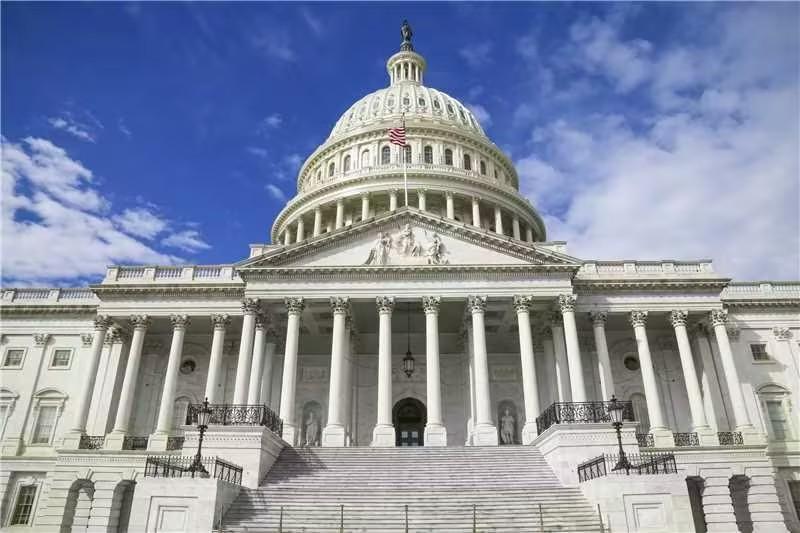
Image 1: U.S. Congress
1. From "Enforcement Blockade" to "Legislative Taming": Why Has the U.S. Attitude Changed?
In recent years, the dominant theme in the U.S. regarding the crypto industry has not been legislation, but enforcement.
The SEC has continuously expanded the interpretation of the definition of "securities," bringing a large number of crypto projects under the existing securities law framework. The core purpose of this approach is not to establish clear rules, but to freeze the pace of industry expansion through enforcement deterrence. While this strategy was effective when the market size was limited and the industry was still in its early stages, its limitations have begun to emerge as the environment changes.
First, the crypto market itself has developed to a size that cannot be ignored. The approval of Bitcoin spot ETFs means that Wall Street capital has deeply bound itself to crypto assets through compliant channels, and the U.S. financial system is no longer just a regulator, but a stakeholder.
Second, the outflow of capital and talent has become concrete and visible. More and more projects are choosing to register and operate in jurisdictions like Singapore, the UAE, and Europe, gradually revealing the risk of "hollowing out" in the U.S. regarding crypto innovation.
At the same time, the global regulatory race is accelerating. The EU's MiCA regulations have formed a complete system, and many places in Asia have adopted a strategy of "establishing rules first, then guiding development." If the U.S. continues to maintain a vague attitude, it may gradually lose its position in the future rule-making of crypto regulations.
In this context, the CLARITY Act appears more like a delayed but necessary lesson.
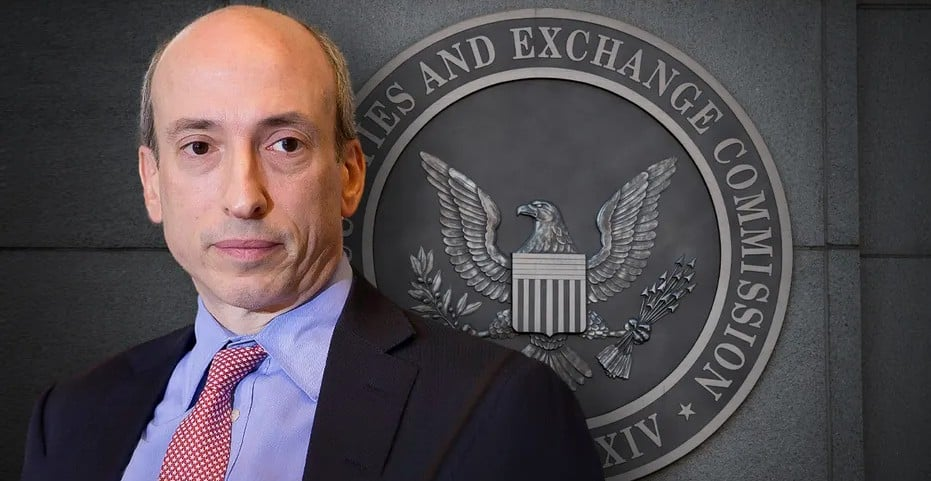
Image 2: Former SEC Chairman, who heavily suppressed crypto during his tenure
2. Handing Regulatory Authority to the CFTC: A Requalification of "Financial Attributes"
Why the CFTC and not the SEC? This is the most critical and strategically significant choice in the CLARITY Act.
The SEC's regulatory logic is built on the traditional securities system of "equity—corporate entity—information disclosure," but the vast majority of crypto assets do not possess these characteristics. They lack a clear corporate entity, do not have ongoing information disclosure obligations, and do not naturally correspond to equity or dividend relationships. Forcing them into the securities framework long-term will only create structural conflicts.
In contrast, the CFTC regulates the commodity and derivatives markets, and the core characteristic of a commodity is that it does not represent ownership but is a tradable, priceable value carrier.
Bringing more crypto assets under CFTC regulation legally acknowledges that these assets are closer to "new commodities" rather than "digital securities." This is not a compromise on individual assets but a systematic extension of the operational logic of crypto assets like Bitcoin.

Image 3: CFTC - U.S. Commodity Futures Trading Commission
3. What is Truly Being Protected is the Extensibility of the U.S. Dollar Financial System
A commonly overlooked question is: If the U.S. continues to suppress crypto assets, who will ultimately be harmed?
The answer is likely not the crypto industry itself, but rather the control power of the dollar system's extension.
Stablecoins, on-chain settlements, and DeFi liquidity have effectively formed a "shadow financial system" for the dollar on-chain. Currently, dollar-denominated assets dominate the global stablecoin structure, and a large number of on-chain financial activities have developed around it.
The significance of the CLARITY Act lies not in blocking the development of this system but in reincorporating it within a regulatory framework. By clarifying the compliance framework for the issuance, circulation, and related financial activities of stablecoins, the U.S. can ensure that this system does not operate completely outside its legal jurisdiction.
From this perspective, this is not a weakening of the dollar's influence but a form of re-centralization—bringing back the dollar financial activities that have already overflowed onto the chain into a controllable range.

Image 4: Dollar System
4. What Entrepreneurs Gain is Not Freedom, but "Permission to Exist"
It should be clear that the CLARITY Act does not represent a comprehensive loosening of the crypto industry.
What it offers is not unconditional freedom, but a manageable, auditable, and predictable state of existence. Once the institutional boundaries are clarified, the space for wild growth will be compressed, arbitrage models relying on regulatory vacuums will gradually disappear, and compliance costs will become the new industry threshold.
This means that the true beneficiaries will not be speculative projects, but rather protocols and platforms with long-term product logic, sustainable business models, and infrastructure attributes. The goal of the U.S. is not to nurture the next MEME but to filter out crypto infrastructures that can be embedded into the mainstream financial system.

Image 5: ETH hailed as "next-generation financial infrastructure"
5. The Real Issues the Market Will Face After January 15
Regardless of the vote outcome, the crypto industry will enter a new phase. At that time, the core focus of the market will no longer be "Will there be lawsuits?" but rather which assets will be explicitly excluded from the definition of securities, which business models can achieve scalable operations under the CFTC framework, and which projects have the long-term capacity to bear compliance costs.
This will be a re-evaluation based on slow variables rather than short-term emotion-driven speculation.
Conclusion: The End of the Crypto "Rebellion Period"
The symbolic significance of the CLARITY Act may outweigh its specific provisions.
It signifies that the U.S. is coming to terms with a reality: crypto assets cannot be eliminated, only absorbed by the system. January 15 may not be the starting point of a bull market, but it is likely a key turning point for the crypto industry to shift from "confronting order" to "integrating into order."
From this day forward, the crypto world will no longer center around the question of "whether it will be recognized," but will begin to face a more realistic and harsher challenge—within the established rules, who can still survive.
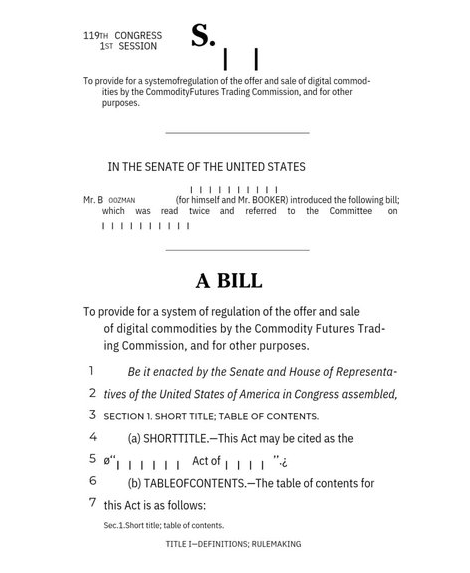
Image 6: CLARITY Act
免责声明:本文章仅代表作者个人观点,不代表本平台的立场和观点。本文章仅供信息分享,不构成对任何人的任何投资建议。用户与作者之间的任何争议,与本平台无关。如网页中刊载的文章或图片涉及侵权,请提供相关的权利证明和身份证明发送邮件到support@aicoin.com,本平台相关工作人员将会进行核查。


