Original Title: "The Intent Economy"
Author: Vaidik Mandloi
Translation: Block unicorn
Preface
In the past year, a subtle change has begun to emerge on the internet. More and more systems are no longer focused on how users interact with them, but rather on the goals users want to achieve. These systems no longer emphasize clicks, steps, or instructions, but start from the user's intent.
This situation is reflected in many fields. In finance, users specify the desired outcome, and the software is responsible for execution. In business, agents negotiate prices and times on behalf of users. In search and efficiency tools, people increasingly describe goals rather than browsing menus or processes.
This shift is often referred to as the "intent economy." It refers to a system where intent becomes the primary input, and execution is delegated to software that competes to fulfill that intent under specific constraints. So far, most of the internet has been built around user interfaces. Users need to translate their needs into actions that the system can understand. This means users must learn various tools, make choices, and manually weigh pros and cons.
The change today is that users' intents themselves are starting to be captured and processed directly. Today, we will delve into how intent-based systems are rising on the internet.
Current Optimization Targets of the Internet
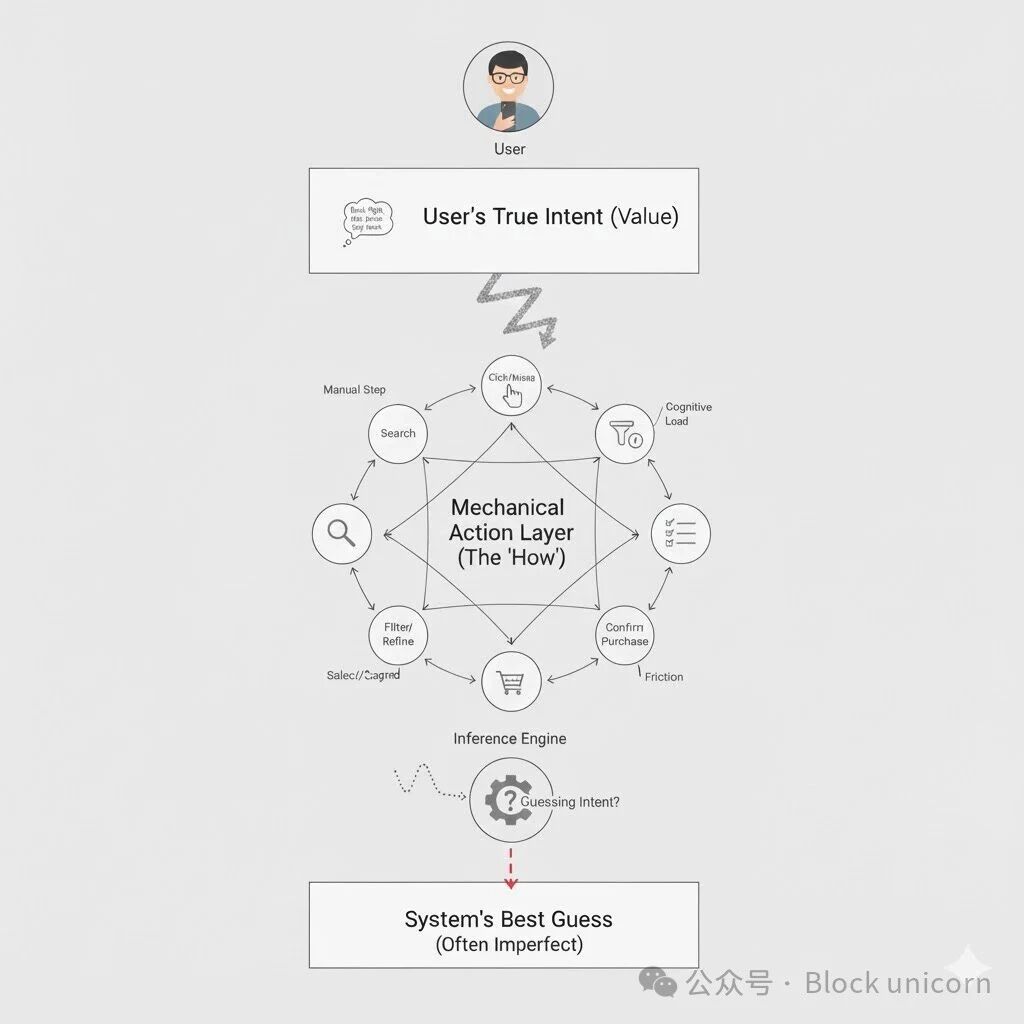
Most internet systems do not operate directly based on intent but rather on behavior. When users want to complete an action, they need to express it through a series of steps: searching, clicking, filtering, selecting, comparing, and confirming. The system cannot receive a clear instruction about what the user wants to do; instead, it receives signals from user actions and tries to infer intent from them. This approach is reasonable when the systems are relatively simple. At that time, the number of options was limited, the execution paths were easier to understand, and users could easily translate their needs into actual actions without much effort or risk.
However, as the internet has developed, this assumption has quietly failed. The market scale has grown larger and more fragmented. An outcome often involves multiple locations, prices, and intermediaries. Yet, the interaction model remains the same. Users still need to decide how to accomplish something, even if they lack the information or background needed to make informed decisions. Booking travel, transferring money, purchasing goods, or coordinating work increasingly requires dealing with complexity. Control still lies with the user, but their understanding of complexity has changed.
At the same time, platforms have begun to optimize around content that is easy to monetize. User behavior has become visible, so metrics like clicks, engagement, time spent, conversion funnels, and conversion rates have become the primary signals for system responses, not because they reflect user success, but because they are measurable and monetizable. Over time, these metrics have gradually replaced user intent as the main optimization target. Systems have become better at guiding users through processes rather than minimizing the effort required for users to achieve their goals. The longer and more complex the process, the more opportunities there are to extract value from it.
Thus, we have an internet where users typically come with clear goals, but platforms attract them through various processes and steps, extending their usage time. Users are not only not reducing the workload required to achieve their goals, but are also asked to compare various options, weigh pros and cons, and navigate lengthy paths, even though the data and computational power of the software far exceed that of the users.
Intent has always existed but has never been seen as a direct input. Systems rely on user behavior rather than intent, leaving users to handle the coordination and decision-making responsibilities themselves. The friction that exists today is not coincidental; it is the result of systems reacting to behavior rather than acting based on established goals.
Making Intent Explicit
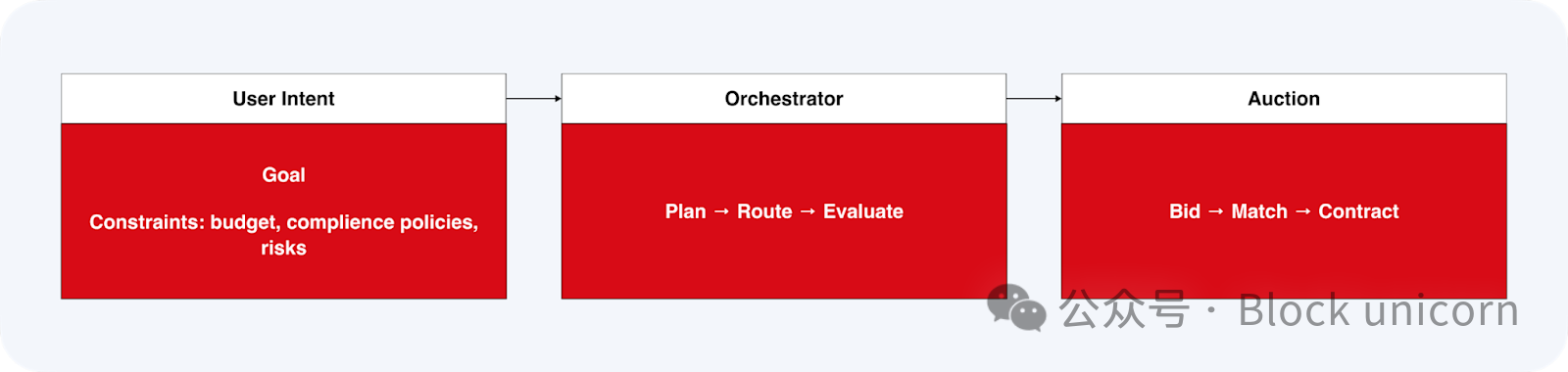
The key difference between intent-based systems and traditional systems is not in the users' needs but in the system's ability to receive those needs directly. When users clearly express intent, they no longer need to go through a series of operations to convey their goals; they simply need to specify the desired outcome and the conditions that must be met. These conditions can be simple, such as a price ceiling, time constraints, or risk preferences. Once intent is clarified, the system no longer waits for further instructions but treats it as a problem to be solved.
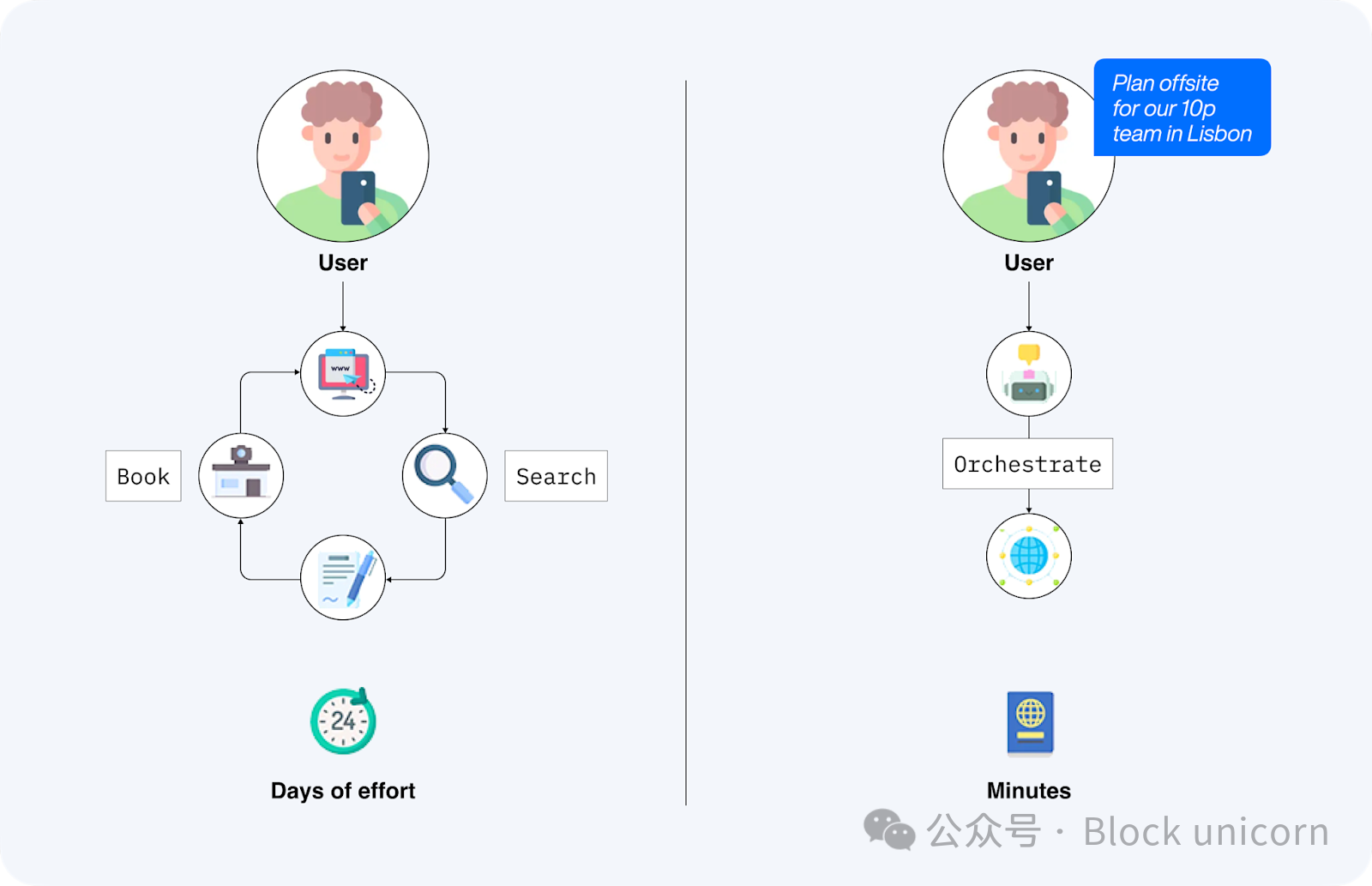
This is crucial because clearly defined intent also affects the execution method. Now, achieving the same goal is no longer limited to a single predefined path but can involve multiple possible approaches. The system can evaluate different routes, locations, or strategies without user intervention and choose the option that best meets the established constraints. Users are no longer navigators of the system; instead, the system navigates on behalf of the users.
Today, all of this is made possible not only by more sophisticated interfaces but also by reduced coordination costs. Software can now evaluate multiple options, compare results, and respond in real-time at a low cost. Agents can run continuously, monitor changing conditions, and adjust execution without needing permission for every step. In an era when computational costs were high, systems were independent, and execution required human intervention, all of this was difficult to achieve. Now, these limitations have been significantly reduced.
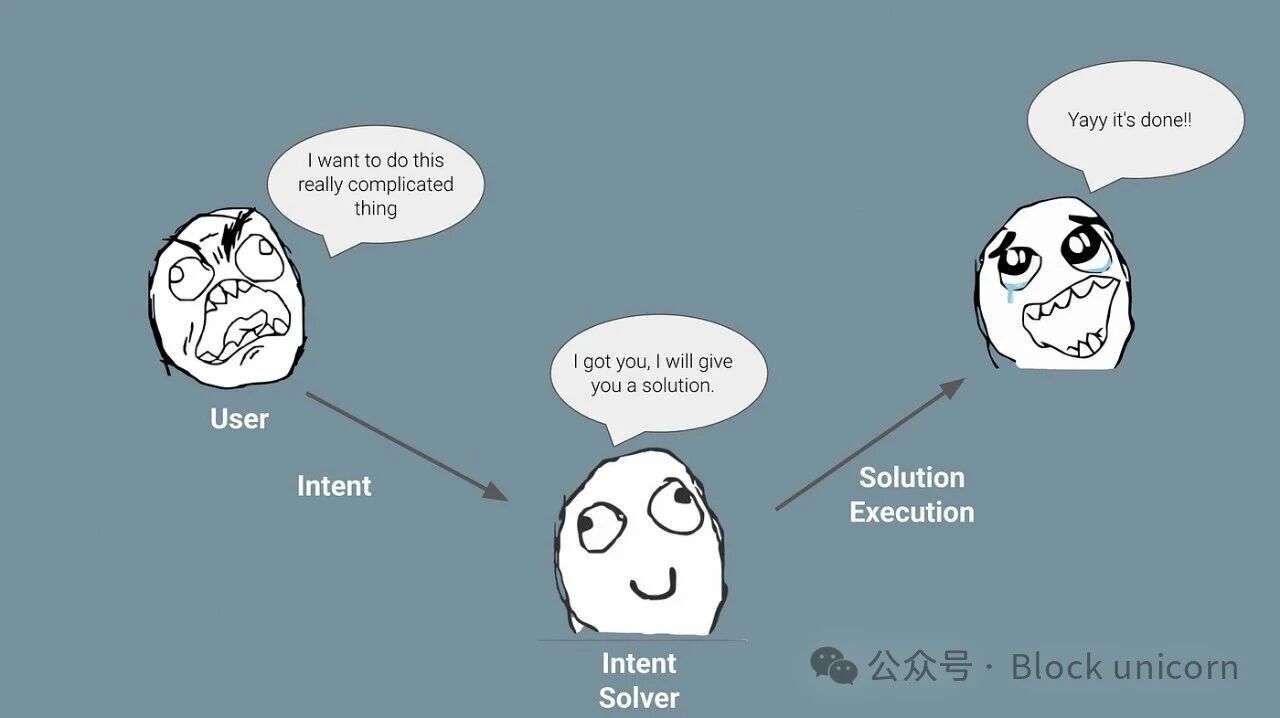
Another important change is that execution no longer needs to be controlled by a single platform. Once intent is expressed in a structured way, any participant capable of fulfilling that intent can respond. This introduces competition at the execution level. Different solvers, agents, or services can attempt to fulfill the same intent, and the system can select the best result based on predefined rules. Users do not need to know who executed the task; they only need to ensure that the result meets their specified conditions.
In old systems, users had to manually compare options and weigh trade-offs to optimize. In intent-based systems, the optimization process shifts downstream. The system compares options, handles complexity, and presents results. Fragmentation is no longer a user problem; instead, it becomes input for optimization. More options can enhance results rather than complicate decision-making.
When Results Become Units of Value
In attention-driven systems, value flows to those who control demand. Platforms compete to keep users on their interfaces because profit occurs here. In intent-driven systems, value flows to those who can most efficiently achieve goals. The scarce resource is no longer attention but reliable execution under various constraints. This is a subtle yet significant change. It shifts the focus of competition from superficial interactions to backend capabilities.
In the era of the intent economy, users no longer browse the market or manipulate platforms in the traditional way; instead, they issue requests. This changes the power dynamics among all parties. The importance of intermediaries that merely guide users through processes diminishes, while infrastructure that can reduce costs, risks, or delays becomes crucial. Competition among execution service providers is no longer about locking in users but about speed, accuracy, price, and reliability. Poor execution will be quickly punished because users do not need to understand the reasons for failure; they only need to see the failure. They can simply stop sending intent in that direction.
This also changes the way markets scale. In the old model, complexity increased with the number of users. The more users there were, the more support, interfaces, and decision-making power were pushed upstream. In intent-based systems, complexity grows with the improvement of infrastructure. Users remain simple, and the system handles various complexities for them. This makes it easier to serve non-expert users without reducing the system's functionality. Advanced users and complex infrastructure can coexist, but the burden of coordination no longer falls on those making requests.
This also lowers switching costs. When users are not limited to specific workflows or interfaces and can simply express intent, they can freely send that intent anywhere. Transaction execution providers cannot rely on inertia or habit; they must continuously compete. This drives them to standardize intent formats, validation mechanisms, and settlement layers, as improved compatibility will expand the scale of the transaction execution market. Over time, this will push systems toward a more open direction.
From a broader perspective, the intent economy changes the experience of "using the internet." Users are no longer navigators of the system but begin to issue requests. Many interactions that previously required attention, judgment, and repeated decision-making can be simplified into a single step. Users determine the outcomes and constraints, while the system competes to complete the rest of the work. This is why the intent economy is not limited to cryptocurrency or finance. These fields can clearly demonstrate their operational mechanisms because execution costs are high and errors are evident. But the same structure applies to any field with high coordination costs: business, logistics, scheduling, procurement, information retrieval, and ultimately everyday digital tasks. In areas where results are more important than processes, intent-based systems outperform workflow-based systems.
That's all for today; see you in the next article.
免责声明:本文章仅代表作者个人观点,不代表本平台的立场和观点。本文章仅供信息分享,不构成对任何人的任何投资建议。用户与作者之间的任何争议,与本平台无关。如网页中刊载的文章或图片涉及侵权,请提供相关的权利证明和身份证明发送邮件到support@aicoin.com,本平台相关工作人员将会进行核查。


