On the surface, organizing a hackathon seems simple: build a website/page, announce some prizes, and then wait for submissions to roll in. However, in reality, a successful hackathon is the result of dozens of wise decisions made before the event begins. On platforms like DoraHacks, you can easily see the difference between a well-prepared hackathon and one that is not.
Insufficient preparation can lead to a series of predictable problems: vague rules can spark disputes; unclear target audiences can result in marketing failures; underestimating resource needs can leave you scrambling for sponsors before the launch or exhaust your team's energy due to excessive workload… Rather than frantically patching things up midway through the event, it's better to prevent issues beforehand.
Conversely, thorough preparation lays a solid foundation for the smooth progression of subsequent phases. You can think of this stage as drawing blueprints before construction. The more detailed the blueprints, the sturdier the final building will be. When unexpected challenges arise, you'll be glad you didn't skip these foundational tasks, allowing you enough capacity to handle emergencies.
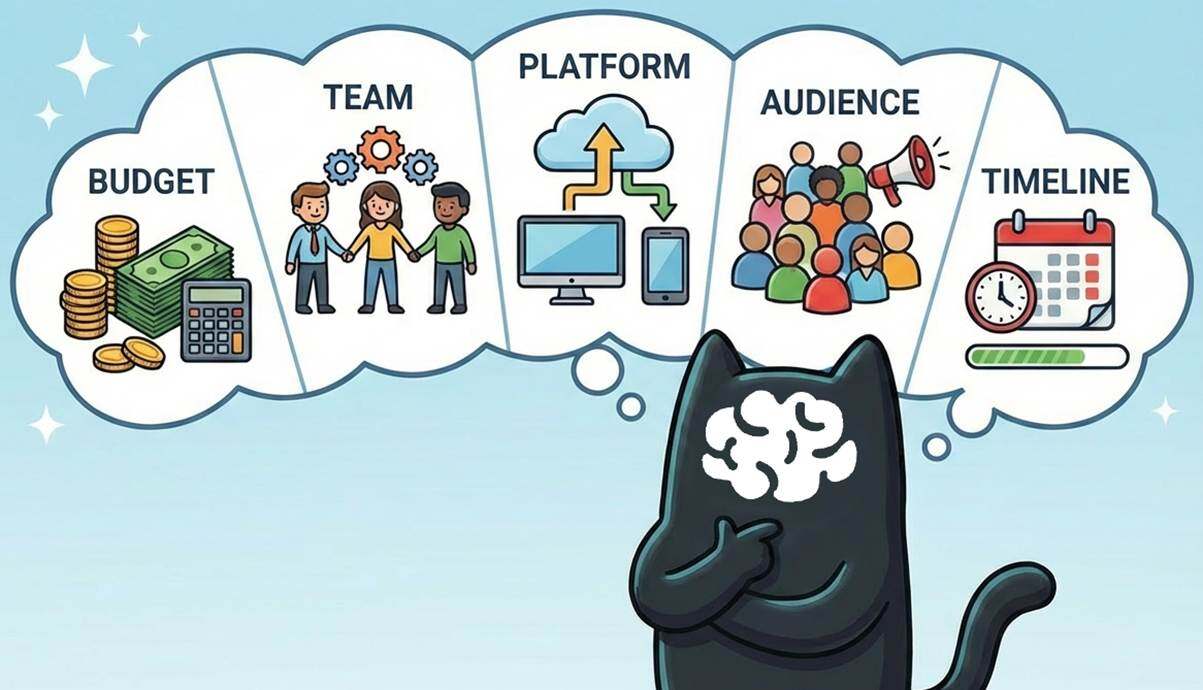
1. Define the Theme, Goals, and Success Metrics
First, clarify the theme and goals of your hackathon. Choose a theme or focus area, which could be a specific technology (like AI or blockchain), a problem domain (like privacy or payments), or an open challenge. Your theme will attract the right participants and help sponsors see the relevance of the hackathon to their products.
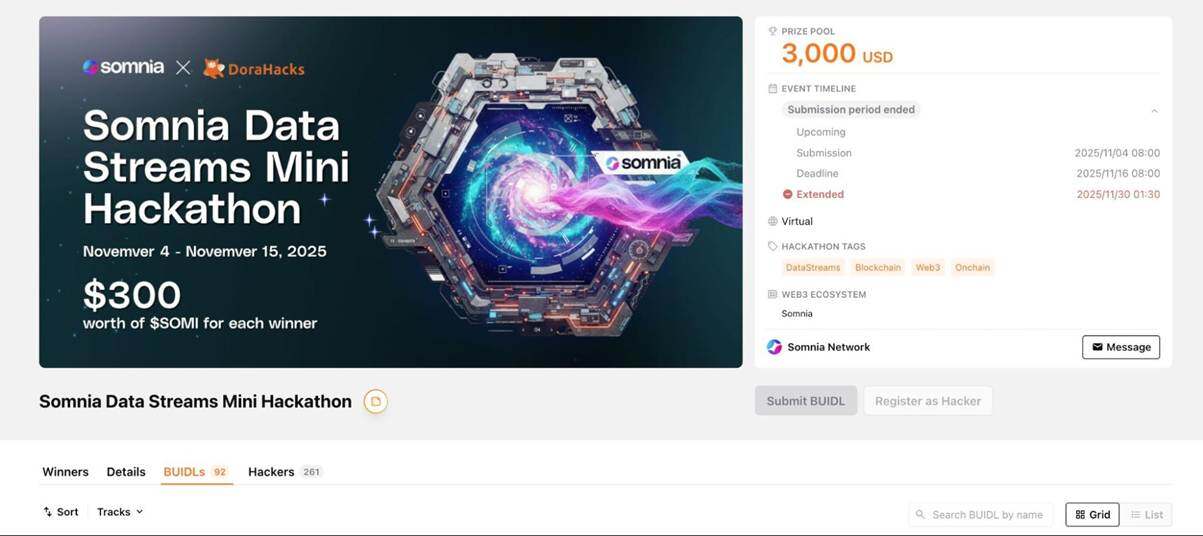
The hackathon organized by Somnia (a public blockchain) around its new SDK "Somnia Data Stream"
Next, clarify your goals. Do you want to build a developer community, generate innovative solutions for specific problems, connect sponsors with talent, or provide educational opportunities for beginners? Different goals will dictate various design choices throughout the process.
Finally, specify the criteria for success. Set measurable metrics, such as the number of registrations, valid submissions, hacker satisfaction, sponsor satisfaction, or media coverage. Establishing these benchmarks early helps you make trade-offs when resources are tight and provides clear evaluation standards for post-event reviews.
Even so, goals should be realistic. Consider the size of the developer community you can reach, the user base for the required technology, and whether your prize pool is competitive compared to similar events. Ambitious yet feasible goals can motivate the team without leading to disappointment.
2. Identify Required Resources
Once your goals are clear, plan the resources needed to achieve them:
● Budget for prizes, marketing, and tools.
● Your existing connections with potential sponsors, communities, or media organizations.
● Tools and platforms for submissions, communication, and evaluation.
● External contributors you need and the time they can commit each week.
Be specific. If you want to set up a $10,000 prize pool, you need to have the funds ready or sponsors willing to provide that amount. If you want 500 participants, you need the corresponding marketing reach to attract them. Identifying resource needs early allows you to discover and fill gaps before moving forward.
3. Understand Your Audience: Who They Are and Where They Are
Carefully consider who you want to participate. Is your target audience college students, entry-level developers, experienced professionals, or a mixed group? Are you focusing on a specific region, country, or a global audience? What skill levels and backgrounds do you want to include?
Understanding your audience almost determines everything: the language and tone of your marketing, the platforms for promotional activities, the complexity of the challenges, the scale of the prizes, and even the timing of the hackathon. A hackathon aimed at Southeast Asian college students will look very different from one targeting experienced developers in North America.

AI hackathon organized by King's College in London
Once you've identified your target audience, find out where they are active online. This could be X (formerly Twitter), Discord communities, Reddit, LinkedIn, university mailing lists, or developer forums. Knowing where your audience congregates will determine your marketing strategy.
4. Research Existing Hackathons
You don't have to start from scratch. Research how successful hackathons operate and learn from their methods. Participate in a few hackathons to experience them from a hacker's perspective. Read their rules, observe their communication styles, and note what practices are effective and which ones frustrate you as a participant.
Browse platforms like DoraHacks to see how top hackathons construct challenges, prizes, and timelines. Pay attention to how they set rules, establish submission requirements, and conduct evaluations. Reach out to hackathon organizers you admire and seek advice—most are happy to share their experiences and lessons learned.
Learning from others helps you avoid common mistakes and adopt effective practices.
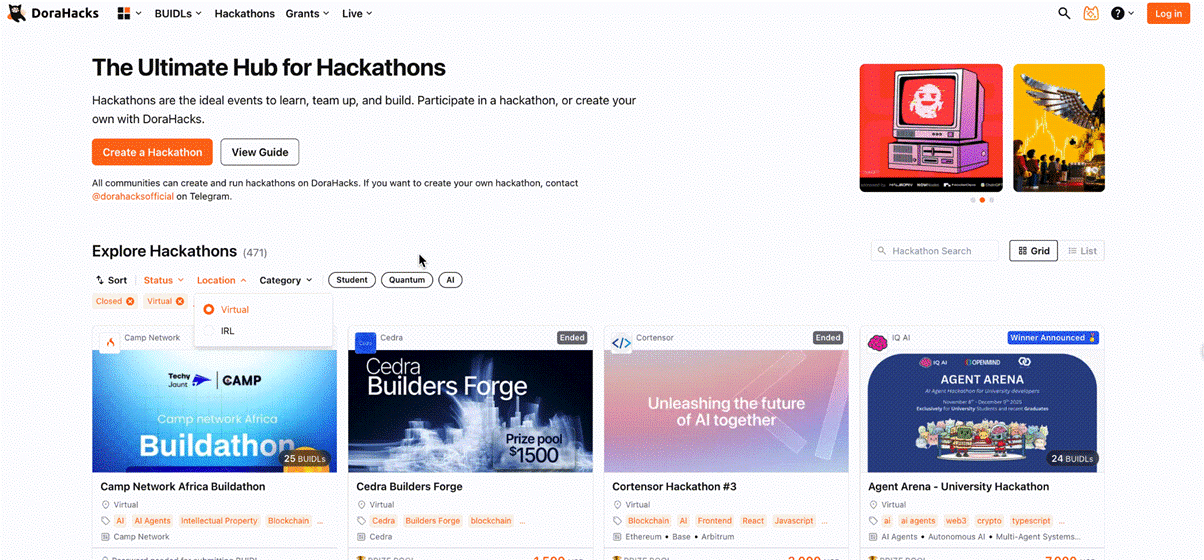
5. Clarify Team Roles and Responsibilities
Whether you're building a team from scratch or working within an existing organization, clarify everyone's responsibilities. Typical roles include business partnerships, marketing and community outreach, participant support, platform and technical operations, and judging coordination.
Assign clear leaders for each area and establish decision-making mechanisms. Ambiguity in responsibilities can lead to oversights and frustration. Even a small team can benefit from clearly defined roles, while larger organizations need this to avoid duplicated efforts or coverage gaps.
Be sure to conduct regular progress checks to track advancements and identify obstacles early.
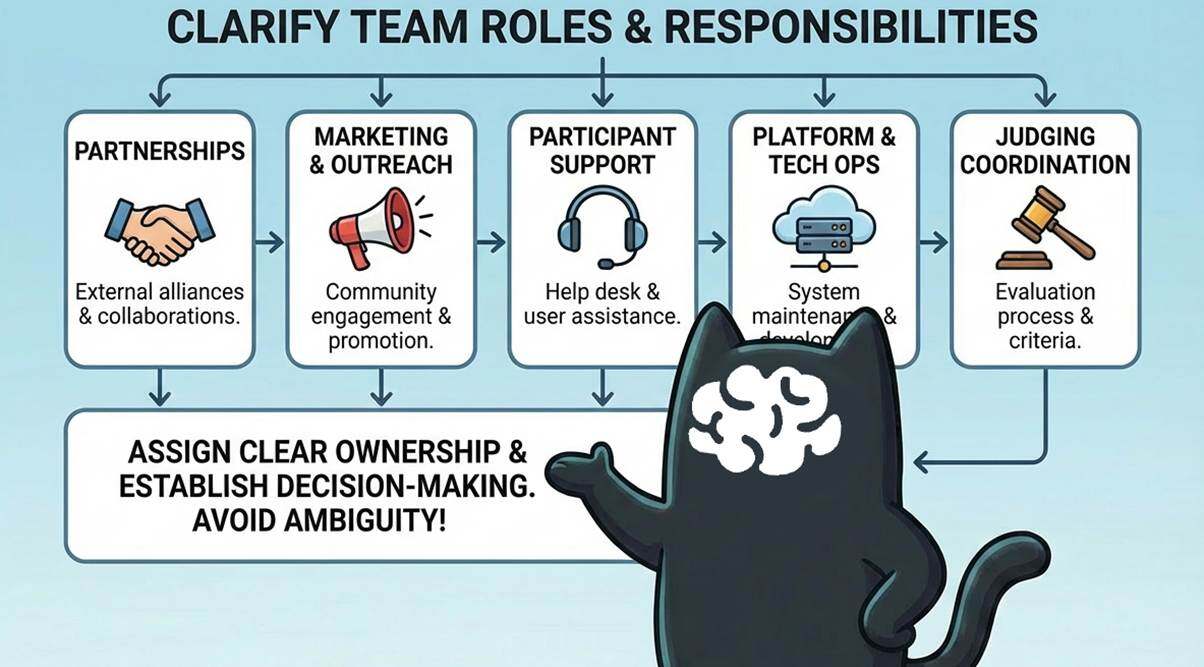
6. Choose a Platform and Get Familiar with It
Selecting the right hackathon platform is crucial. DoraHacks is the best platform to start at zero cost, offering sufficient flexibility and a powerful Organizer Dashboard. Sometimes organizers also use private forms or spreadsheets for registration. When evaluating platforms, consider submission and review features, customization options, cost and pricing models, ease of use for organizers and participants, and available community or support services.
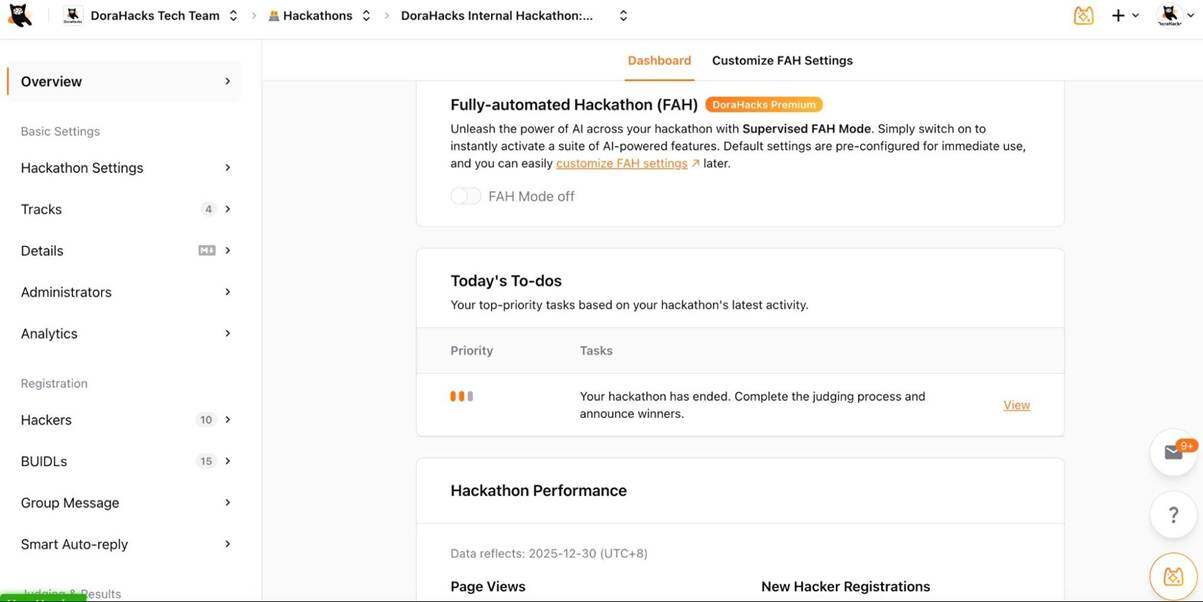
DoraHacks' Organizer Dashboard_ for hackathon management and hacker support_
Once you've selected a platform, thoroughly familiarize yourself with it from both the hacker and organizer perspectives. Organize a test hackathon to experience the organizer process: create the event page, set rules, configure evaluation criteria, and manage submissions. Then experience it as a participant: register, submit a mock project, and feel the entire process. Understanding both perspectives helps you write clearer instructions, anticipate participant confusion, and quickly resolve issues during the hackathon.
7. Create a Realistic Timeline
Work backward from the scheduled hackathon date. Most online hackathons require one to two months of preparation time, while larger hackathons may need even longer. Plan out key milestones: when to start contacting sponsors, when to launch marketing, when registration opens and closes, when the hackathon period runs, when evaluations take place, and when winners are announced.
Be sure to allow for buffer time. Negotiating with sponsors often takes longer than expected, approvals may be delayed, and unexpected issues can arise. Also, consider external factors such as school exam periods, important holidays, or competing events that may affect participation.
If the timeline feels very tight, consider postponing the date. Hosting a perfectly executed hackathon a month later is better than rushing an event on the original date.
8. Decide Whether to Move Forward
After carefully considering all the above issues, take a serious look at whether now is the right time to move forward with the project. Do you have the necessary resources or a realistic plan to obtain them? Is your team aligned and fully committed? Is the timeline feasible for all involved?
If there are still shortcomings, it's best to address them before launching rather than forcing a hackathon with insufficient resources. You might consider joining the organizing team of another hackathon to gain experience or lowering your goals to choose a project more suitable for your first participation.
When everything is ready, you are prepared to transition from the "zero step" to the formal organization phase.
Feel free to explore DoraHacks for more features to support your hackathon organization, or connect with experts now!
About DoraHacks
DoraHacks is a leading global hackathon community and open-source developer incentive platform. DoraHacks provides a toolkit for all parties, empowering them to organize hackathons and fund early-stage ecosystem startups.
DoraHacks is committed to driving a global hackathon movement in the fields of Web3, AI, quantum computing, and space technology. To date, over 30,000 startup teams have received more than $300 million in funding through the DoraHacks community. Numerous open-source communities, enterprises, and technology ecosystems are actively leveraging DoraHacks and its BUIDL AI capabilities to organize hackathons and fund open-source initiatives.
Official Website| Twitter|Discord|Telegram|Binance Live|YouTube
免责声明:本文章仅代表作者个人观点,不代表本平台的立场和观点。本文章仅供信息分享,不构成对任何人的任何投资建议。用户与作者之间的任何争议,与本平台无关。如网页中刊载的文章或图片涉及侵权,请提供相关的权利证明和身份证明发送邮件到support@aicoin.com,本平台相关工作人员将会进行核查。